Pai Food Guide: What to Eat in Pai, Thailand (and Where)
Eat well in Pai, Thailand: northern Thai dishes, night-market stalls, cafés and cooking classes, with costs, timing and dietary tips.
On this page
Last updated November 2026. Pai food in this town in Mae Hong Son province, northern Thailand, mixes Lanna dishes, night-market snacks and a traveler-cafe scene built around vegetarian and Western menus. Use this guide to decide what to order, where to eat by situation, and which dedicated guides to open next.
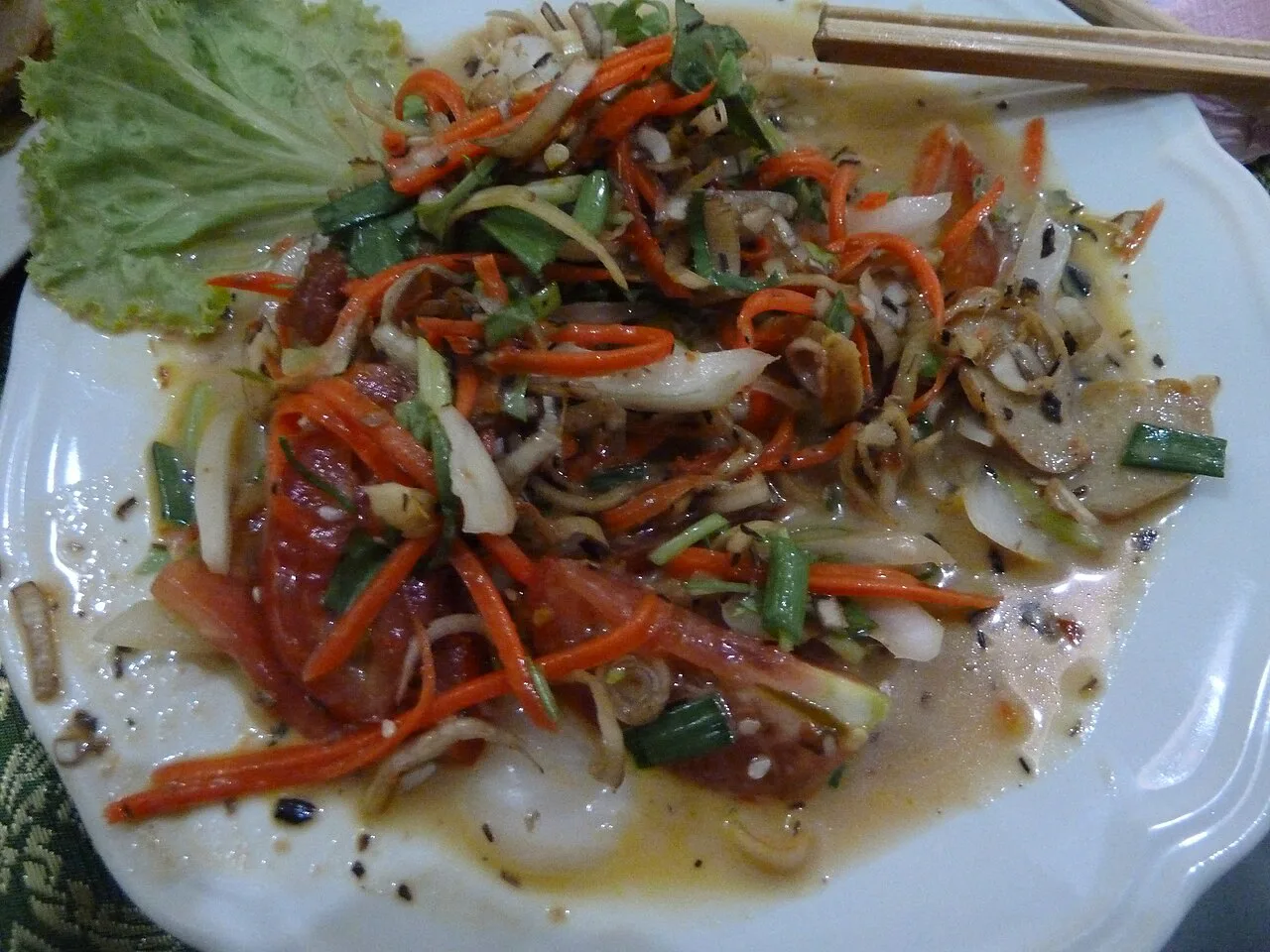
Featured image: Christophe95, CC BY-SA 4.0, via Wikimedia Commons.
Quick answer: how to eat in Pai
Eat northern Thai dishes at casual restaurants and market stalls. Use cafés for slow mornings and vegetarian meals. Save the evening for the walking street and night-market area, where snacks are easy to graze on. Here are the must-try items and who each suits.
- Khao soi: curry noodles with crispy noodles on top. Best for first-timers.
- Sai ua: northern herb sausage. Best for meat eaters who want a regional taste.
- Nam prik noom: a green chili dip eaten with vegetables and sticky rice. Best for adventurous eaters.
- Pad gra prow: holy basil stir-fry over rice. Best for a fast, filling lunch.
- Café breakfasts and vegetarian plates: best for slow mornings and plant-based eaters.
Northern Thai dishes to try in Pai
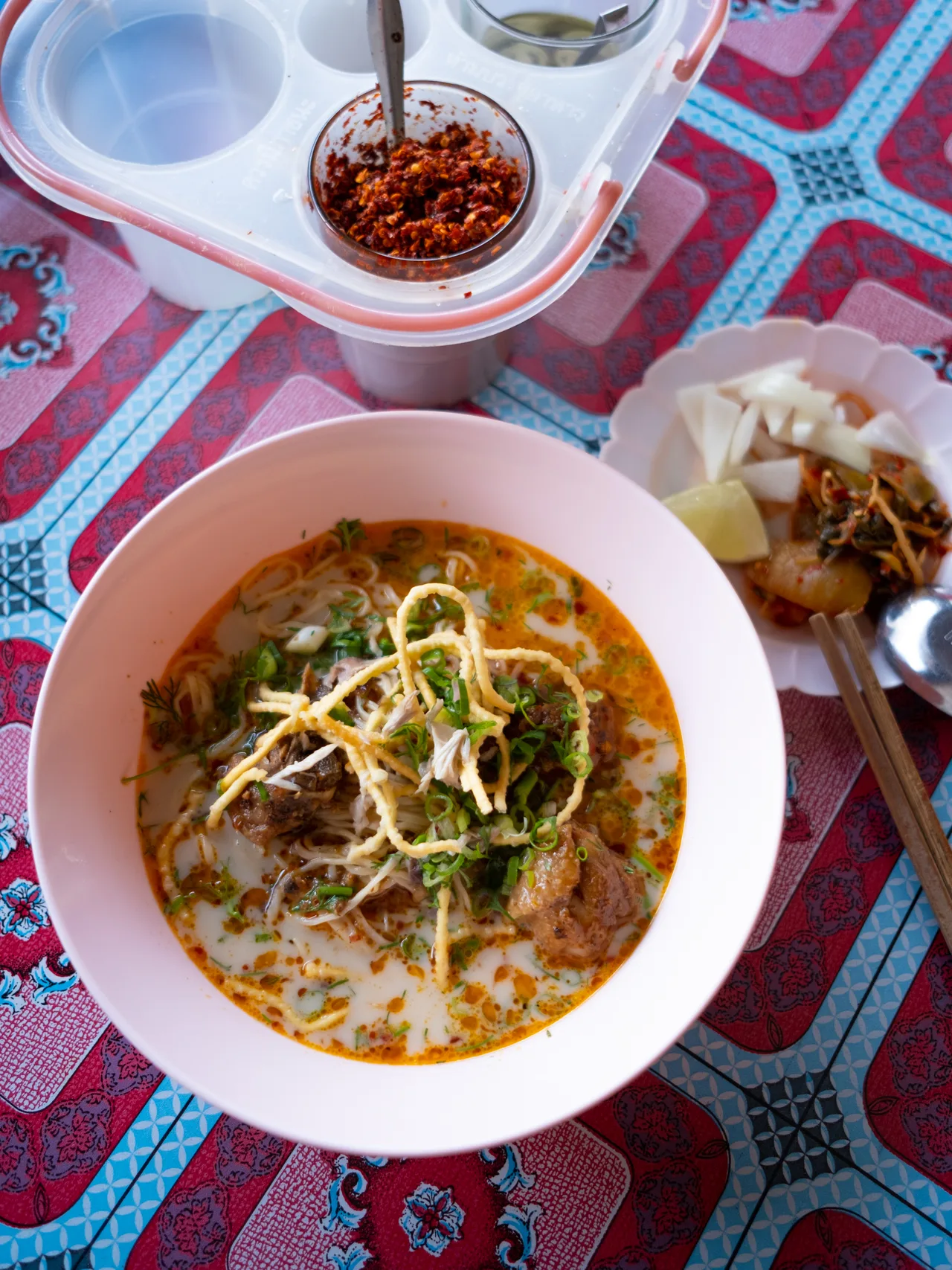
Khao soi is the headline dish. It is a northern Thai curry noodle bowl with a rich sauce, chicken or beef, and crispy fried egg noodles on top. Our dedicated khao soi guide for Pai covers where to order it. Sai ua and nam prik noom round out a Lanna meal, usually with sticky rice. Pad gra prow is not strictly northern, but it is a Thai staple at lunch. It uses holy basil, which is a different herb from Thai basil. Skip khao soi if you avoid coconut-based curries or rich, oily sauces. Ask for milder versions of the chili dips.
Pai food by situation: where to eat
Each eating style trades speed, cost and comfort differently. Costs below are relative tiers, since menu prices change and vary by venue. Evening stall grazing is covered in our night market guide. A wider stall rundown sits in the Pai street food guide. For sit-down meals, start with the best restaurants in Pai.
| Option | Cost level | Speed | Best time | Suits |
|---|---|---|---|---|
| Night-market stalls | Lowest | Fast | Evening | Grazers, budget travelers, first-timers |
| Casual Thai restaurants | Low to mid | Moderate | Lunch and dinner | Khao soi seekers, families, groups |
| Traveler cafés | Mid | Slow to moderate | Morning to afternoon | Vegetarians, laptop workers, brunch fans |
| Cooking class | Highest | Half-day activity | Daytime | People who want technique and a full meal |
A day of eating in Pai
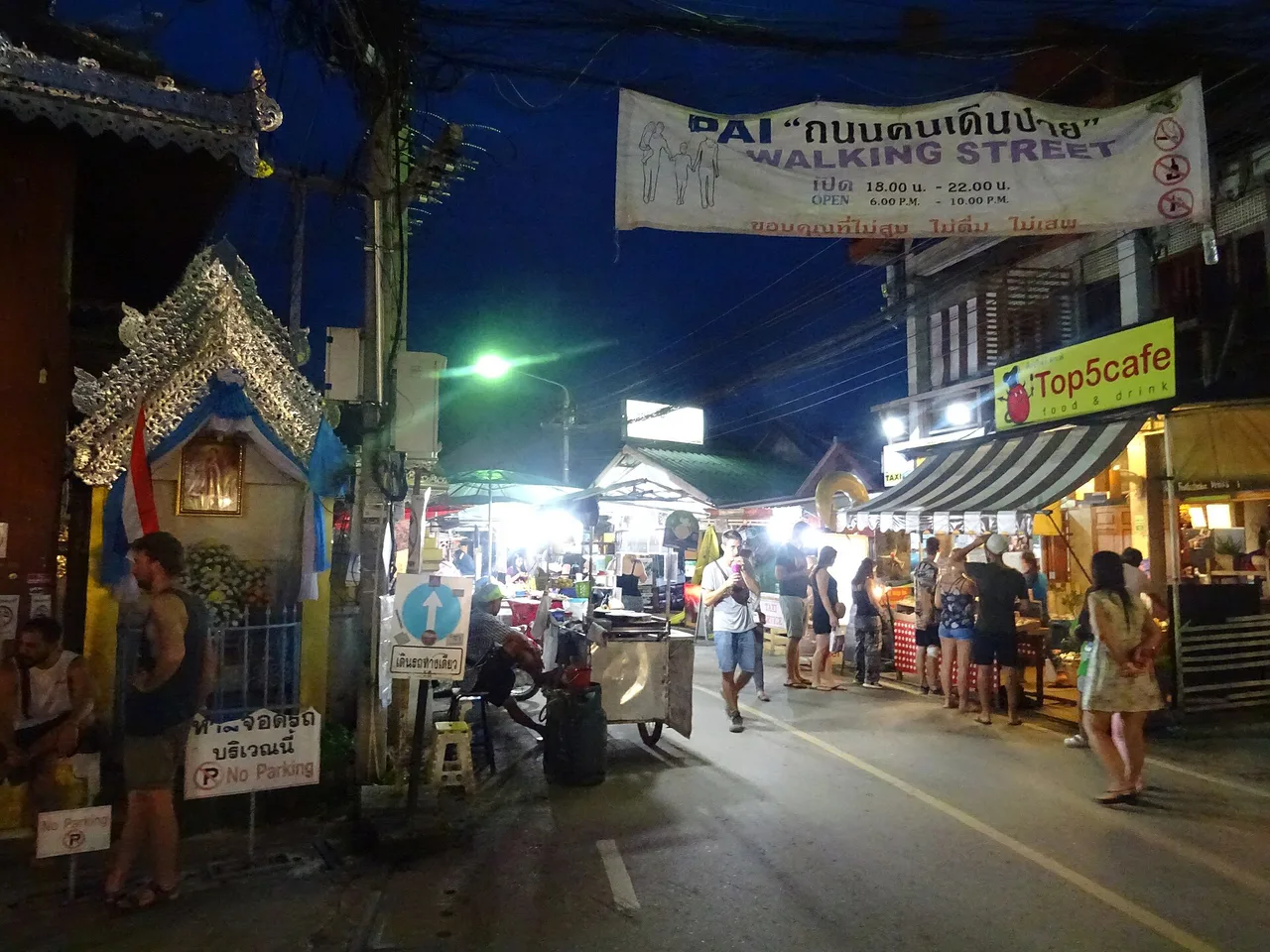
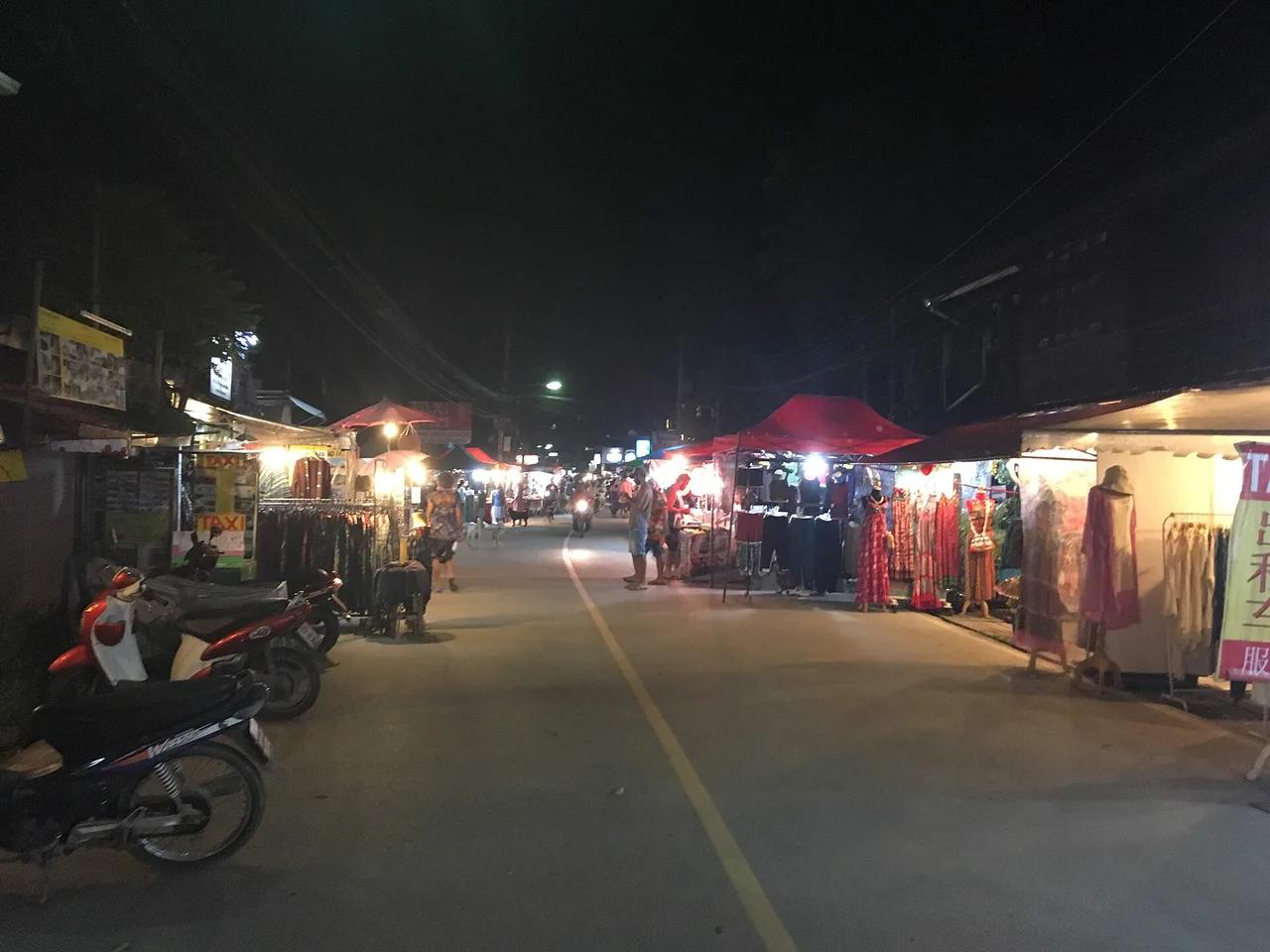
Start with coffee and a café breakfast. Pai's coffee scene has options for slow mornings. Have a northern Thai noodle or rice lunch at a casual restaurant. Take an afternoon break, then head out at dusk. Pai Walking Street: What to Eat, When to Go is where the evening food crowd gathers. Stalls there suit snacking rather than one big sit-down dinner. Hours shift by season and by venue, so do not plan a late dinner around one specific stall.
Costs and how to budget
Market stalls are the cheapest way to eat in Pai. Casual Thai restaurants come next. Traveler cafés and sit-down places with Western menus usually cost more. A cooking class is the biggest single food expense. Prices and hours were last checked November 2026, and venues set their own menus, so read the board before ordering. Carry small cash for stalls, because card acceptance is more likely at cafés and restaurants. Compare English-menu prices with the local-language board if both exist.
Vegetarian, vegan, allergy and spice tips
Pai's café scene makes vegetarian eating easier than in many Thai towns. Even so, Thai dishes often use fish sauce, shrimp paste or meat-based stock. Say clearly what you avoid when you order, and ask how the dish is made. Do the same for nut, shellfish and egg allergies, since cross-contact at open stalls is hard to rule out. Spice level is the other trap. Ask for mild first and add chili from the table. Northern dips and sausages can be hotter than they look.
- Vegetarian: ask for "jay" food at places that offer it, or confirm no fish sauce.
- Allergies: show a written note in Thai if you can, and choose cafés with printed menus.
- Spice-averse: start with khao soi or pad gra prow ordered mild.
Learn it hands-on: cooking classes
A class suits travelers who want to cook khao soi or other regional dishes at home. It is less useful if you only want a quick meal. Compare menus, group size, market-visit options and dietary flexibility before booking. Our Pai cooking class guide goes into the choices. Skip a class if you have a tight schedule or prefer eating to cooking.
Mistakes to avoid and practical logistics
Opening hours and seasonal closures vary, so check each venue's own page or map listing for current hours. Pai is a scooter-dependent town, so plan evening transport before you eat.
- Ordering by spice level without checking what the dish normally contains.
- Assuming a restaurant is open late because the walking street is busy.
- Riding a scooter at night after a long dinner on unfamiliar roads.
- Paying tourist-menu prices when a simpler local board is next door.
- Eating outdoors in rainy or very hot weather without a backup indoor option.
Thai food notes for your next trip
Optional updates to our food guides.
You might also like
Continue reading
More guides you'll find useful