Pai Street Food Guide: Where, When & What to Eat
A practical guide to Pai street food: walking street, breakfast stalls, noodle shops, what to order, timing, and how to choose a good stall.
On this page
Last updated November 2026. Pai street food clusters in three places: the Walking Street stalls on Chaisongkram Road after dark, early breakfast stalls near the bus station morning market, and snack carts around Rangsiyanon Road. Evenings are the easiest and most touristy, mornings are the most local, and small daytime stalls are the cheapest. Use our wider Pai food guide for restaurants and cafés, and this page to decide where to eat on the street.
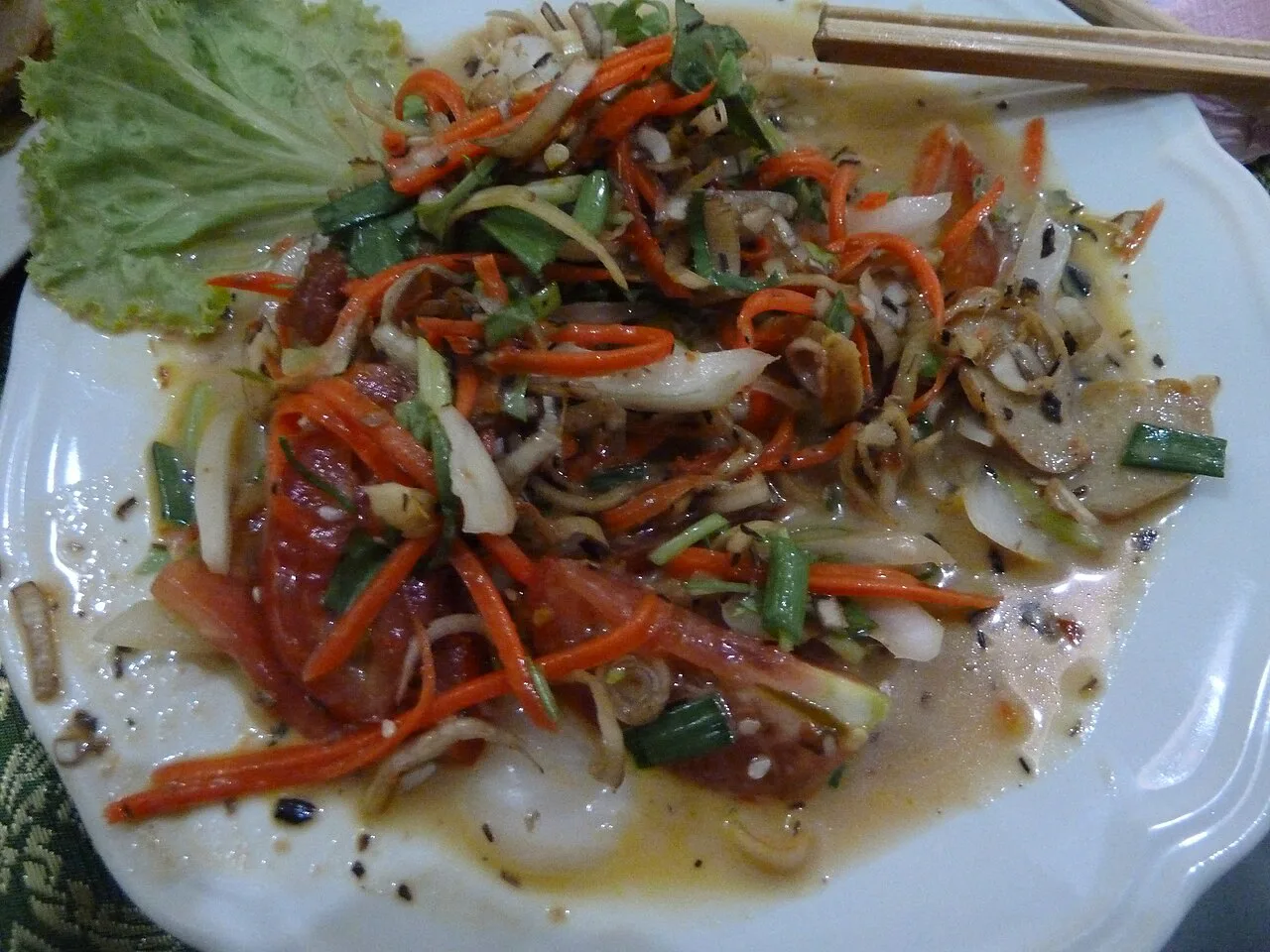
Featured image: Christophe95, CC BY-SA 4.0, via Wikimedia Commons.
Pai Street Food at a Glance
Pai is small enough to cover on foot, so you can sample all three hubs in one day. Chai Songkram Rd. closes to traffic at night and fills with stalls. The morning market and breakfast stalls start at sunrise. Snack carts and noodle stalls fill the gaps in between. Pick by time of day first, then by how local you want the meal to feel.
| Hub | Best time | Crowd | Price level | Pick this if |
|---|---|---|---|---|
| Walking Street, Chaisongkram Road | Evening | Busy, mostly visitors | Mid for street food | You want variety and an easy first night |
| Morning market near the bus station | Sunrise to mid-morning | Locals and early risers | Low | You want congee and a local breakfast |
| Carts around Rangsiyanon Road | Afternoon and early evening | Light | Low | You want a quick snack without a crowd |
| Tiny back-street stalls | Lunch | Few visitors | Lowest | You want cheap, short-menu cooking and can skip seating |
Pai Walking Street at Night: What to Eat and What to Skip
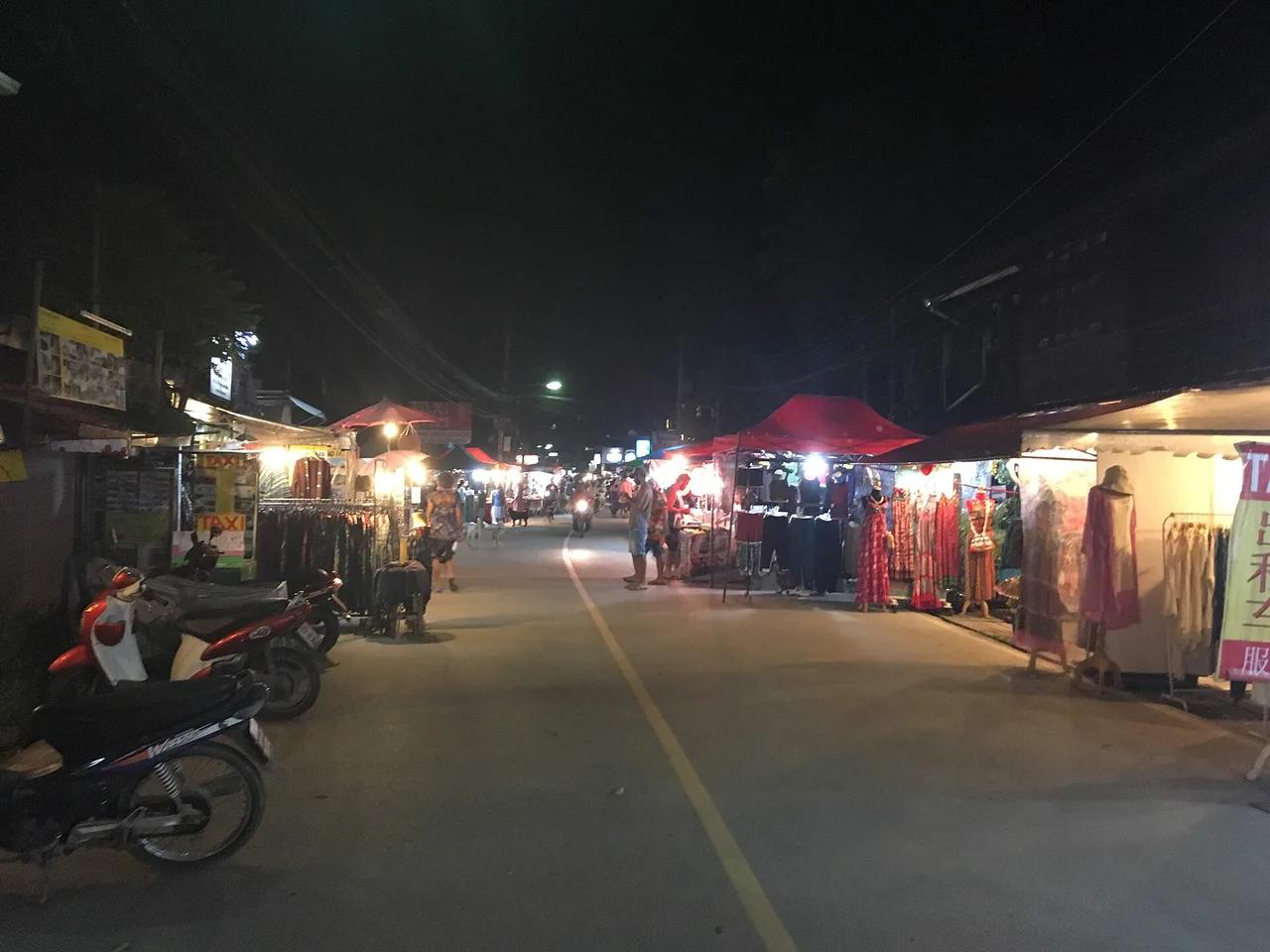
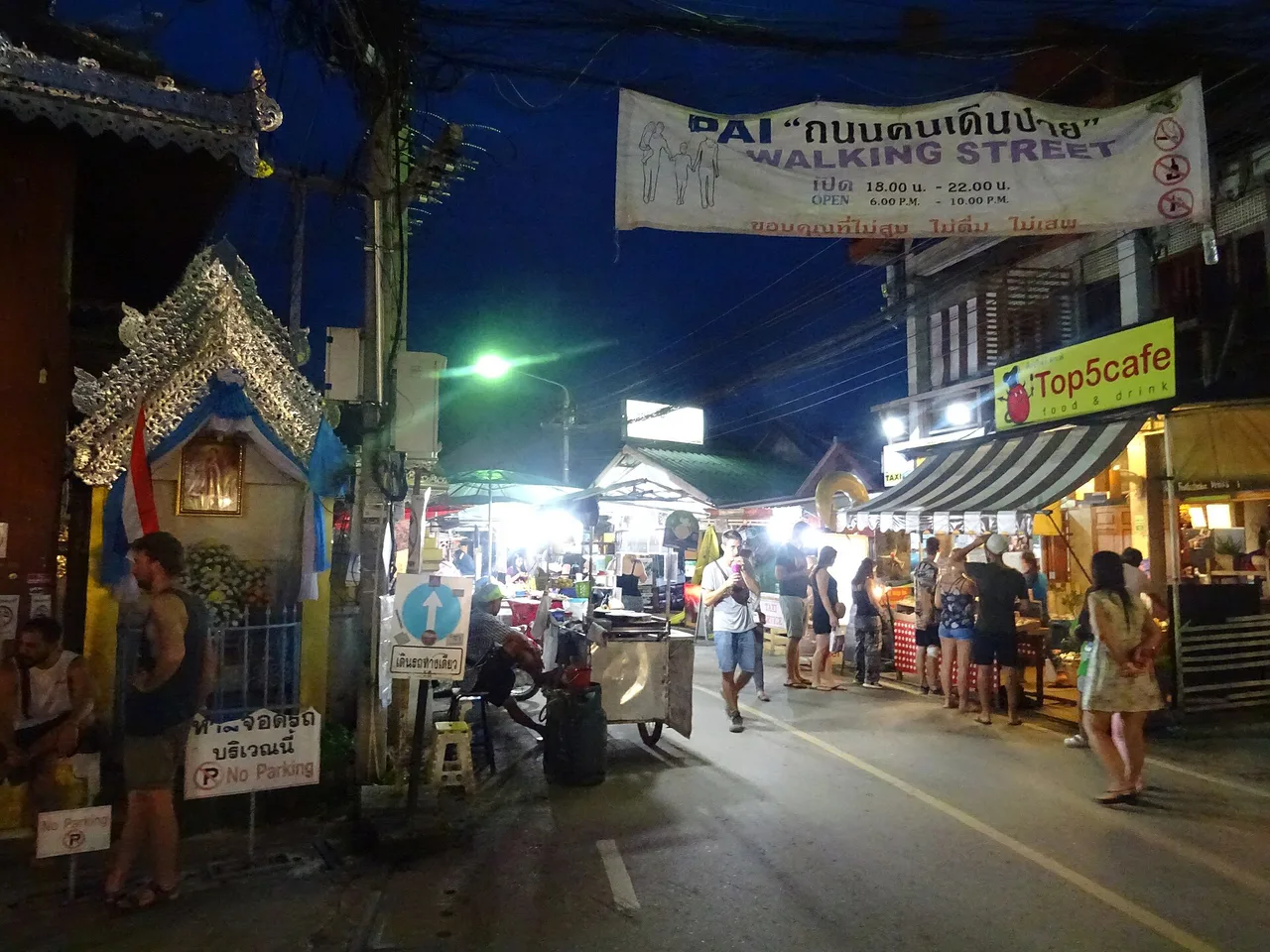
Chai Songkram Rd. turns into a pedestrian strip at night. Stalls sell souvenirs, crafts and a long run of snacks. Expect BBQ skewers, pad thai and even sushi. Food here is built for grazing, not for a definitive Northern Thai meal. Graze on grilled skewers, fruit and sweet snacks, then save the regional dishes for daytime stalls. Skip anything sitting out and lukewarm. For stall-by-stall detail, see our full Walking Street guide.
- Order: grilled skewers, fresh-cooked stir-fries, sticky-rice sweets and fruit.
- Skip: sushi and cold dishes sitting out in the heat.
- Look for: stalls cooking to order over a hot flame with a steady queue.
- Consider: Kai Jeaw Bar, a walking-street dinner spot serving pad thai, pad kra pao and pad see ew.
Breakfast and Morning Stalls in Pai
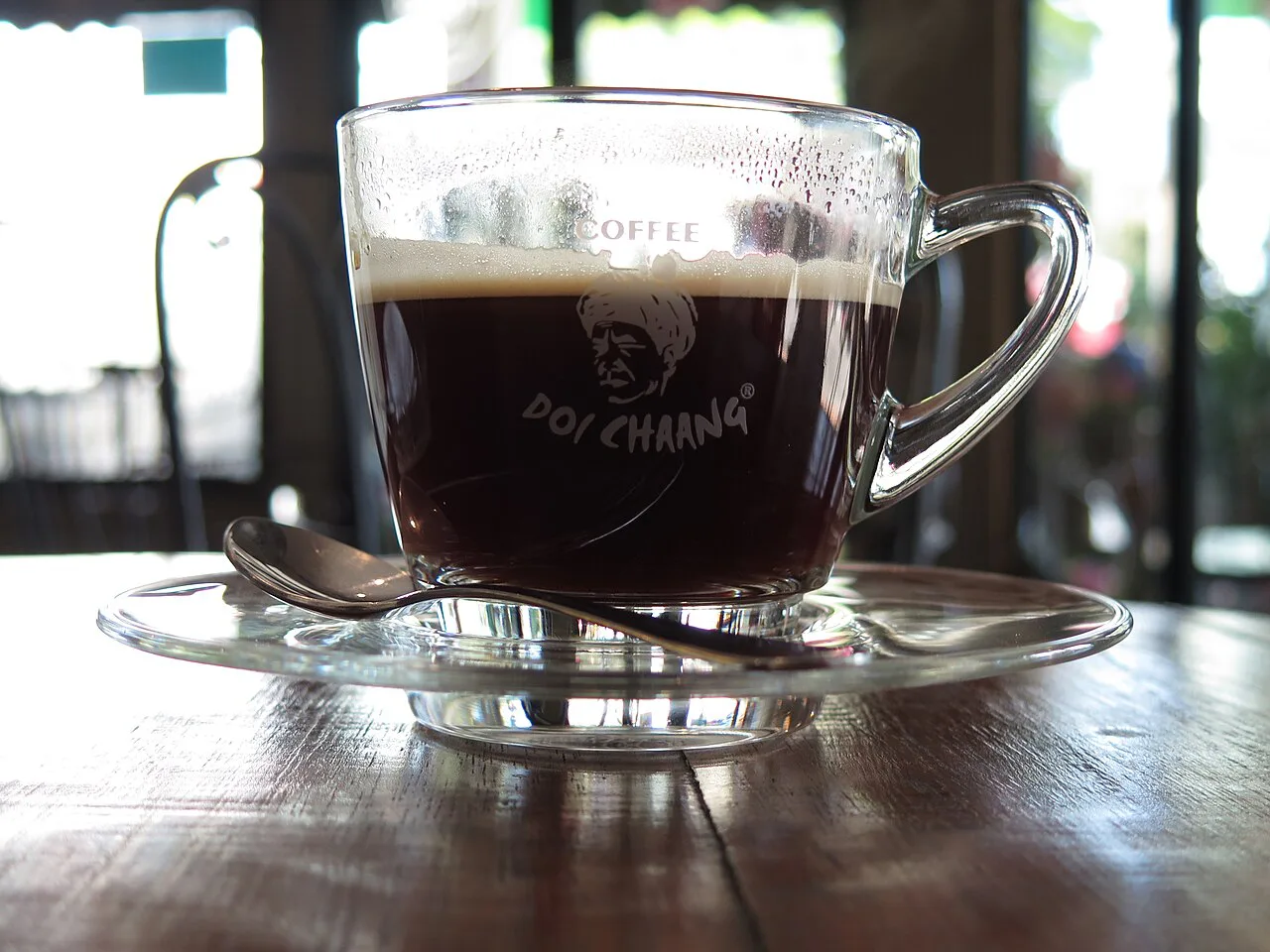
Mornings are when Pai feels least staged. P'lai Rice Soup serves congee with toppings and patongo, the fried dough sticks eaten for dipping. It reportedly opens at sunrise and closes around 8 to 9am, so arrive early rather than mid-morning. The morning market near the bus station is the other anchor for fresh snacks and cooked breakfast food. Pair a bowl of congee with coffee afterward from the morning coffee options in town.
Plan the congee stop before 8 to 9am, then keep Chaisongkram Road for the evening, the easiest slot for a first night.
- Arrive at sunrise for the widest choice.
- Order congee and patongo together.
- Carry small cash, since stalls rarely take cards.
Daytime Noodle, Rice and Curry Stalls Beyond the Walking Street
Walk a few blocks off Chai Songkram Rd. and the food gets cheaper and plainer. Snack carts around Rangsiyanon Road suit a quick bite between sights. Small stalls like Khun Si, a counter near the main arteries, focus on pad kra pao and papaya salad. Joy's Place is a tiny stall with a short menu, reportedly capped at ฿40 a dish, and it has no bathroom. Menus at these places are short, seating is limited, and cooking is done to order. If you want a table, air conditioning and a long menu, move on to the sit-down restaurants in Pai.
What to Order: Northern Thai Dishes Worth Trying
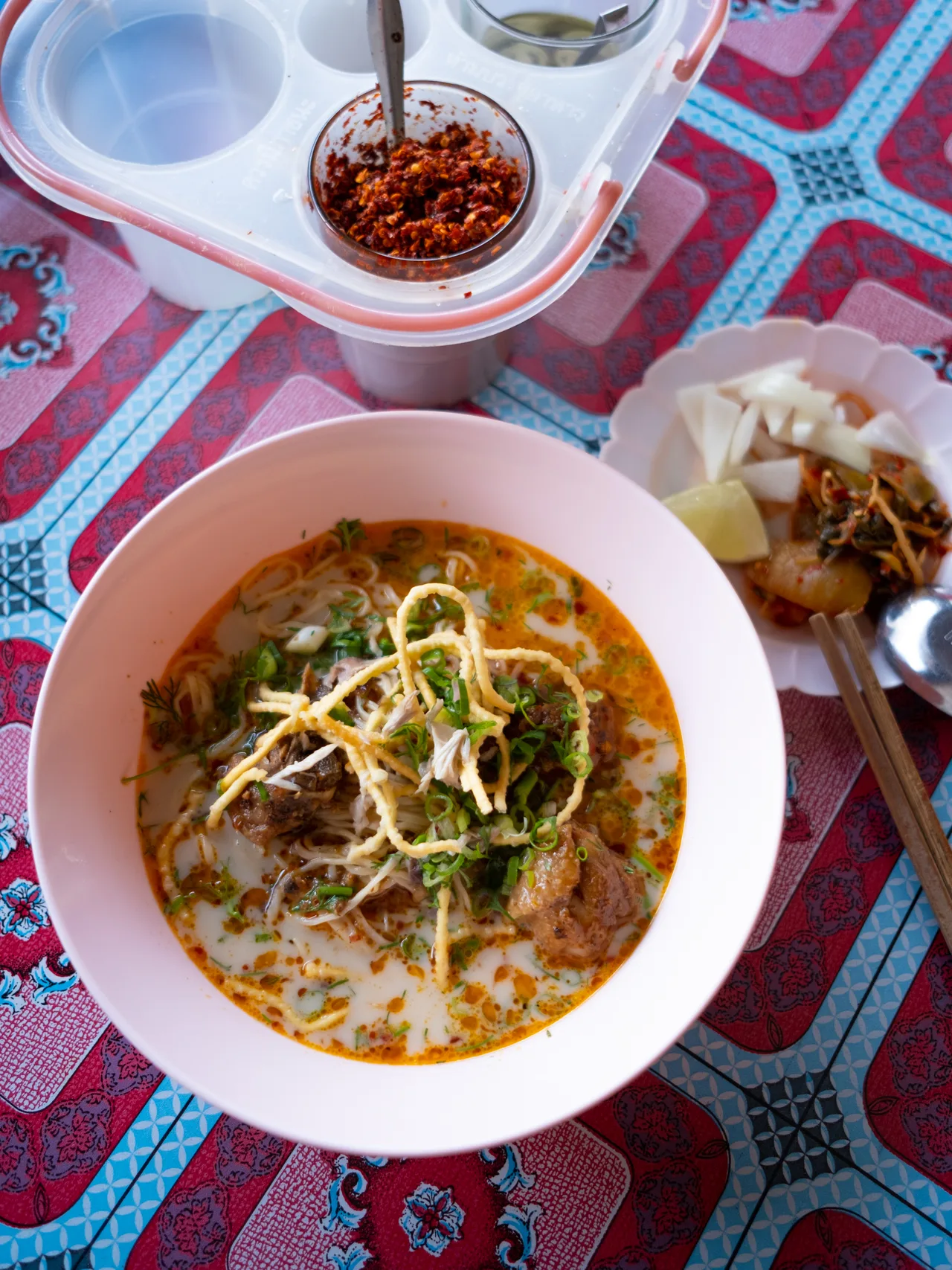
Pai's cooking blends Northern Thai (Lanna) and Shan traditions. Shan influence shows in thick, oily curries. Start with khao soi, a chicken curry noodle soup served at spots like Khaosoi Zister's. Our khao soi deep dive compares the bowls. Nam tok noodles at Pai Noodles and More come in a spicy broth made with pig's blood, liver and fishballs. Pad kra pao and papaya salad are safer starting points. Sai ua sausage and moo ping grilled pork are classic Northern Thai street items to look for, though availability varies by stall. To learn the recipes yourself, book a cooking class in town.
- Khao soi: coconut curry noodle soup, mild to medium heat.
- Nam tok noodles: contains pig's blood, so say so if you avoid it.
- Pad kra pao: holy basil stir-fry, ask for the chilli level you want.
- Papaya salad: often made with fish sauce and fermented ingredients.
- Congee and patongo: the standard breakfast pairing.
How Much to Budget and How to Pay
Street meals cost less than sit-down restaurants, and back-street stalls cost less than Walking Street stalls. One cheap stall reportedly caps dishes at ฿40, but no published price list covers Pai's stalls, so treat any figure as a rough guide. Carry small notes and coins, because stalls take cash. Walking Street prices drift upward on busy nights. Ask the price before you order if nothing is posted.
Choosing a Good Stall: Hygiene, Queues and Authenticity
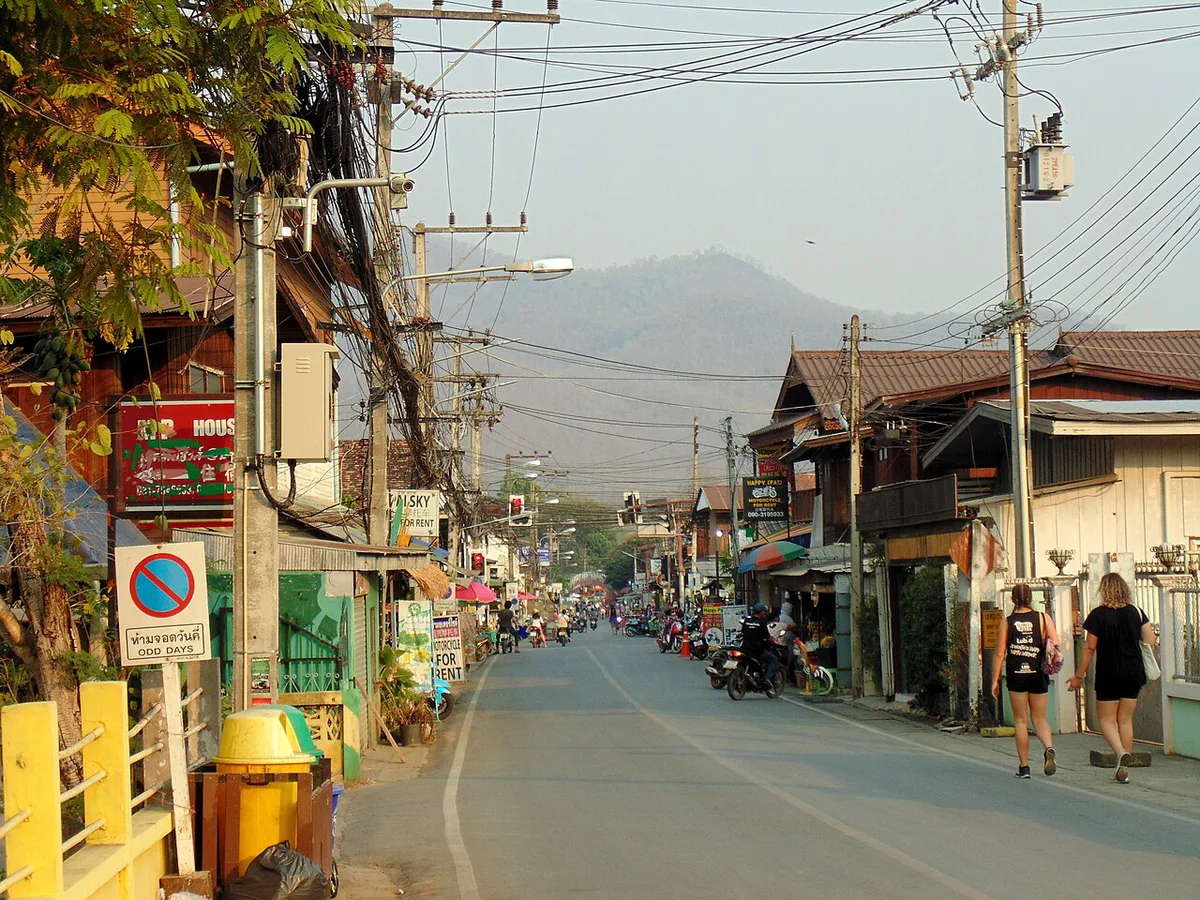
A simple rule works: choose high turnover, cooked-to-order food served hot. Locals queueing at a plain stall beat a long laminated menu with photos. Authenticity tends to rise as you walk away from Chaisongkram Road, while convenience and variety fall. For the night-time scene, the night market page explains how it differs from the Walking Street.
- Mistake: eating only on the Walking Street and calling it local.
- Mistake: arriving at breakfast stalls after 9am.
- Mistake: choosing food that has sat out uncovered.
- Mistake: assuming a stall has a bathroom, since some have none.
- Mistake: ordering Thai-level spice on day one.
Dietary Needs, Spice Levels and Allergies
Vegetarian options exist, but stalls often use fish sauce, oyster sauce or shrimp paste. Say clearly that you eat no meat, fish sauce or shrimp, and expect some cross-contact. Nam tok noodles contain pig's blood. Gluten, halal and nut allergies are hard to guarantee at a cart with shared woks, so a restaurant with a printed menu is safer. For spice, ask for mild first and add chilli from the condiment jars. Drink bottled water and be careful with ice from unknown sources.
Sample Plans: One Evening, Two Days, Passing Through
Match the plan to your stay. Each one covers a breakfast stop and an evening stop.
- One evening: snack on skewers along Chaisongkram Road, then finish with a sweet snack.
- Two days, day one: congee and patongo at sunrise, noodles at lunch, Walking Street at night.
- Two days, day two: morning market, a khao soi bowl at midday, a cart snack on Rangsiyanon Road.
- Passing through: one breakfast stall in the morning and one pad kra pao lunch.
When to Go: Season, Weather and Timing
Rain can thin evening crowds and shorten the Walking Street's stall run, while cooler dry evenings tend to draw bigger crowds. Hours vary by stall and season, so ask locally about opening times. Breakfast stalls are the one reliably early habit: they run at sunrise and finish by mid-morning.
Getting to Pai and Around Town
Pai is about 130 km northwest of Chiang Mai on the Mae Hong Son loop. Vans leave from Chang Phueak Bus Terminal. Once in town, everything in this guide is walkable.
About 130 km northwest of Chiang Mai, the passing-through plan covers only one breakfast stall and one pad kra pao lunch.
Thai food notes for your next trip
Optional updates to our food guides.
You might also like
Continue reading
More guides you'll find useful