Thai Street Food Prices: What Dishes Really Cost (2026 Guide)
What Thai street food costs in baht: dish-by-dish ranges, daily food budgets, regional differences, and how to avoid tourist-strip markups.
On this page
Last updated November 2026. Thai street food prices at local stalls start near ฿10 for a pork skewer, and most single plates cost about ฿40–100. Tourist strips add a clear markup, so the same pad thai can cost ฿50 on a side soi and ฿120 or more on a main drag. Use this page to price each dish and plan a daily food budget, then read our full Thai street food guide for what to eat.
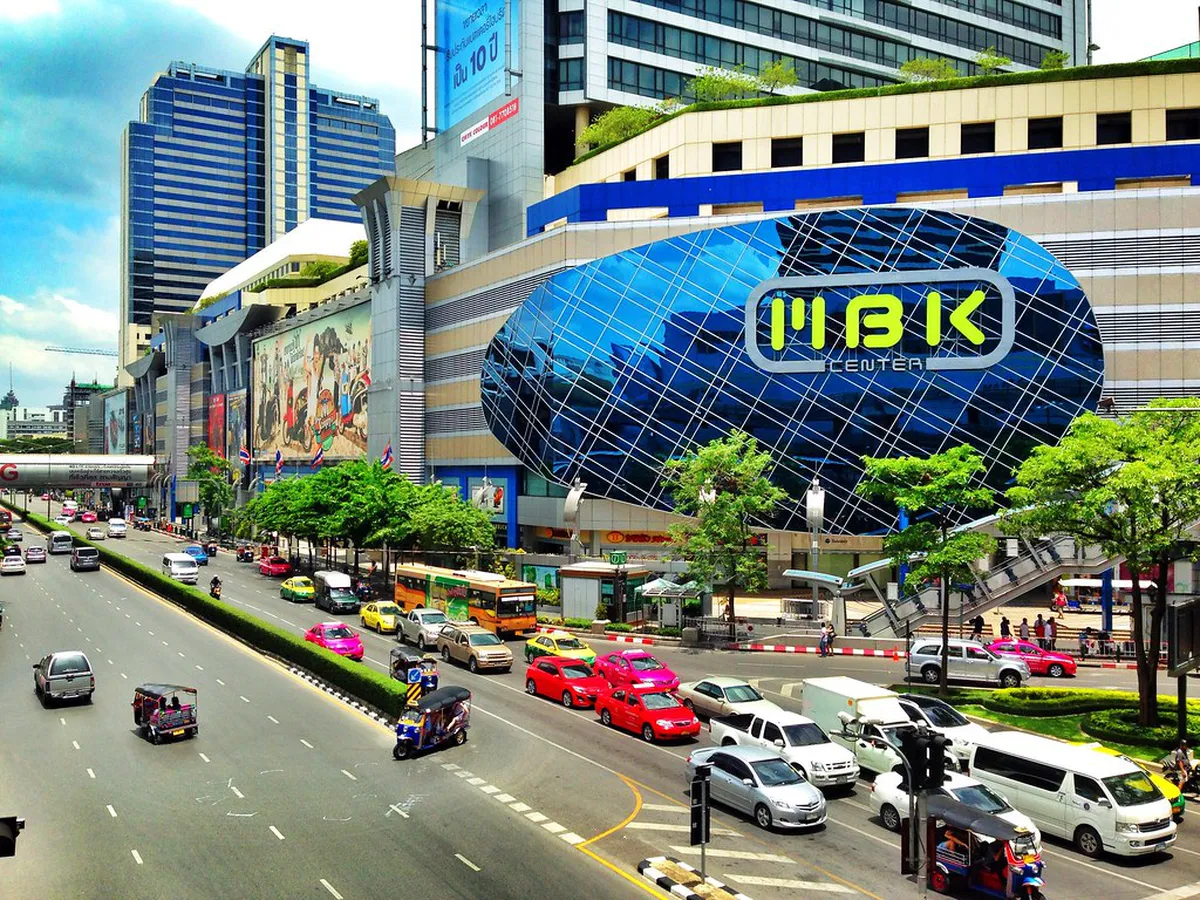
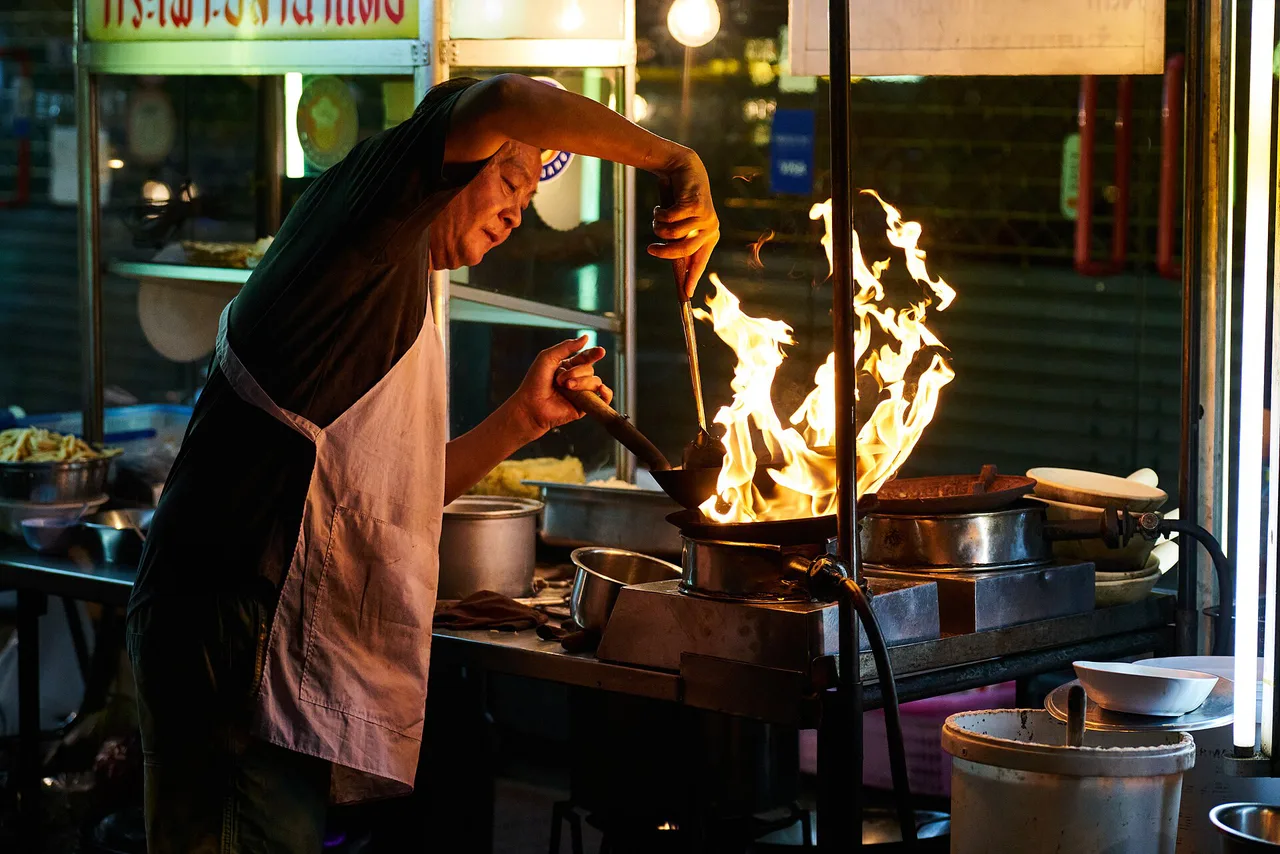
Featured image: PumpkinSky, CC BY-SA 4.0, via Wikimedia Commons.
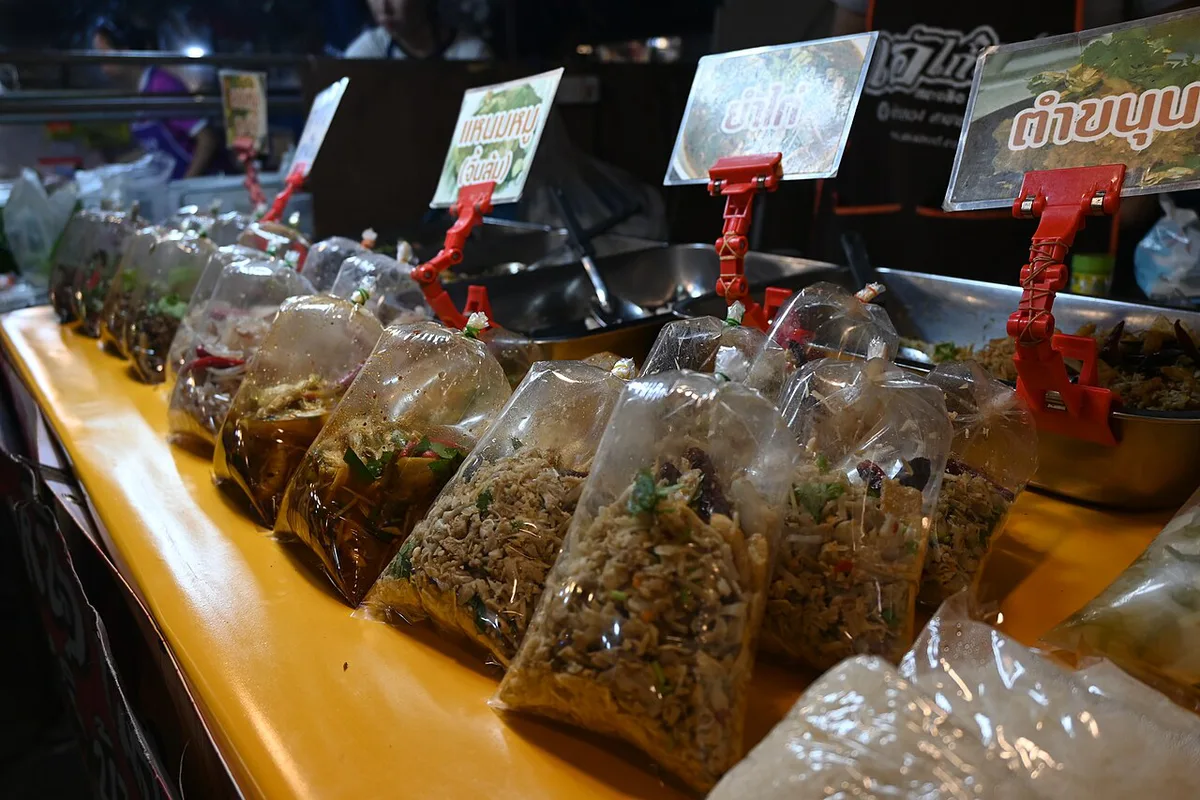
Quick answer: Thai street food prices in baht
Most plates at local stalls cost ฿40–100. Skewers such as moo ping run ฿10–25 each. Soups and curries built around prawns climb to ฿100–350. On tourist strips such as Khao San Road, pad thai can reach ฿100–150. A few minutes away, the same dish costs about ฿50. If you eat mostly street meals, plan on roughly ฿400–600 per person per day for food. Prices rose after 2019 and vary by vendor, area and season, so treat every range here as a planning guide rather than a menu.
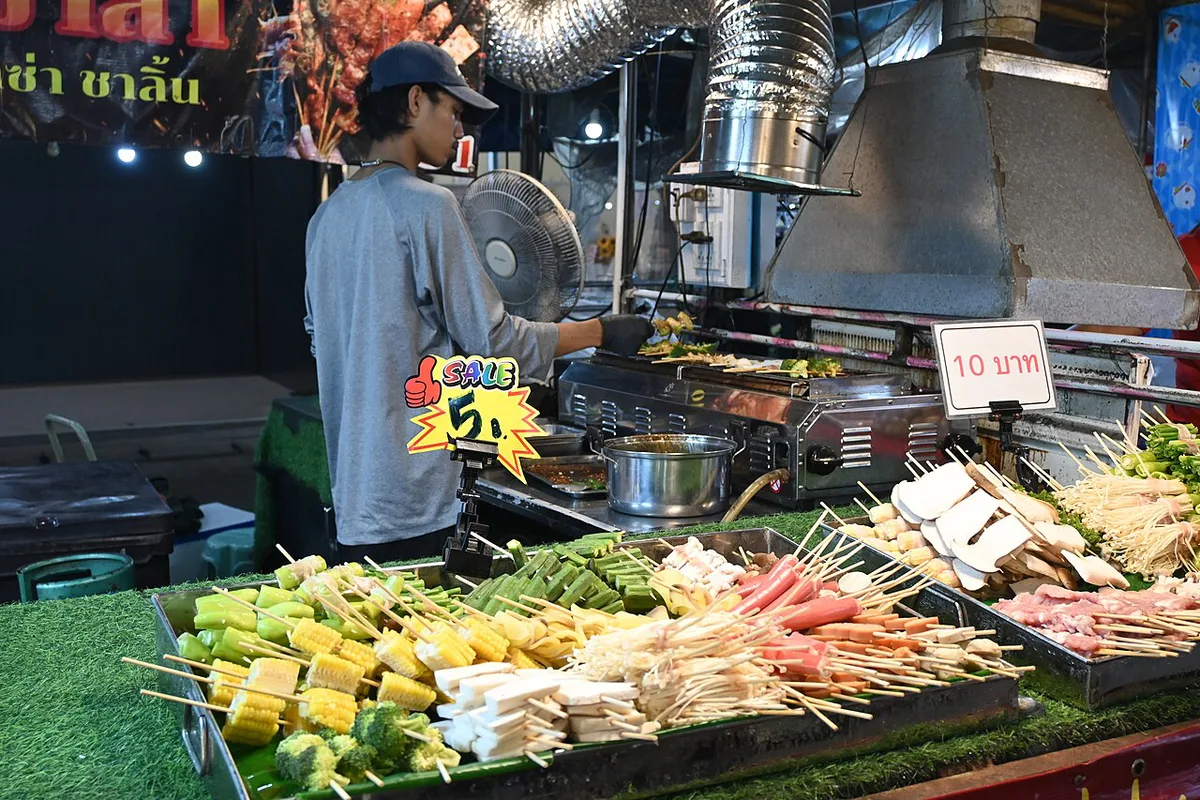
- Skewers and snacks: ฿10–50
- Noodle bowls and rice plates: ฿40–100 at local stalls
- Prawn dishes and curries: ฿100–350
- Tourist-strip premium: pad thai at ฿120 or more versus about ฿50 at a local stall
What a typical dish costs
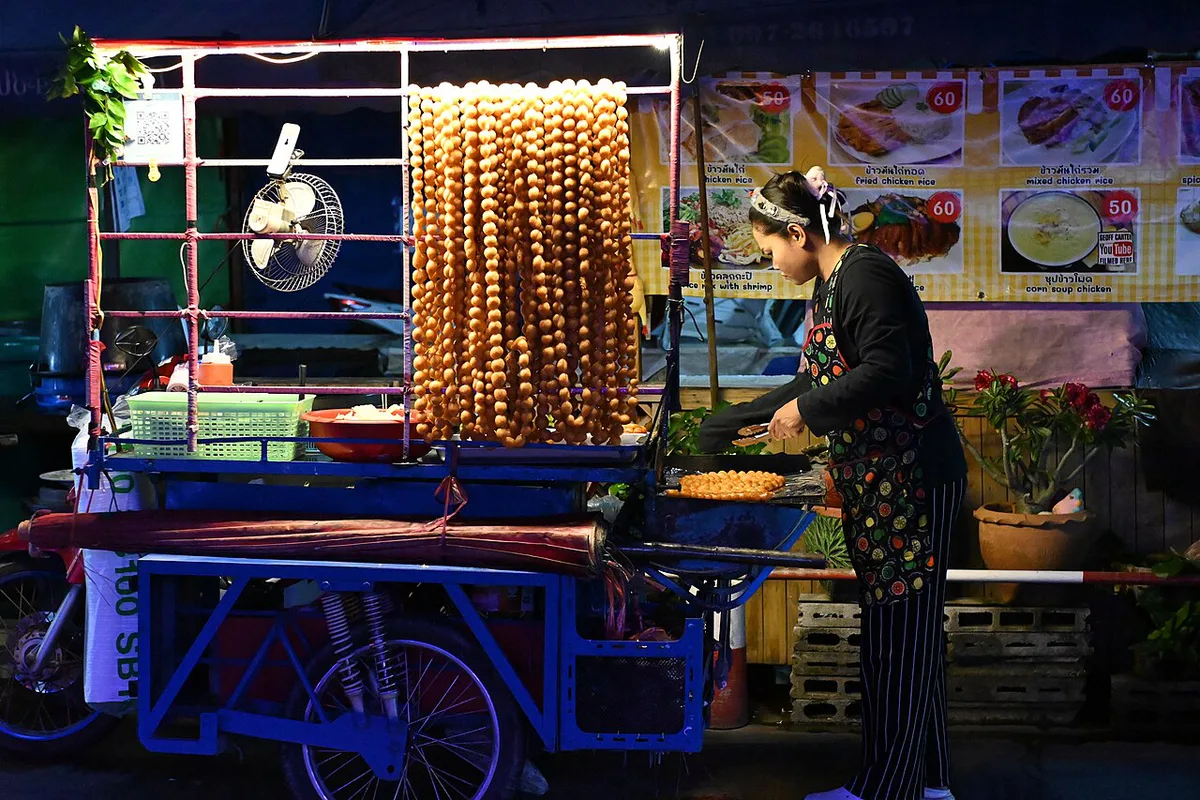
Prices checked November 2026. Every range below is baht per serving. Pad thai spans ฿50–140, and the top of that range sits in tourist zones. Khao soi, the Chiang Mai curry noodle, runs ฿60–140. Our guide to what each dish tastes like helps you pick before you price. Where the table gives no tourist-zone figure, expect the upper end of the local range or above.
| Dish | Local-stall range | Tourist-zone range | What pushes the price up |
|---|---|---|---|
| Pad thai | ฿50–140 | ฿120+ | Prawns, extra egg, tourist strip |
| Khao soi | ฿60–140 | Upper end of range | Bigger portion, added meat |
| Tom yum goong | ฿100–350 | Upper end of range | Large prawns, sit-down setting |
| Khao man gai | ฿50–100 | Upper end of range | Extra chicken, soup add-on |
| Som tum | ฿40–100 | Upper end of range | Seafood or extra toppings |
| Pad kra pao | ฿60–180 | Upper end of range | Egg on top, seafood instead of pork |
| Moo ping (pork skewer) | ฿10–25 each | Upper end of range | Buying in sets of three or four |
| Khanom krok | ฿30–50 | Upper end of range | Larger set, special fillings |
| Mango sticky rice | ฿60–180 | Upper end of range | Off-season mangoes, tourist-area stall |
Why the same dish costs ฿50 in one place and ฿150 in another
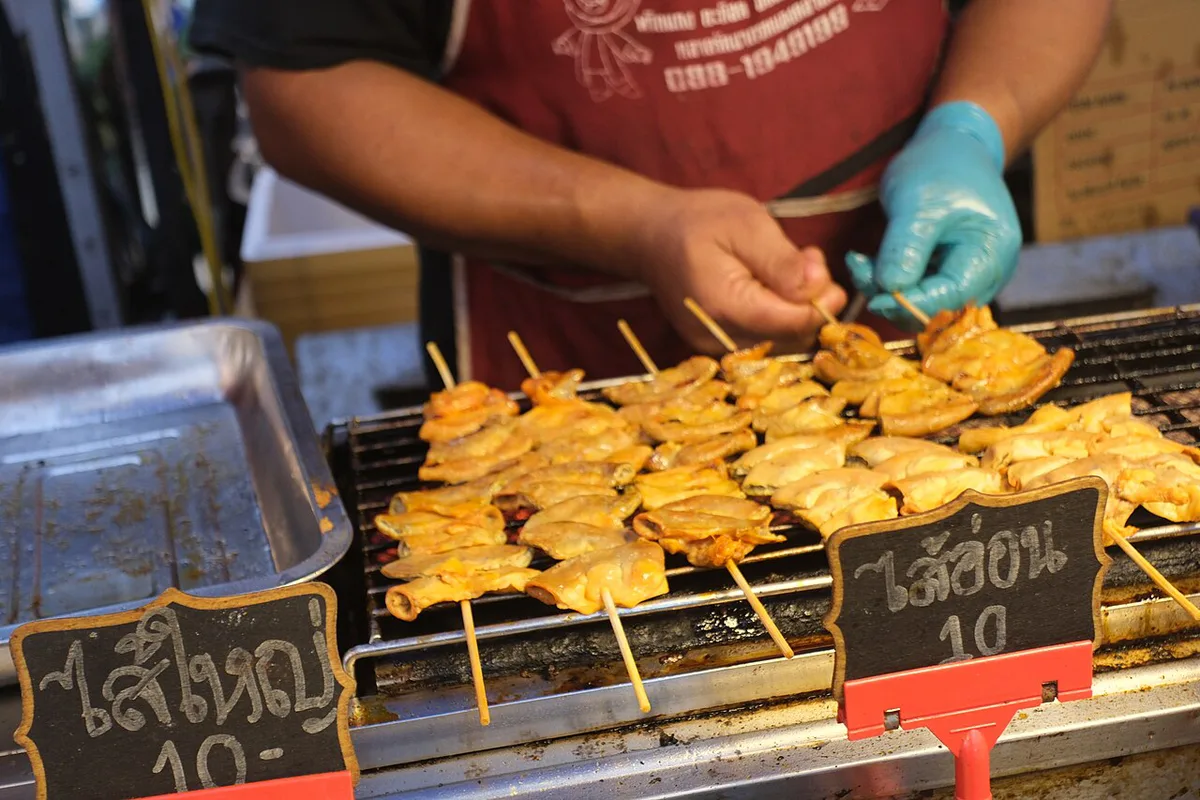
Location sets the baseline. A cart on a side soi pays less rent than a stall facing a backpacker strip. Protein and size come next. A plain pad kra pao sits near the ฿60 end, while seafood and an added egg push it toward ฿180. Time of day matters too, since lunch rushes at local stalls keep prices steady and late-night tourist zones do not. Sit-down service adds a margin that a standing cart skips. Three or four moo ping skewers cost ฿30–100 depending on where you buy them.
- Mistake: ordering pad thai on a tourist strip such as Khao San Road, where ฿100–150 is common.
- Mistake: ordering seafood with no weight or price agreed.
- Mistake: assuming two menus are comparable when one lists English-only prices.
Daily food budgets by travel style
Budgets depend on how many meals come from stalls and whether drinks are included. A backpacker eating street meals at every stop can plan on ฿400–600 per person per day. Mid-range travelers who mix a street breakfast with sit-down lunch and dinner should plan on ฿800–1,500. Rescale the figures by your own meal count. Three street meals at ฿50–60 each cover only ฿150–180, so snacks, fruit shakes and desserts drive the rest. Drinks move the total more than most travelers expect.
| Style | Food per person per day | Assumptions |
|---|---|---|
| Backpacker | ฿400–600 | Street meals at every stop, snacks and fruit shakes, no classes or tours |
| Mid-range | ฿800–1,500 | Street breakfast, sit-down lunch and dinner, some night market grazing |
Prices by city and region
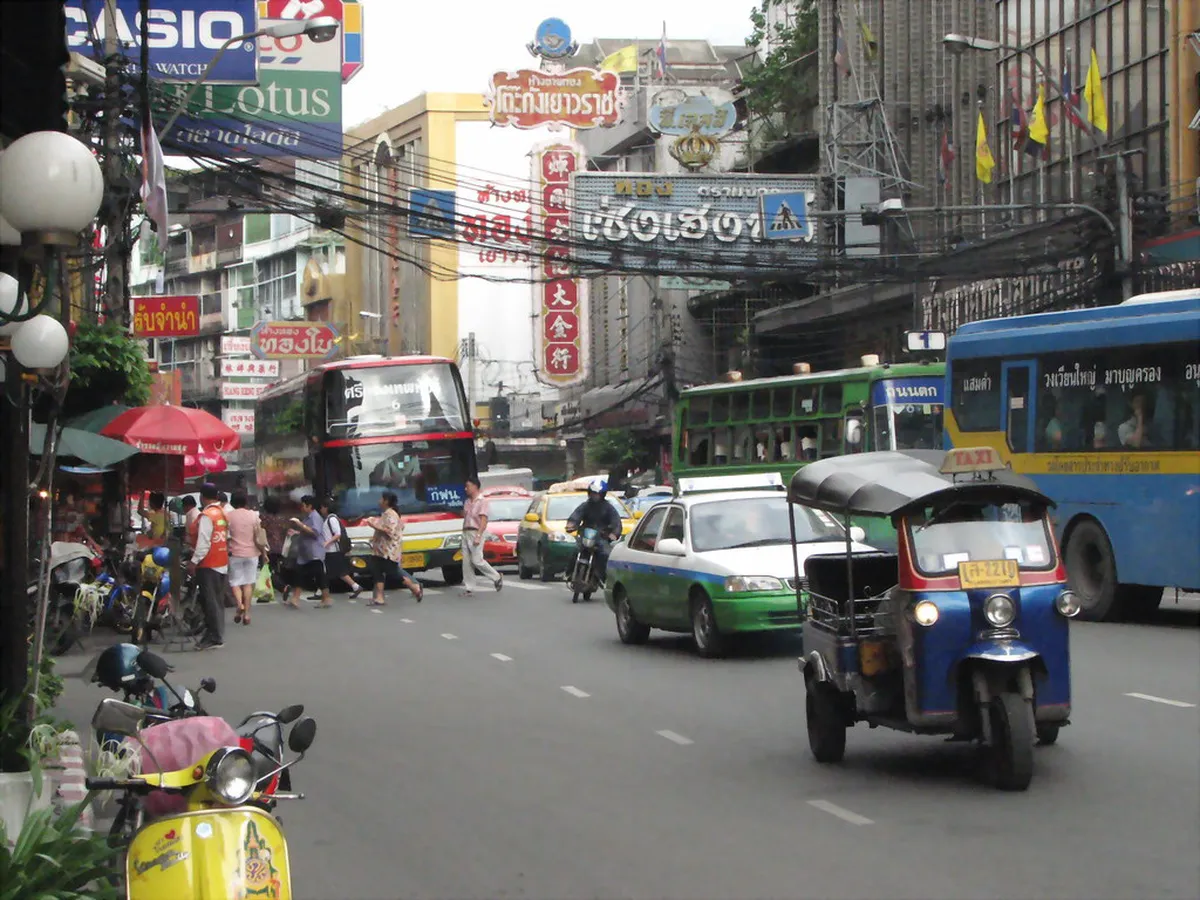
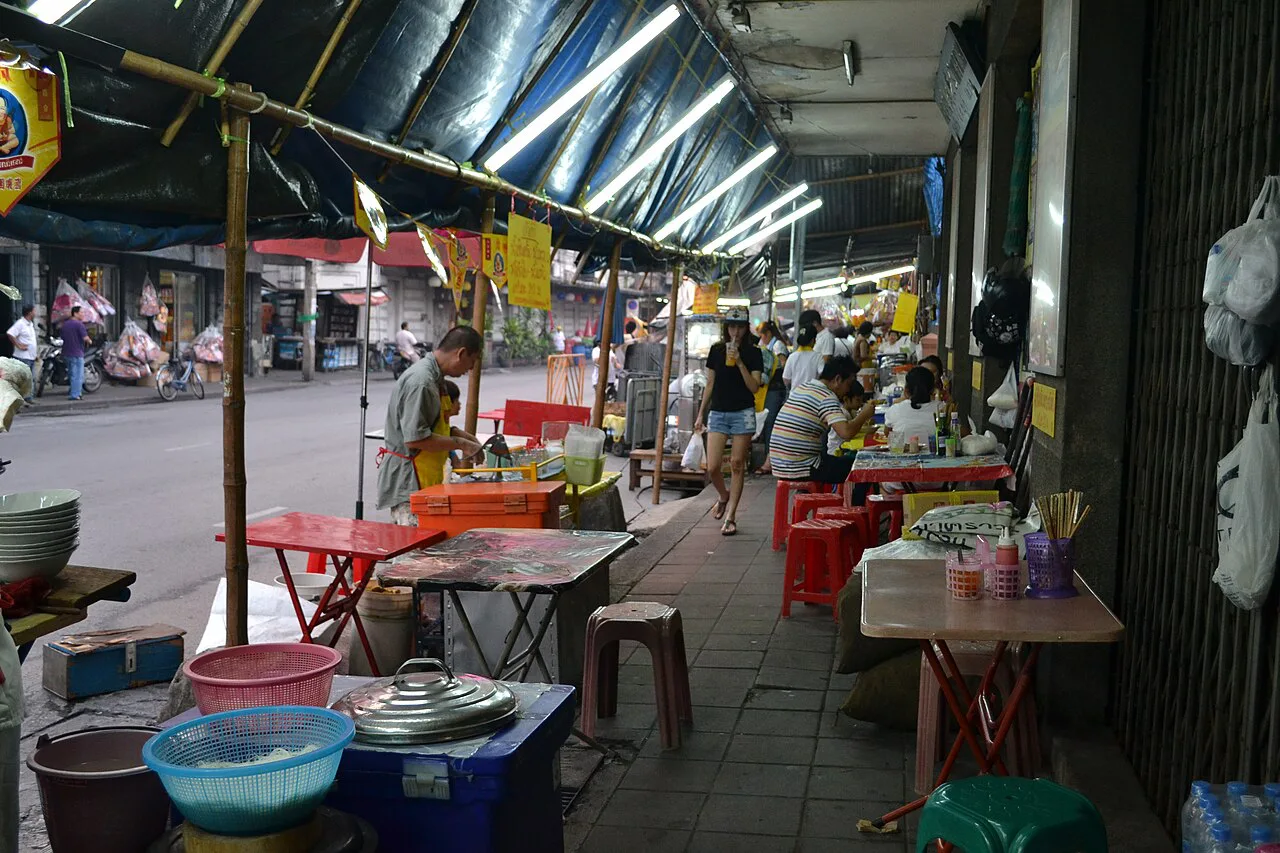
Bangkok has the widest spread. Yaowarat (Chinatown) and Chatuchak Weekend Market sit alongside tourist strips where pad thai hits ฿100–150. Chiang Mai is the home of khao soi at ฿60–140, and its local-market prices tend to sit below Bangkok's tourist zones. Phuket's Old Town stalls and the islands lean higher on seafood and beach-facing meals. Exact gaps shift by vendor, so compare two or three stalls before committing. The Tourism Authority of Thailand lists regional destinations and events if you are planning around a specific market.
Night markets, food courts and 7-Eleven
Hours shape both price and choice. Morning markets typically run 5–10am and suit rice dishes and breakfast snacks. Lunch stalls peak around 11am–2pm and often sell out. Night markets start around 6–7pm and run to midnight or later. Our guide to snack stalls and sweets covers what to grab at each. Food courts trade a small premium for air conditioning and fixed prices. A 7-Eleven gives you a fixed-price benchmark and a fallback when stalls are closed, and our look at convenience-store meals shows what to buy.
Night markets start around 6–7pm and run to midnight or later. Late-night tourist zones do not hold prices steady, unlike lunch rushes at local stalls.
| Option | Price | Speed | Best for |
|---|---|---|---|
| Street stall or cart | Lowest | Fast, queue signals quality | Budget travelers and noodle or skewer meals |
| Food court | Mid | Fast, fixed prices | Hot afternoons, first-timers |
| Sit-down restaurant | Highest | Slower | Groups, long meals, seafood |
Ordering, paying and avoiding overcharging
Ask the price before the cook starts. "Tao rai?" means "how much?" Carry ฿20 and ฿50 notes, since small change is easier for a cart vendor. Many stalls show a QR code, but acceptance is not universal, so keep cash ready. Walk on if there is no posted price and the vendor will not quote one. Weigh seafood and agree the total first. If the bill differs from the quote, point to the agreed amount calmly and pay that. Tipping is not expected at street stalls. Our step-by-step ordering guide covers the full routine.
Should you pay for a food tour or class?
A tour makes sense on a first visit if you want context and several tastings in one evening. A class suits travelers who want to cook at home. Skip both if you are happy to point at stalls and ask prices, because the street itself costs little. If you want to sample a Bib Gourmand vendor, the MICHELIN Guide Thailand lists the current selection.
Frequently Asked Questions
What is a popular Thai street food?
Pad thai, moo ping, khao man gai and som tum are everyday staples. Pad thai runs ฿50–140, and moo ping costs ฿10–25 per skewer.
What are the top Thai dishes to try?
Start with pad thai, khao soi, pad kra pao and mango sticky rice. Our dish-by-dish guide explains each one and what to expect.
Thai food notes for your next trip
Optional updates to our food guides.
You might also like
Continue reading
More guides you'll find useful