Types of Thai Curry: Green, Red, Massaman and More
Compare Thai curry types by heat, richness and flavor, with a quick picker for what to order or cook. Green, red, yellow, massaman, panang and more.
On this page
Last updated November 2026: the main types of Thai curry are green, red, yellow, massaman and panang, and each starts from a different paste. Green is fresh and herbal, red is a balanced middle, yellow is gentler, massaman is warm-spiced and nutty, and panang is thick and creamy. Start with massaman or panang for mild and creamy, red for a classic middle ground, and green for fresh heat.
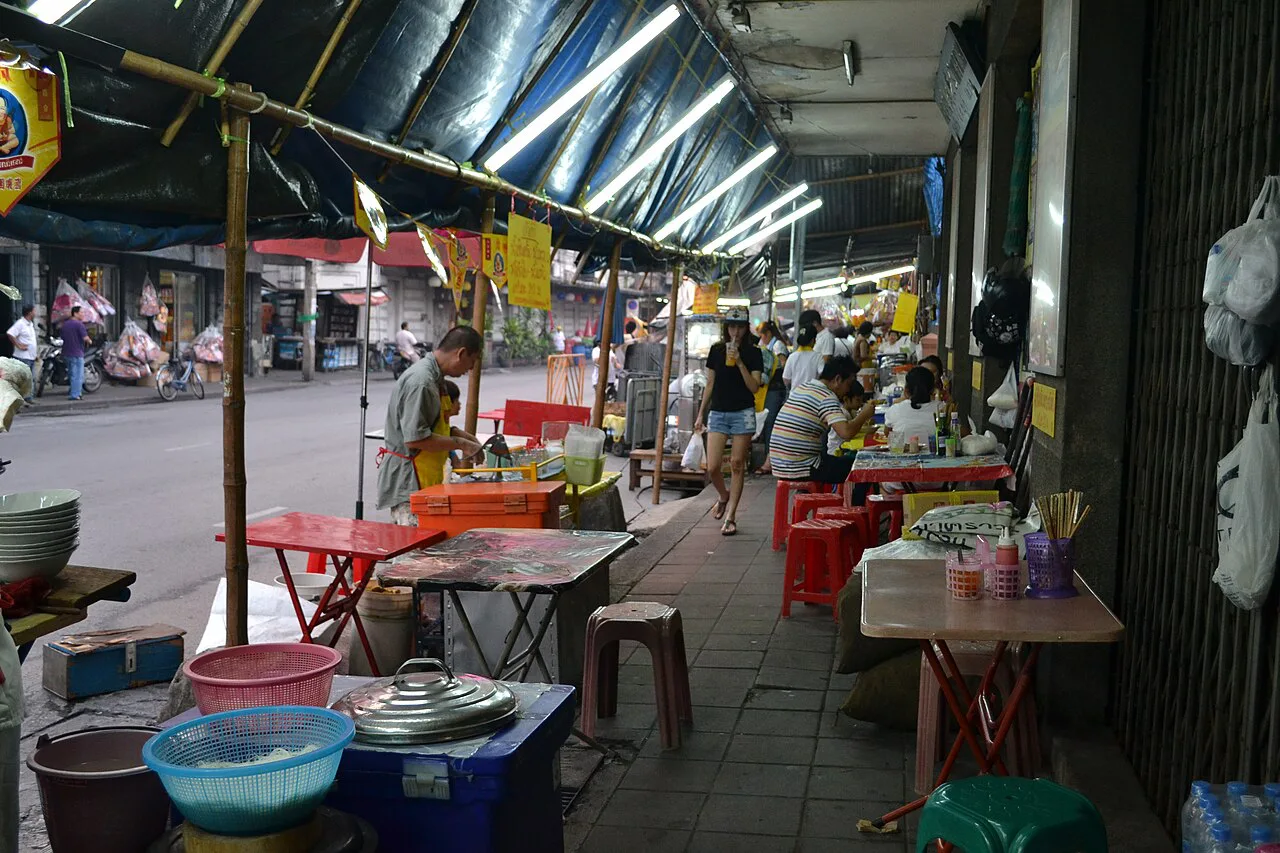
Featured image: Vee Satayamas, CC BY 4.0, via Wikimedia Commons.
Types of Thai curry at a glance
Use these quick-pick lines for a fast answer, then read the profiles for detail. For wider context, browse our wider Thai food guide.
- Want mild and sweet? Order massaman or panang.
- Want a safe middle? Order red curry.
- Want fresh, herbal heat? Order green curry.
- Want gentle and turmeric-warm? Order yellow curry.
- Want fiery and coconut-free? Look for jungle curry.
What makes a Thai curry a curry
Thai curry is a pounded paste plus a liquid, not a spoonful of curry powder. In Thai, the word is kaeng, also spelled gaeng. Other spellings vary too: massaman or masaman, panang or penang. This guide sticks to kaeng, massaman and panang. Pastes usually combine chilies, garlic, shallots, lemongrass, galangal, coriander and shrimp paste. Turmeric, cumin or pepper join certain colors. Cooks pound everything in a mortar and pestle, then fry the paste so the aromas open up. Coconut milk or water goes in next, followed by meat, seafood, vegetables and herbs. Fish sauce adds salt, palm sugar adds sweetness, and lime or tamarind adds sour notes. Dried spices do appear: massaman leans on cinnamon and cardamom, so "fresh ingredients only" is not a rule.
Thai curry types compared
Labels below are general ranges, not rules. Heat shifts with the cook and with your request.
| Curry | Heat | Richness | Flavor | Common protein | Vegan swap |
|---|---|---|---|---|---|
| Green (kaeng khiao wan) | Medium to hot | Medium | Fresh, herbal, slightly sweet | Chicken, shrimp | Tofu; check paste |
| Red (kaeng phet) | Medium | Medium to rich | Bold, savory, balanced | Chicken, beef, pork, shrimp | Tofu; check paste |
| Yellow (kaeng kari) | Mild to medium | Creamy | Turmeric-warm, gently spiced | Chicken | Tofu, vegetables |
| Massaman | Mild | Rich | Warm-spiced, nutty, sweet-savory | Beef, lamb, chicken | Tofu, potato; contains peanuts |
| Panang | Mild to medium | Very rich, thick | Sweet, creamy, peanut | Beef, chicken | Tofu; contains peanuts |
| Jungle | Hot | Light, no coconut milk | Salty, peppery, herbal | Varies by cook | Paste needs checking |
| Sour orange | Varies by cook | Light, boiled | Sour, savory | Varies by cook | Swap the shrimp paste |
The main Thai curries, one by one
Each profile follows the same order: paste base, heat, richness, signature ingredients and best use.
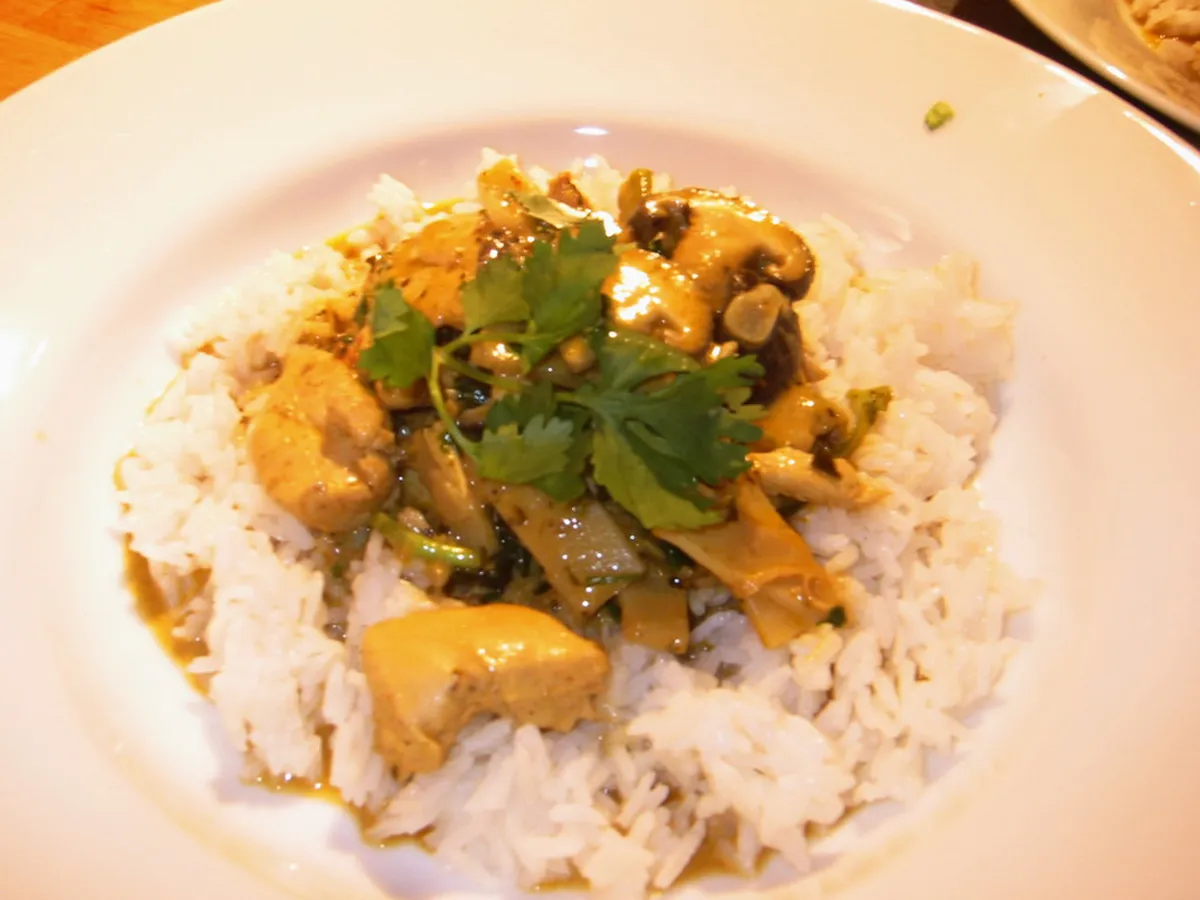
- Green curry (kaeng khiao wan): Made with fresh green chilies, Thai basil and kaffir lime. Heat sits at medium to hot. Thai eggplant and bamboo shoots are common. Best for fresh, aromatic flavor with a kick.
- Red curry (kaeng phet): Dried red chilies give the color and warmth. Heat is usually medium, and richness is balanced. Bell pepper, bamboo shoots and basil are typical. Best as an all-purpose order with almost any protein.
- Yellow curry (kaeng kari): Chilies plus turmeric, sometimes with curry-powder-style spices. Heat runs from gentle to fairly spicy, depending on the cook. Chicken and mixed vegetables are the usual pairing. Best for a warm, easy-going bowl.
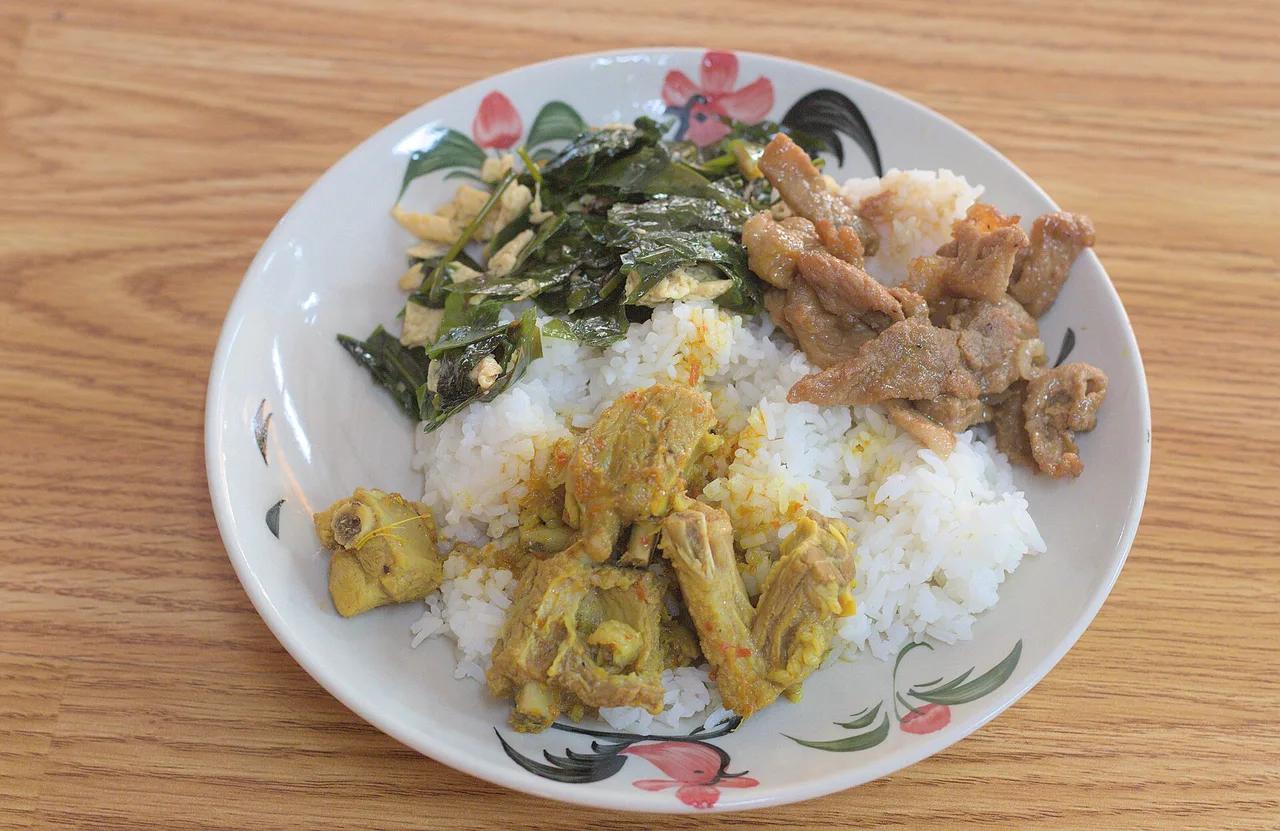
- Massaman: The paste uses dried spices such as cinnamon, cardamom, cloves and star anise. Potato and peanuts are standard. Heat is mild, richness is high, and slow simmering suits beef or lamb. Best for sweet-savory comfort.
- Panang: Thick, creamy and slightly sweet, with a hint of peanut. Heat is mild to medium. The sauce clings to beef or chicken instead of pooling like soup. Best for a concentrated, rich plate.
Other Thai curries worth knowing
Menus in Thailand run well past the big five. Jungle curry is often traced to Phetchaburi. It skips coconut milk, so it eats salty, peppery and very hot. Cooks garnish it with fresh green peppercorns and holy basil. Sour orange curry is boiled, not creamy. Its simple paste of chilies, shallots, garlic, salt and shrimp paste gets sourness from tamarind. Because it eats like a soup, pair it with ideas from our sour Thai soups. Choo chee is a drier red-curry variation with less sauce. Hor mok also builds on red curry paste. Some yellow variants run spicier or sourer, so ask the cook what is in the pot.
How Thai curries differ by region
Southern curries lean on coconut milk, which softens the chili heat. Massaman is a southern favorite, with potato and peanuts. Jungle curry breaks the pattern by leaving coconut out. Rice changes by region too, as the list shows.
- North: sticky rice is the usual partner. Look for kaeng hang le on regional menus.
- Central: jasmine rice is the usual partner, and red and green curries are widely served.
- South: jasmine rice, rich coconut-based curries and massaman. Look for kaeng som, the sour curry.
How to choose by heat, richness and diet
Choose by heat first, then richness, then diet. Spiciness changes by cook, so treat any label as a starting point. First-timers do well with massaman or panang. Browse gentler Thai dishes for more low-heat ideas.
- Mild and sweet: massaman.
- Mild and thick: panang.
- Medium and balanced: red curry.
- Fresh and hot: green curry.
- Light and sour: sour orange curry.
- Vegan: any coconut curry, with the paste checked first.
Ordering and eating curry in Thailand
Curries show up at street stalls, rice-and-curry shops and sit-down restaurants. Stalls often display their pots, so you can simply point. Most vendors buy paste from market sellers instead of pounding their own. Ask for less heat by saying you want it mild, then taste before adding table chilies. "Mild" varies by cook. Curry normally arrives with rice, and many rice-based Thai meals follow the same pattern. Central and southern tables favor jasmine rice, while northern tables favor sticky rice. Some places serve roti on the side for dipping. Fish curries simmer fillets in red, green or yellow sauce. Compare them with seafood-forward Thai plates.
Vegan, vegetarian and allergen notes
Coconut milk makes most Thai curries a natural fit for plant-based eating. Hidden animal ingredients sit in the paste and seasoning. Shrimp paste and fish sauce are the two to ask about. Fermented soybean paste or vegan gapi can replace shrimp paste. Tofu and vegetables replace the meat. Read jar labels for shrimp paste, since some pastes also carry gluten or allergen traces. Massaman and panang often include peanuts, so flag a peanut allergy before ordering. Shellfish allergies call for the same care with shrimp paste. More ideas sit in our vegetarian Thai options.
Cooking basics and common curry mistakes
Home cooks can use jarred paste, and plenty of vendors in Thailand do the same. Fry the paste briefly in oil or thick coconut cream before adding liquid. Add fish sauce in small steps. Balance with palm sugar and tamarind or lime. Fresh galangal and lemongrass are hard to find outside tropical regions, so try Asian grocers. Avoid these common mistakes.
- Treating Thai curry as curry powder.
- Burning the paste, which leaves bitterness no coconut milk can fix.
- Fixing a "too salty" curry with more salt instead of sour and sweet balance.
- Expecting every curry to be fiery.
- Confusing Thai curry with Japanese roux-based curry.
- Ordering red curry and expecting massaman sweetness.
- Ordering panang and expecting a soupy sauce.
Frequently Asked Questions
What is the difference between red curry and panang curry?
Panang is thicker, sweeter and creamier, often with a hint of peanut. Red curry is more savory, with a thinner sauce and medium heat. Some cooks treat panang as a red-curry type.
Which Thai curry is better, red or green?
Neither wins outright. Red suits a balanced, savory bowl. Green suits fresh, herbal flavor and often runs hotter.
What is Thai curry called?
In Thai, curry is kaeng, also spelled gaeng. Names pair it with the paste, such as kaeng khiao wan for green curry and kaeng phet for red.
Thai food notes for your next trip
Optional updates to our food guides.
You might also like


Continue reading
More guides you'll find useful