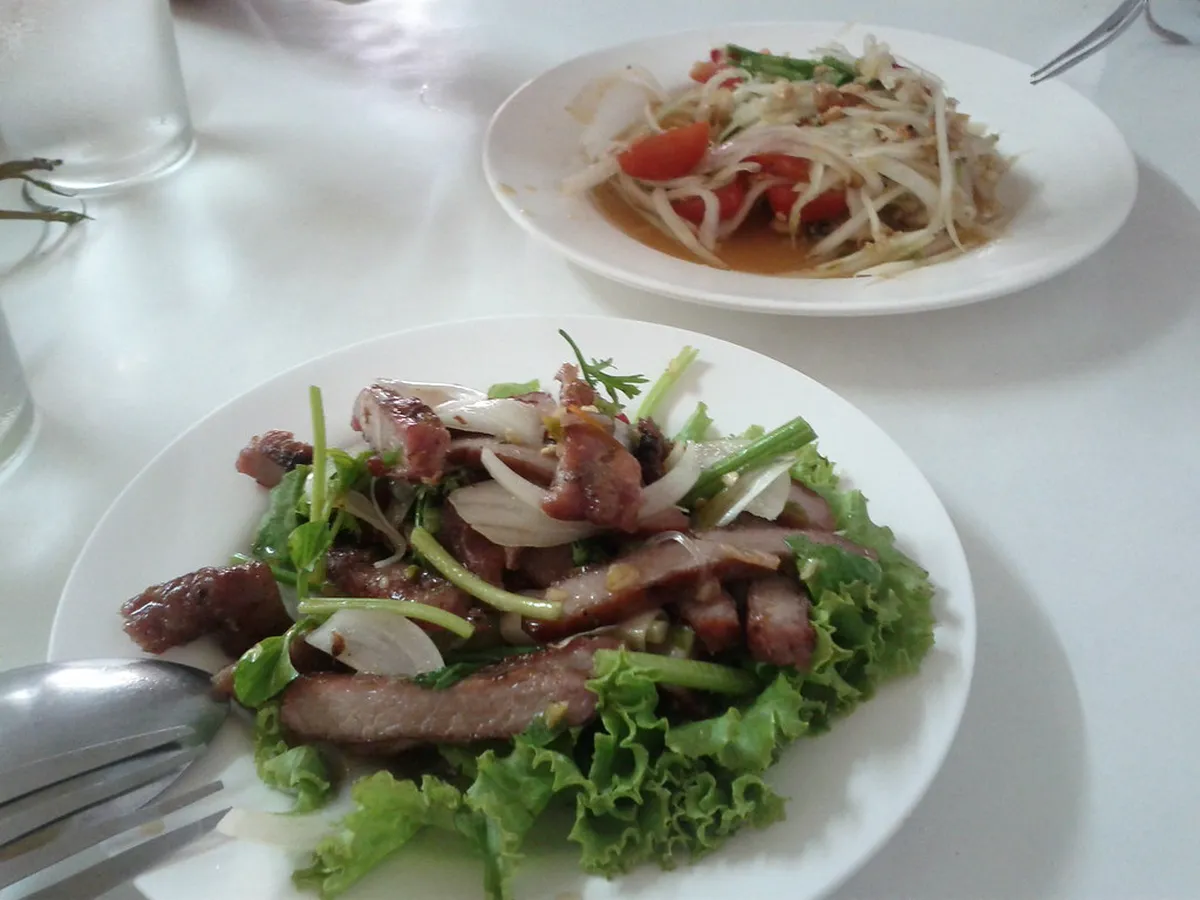
Kor Moo Yang: Thai Grilled Pork Neck, How To Order It
What kor moo yang is, how it differs from moo ping, and how to order Thai grilled pork neck with sticky rice and dipping sauce.
On this page
Last updated November 2026. Kor moo yang (คอหมูย่าง) is grilled pork neck, sliced into thick, juicy pieces with a chewy bite and a fatty edge. This guide explains the name, how it differs from other Thai grilled pork, and how to order it with sticky rice and a spicy dipping sauce.
Featured image: autonome, CC BY 2.0, via Flickr.
What Is Kor Moo Yang?
Kor moo yang is grilled pork neck. In Thai, kor (คอ) means neck, moo (หมู) means pork and yang (ย่าง) means grilled. Marbling gives it a richer, chewier texture than lean cuts. It sits comfortably in the Isan food tradition of the northeast, where grilled meats are eaten with sticky rice and a sharp dip.
Romanization varies from menu to menu. You may see kho moo yang, kaw moo yang or simply "grilled pork neck." English menus sometimes say "pork collar" or "pork jowl" for the same dish. Jowl is a different part of the animal, so point to the Thai name if you want to be sure. For the wider picture of grilled Thai street food, start with our Thai barbecue guide.
Kor Moo Yang vs. Moo Ping, Moo Kata And Other Thai Grilled Pork
Thai grilled pork comes in several formats, and the names get mixed up. Kor moo yang is a thick-cut neck steak, grilled and sliced. Small marinated pieces on bamboo sticks are a different dish, covered in our guide to Thai pork skewers. Grill-it-yourself tables are another thing again, explained in our page on mookata hotplate dining. Use the table below to choose.
| Dish | Cut and shape | Style | Best when |
|---|---|---|---|
| Kor moo yang | Pork neck, grilled whole, then sliced | Plated with sticky rice and a spicy dip | You want a sit-down plate with plenty of chew and fat |
| Moo ping | Small pork pieces threaded on skewers | Sweeter, soy-leaning marinade, eaten by hand | You want a quick snack or breakfast on the move |
| Moo yang (general term) | Any grilled pork | Varies by cook and region | You are reading a menu and need to ask which cut it is |
| Moo kata | Sliced pork cooked on a table grill | Cook it yourself with broth and dips | You are with a group and want a long meal |
How To Order Kor Moo Yang And What To Eat It With
At a stall or restaurant, say "kor moo yang" and point at the meat if it is on display. A single plate usually arrives sliced, ready to eat with your fingers or a spoon and fork.
Typical accompaniments follow a pattern. Order sticky rice (khao niao) to roll into small balls. Ask for the dipping sauce, jaew (nam jim jaeo), which is usually a spicy-sour mix of chili, lime and fish sauce, often with toasted rice powder. Raw vegetables or fresh herbs on the side cut through the fat. Not every vendor serves all three, so ask what comes with the plate.
If you cannot take heat, say "mai phet" (not spicy) when ordering. Jaew can still be fiery, so taste a small dab first. Dip each slice lightly rather than drowning it.
- Sticky rice (khao niao): the standard starch for grilled neck.
- Jaew dip: spicy, sour and salty, and meant to balance the richness.
- Raw vegetables or herbs: a fresh counterpoint between bites.
- Clear soup or a cold drink: common ways to cool the heat.
What Makes A Good Plate
Quality shows in the cut and the fire. Good kor moo yang has visible marbling, with fat that has rendered and crisped at the edges. Slices should be thick and juicy rather than dry or stringy. Light char adds flavor, while blackened patches taste bitter.
Serving temperature matters too. Meat should come warm and freshly sliced, not sitting for long. Sauce is the other tell. A good jaew tastes sharp and balanced, and a flat or watery one drags down the plate.
- Good sign: grilled to order, with glistening fat and light char.
- Good sign: sliced thick, not shaved thin.
- Warning: grey, dry slices that look like they have sat for hours.
- Warning: heavy black burn marks or a bitter smell.
- Warning: no dip offered, or a dip that tastes only of sugar.
Where To Find Kor Moo Yang: Street Stalls, Isan Restaurants And BBQ Spots
Look for charcoal grills on the street, market stalls with meat laid out on display, and Isan restaurants that list grilled dishes on the menu. Smoke and a queue of locals are the easiest signs. Mookata and barbecue restaurants may offer pork neck among the raw meats, though you cook it yourself there.
Grilled pork neck often shares a menu or stall with other grilled foods. Common neighbors include grilled chicken, which is milder and more marinade-driven. You may also see grilled Thai sausages, which are tangier and often fermented. Coastal stalls add grilled squid, which is lighter and cooks in minutes. Ordering two or three of these with sticky rice makes a full meal.
Cost, Effort And Dietary Notes
Prices vary by city and venue, so no single baht figure applies. As a rough guide, a street-stall plate is the cheapest and fastest option. A sit-down Isan restaurant costs more and adds seating and a wider menu. Grill-it-yourself places cost the most per person, but they suit groups. Check the menu board for the current price before you order.
Kor moo yang is pork, so it is not suitable if you avoid pork for religious, ethical or health reasons. No substitute exists within the dish. It is also rich and fatty, so share a plate if you prefer lighter meals. Jaew often contains fish sauce, which matters if you avoid fish products. Pork should arrive hot and fully cooked, so send back anything pink or lukewarm.
Ordering Tips For Your First Plate
Start with one plate and sticky rice, then add sides only after you have tasted the jaew. Share between two people to try more dishes. Learn three phrases: "kor moo yang," "khao niao" for sticky rice and "mai phet" for not spicy. These cover most stalls. If a cook is grilling several cuts, ask which is the neck, since pork shoulder is sometimes grilled and sold in a similar way.
Thai food notes for your next trip
Optional updates to our food guides.
You might also like



Continue reading
More guides you'll find useful