Thai Sausage Guide: Types, Flavors & What to Order
Learn the main styles of Thai sausage, from northern sai oua to Isan sai krok, how they taste, and how to order them in Thailand.
On this page
Last updated November 2026. Thai sausage is a family of regional styles, and the one most travelers chase is sai oua, the herb-packed grilled pork sausage of Northern Thailand. You will meet it at street grills, markets and northern Thai restaurants, alongside the sour, fermented sai krok of the northeast. Looking for a recipe or a shop to buy from? This guide covers what to eat in Thailand, so use a dedicated recipe page for kitchen steps.
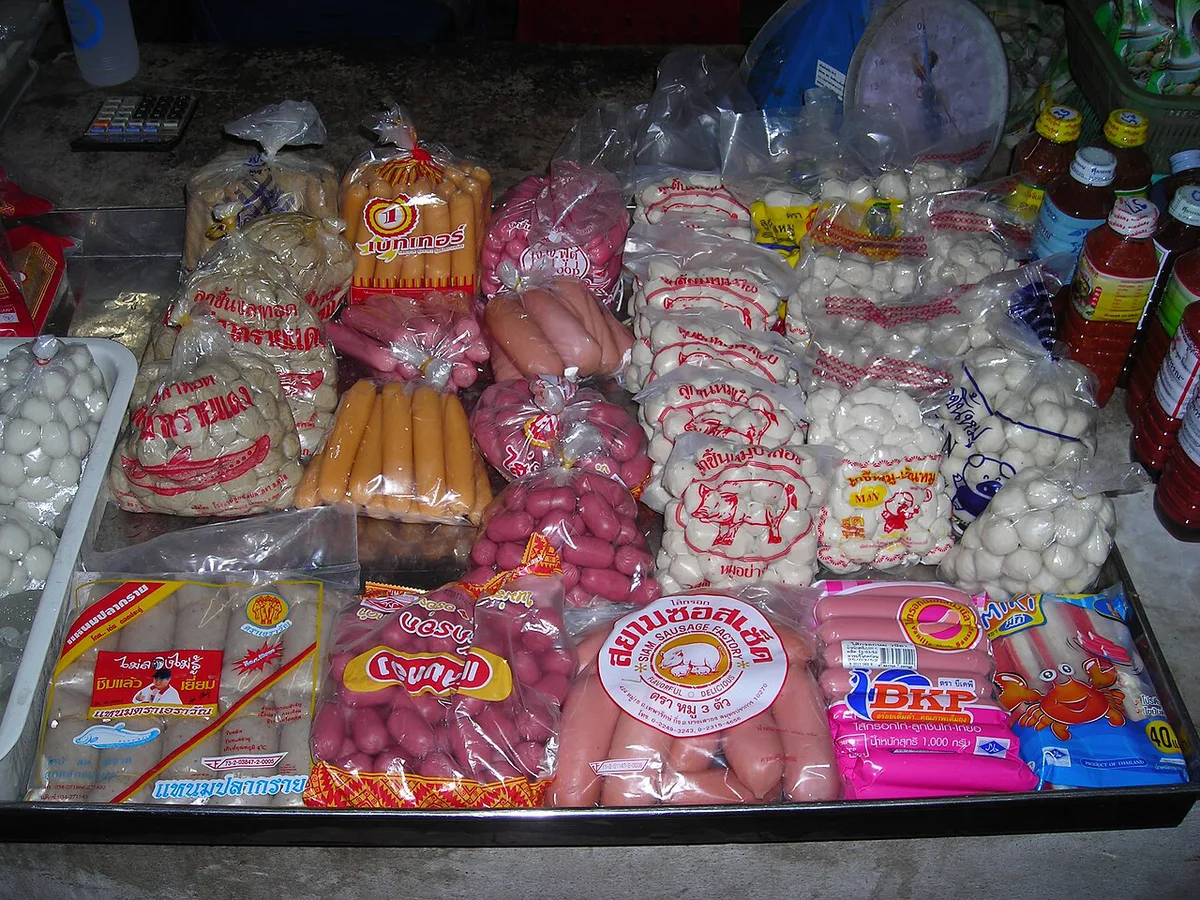
Featured image: Chainwit., CC BY 4.0, via Wikimedia Commons.
What Thai Sausage Is: A Quick Answer
Two styles matter most on a trip. Sai oua comes from the north and tastes of lemongrass, chili, shallot and makrut lime leaf. Sai krok Isan comes from the northeast and leans sour because the pork and rice filling is fermented. Both are grilled over charcoal and sold as part of a wider spread of smoked and barbecued meats. Our Thai BBQ guide maps that wider spread. Pick the sausage first, then build the plate around it.
Thai Sausage Types Compared
Use this table to choose between the two main styles. Flavor notes are general, since each vendor keeps their own recipe.
| Sausage style | Region of origin | Flavor and texture | Typical serving | Best for |
|---|---|---|---|---|
| Sai oua | Northern Thailand, associated with Chiang Mai | Herbal, spicy and coarse-textured, with lemongrass and makrut lime leaf | Grilled, sliced into pieces, with herbs, lettuce and a dipping sauce | Heat seekers and first-timers who want the signature style |
| Sai krok Isan | Isan, the northeast | Sour and tangy from fermented pork and rice | Grilled whole or sliced, often with fresh vegetables and chilies on the side | Adventurous eaters who like a tart bite |
Sai Oua: The Northern Thai Sausage
Sai oua is also spelled sai ua. Cooks mince pork shoulder and mix it with lemongrass, shallot, chili, makrut lime leaf and fish sauce. Fat in the mince keeps the links juicy on the grill. Vendors cook the links slowly over charcoal so the casing browns and the herbs perfume the smoke. Slices come off at an angle, which exposes the green flecks inside. A tart, salty dipping sauce and a pile of lettuce and fresh herbs usually come alongside. Wrap a piece in lettuce, add a herb sprig and dip. That cuts the richness and keeps the chili in check.
Sai Krok Isan: The Sour Alternative
Sai krok Isan swaps herb heat for tang. Fermentation gives the pork and rice filling a sour edge that sai oua does not have. Expect a softer, slightly springy bite rather than a coarse crumble. Grilling adds smoke and char. Order it when you want contrast on a shared plate, because it pairs well with fresh cucumber, cabbage and chilies. Hand it to a friend who found sai oua too spicy, and many will prefer the milder, sour profile.
How to Order and Eat Thai Sausage
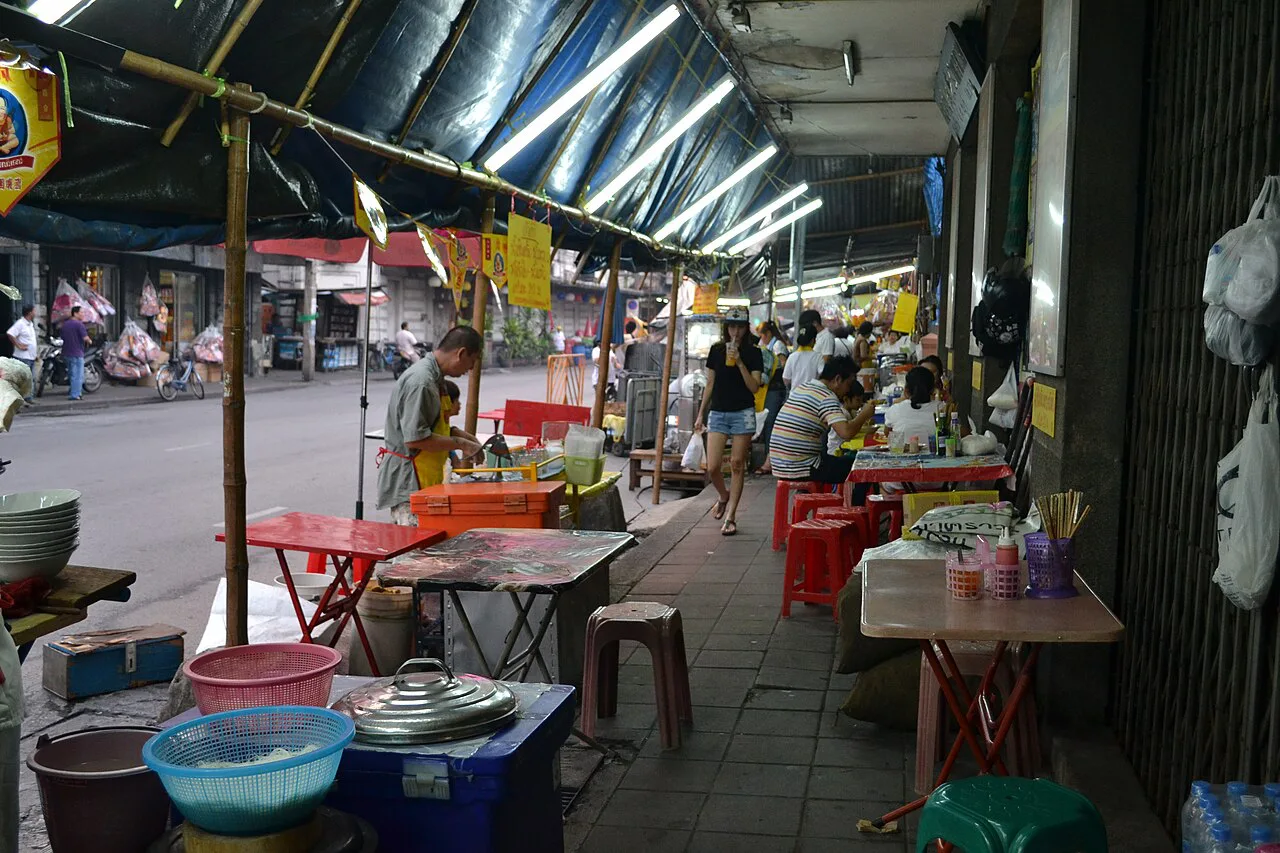
Street grills and markets are the easiest places to start. Look for links coiled on a charcoal rack and point at what you want. Sit-down northern Thai restaurants serve sai oua as a starter or as part of a mixed plate. Browsing restaurant listings in the Michelin Guide Thailand helps you find sit-down places to eat. Portions vary by vendor, so ask whether the price is per link, per weight or per plate before you order. Take the herbs and dipping sauce that arrive with it. Sticky rice makes a natural base.
- Street stall: quick, cheap, eaten on the spot or from a bag.
- Market grill: more choice, often several sausage styles side by side.
- Restaurant: sliced and plated with herbs, lettuce and sauce.
Cost and Value
A single link from a street grill is the cheapest way to try Thai sausage. A restaurant plate costs more but arrives sliced, with dipping sauce and fresh herbs. Prices and hours checked November 2026 are not listed here, because vendor pricing differs by city and stall. Ask before ordering, and compare against nearby grills.
Spice, Ingredient and Dietary Notes
Sai oua can run hot, since chili sits inside the mince. Ask for less heat, or lean on lettuce and the dipping sauce to cool each bite. Both styles are pork-based. Fish sauce is a standard seasoning in sai oua, and some recipes add soy sauce, which brings soy and wheat exposure. Allergy-sensitive eaters should ask each vendor what goes in, because recipes differ from stall to stall. Halal and vegetarian options are not something to assume at a grill.
Building a Grilled Plate Around Your Sausage
Sausage works best as one item in a spread. For more pork, add moo ping skewers to the order. Sliced grilled pork neck is another option, and our moo kata guide covers the table-top version. A fatty, charred cut suits sausage too, as the Kor Moo Yang: Thai Grilled Pork Neck, How To Order It page explains. If you avoid pork, order Thai Grilled Chicken (Gai Yang): What It Is and How to Eat It instead. Seafood fans can add Thai Grilled Squid (Pla Muk Yang): What to Order and Where to Eat for a lighter bite. Finish with sticky rice and raw vegetables to balance the richness.
Mistakes to Avoid
Skip these common slip-ups.
- Assuming all Thai sausage tastes alike. Sai oua and sai krok Isan sit at opposite ends of the flavor range.
- Expecting the US product sold as Thai sausage. Shop versions use different recipes, such as veal with brown sugar, so flavors differ from Thai originals.
- Skipping the lettuce, herbs and dipping sauce. They are part of how sai oua is eaten.
- Ordering a second round before asking how the vendor prices portions.
Thai food notes for your next trip
Optional updates to our food guides.
You might also like


Continue reading
More guides you'll find useful