Thai Grilled Chicken (Gai Yang): What It Is and How to Eat It
Thai grilled chicken is gai yang: charcoal-grilled and served with dipping sauce. Learn how to order it, what to pair it with, and how to cook it at home.
On this page
Last updated November 2026: thai grilled chicken usually means gai yang (ไก่ย่าง, also spelled kai yang), chicken marinated in garlic, coriander and fish sauce, then grilled over charcoal. Most plates arrive with sticky rice and a sharp dipping sauce. We cover how to order it, what to eat with it, and how to cook a close version at home.
Featured image: Heinrich Damm (User:Hdamm, Hdamm at de.wikipedia.org), CC BY 2.0, via Wikimedia Commons.
What Is Thai Grilled Chicken (Gai Yang)?
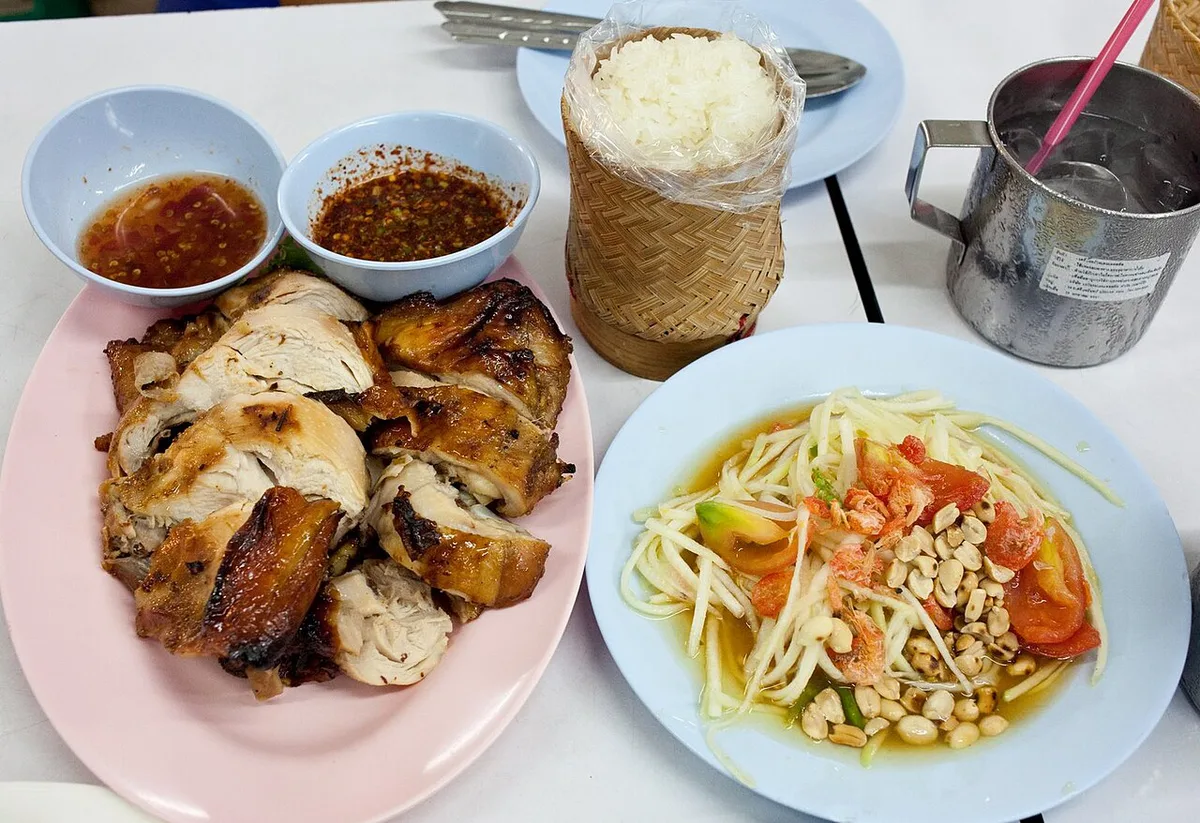
Gai yang translates simply as "grilled chicken". In Thailand, though, the phrase points to one dish that nearly everyone recognizes. It also goes by kai yang, gai ping and kai ping. Our pick for a first order is the classic plate of grilled chicken, sticky rice and dipping sauce. It is one of several grilled staples in our Thai BBQ guide. Gai yang is often described as Lao in origin, where the dish is called ping kai. Isaan, the northeastern region, helped make it popular across Thailand. Isaan cooking leans Lao and tends to run hotter and more sour than central Thai food.
How Gai Yang Is Made and Served in Thailand
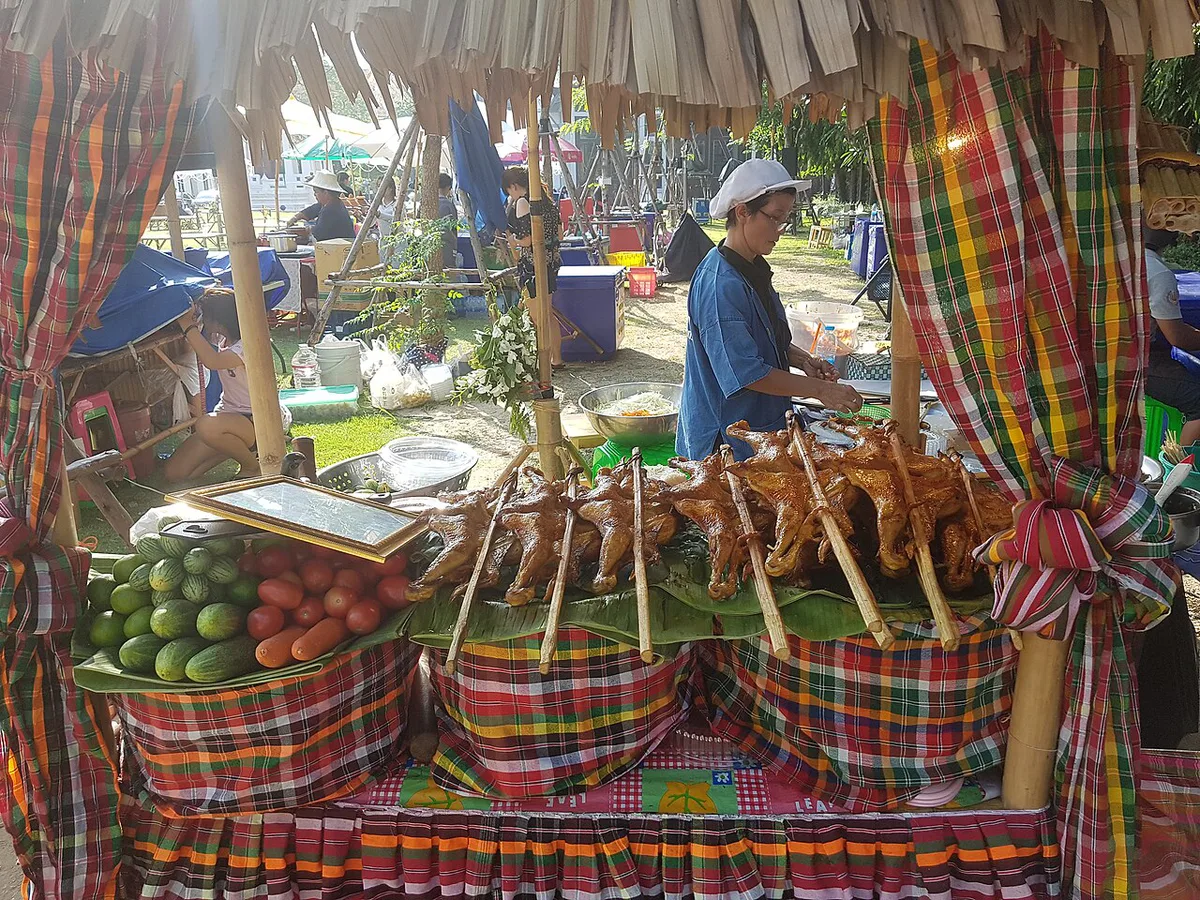
Traditional gai yang uses a whole chicken that is butterflied and flattened. Cooks hold it between split bamboo and slow-roast it over a charcoal grill. Slow heat matters here. Sugar in the marinade scorches fast, so the bird cooks gently and the skin turns deep brown rather than black. The base marinade is garlic, coriander, fish sauce and white pepper. Soy sauce and a little sugar add color and caramelization. Three things usually share the plate: sticky rice, a dipping sauce called nam jim jaew, and a salad of green papaya known as som tum. Together they cover salty, sweet, sour and hot in one meal.
Regional Styles and Where to Find Thai Grilled Chicken
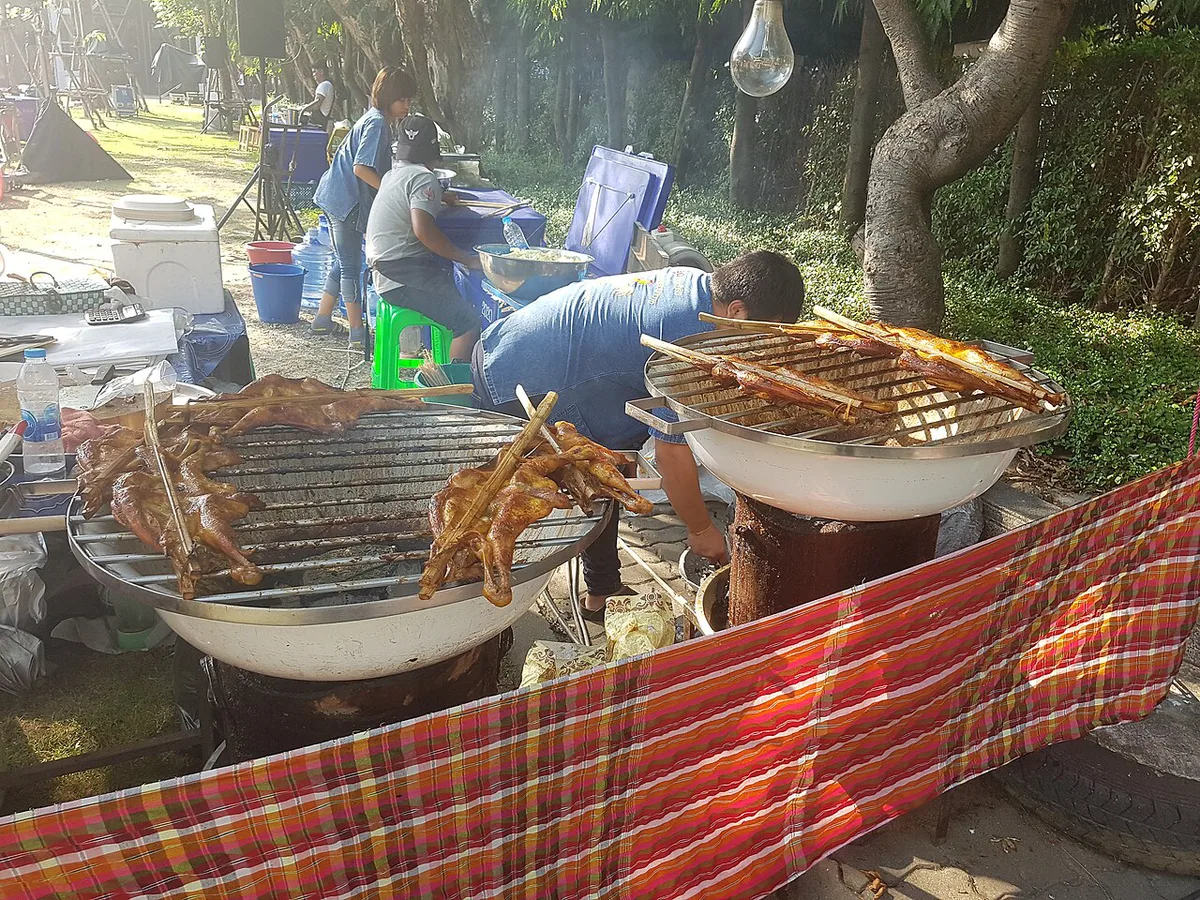
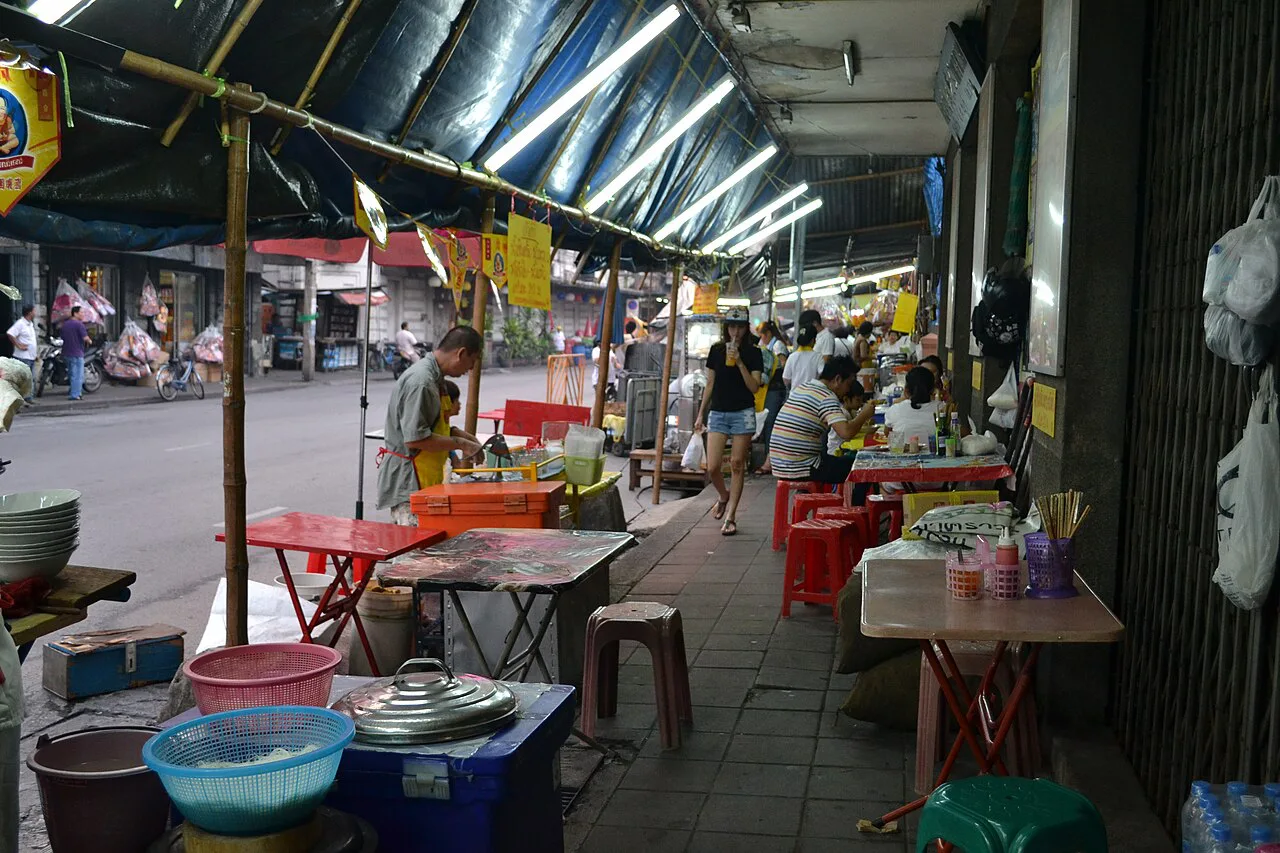
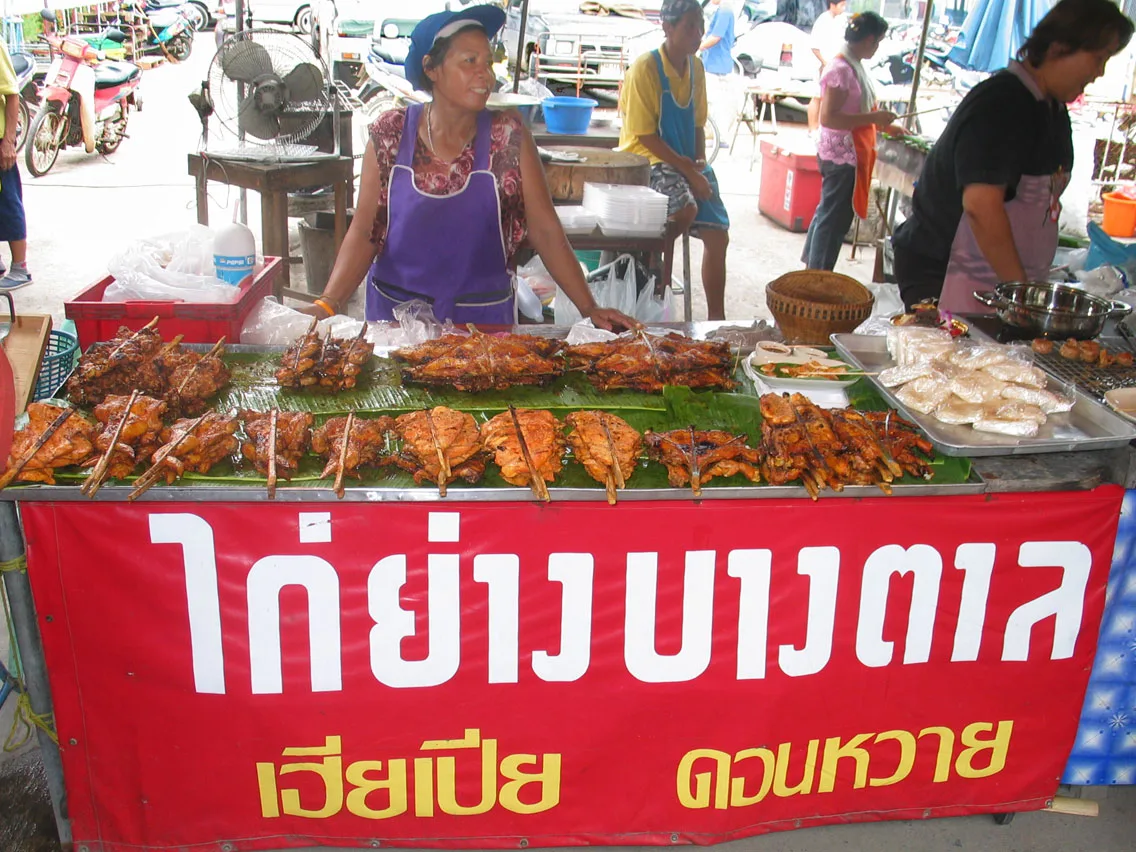
Gai yang is a popular street food found throughout Thailand. Look for charcoal grills with split chickens racked in rows. Isaan-style cooking is the reference point, so grill restaurants that advertise northeastern food are a safe bet for a sit-down plate. Stalls sell it by the piece or by the half bird, and the cook usually chops it for you. Regional differences show up mostly in the sauce and the marinade rather than the method. Isaan versions lean on the tart, toasted-rice dipping sauce. Other vendors favor a sweeter chili sauce. We'd start with the Isaan-style sauce, since it shows what the dish is built around.
Gai Yang vs Other Thai Grilled Meats
Thai grilling covers far more than chicken. This table helps you pick by protein and by how you want to eat.

| Dish | Protein | Typical flavor | How it is served | Best fit |
|---|---|---|---|---|
| Gai yang | Chicken, often split open | Garlic, coriander, pepper, savory-sweet | Chopped, with sticky rice and nam jim jaew | First-timers and anyone who wants a lighter protein |
| Moo Ping: Thai Grilled Pork Skewers and How to Order | Pork | Sweet, marinated | Skewers, often with sticky rice | Quick walking snack |
| Kor Moo Yang: Thai Grilled Pork Neck, How To Order It | Pork neck | Rich, fatty, savory | Sliced, with a spicy dipping sauce | Pork lovers who like a chewy-tender bite |
| Moo Kata (Mookata): What It Is and How to Eat It | Pork and mixed items | Depends on the sauce you dip into | Pan grill at the table | Group meals where everyone cooks |
| Grilled squid | Squid | Light, smoky, seafood-sweet | Grilled whole or sliced, with a dipping sauce | Seafood eaters |
How to Order Gai Yang and What to Pair It With
Ask for gai yang with sticky rice and nam jim jaew. Add som tum if you want a cool, crunchy counterpoint. Nam jim jaew is a tamarind, lime and fish sauce dip with chili, shallot and toasted rice powder. The toasted rice gives it a nutty, popcorn-like aroma. A sweeter chili dip works too, but we prefer the jaew version because the sour edge cuts through charred skin. Spice sits mostly in the sauce and the salad, so you can control heat by asking for less chili there. For a bigger spread, add sausages from our Thai sausage guide. Vendors set their own prices and portions, so ask before they chop. To research sit-down restaurants by city, browse the Michelin Guide Thailand listings. Pick busy stalls where chicken moves off the grill quickly and comes out cooked through.
Marinade Basics: What Makes It Taste Like Street Gai Yang
Each ingredient has a job, which helps when you need to substitute.
- Garlic: the sharp, savory backbone.
- Coriander root: the classic base flavor. Use stems and seeds if you cannot find root.
- White pepper: gentle, lingering heat. Black pepper works in a pinch.
- Fish sauce: salt and umami. Soy sauce adds color and depth.
- Palm sugar: a little sweetness and the browning that crisps the skin. Light brown sugar substitutes.
- Lemongrass and turmeric: optional. Turmeric mostly adds color. Some versions add coconut milk for a softer finish.
Cooking Gai Yang at Home
Home cooks marinate anywhere from 2 hours to overnight. Longer gives deeper flavor. Bone-in thighs are the most forgiving cut. A butterflied whole bird is closest to the street version, but breasts dry out fast. Charcoal gives the best flavor, though gas or an oven works. For the oven route, one popular method bakes pieces at 350°F for 35 to 40 minutes. On a grill, use indirect heat first and finish over direct heat to crisp the skin. Chicken must reach 165°F, the USDA-recommended temperature. One method pulls thighs at 155°F, then crisps them over the coals to a final 165°F. Quick versions grill thighs 4 to 5 minutes per side on medium heat. Slow indirect versions can take about 1 hour. Rest the meat for 5 to 10 minutes before cutting.
Common Mistakes to Avoid
Most problems come down to heat, timing and a quick check of what you are eating.
Chicken must reach 165°F, and breasts dry out fast, so they need the earliest pull.
- Ordering by name only: say gai yang, not just "chicken", or you may get a different preparation.
- Skipping the sauce: nam jim jaew is half the dish.
- Assuming the chicken is mild: the dip and som tum carry the heat, so ask for less chili there.
- Eating undercooked bone: if juices run pink near the bone, ask for it back on the grill.
- Burning the marinade: sugary coatings scorch over direct heat, so start indirect.
- Cooking breasts too long: pull them early and let them rest.
Thai food notes for your next trip
Optional updates to our food guides.
You might also like

Continue reading
More guides you'll find useful