Pad See Ew in Thailand: What It Is & How to Order It
What pad see ew is, how it tastes, how it differs from similar noodle dishes, and how to order it in Thailand.
On this page
Last updated November 2026. Pad see ew is a Thai stir-fry of wide rice noodles, dark and light soy sauce, egg and Chinese broccoli, finished over a very hot wok. This guide explains what to expect on the plate, how it differs from other noodle dishes, and how to order it. It also sits inside our wider look at Thai noodle favorites.
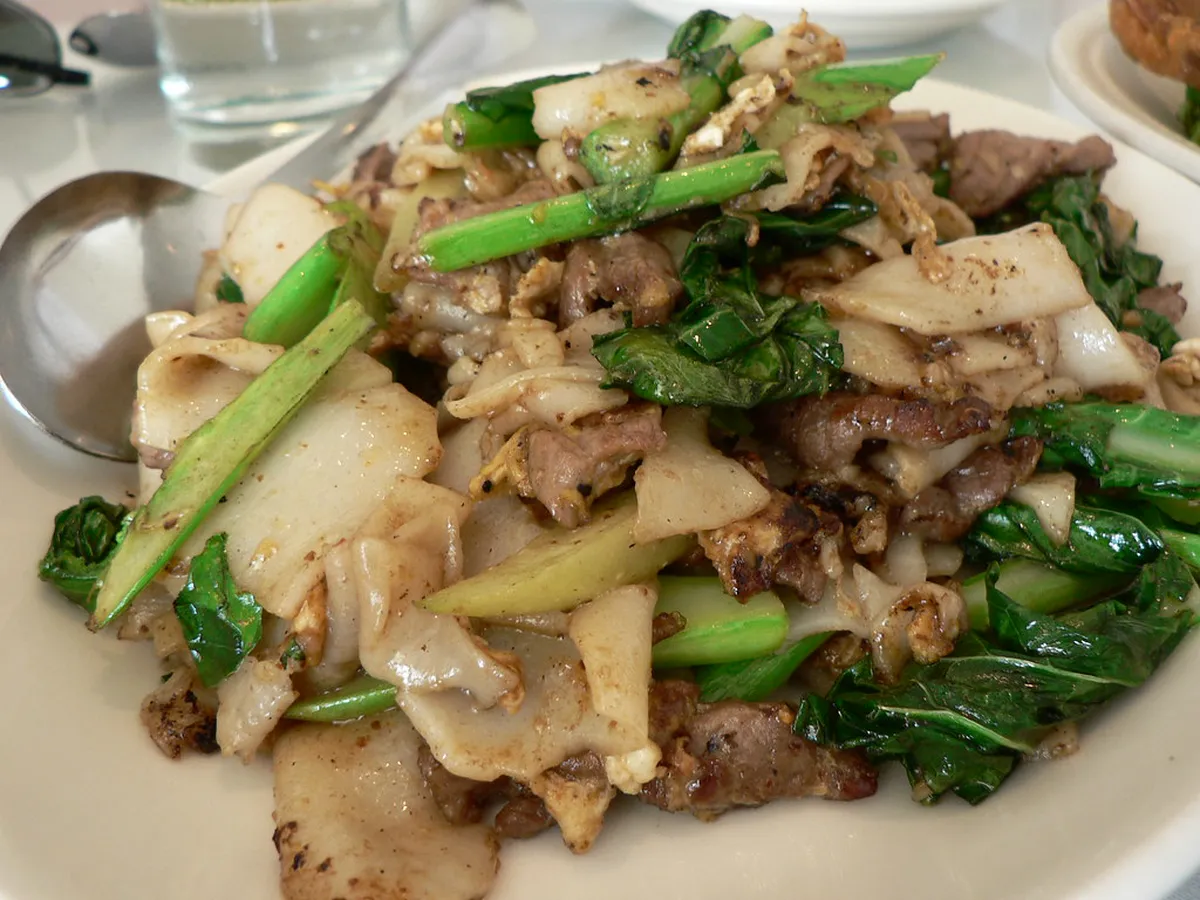
Featured image: stu_spivack, CC BY-SA 2.0, via Flickr.
What Pad See Ew Is
Pad see ew is a dry, wok-fried noodle dish. Broad, flat rice noodles (sen yai) are tossed with egg, gai lan (Chinese broccoli) and a choice of protein. Dark and light soy sauce supply the color and the savory-sweet flavor. "See ew" refers to soy sauce, so the name reads roughly as "stir-fried with soy sauce." Spelling varies on menus, and you may see pad si io, phat si io or pad see eiw. In Thai script it is written ผัดซีอิ๊ว. Chinese influence shows in the soy seasoning, the wide noodles and the high-heat wok technique. Thai kitchens made the dish their own.
What Pad See Ew Tastes Like and How It Is Cooked
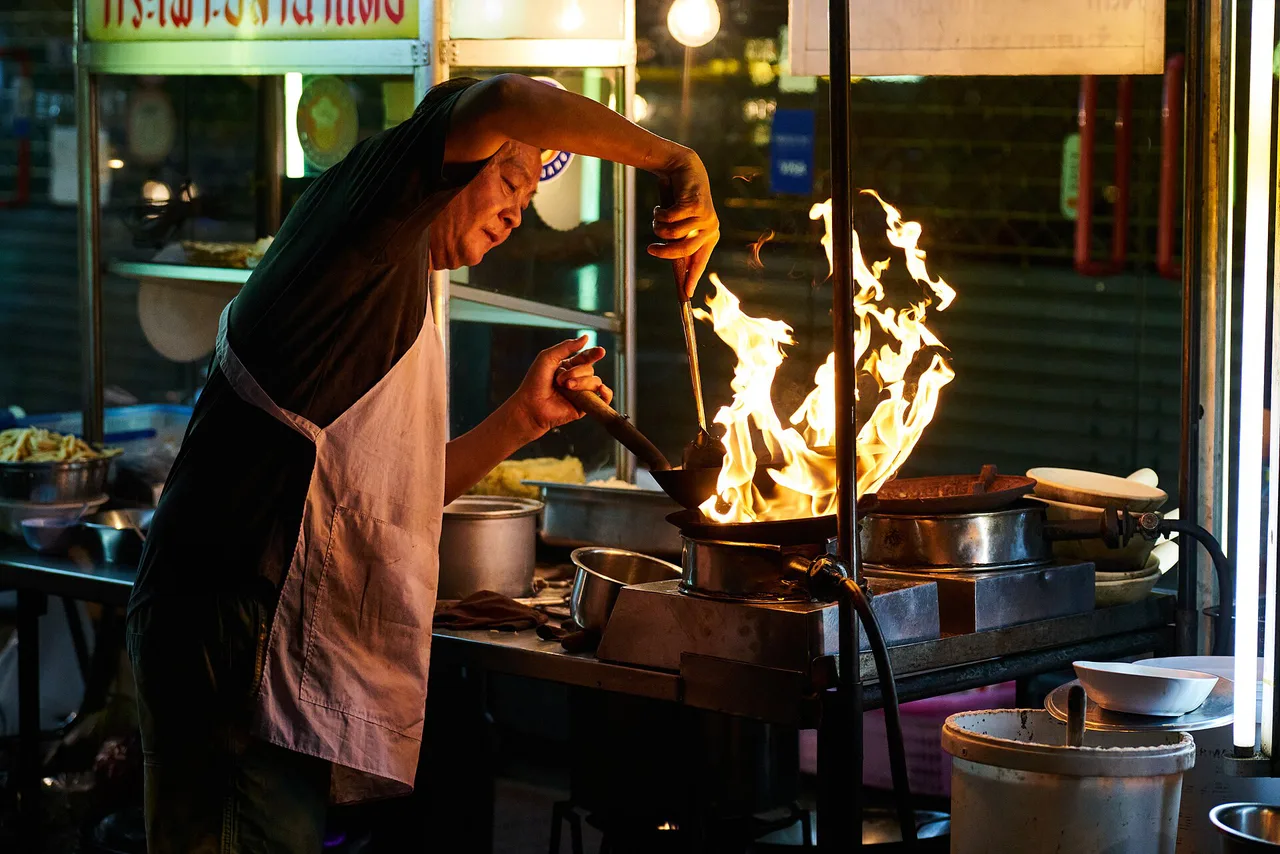
Expect a savory dish with a mild sweetness from the dark soy. Noodles come out chewy and slightly browned at the edges. A good plate has a smoky wok char, often called wok hei, which comes from a very hot wok and quick tossing. Egg is scrambled into the noodles, and the gai lan stays crisp with a faint bitterness that balances the sauce. Cooks work one or two portions at a time, so each plate is made to order. That is why a busy stall is usually a good sign. Nothing here is a soup, and the sauce clings to the noodles rather than pooling in the bowl.
Pad See Ew vs Similar Thai Noodle Dishes
Thailand has dozens of noodle dishes, and several get confused with this one. The closest relative is gravy-covered wide noodles, which use a similar noodle but arrive swimming in a thick sauce. Soup dishes such as dark, rich noodle soup are a different meal altogether. Pad thai uses thinner noodles and a tangy, sweet profile instead of soy. Use this table to pick the right dish for your craving.
| Dish | Noodle type | Wet or dry | Flavor | Best for |
|---|---|---|---|---|
| Pad see ew | Wide flat rice noodles | Dry, wok-fried | Savory-sweet, smoky char | A hearty plate without broth |
| Rad na | Wide rice noodles | Wet, gravy-topped | Savory, thick sauce | Comfort food with plenty of sauce |
| Boat noodles | Rice noodles in broth | Soup | Dark, rich broth | A small, intense bowl |
| Guay jub | Rolled noodles | Soup | Savory broth | Rolled-noodle soup fans |
| Yen ta fo | Rice noodles in broth | Soup | Distinctive, tangy-sweet broth | Adventurous soup eaters |
| Khanom jeen nam ngiao | Thin rice noodles | Broth-based | Rich, layered broth | Trying a regional broth |
How to Order Pad See Ew in Thailand
Start by naming the dish: say "pad see ew" and add your protein. Common choices are chicken, pork, shrimp or tofu. Many cooks will also ask which noodle you want, and sen yai is the classic wide format. Tables at noodle shops usually carry a condiment set, often with chili flakes, vinegar, sugar and fish sauce. Use them to adjust the plate to your taste. Egg is built into the standard dish. If you avoid it, say so clearly before the wok goes on. Vegetarian travelers should ask for tofu and no oyster or fish sauce, and should expect that some kitchens cannot fully separate their ingredients. A picture of the dish on your phone helps at stalls without an English menu. For other options on the same menu, browse our guide to more Thai noodle dishes before you go.
Where to Eat It and What to Pay
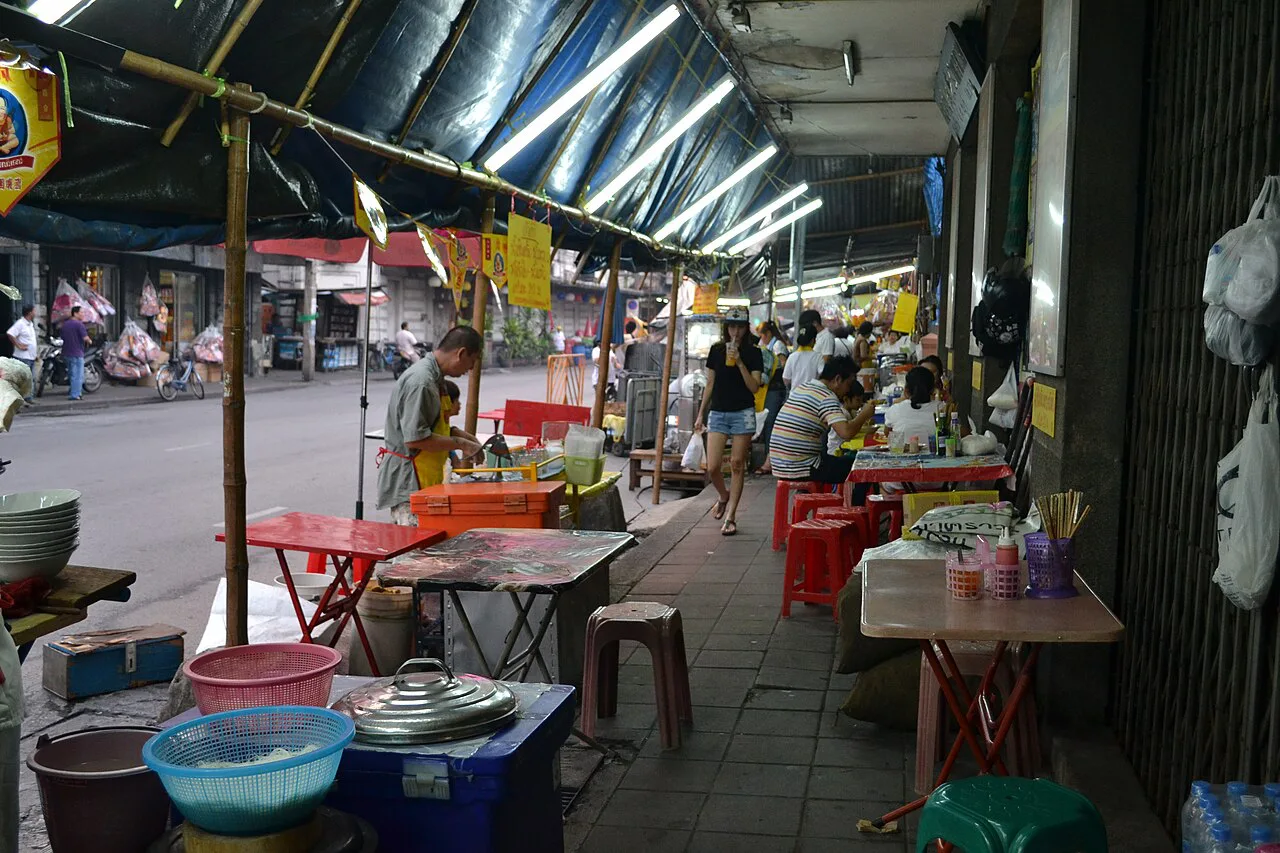
Pad see ew appears at street stalls, food courts and sit-down restaurants, and prices vary by venue. Check the current listings on the MICHELIN Guide Thailand for restaurants, and read the menu board for local prices.
Mistakes to Avoid and Who Should Skip It
A few small errors cause most disappointments with this dish. Keep these in mind before you order.
- Ordering it when you want something saucy. If you crave gravy, choose rad na instead.
- Expecting pad thai. Pad see ew is soy-based, not tangy, and uses wider noodles.
- Expecting soup. Pad see ew is dry, so choose a broth-based dish if you want one.
- Ignoring allergens. Soy, egg and shellfish (in shrimp versions) are common, and soy and oyster sauce can contain gluten.
- Assuming it is mild for everyone. Spice is added at the table, so you control the heat.
Frequently Asked Questions
Do I want pad thai or pad see ew?
Choose pad see ew for a smoky, soy-seasoned plate with wide, chewy noodles. Choose pad thai if you prefer thinner noodles and a tangier, sweeter flavor.
Where does pad see ew originate?
Pad see ew reflects Chinese-Thai cooking. Its soy sauce seasoning, wide noodles and wok technique point to Chinese influence, adapted in Thai kitchens.
How do you say pad see ew in Thai?
Say "phat si io," written ผัดซีอิ๊ว in Thai script. Pointing at the script on your phone also works at busy stalls.
Thai food notes for your next trip
Optional updates to our food guides.
You might also like

Continue reading
More guides you'll find useful