6 Thai Noodle Dishes to Try and How to Order Them
A traveler's guide to 6 Thai noodle dishes: how to tell them apart, what to order, how to customize a bowl, and who should skip which one.
On this page
Last updated November 2026. Thai noodle dishes fall into a few families: broth bowls, gravy-topped plates, stir-fries and northern curry-style soups. Each of the 6 dishes below has its own guide, so this page helps you pick one and order it without guessing.
Featured image: Iudexvivorum, CC0, via Wikimedia Commons.
Quick answer: which Thai noodle dish should you order?
Start with your mood. Want broth? Choose boat noodles, yen ta fo or guay jub. Want a thick sauce over the noodles? Choose rad na. Want something dry, savory and mild? Choose pad see ew. Want a regional curry-style soup? Choose khanom jeen nam ngiao. Prices and hours checked November 2026 against the linked guides, which carry the dish-level detail.
| Dish | Style | Flavor | Best for |
|---|---|---|---|
| Boat noodles | Soup, dark broth | Rich, savory, often blood-thickened | Adventurous eaters |
| Yen ta fo | Soup, pink broth | Sweet, tangy, savory | First-time soup eaters |
| Rad na | Gravy-topped, wide noodles | Savory and mellow | Mild palates |
| Khanom jeen nam ngiao | Curry-style soup, northern | Tomato-forward, savory, mildly spicy | Regional food seekers |
| Pad see ew | Stir-fried, wide noodles | Smoky, soy-sweet | Easy, low-spice meals |
| Guay jub | Rolled noodles in peppery broth | Peppery, savory | Cold-weather comfort |
How Thai noodle dishes differ
Two choices define every bowl: the noodle and the format. Rice noodles come wide (sen yai), thin (sen lek) or as fine vermicelli (sen mee). Egg noodles (ba mee) also appear in some soups. Format then splits into soup, stir-fry, gravy-topped and curry-style. Seasoning is finished at the table. Fish sauce adds salt, sugar adds sweetness, dried chili adds heat and chili vinegar adds sourness. Balancing those four is what makes one bowl taste different from the next.
6 Thai noodle dishes to order, by style
Each capsule covers what the dish is, its flavor, who it suits and one ordering tip. Soups come first, then sauced and stir-fried plates.
1. Boat noodles
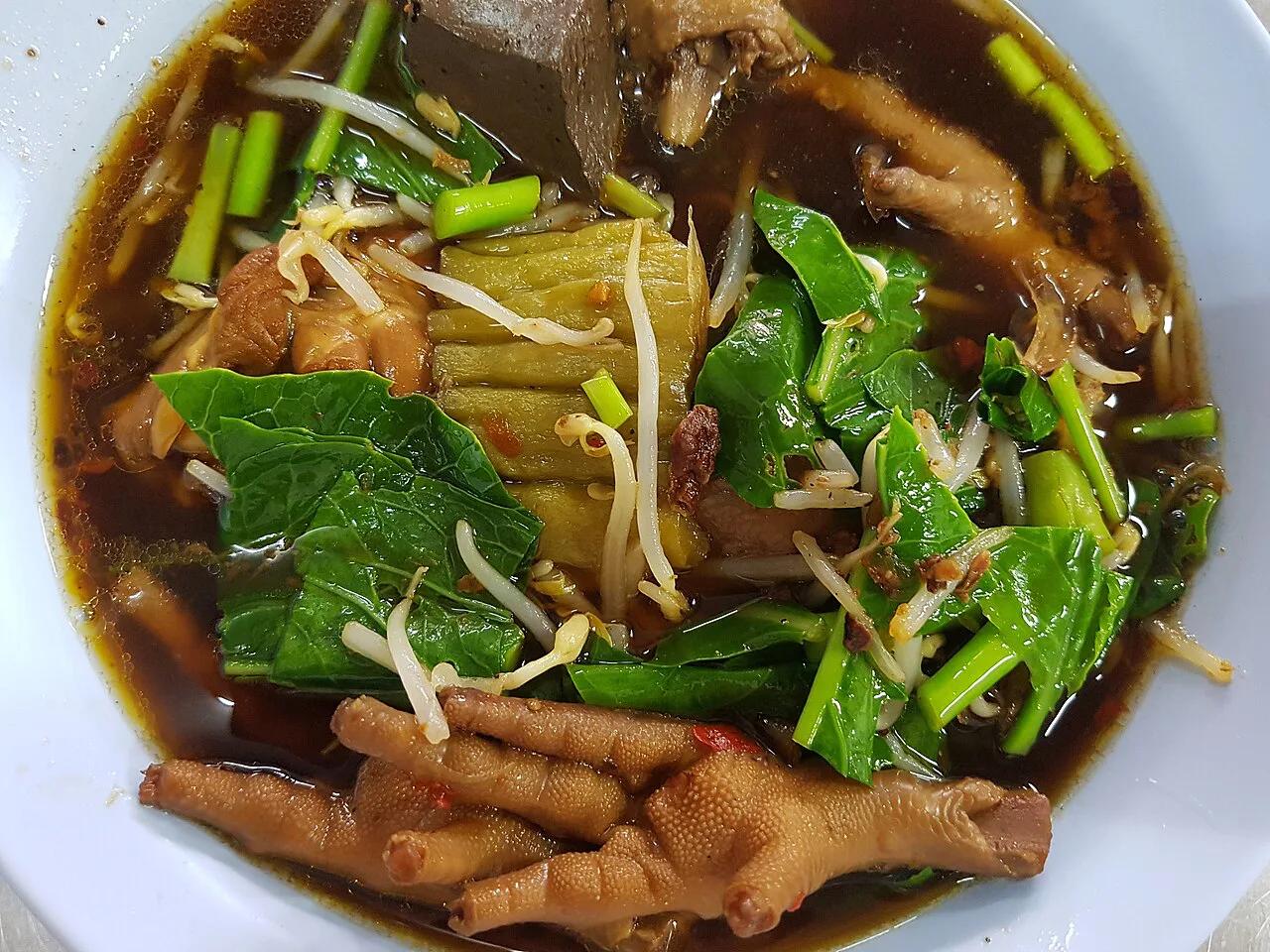
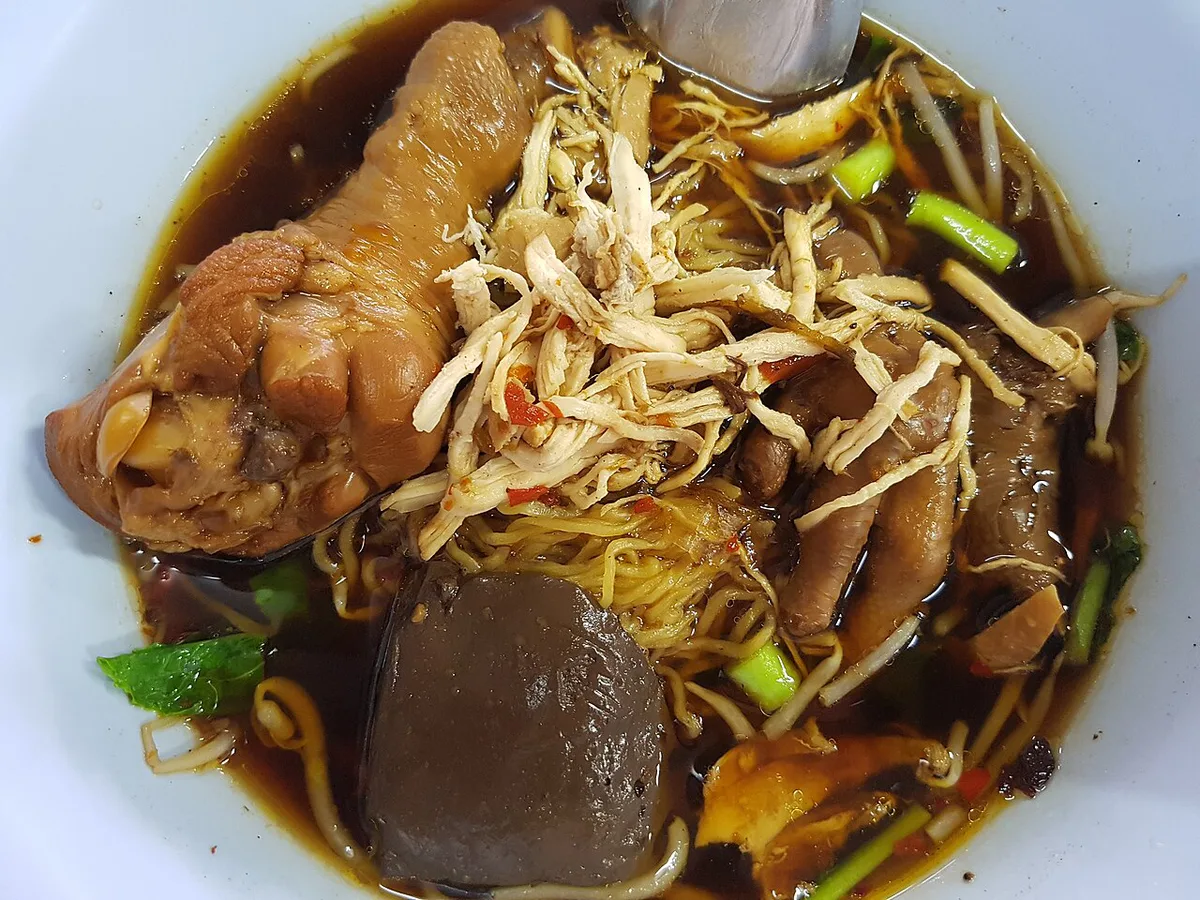
Boat noodles are small bowls of rice noodles in a dark, intensely savory pork or beef broth. Many versions are thickened with blood, which gives the soup its depth and color. Order several bowls rather than one, since portions are small and you can compare toppings.
Add condiments sparingly at first, because the broth is already strong. Skip this one if blood-thickened broth is a dealbreaker. Read the full guide to Boat Noodles (Guay Teow Reua): What to Order and How to Eat Them in Thailand before you go.
2. Yen ta fo
Yen ta fo is a pink noodle soup, colored and flavored by fermented bean curd. Expect a sweet-tangy broth, usually with seafood or fish balls among the toppings. It suits first-time soup eaters because the flavor is bold but not hot.
Ask which toppings come in the bowl, as options vary from stall to stall. Skip it if you avoid fish products or dislike sweet-leaning broths. Details on toppings and ordering sit in our yen ta fo guide.
3. Rad na
Rad na is a plate of wide rice noodles under a thick, savory gravy. Pork, chicken or seafood toppings are common, and the gravy is gentle rather than fiery. It suits anyone who wants a filling plate without chili heat.
Add vinegar, sugar or dried chili at the table to shape the flavor. Skip it if you want a light meal, since the gravy makes it heavy. Our rad na guide covers variations and ordering.
4. Khanom jeen nam ngiao
Khanom jeen nam ngiao pairs soft rice noodles with a tomato-forward, pork-based broth. It is a northern Thai dish and reads as curry-style rather than a clear soup. Expect savory depth with moderate spice, and fresh herbs on the side.
Choose it when you want something regional, not the standard noodle-shop menu. Skip it if you avoid pork or any blood-based ingredients. Start with the Khanom Jeen Nam Ngiao: Northern Thai Noodle Soup, What to Order page for specifics.
5. Pad see ew
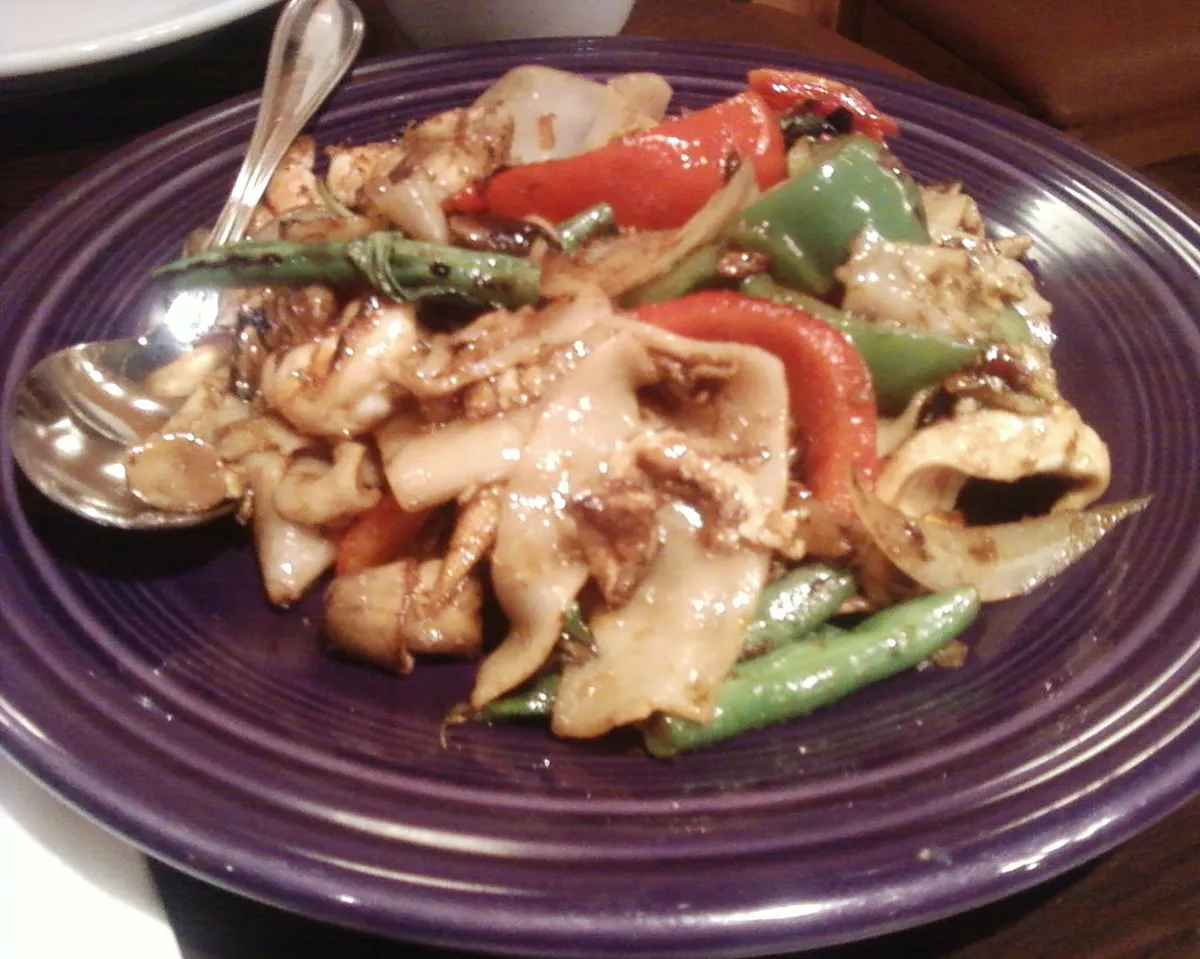
Pad see ew is a stir-fry of wide rice noodles in dark soy sauce, usually with egg and greens. Flavor is smoky and slightly sweet, with little heat unless you add chili. It suits travelers who want a dependable, low-spice plate on day one.
Tell the cook your protein choice, and add dried chili or vinegar only if you want a kick. Skip it if you want broth, because this plate is dry. See the pad see ew guide for noodle and protein choices.
6. Guay jub
Guay jub features rolled rice noodles in a peppery broth. Pork toppings are typical, and the pepper gives warmth without chili burn. It suits cool mornings and anyone who likes a broth-first meal.
Eat it soon after serving, while the broth is hot and the noodles hold their curl. Skip it if you avoid pork or offal-style toppings. Our guay jub guide explains what comes in the bowl.
How to order and customize noodles in Thailand
Order in this sequence: dish, noodle type, protein, spice. Pointing at the noodles on display works at most stalls. Naming a width helps: sen yai for wide, sen lek for thin, sen mee for vermicelli, ba mee for egg noodles. Ask for less spice when you order, since the condiment caddy lets you add heat later. The caddy usually holds fish sauce, sugar, dried chili and chili vinegar. Taste first, then add a little at a time.
Where and when to eat noodles
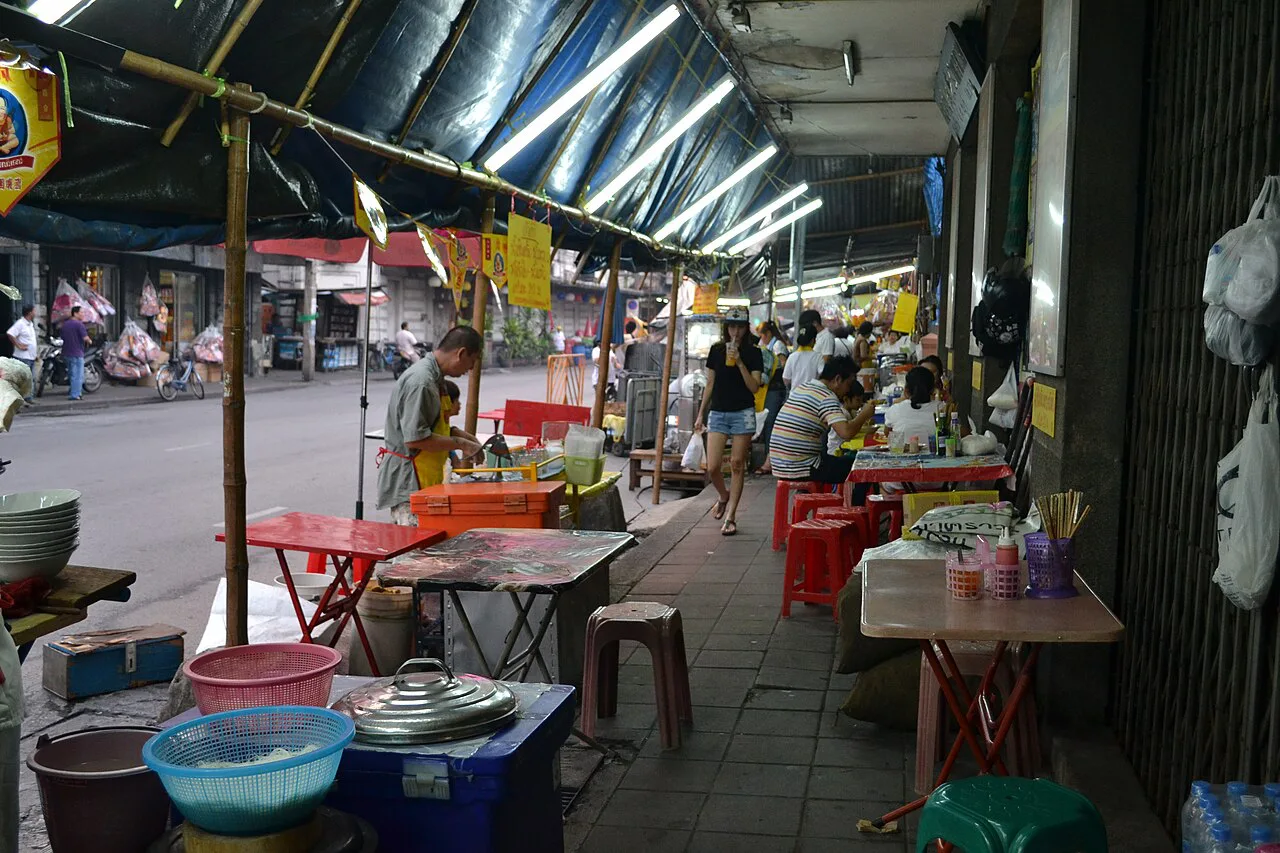
Noodles are sold at street stalls, market stalls, shophouses and food courts. Stalls often specialize in one dish, so choose the stall by the dish you want. Sit-down restaurants offer broader menus and a calmer pace. Carry small cash for stalls, since many do not take cards. To find well-regarded restaurants by region, browse the MICHELIN Guide Thailand. Expect popular stalls to run out of broth later in the day, so go earlier rather than later.
Dietary notes and who should skip what
Pork and fish sauce are common across Thai noodle dishes. Some broths use blood or offal, boat noodles being the clearest example. Vegetarians should ask about the broth and the sauce, because hidden animal products are hard to avoid. Nobody can guarantee an allergen-free bowl at a street stall, so people with serious allergies should eat only where they can communicate clearly. If you dislike heat, choose pad see ew or rad na. If you want a light meal, favor a small soup bowl over a gravy plate.
Common mistakes with Thai noodle dishes
Ordering by dish name alone is the biggest one. Say the noodle type too, or you get the stall's default. Assuming every broth is pork-free is another. Adding chili vinegar and dried chili all at once overpowers the bowl, so build flavor gradually. Finally, avoid ordering one huge bowl at a boat noodle stall. Several small bowls let you compare toppings.
Frequently Asked Questions
Is Thai food rice noodles?
Many Thai noodle dishes use rice noodles, including pad see ew, rad na and boat noodles. Egg noodles (ba mee) also appear in some soups. Ask for your preferred noodle type when you order.
Explore More Guides
Keep planning your trip with these guides.
Guides
Thai food notes for your next trip
Optional updates to our food guides.
You might also like

Continue reading
More guides you'll find useful