Rad Na (Lad Na): Thai Gravy Noodles Explained, How to Order It
What rad na is, how it differs from pad see ew and other Thai noodles, how to order and season it, plus a short home-cooking overview.
On this page
Last updated November 2026: rad na (also spelled lad na or rat na) is a Thai gravy noodle dish of wide rice noodles, often pan-charred, under a thick savory sauce with pork, chicken or seafood and Chinese broccoli. It is neither a soup nor a pad thai-style stir-fry. This eater's guide covers what lands on the plate, how to order and season it, and where it sits in our wider guide to Thai noodles.
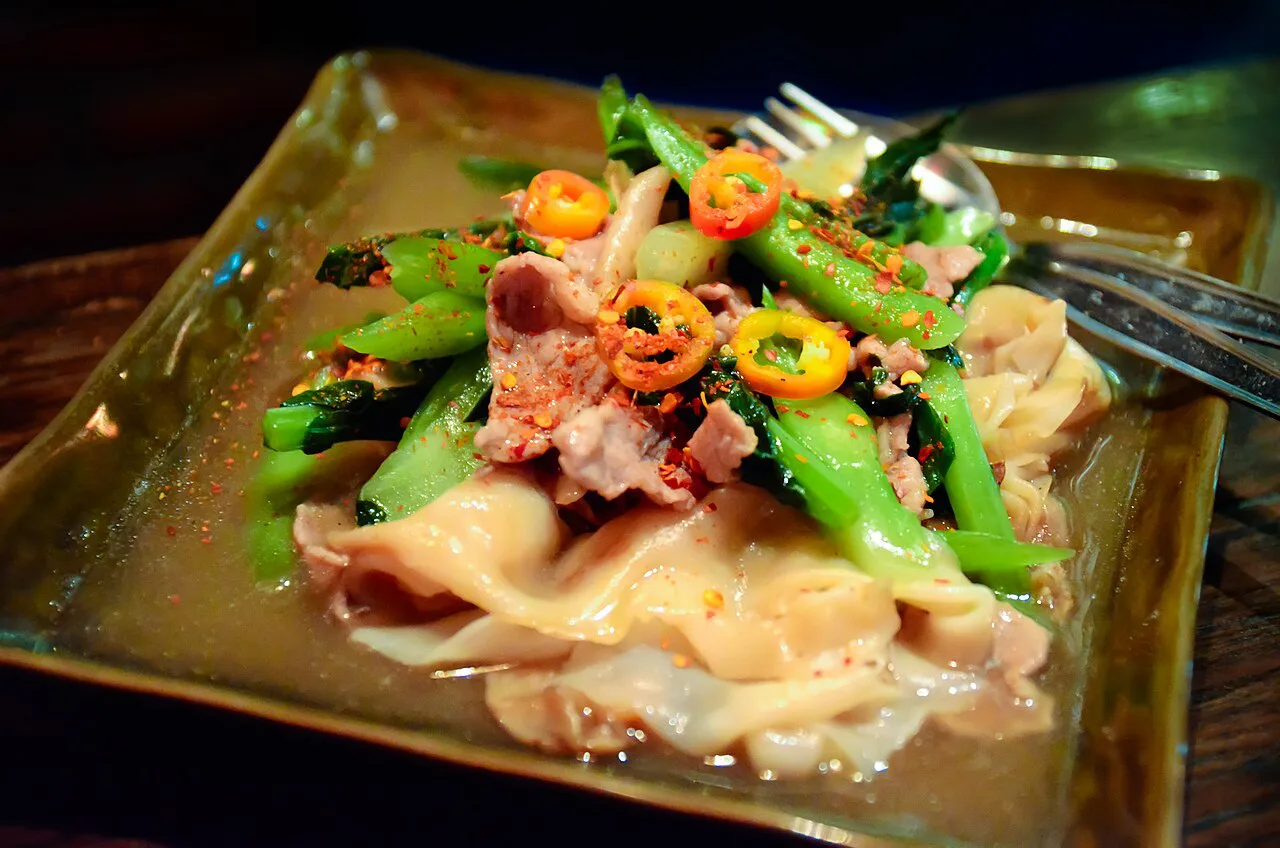
Featured image: Takeaway, CC BY-SA 3.0, via Wikimedia Commons.
What Rad Na Is: Thai Gravy Noodles Explained
Rad na is a plate of wide rice noodles with a thick, glossy gravy ladled over the top. You will also see it spelled lad na or rat na, and some menus write kuaytiao rad na. One English rendering of the name is "pour on the face", which describes the gravy going on last. Expect a saucy plate you eat with a fork and spoon, not a brothy bowl. Pad see ew sits on the same wide-noodle shelf, yet it eats very differently. Pad see ew is stir-fried in dark soy. Rad na is sauced after the noodles are cooked.
What's in the Bowl: Noodles, Gravy, Greens and Protein
Four parts make the dish, and each one changes what you taste.
- Noodles: wide rice noodles (sen yai), often seared in a pan until the edges char and smell smoky.
- Gravy: a savory sauce built on fermented soybean paste, with soy sauce and a starch thickener.
- Greens: Chinese broccoli (kai-lan, called pak kana in Thai), cooked until tender in the gravy.
- Protein: pork, chicken or seafood, sliced thin so it cooks quickly in the sauce.
Gravy and Noodle Texture in Rad Na
Cooks disagree on the thickener. Some use tapioca starch and others use cornstarch, and both give the same glossy cling. Yellow bean sauce is a common source of the fermented soybean flavor. Seared noodles hold their chew under the sauce, while unseared ones soften faster. Flavor runs savory and mild rather than hot.
Rad Na Variations: Moo, Gai, Talay and Noodle Styles
Menus name the protein after the dish. Rad na moo is pork, rad na gai is chicken, and rad na talay is seafood. Pork is the default at many stalls, so say so if you want something else. Tofu versions turn up at some places, though availability varies by vendor. Noodle style changes the plate more than protein does. Charred sen yai gives a smoky edge and a chewy bite. Softer noodles soak up more sauce and eat gentler. Some vendors also offer crisp or thinner noodles, so look at what is on the counter.
- Smoky and chewy: pork or chicken on charred sen yai.
- Lighter: chicken on soft noodles.
- Seafood-forward: rad na talay.
- Meat-free: ask about tofu, and ask about fish sauce and oyster sauce in the gravy.
How Rad Na Differs from Pad See Ew, Boat Noodles and Other Thai Noodles
Six dishes get confused on a noodle crawl. This table separates them by format and by when each one is the right order. Start with stir-fried wide noodles if you want to taste the closest neighbor side by side.
| Dish | Format | Noodle | Flavor | Pick it when |
|---|---|---|---|---|
| Rad na | Gravy over noodles | Wide rice noodles, often charred | Savory, mild, fermented soybean | You want a saucy plate, not soup |
| Pad see ew noodles | Stir-fry | Wide rice noodles | Dark soy, smoky wok | You want a drier wide-noodle plate |
| Boat noodle soup | Soup | Rice noodles | Deep, savory broth | You want a small, rich bowl |
| Guay jub rolled noodles | Soup | Rolled rice noodles | Peppery broth | You want a spoon-and-slurp bowl |
| Yen ta fo pink soup | Soup | Rice noodles | Tangy, fermented bean curd base | You want something sour and savory |
| Khanom jeen with nam ngiao | Noodles with curry-style sauce | Thin, round rice noodles | Rich, savory sauce | You want a saucier noodle that is not a gravy |
How to Order and Season Rad Na
Say the dish name plus the protein: rad na moo, rad na gai or rad na talay. Many vendors serve it as a one-plate lunch, so you rarely need sides. A condiment caddy usually waits on the table. Taste first, then adjust. A typical set looks like this.
- Sugar: rounds out the savory gravy.
- Fish sauce with chili: adds salt and heat.
- Vinegar with chili: cuts through the richness.
- Chili flakes: raise the heat without changing the sauce.
Spice Level and Dietary Notes for Rad Na
Rad na usually arrives mild, so the table does the heat work. The gravy often contains fish sauce or oyster sauce, so pescatarian, vegetarian and vegan eaters should ask before ordering. Pork is the default meat. To find a sit-down restaurant in an unfamiliar city, browse the restaurant listings in the MICHELIN Guide Thailand by area.
Common Mistakes First-Timers Make with Rad Na
Most disappointments come from a wrong expectation, not a bad plate.
- Expecting soup: the gravy coats the noodles, and there is no broth to sip.
- Skipping the caddy: unseasoned rad na tastes flat to many eaters.
- Mixing it up with pad see ew: ask for the gravy dish by name.
- Assuming heat: it arrives mild unless you add chili.
- Letting it sit: noodles keep absorbing gravy and lose their chew.
Making Rad Na at Home: A Short Overview
Home cooks follow two steps. First, sear wide rice noodles in a nonstick pan with a little oil and dark soy until golden and smoky at the edges. Second, fry garlic with fermented soybean paste, add sliced meat and stock, then drop in Chinese broccoli. Season with fish sauce, oyster sauce and sugar. Thicken with a starch slurry, then pour the gravy over the noodles. Dried noodles work if fresh ones are hard to find. Serve with the same condiments you would find at a stall.
Frequently Asked Questions
What is lad na?
Lad na is another spelling of rad na, a Thai dish of wide rice noodles under a thick savory gravy. It usually comes with pork, chicken or seafood and Chinese broccoli.
What are Thai noodles called?
Many Thai noodle dishes carry the word kuaytiao, as in kuaytiao rad na. Each dish then has its own name, such as pad see ew, boat noodles or guay jub. Our overview of Thai noodle varieties maps them.
Thai food notes for your next trip
Optional updates to our food guides.
You might also like


Continue reading
More guides you'll find useful