Thai Food Phrases: What to Say When Ordering (With Thai Script)
Practical Thai food phrases for restaurants and street stalls, with Thai script, spice and allergy requests, menu words and polite endings. Save it for your trip.
On this page
Last updated November 2026. These Thai food phrases cover the moments that matter at a table or street stall: ordering, spice, allergies and the bill. We give Thai script next to each romanization, because tones make spelling-by-ear unreliable. Screenshot the first table and you can order most meals with eight phrases.
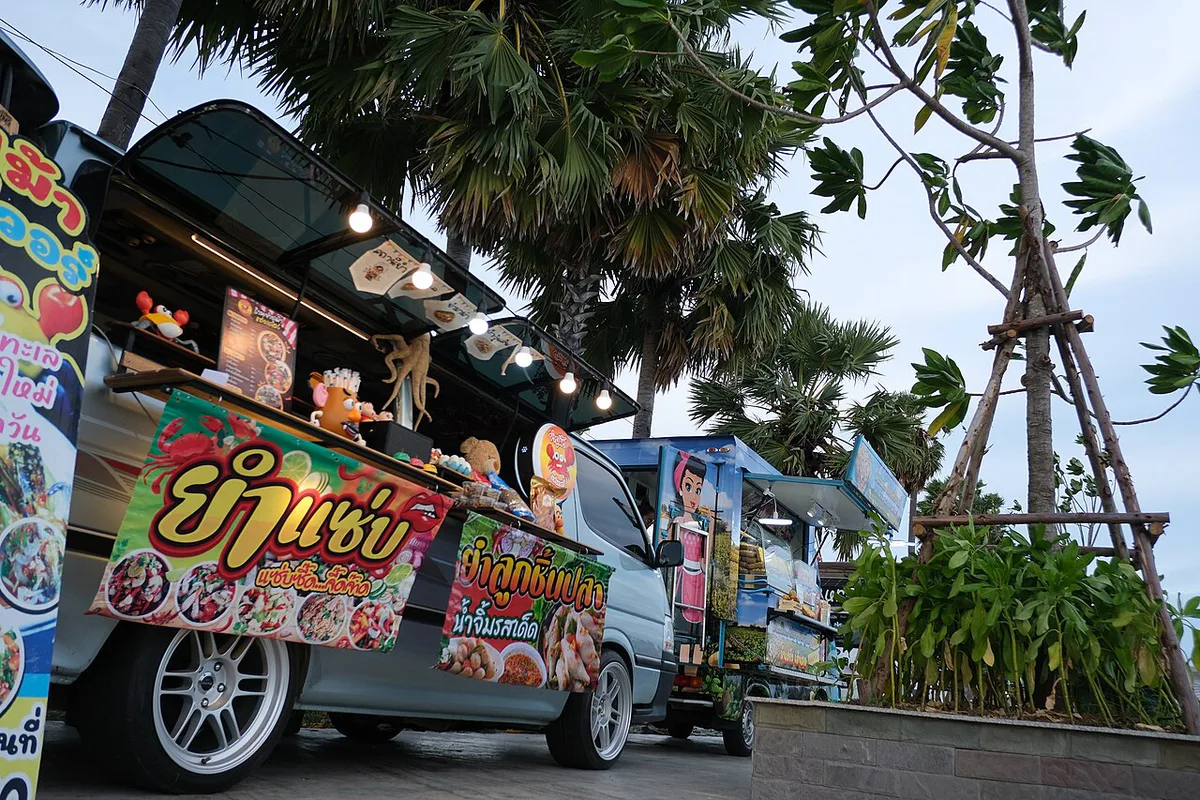
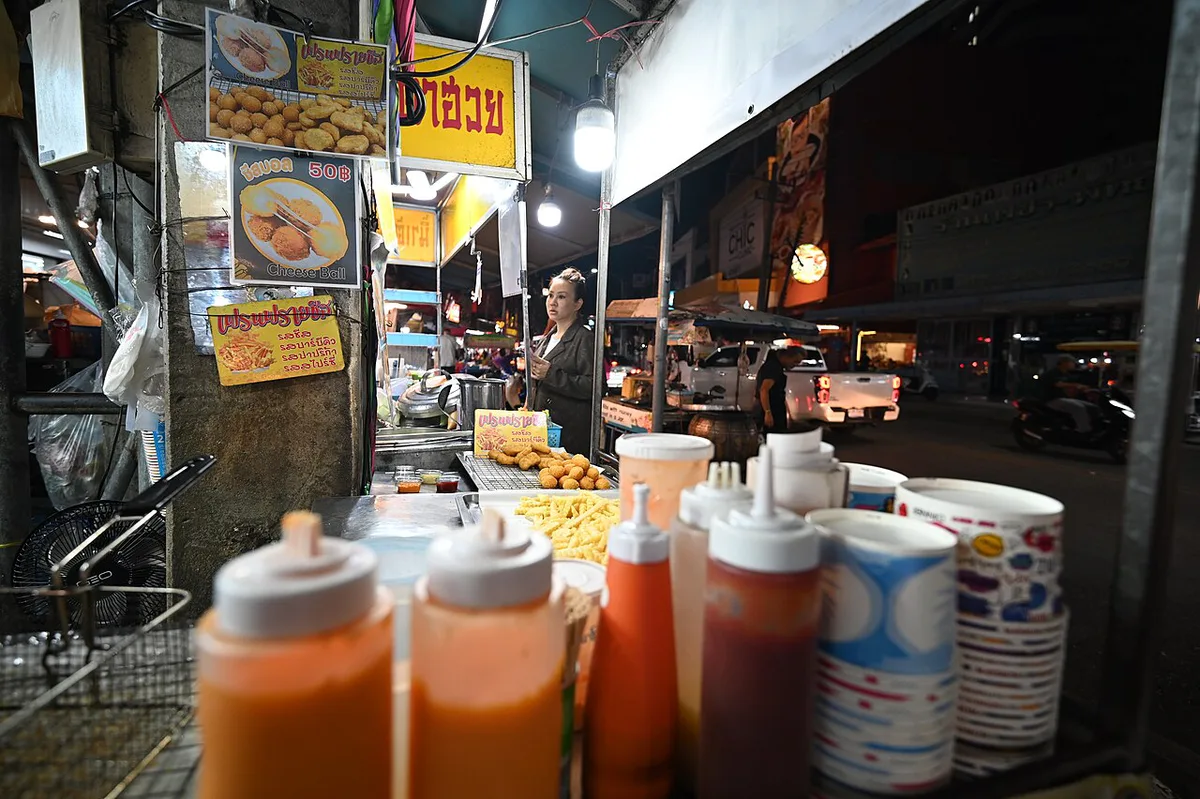
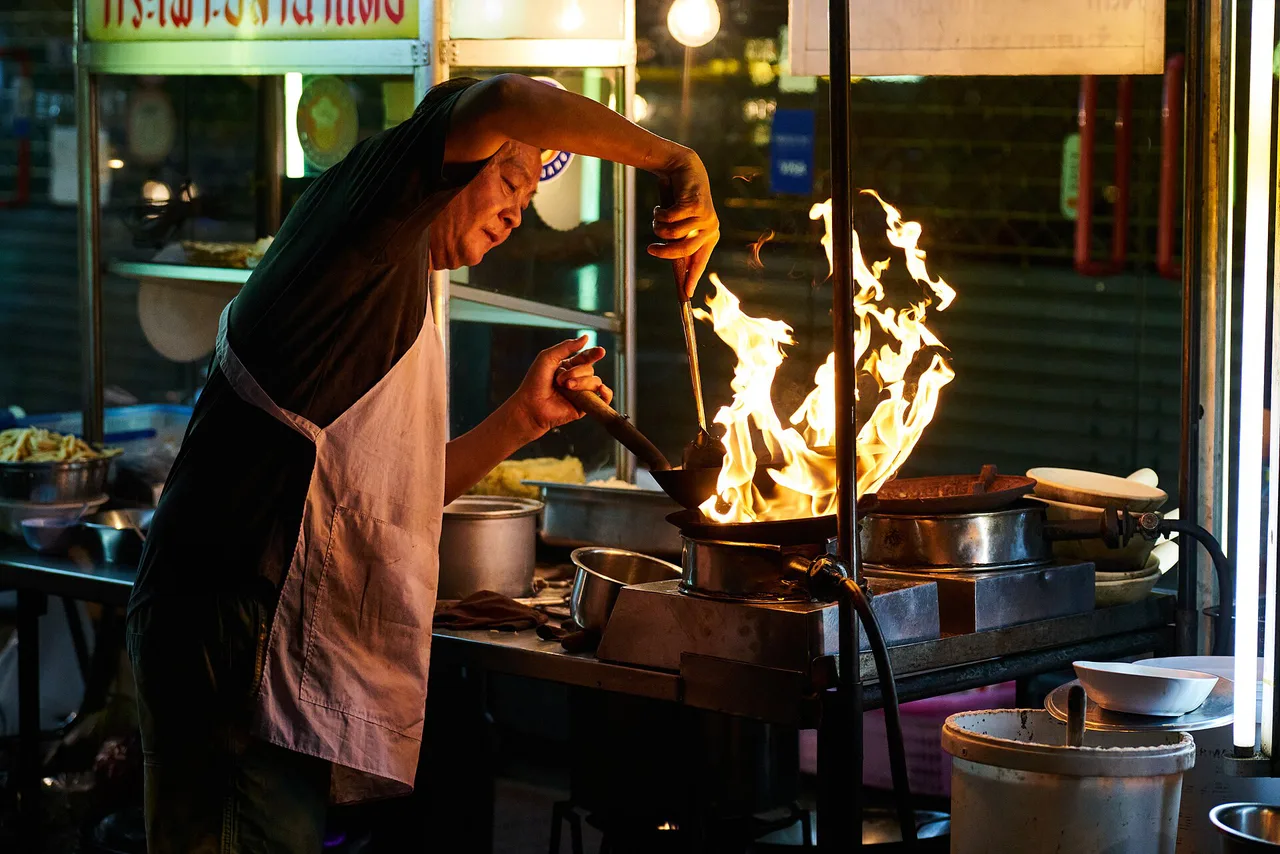
Featured image: PattayaPatrol, CC BY-SA 4.0, via Wikimedia Commons.
The 8 Thai Food Phrases That Cover Most Meals
Add ka (said by women) or khap (said by men) to the end of each phrase. That one habit makes every line below sound polite. Romanization varies between sources, so treat the Thai script as the reliable reference. Thai has five tones, and a phone screen showing the script beats a shaky pronunciation. We suggest saving this table as a screenshot.
| English | Thai script | Romanization | When to use it |
|---|---|---|---|
| Delicious | อร่อย | aroi (aroy) | After the first bite; add mak for very |
| What's this? | นี่คืออะไร | nii khue arai | Pointing at a dish or ingredient |
| One more, please | เอาอีกหนึ่ง | ao iik neung | Ordering a second helping or drink |
| Not spicy | ไม่เผ็ด | mai phet | Ordering any dish |
| Without (X) | ไม่ใส่ | mai sai | Before the ingredient you want left out |
| Takeaway | เอากลับบ้าน | ao klap baan | Ordering to go |
| Drinking water | น้ำเปล่า | naam plao | Asking for plain water |
| Bill, please | ขอเช็คบิล | kho check bin | When you are ready to pay |
Ordering at Restaurants and Street Stalls
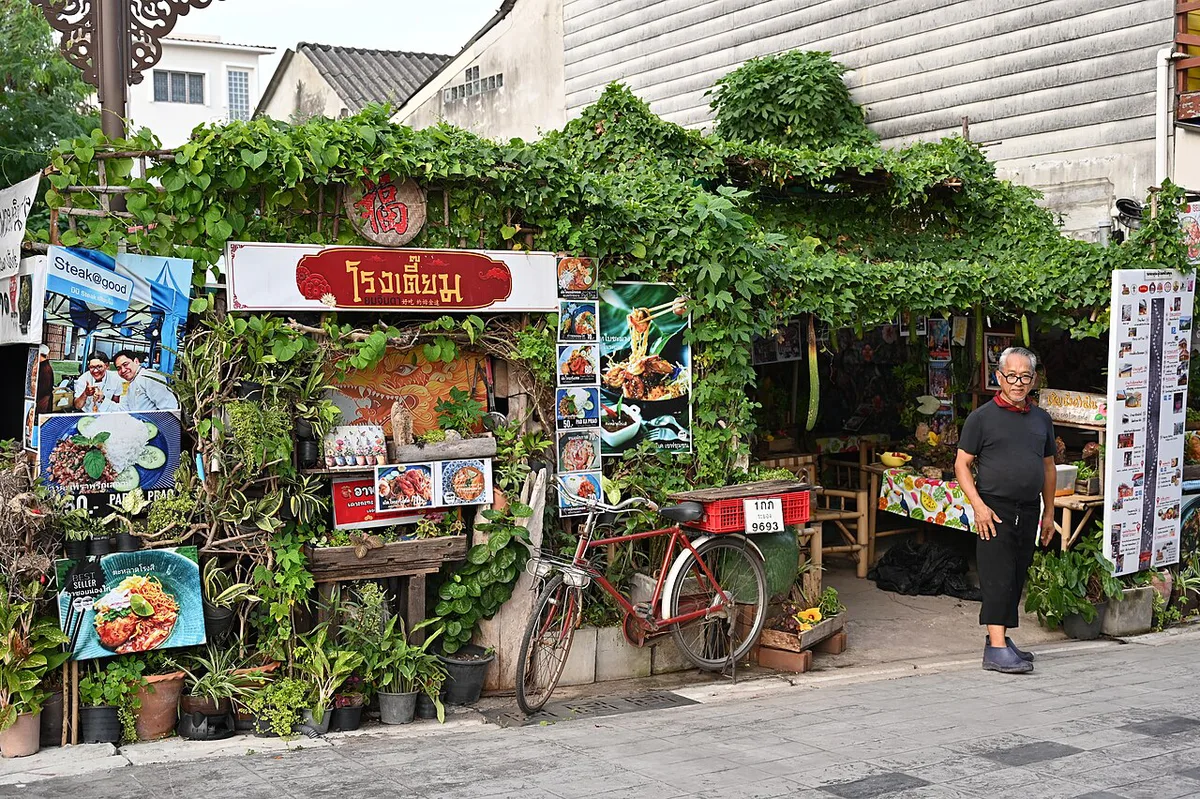
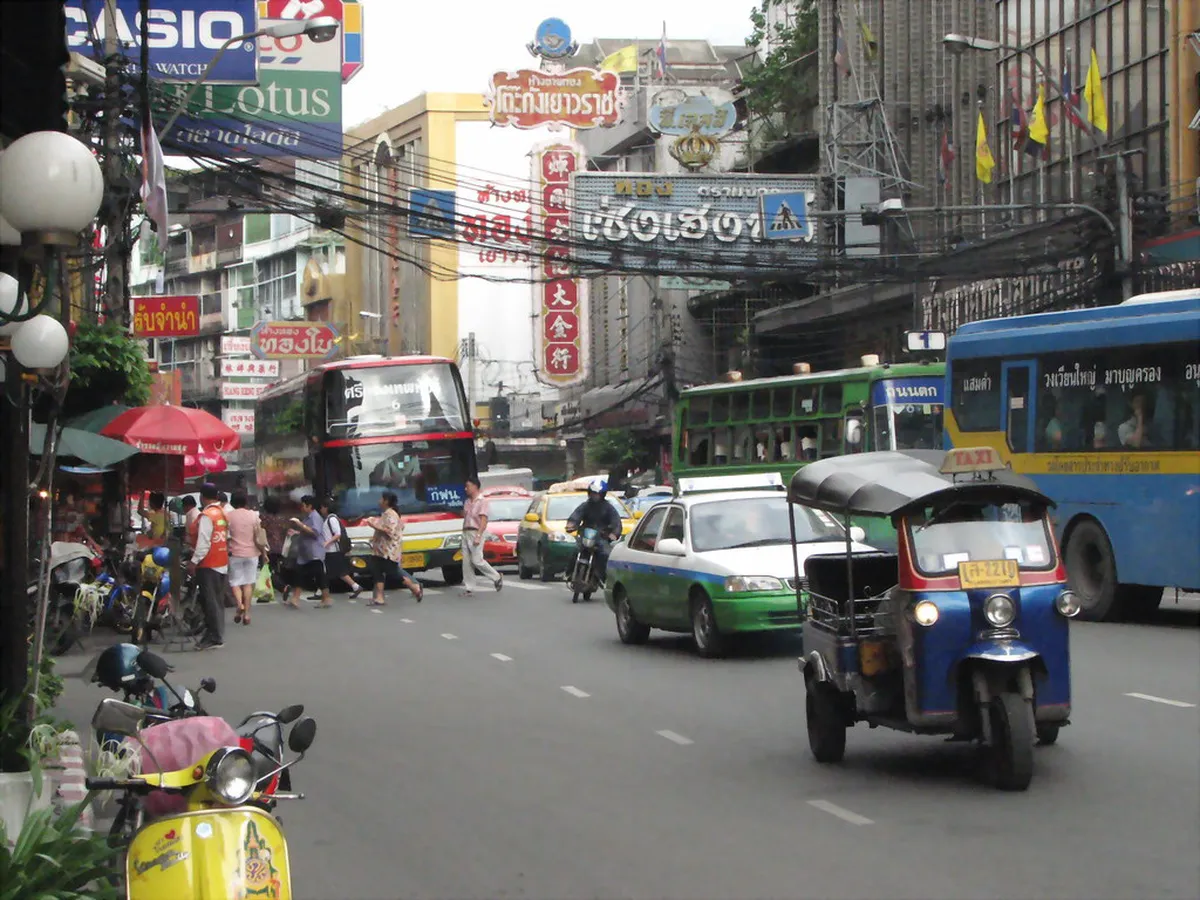
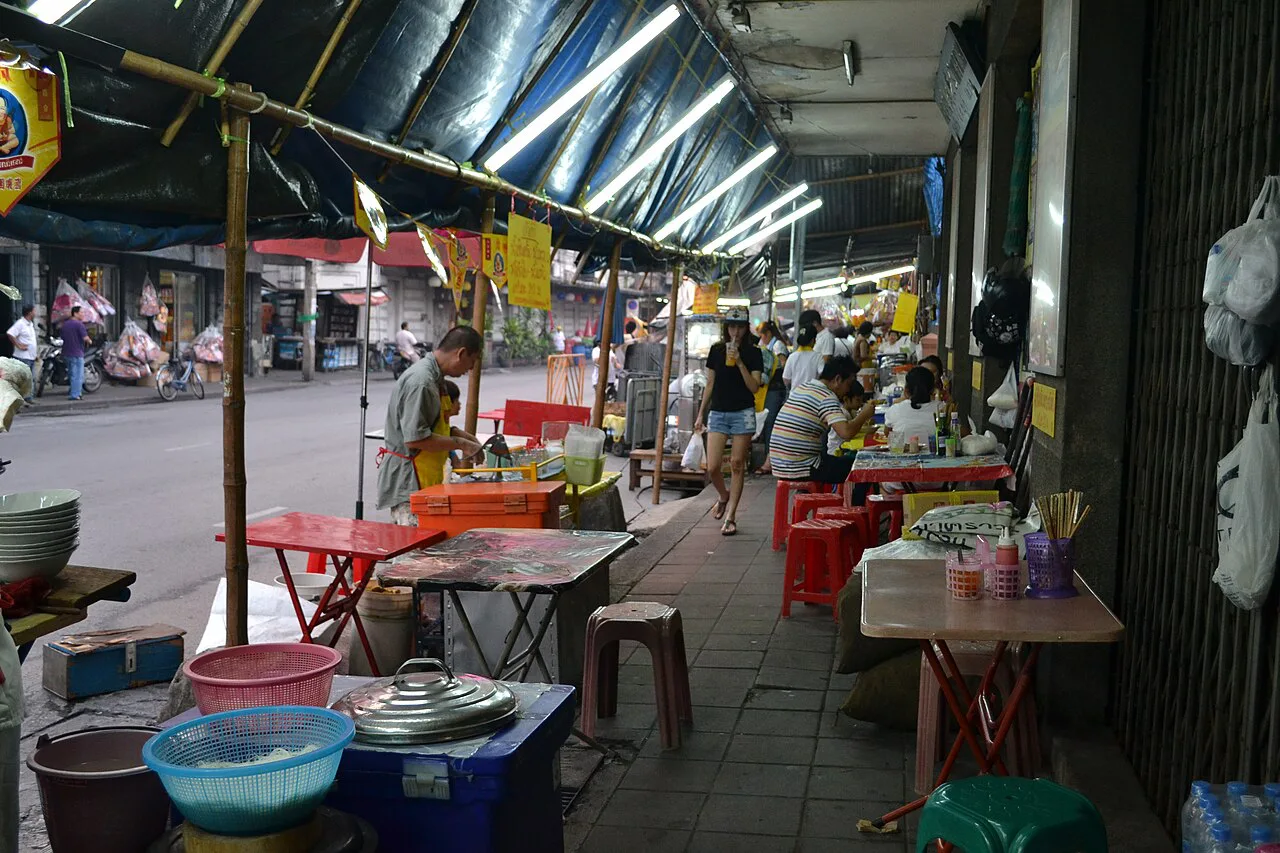
At a restaurant, ask for the menu with ขอเมนู (kho menu). At a stall, point at the dish and say its name or hold up fingers for the quantity. Pointing is a normal way to order, and nobody will think less of you. Dishes arrive in whatever order the kitchen finishes them, so a noodle bowl may land before the starter. For table manners and sharing, read our guide to eating Thai food properly. Count dishes with a classifier. Use จาน (jaan) for a plate and ชาม (chaam) for a bowl. Then say whether you eat here, กินที่นี่ (gin thii nii), or take it away, เอากลับบ้าน (ao klap baan). Here are three full orders built from the pieces above.
- One iced coffee, no milk, no sugar: ขอกาแฟเย็น ไม่ใส่นม ไม่ใส่น้ำตาล (kho gaafae yen, mai sai nom, mai sai naam taan).
- One plate of pork basil stir-fry, a little spicy: ผัดกะเพราหมู เผ็ดนิดหน่อย (pad kaphrao muu, phet nit noi).
- Fried rice without shrimp, to go: ข้าวผัด ไม่ใส่กุ้ง เอากลับบ้าน (khao pad, mai sai kung, ao klap baan).
Controlling Spice, Sweetness and Add-ons
Start with ไม่เผ็ด (mai phet) for not spicy or เผ็ดนิดหน่อย (phet nit noi) for a little spicy. Cooks often adjust to what they expect from visitors, so you may still meet real heat. Mai sai removes one named ingredient, but it does not strip stock or sauce that is already in the dish. Ask for ice-free drinks or less sugar the same way: ไม่ใส่น้ำตาล (mai sai naam taan). Table seasonings let you build heat yourself at the end. Our guide to Thai table condiments explains the jars you will find. Hot coffee is ร้อน (ron) and iced is เย็น (yen), so say which one when you order.
Allergies, Vegetarian and Dietary Phrases
To say you are allergic, use แพ้ (phae) plus the food. Peanuts, for example, is แพ้ถั่วลิสง (phae thua lisong). For vegetarian eating, กินเจ (gin jay) is the usual phrase, though it can imply a stricter food style than Western vegetarianism. Hidden ingredients are the real risk. Stock, fish sauce, shrimp paste and egg can sit inside dishes that look plain. A spoken phrase is not a safety guarantee. If an allergy is serious, show a written Thai allergy card and ask the cook directly.
| English | Thai script | Romanization |
|---|---|---|
| Peanut | ถั่วลิสง | thua lisong |
| Egg | ไข่ | khai |
| Shrimp | กุ้ง | kung |
| Fish | ปลา | plaa |
| Fish sauce | น้ำปลา | naam plaa |
| Shrimp paste | กะปิ | kapi |
Menu Word Decoder
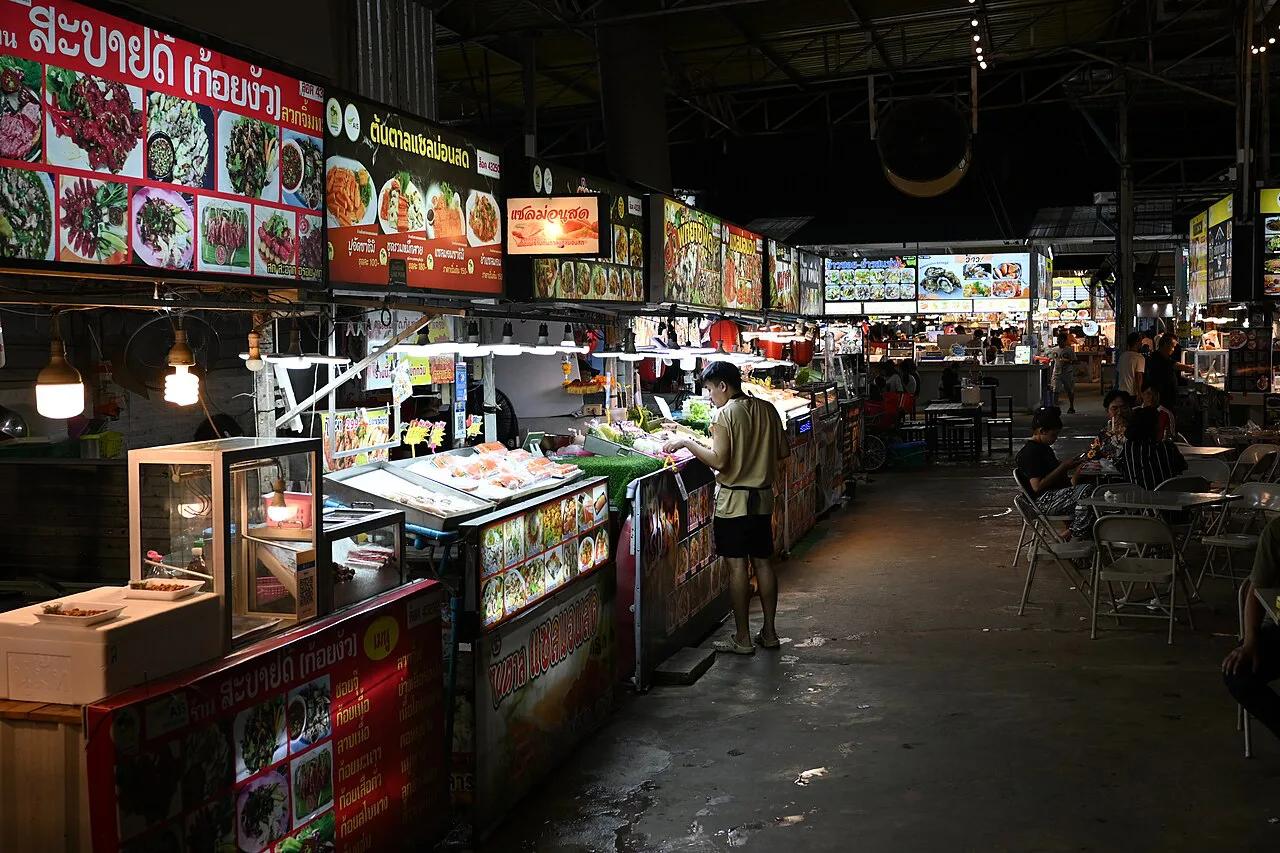
Menus often name the cooking method first. Learn these few words and a dish name stops being a mystery. Sticky rice and curry also have their own words, which you will see on stall signs. Meat words matter if you avoid pork or beef.
| Word | Thai script | Romanization | Meaning |
|---|---|---|---|
| Stir-fried | ผัด | pad | Fried in a wok |
| Grilled | ย่าง | yaang | Grilled over heat |
| Boiled or soup | ต้ม | tom | Boiled dishes and soups |
| Rice | ข้าว | khao | Rice, also a meal |
| Sticky rice | ข้าวเหนียว | khao niao | Sticky rice |
| Curry | แกง | kaeng | Curry |
| Pork | หมู | muu | Pork |
| Chicken | ไก่ | kai | Chicken |
| Beef | เนื้อ | nuea | Beef |
Paying, Tipping and Being Polite
Say ขอเช็คบิล (kho check bin) and wait; staff will bring the bill to you. Ka and khap are polite particles, and the speaker's gender decides which one you use. Adding one to a short phrase softens it. Thai Ministry of Culture materials on Thai cultural customs are a good next read for tone and manners. Our Thai food etiquette guide covers the rest of table behavior. For what to leave behind, see tipping in Thai restaurants. To judge what a meal should cost, check typical food costs in Thailand.
Which Phrases to Learn First
Do not try to memorize everything. Pick the set that fits your trip, and keep the script on your phone for the rest.
- Food-curious: aroi, nii khue arai and ao iik neung.
- Vegetarian: gin jay, mai sai, and the shrimp paste and fish sauce words.
- Allergic: phae plus your allergen, and a written Thai allergy card.
- Short stay: mai phet, kho check bin, and ka or khap on everything.
Thai food notes for your next trip
Optional updates to our food guides.
You might also like
Continue reading
More guides you'll find useful