How to Order Street Food in Thailand: Point, Phrases and Paying
Never spoken Thai? Learn how to order street food in Thailand: pointing, key phrases, spice levels, paying and dietary tips, by vendor type.
On this page
Last updated November 2026. Knowing how to order street food in Thailand comes down to five moves: point, name, customise, pay and eat. We'd start with the stalls where pointing is enough, then add phrases as your confidence grows. This guide sits under our wider Thai street food guide and focuses on the mechanics at the stall.
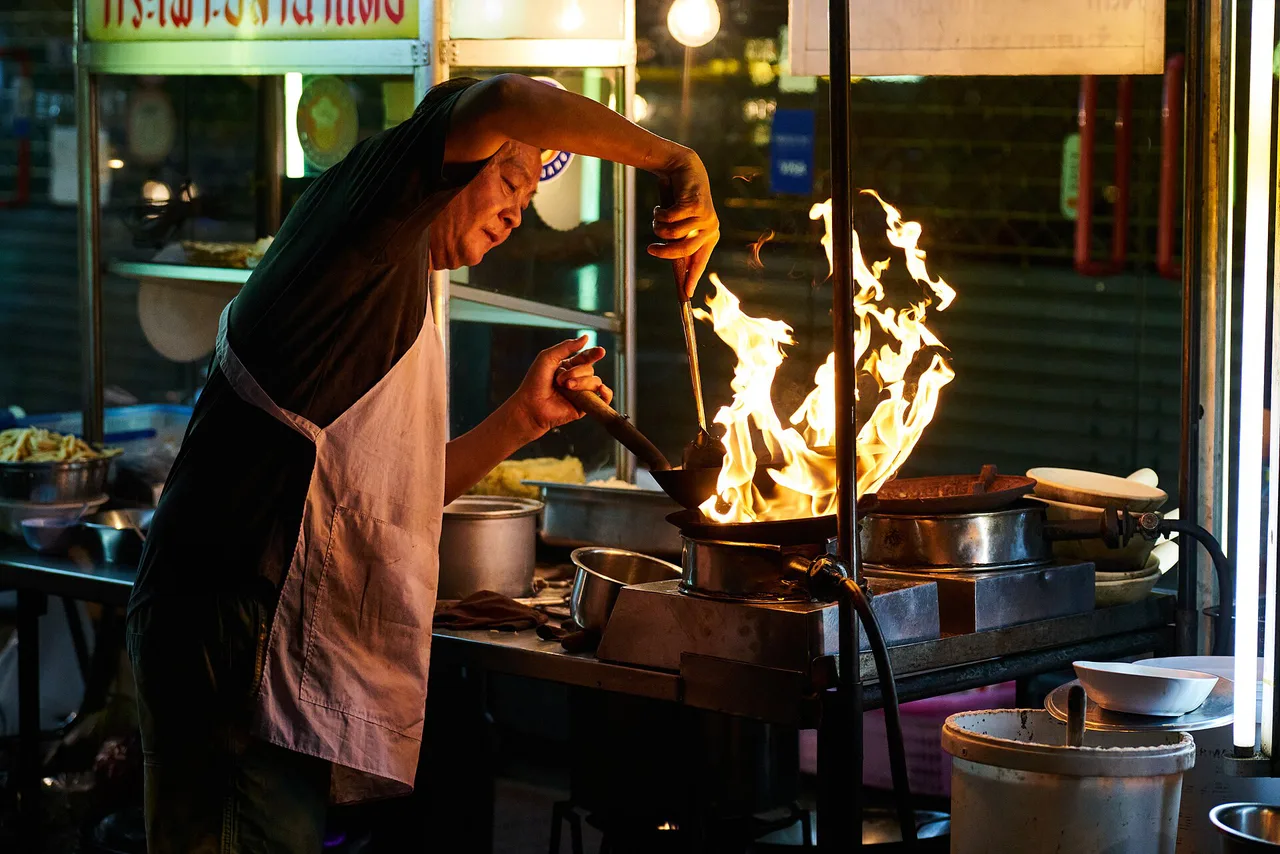
Featured image: Takeaway, CC BY-SA 3.0, via Wikimedia Commons.
The short answer: how ordering works
Most stalls need no shared language. Point at the food or at another customer's plate, then add protein, spice level and "here or takeaway". Payment happens at the cart or after you eat, depending on the vendor type. Bangkok is our main example, but the same logic applies in any Thai town.
- Point at the dish, the display or a neighbour's plate.
- Name it if you know it, or say "one of this".
- Customise: protein, spice, egg, rice or noodles.
- Say whether you're eating here or taking it away.
- Pay at the cart, or after eating if you sat down.
Know which kind of vendor you're at
Each vendor type has its own rhythm. Match your approach to the setup you see, and ordering gets much easier. Skewer carts suit first-timers, and our guide to street snacks covers what to grab there.

| Vendor type | How to order | Mistake to avoid |
|---|---|---|
| Grill or skewer cart (moo ping, satay) | Point, hold up the number of sticks, pay per stick | Grabbing sticks before the vendor reheats them |
| Display-case or curry-rice stall | Point at one or two toppings over rice | Pointing at everything and ending with a mixed plate you can't finish |
| Wok or made-to-order stall (อาหารตามสั่ง) | Dish name + protein + extras, such as a fried egg | Skipping the spice level |
| Noodle shop | Choose noodle type, soup or dry, and size | Assuming one bowl is a full meal |
| Market food court | Some use coupons or tokens, so watch what locals do first | Sitting down before you know the payment system |
Point, show, or say: ordering without Thai
Pointing works because food is on display. At a busy cart, wait until you spot a dish that looks good on someone's plate, then point at it and at the vendor. A saved phone photo or a translation app fills the gaps. Many vendors reportedly know English names for meats, so "chicken" or "pork" usually lands. Here are two sample exchanges that stay generic, with no invented stall names.

- Noodle stall: you point at a bowl and say "one of this". The vendor asks "dry or soup?" by gesturing. You pick one and hold up a finger for the size.
- Noodle stall, step two: you add "mai phet" (not spicy). The vendor nods, cooks it, and points at an empty stool.
- Rice-and-curry stall: you point at one curry and one stir-fry. The vendor lifts a plate to ask "here or bag?" You answer "eat here" and take a seat.
- Rice-and-curry stall, step two: the vendor adds rice and a fried egg if you ask. You pay at the counter when you finish.
The order formula and phrases
Our formula is dish + protein + spice + extras. Even a half-formed version works, such as "pad kra pra, chicken, mai phet". Thai is tonal, so have a Thai speaker or a reputable language source confirm the tones. Locals will understand a good-faith attempt, and pointing backs it up. For dish names to learn first, see our street food dishes list.

| Meaning | Romanization | Thai | Mistake to avoid |
|---|---|---|---|
| One of this | ao an nii | เอาอันนี้ | Pointing without saying anything, which leaves the quantity unclear |
| Not spicy | mai phet | ไม่เผ็ด | Saying it only once the dish is already cooked |
| A little spicy | phet nit noi | เผ็ดนิดหน่อย | Assuming "a little" matches your home heat level |
| No pork | mai sai mu | ไม่ใส่หมู | Forgetting that broths and shared grills may still involve pork |
| Takeaway (in a bag) | sai thung | ใส่ถุง | Ordering takeaway at a stall that only serves sit-down |
| Bill please | check bin | เช็คบิล | Waiting for a bill at a cart where you pay on the spot |
Customising: spice, ingredients, egg, rice
Ask for a mild version first. You can always add chilli from the condiment caddy. Som tam shows why. A central Thai version is milder and sweeter, while an Isan style version can be far more pungent and fermented. Boat noodles come in small bowls, so people typically order several. Fishball noodles come dry or in soup, with egg, thin rice or wide rice noodles. In Thailand, pad thai reportedly comes without peanuts and with egg scrambled in, fried on the side or wrapped as an omelet. Say "no egg" if you want to skip it. Browse more options in our dish-by-dish breakdown.
Paying, change and etiquette
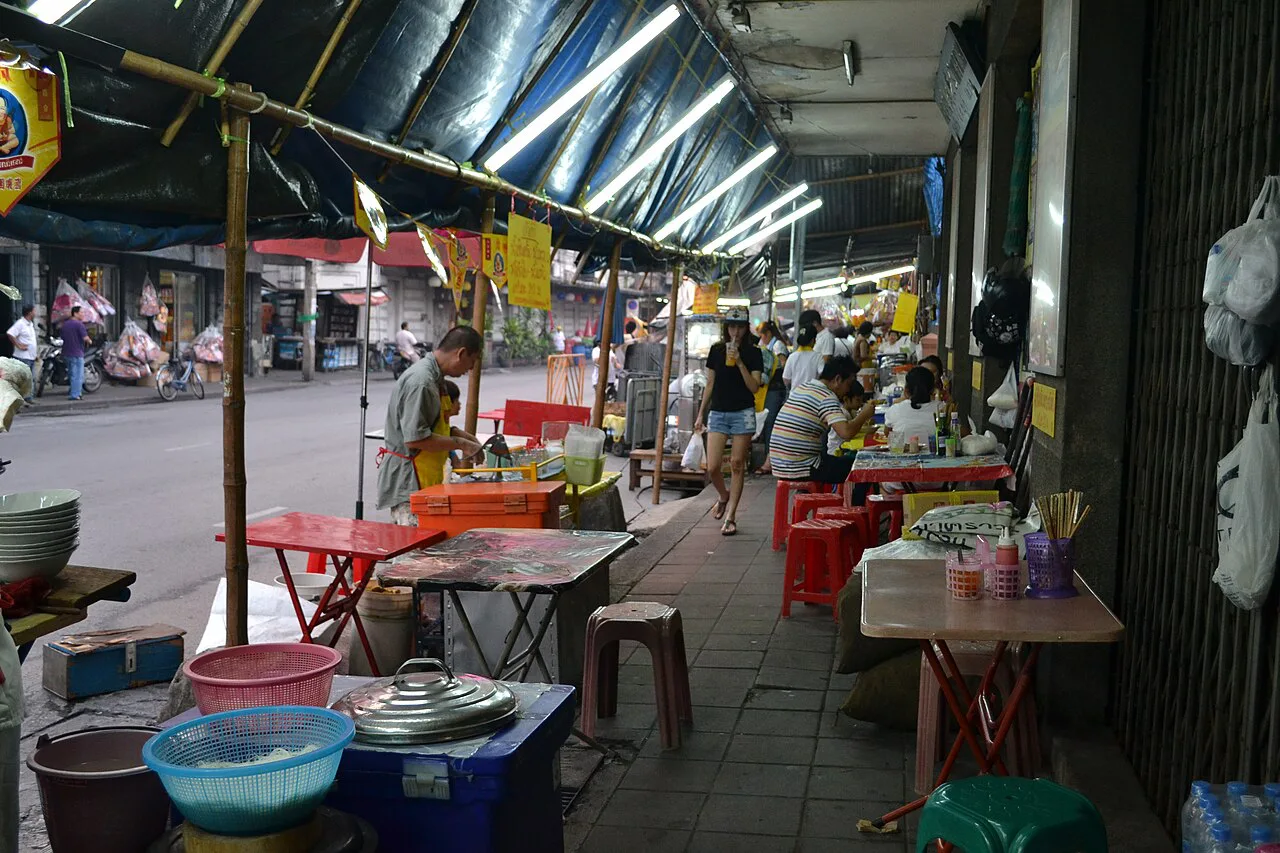
At skewer carts and takeaway stands, pay when you collect. At sit-down stalls, you generally pay after eating, but copy the table next to you. Carry small notes and coins, because small stalls rarely have change for large bills. Some vendors display QR codes, though we wouldn't count on it at a basic cart. Seating is often plastic stools, and sharing a table is normal. Most dishes come with a fork and spoon. Chopsticks mainly appear with Chinese-style noodle soups. Knives are rarely used.
Choosing a stall: crowds, turnover, hygiene
Our pick is the busiest cart in sight. High turnover means fresher ingredients, and you may wait a little longer. Prefer food cooked in front of you. Peel fruit yourself, and stick to bottled water or sealed drinks. Treat these as sensible habits, not guarantees. If your stomach is sensitive, noodle soups are a gentler start than deep-fried snacks. If you'd rather not order at a stall yet, our convenience store food guide is a low-pressure fallback. You can also browse stalls named in the Michelin Guide Thailand for ideas.
Dietary needs and allergies
Vegetarian and vegan ordering takes care. Eggs or tofu may be cooked on a grill or in a pan that also handled pork, chicken or shrimp. Tofu noodle soup can come in meat broth. Fish sauce is common across Thai dishes. Say "mai sai mu" for no pork, and point to what you want to avoid. Kin Jay, the vegan festival, runs in October, and vendors signal it with yellow banners. Check current festival information for the exact dates. With limited shared language, strict allergies such as shellfish or peanut carry real risk, so we'd skip stalls where you can't confirm ingredients.
Where and when to order: timing and logistics
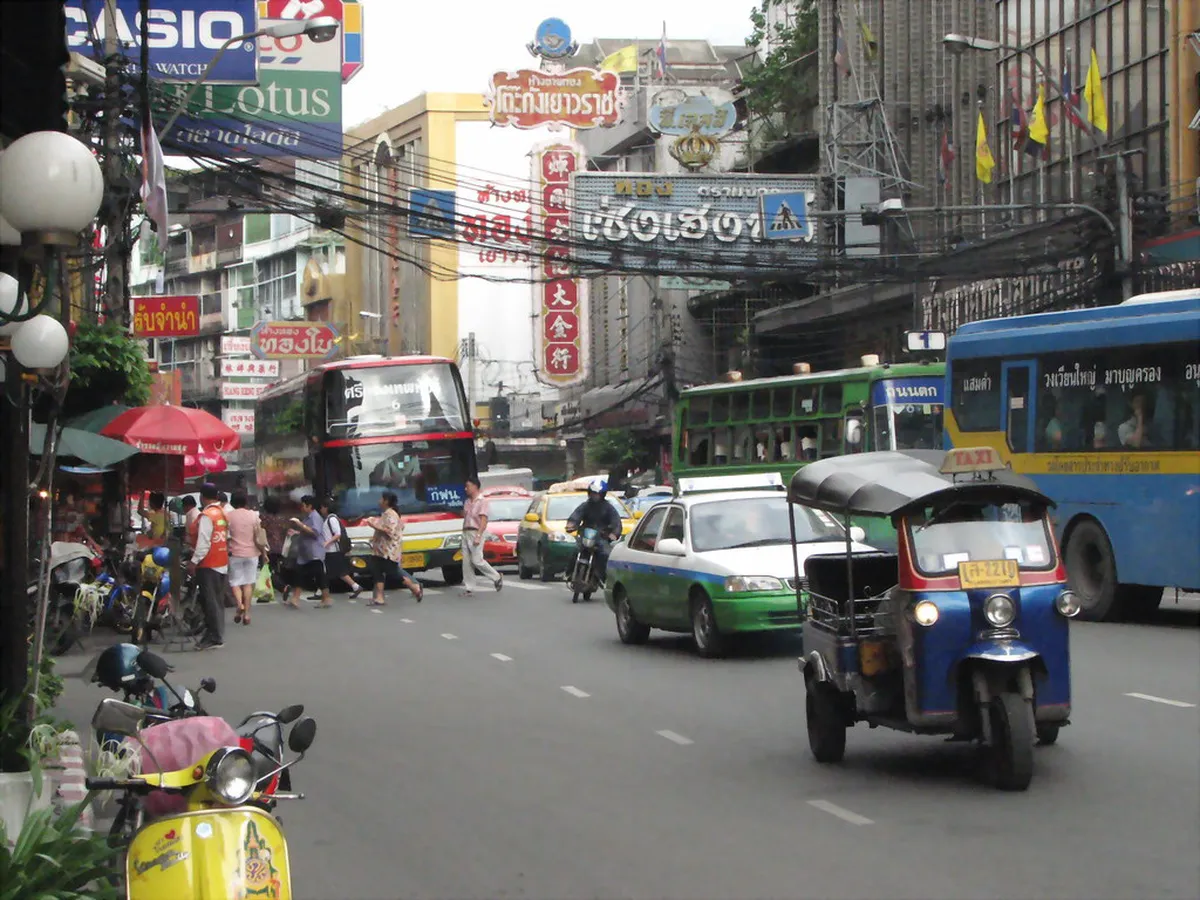
Carts cluster where foot traffic is heavy. That means BTS stops, markets, university areas and business districts. Some set up in front of shops after they close for the day. Chinatown in Bangkok is a strong area for a first walk. Named stalls keep short or irregular hours. For example, Nai Mong Hoi Tod in Chinatown has been reported closed Monday and Tuesday, so check before going. Our first-meal route: start with a skewer cart for pointing practice, then a noodle shop for the soup-or-dry choice, then a rice stall for spice practice. Bangkok stalls are fast and high-turnover, with little English. Smaller-city markets move slower and may have fewer vendors, so we'd give yourself extra time there.
Cost expectations
Street food is generally cheaper than sit-down restaurants, and single skewers cost less than a full noodle bowl. Older guides quote very low prices that may no longer hold, so we won't repeat them. Look at what locals pay, and ask the vendor with a finger-point and "tao rai?" if there's no menu. Our street food price guide gives a current cost framework.
Common mistakes
Most first-day errors are easy to avoid.
- Ordering too much at the first stall. Boat noodle bowls are tiny, so start with two or three.
- Not specifying spice. Say "mai phet" or "phet nit noi" up front.
- Pointing at everything at a rice-and-curry stall. Pick one or two toppings.
- Assuming pad thai arrives with peanuts. In Thailand, it reportedly often doesn't.
- Expecting English menus. Many stalls have none, so use photos and pointing.
Thai food notes for your next trip
Optional updates to our food guides.
You might also like

Continue reading
More guides you'll find useful