Thai Street Snacks: What to Try, Prices & How to Order
Which Thai street snacks to try first, rough baht prices, when to find them, how to order, and how to eat safely.
On this page
Last updated November 2026: Thai street snacks are small grilled, fried and sweet items you can eat on foot, and six of them cover most of what first-timers want. Meals like pad krapao and tom yum sit in our full street dishes guide. For the wider picture, start at the Thai street food hub.
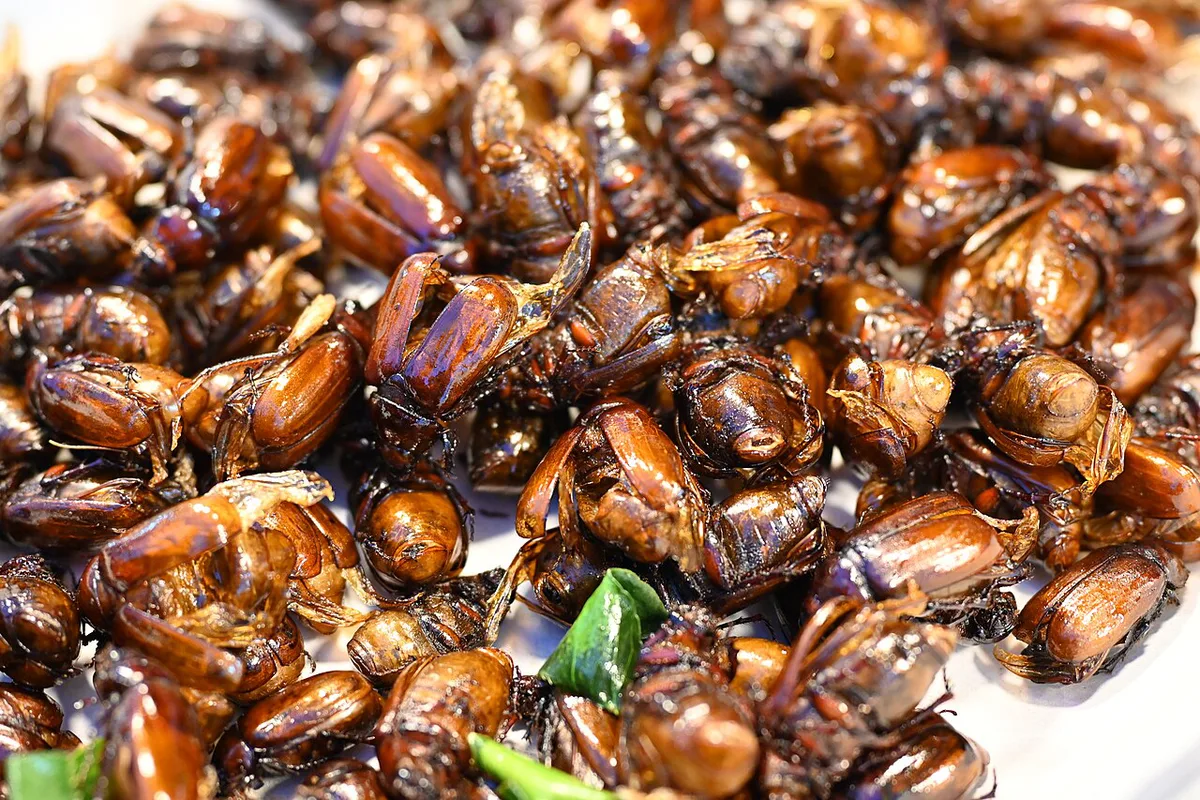
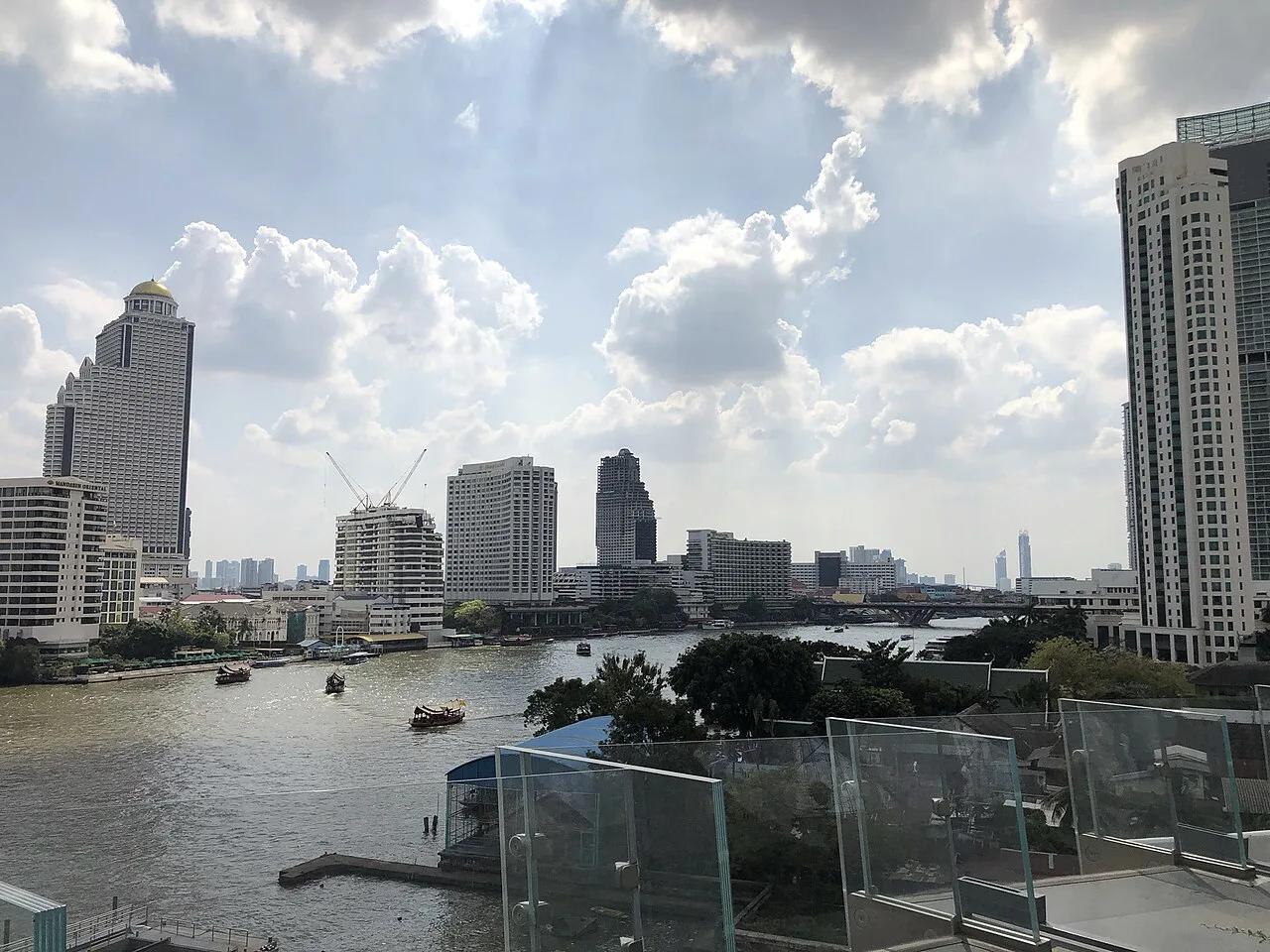
Featured image: PattayaPatrol, CC BY-SA 4.0, via Wikimedia Commons.
Quick answer: the Thai street snacks to try first
We'd start with moo ping, kai tod, sai krok Isan, khanom krok, banana roti and sugar cane juice. Together they cover grilled, fried, sweet and cooling snacks, and none needs a table. Our pick for a first walk is moo ping with sticky rice, because it is cheap, mild and sold at stalls across Bangkok.
- Moo ping (หมูปิ้ง): sweet grilled pork skewers, no heat, a morning staple.
- Kai tod: Thai fried chicken, sold by street vendors nearly everywhere.
- Sai krok Isan: grilled fermented sausage with a sour edge.
- Khanom krok: coconut pancakes cooked to order in a dimpled pan.
- Banana roti: thin fried dough folded around sliced banana.
- Sugar cane juice: pressed in front of you, the easiest cooling drink.
Thai street snacks at a glance
This table compares heat, sweetness and vegetarian options. Most savory items contain pork, fish sauce or shrimp by default, so vegetarians should read the notes column.
| Snack | Type | Heat | Vegetarian? | Best time |
|---|---|---|---|---|
| Moo ping | Savory, grilled | None | No (pork, fish sauce) | Morning |
| Kai tod | Savory, fried | None to mild | No | Afternoon to evening |
| Sai krok Isan | Savory, grilled | Mild | No | Evening |
| Khanom krok | Sweet, made to order | None | Usually yes; ask about egg | Afternoon to evening |
| Banana roti | Sweet, griddled | None | Often yes; egg is optional | Evening and late night |
| Roti sai mai | Sweet, spun sugar | None | Usually yes | Afternoon to evening |
| Cut fruit on ice | Fruit | None | Yes | Midday heat |
| Sugar cane juice | Drink | None | Yes | Midday heat |
Savory grilled and fried snacks
Moo ping are small charcoal-grilled pork skewers. The marinade typically combines coconut milk, garlic, coriander root, fish sauce and palm sugar. Sticky rice comes in a small plastic bag, and you eat standing at the curb. Gai tod, spelled kai tod on many menus, is fried chicken that Michelin Guide Thailand has covered as a dish found everywhere. It pairs with som tam and sticky rice, and a stall that lacks one usually has a neighbor selling it.
Sai krok Isan is a grilled sausage from the northeast with a fermented, sour note. In Chiang Mai night markets, small sai ua links of about 3 inches are sold instead. Those are northern sausages packed with lemongrass and herbs. Quail eggs are sold on plates of roughly 5 to 7. Salapao, the steamed buns filled with meat or sweet beans, tend to come from mobile vendors.
Khanom and sweet snacks
Khanom is the Thai word for sweets and snacks. Glass-covered carts often hold pre-made trays of tako (coconut cream jelly), khanom man (coconut cassava cake) and khanom wun (flavored jellies). Khanom krok and khanom bueang are different. Vendors make them to order, so you can watch the batter set. Khanom krok are coconut pancakes with a crisp edge and a soft center, while khanom bueang are wafer-thin crispy pancakes with coconut cream and egg yolk topping.
Sweet roti stalls are often run by Thai Muslim vendors. Banana roti is a thin fried dough folded over sliced banana, drizzled with condensed milk and sometimes topped with egg. Roti sai mai wraps that kind of dough around spun sugar threads. Mango sticky rice peaks from March to June, when mangoes are in season. Outside those months, ask whether the mangoes are ripe before buying.
Fruit, drinks and cooling snacks
Peeled, sliced fruit sits on crushed ice in street carts, which keeps it cold in Bangkok's heat. Sugar cane juice is pressed from fresh stalks while you wait. Thai tea is black tea with sweetened condensed milk and arrives bright orange. Fresh coconut with coconut ice cream is another cooling stop. Ice is generally fine in Bangkok, since the tube ice with a hole through it is factory-made from purified water. Be pickier with loose crushed ice at small, quiet carts.
Night-market and kap klaem snacks
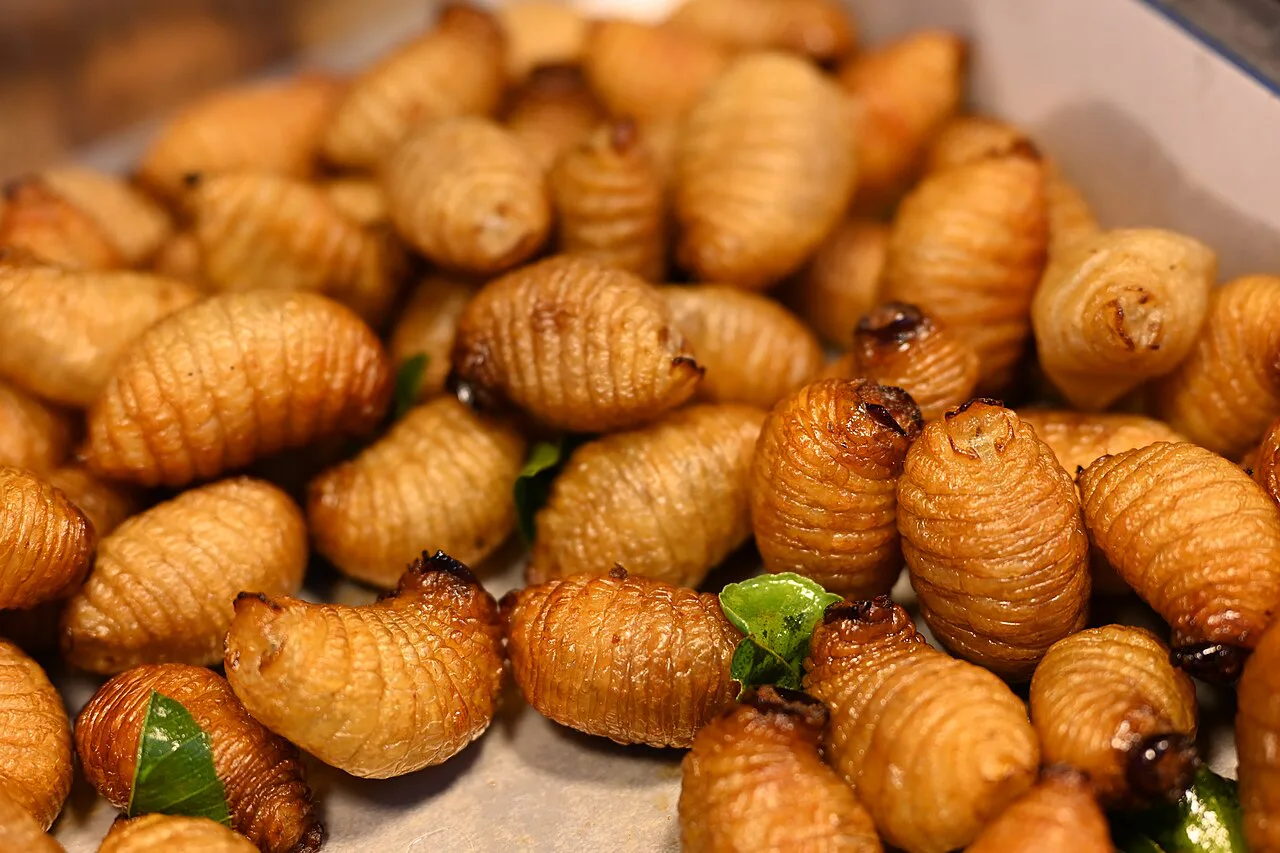
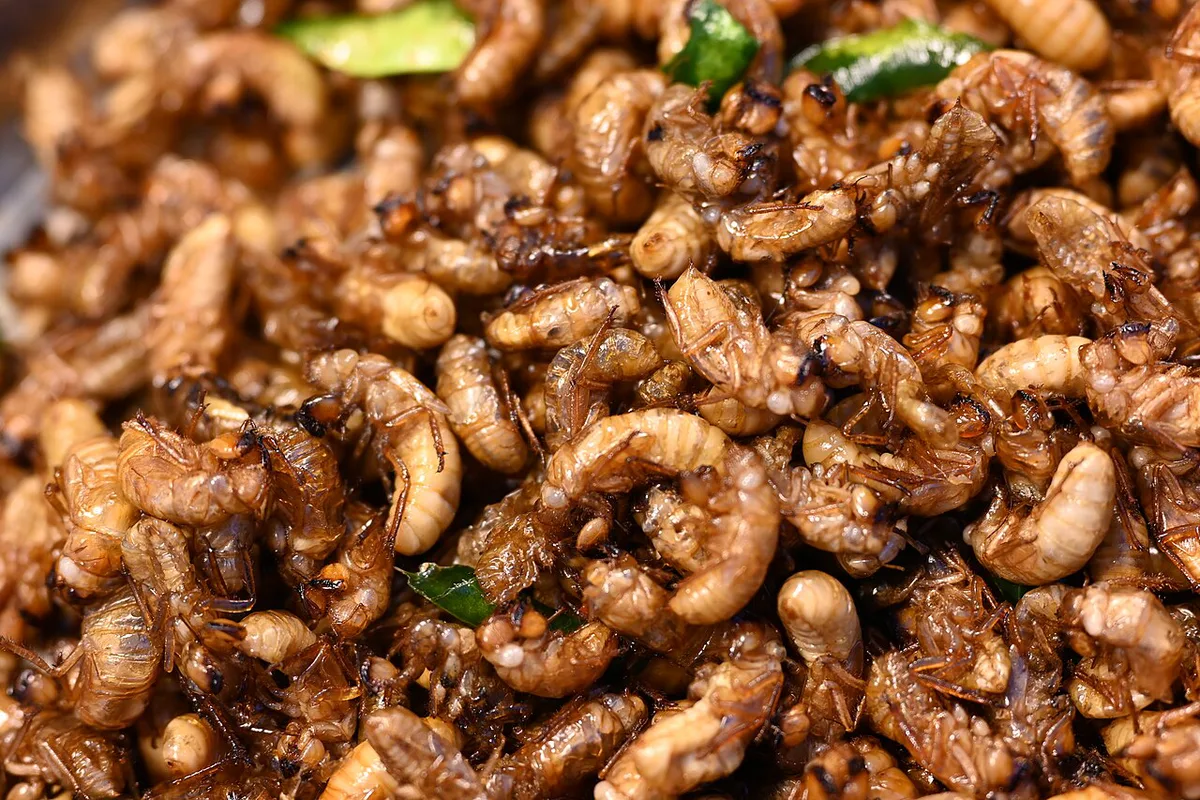
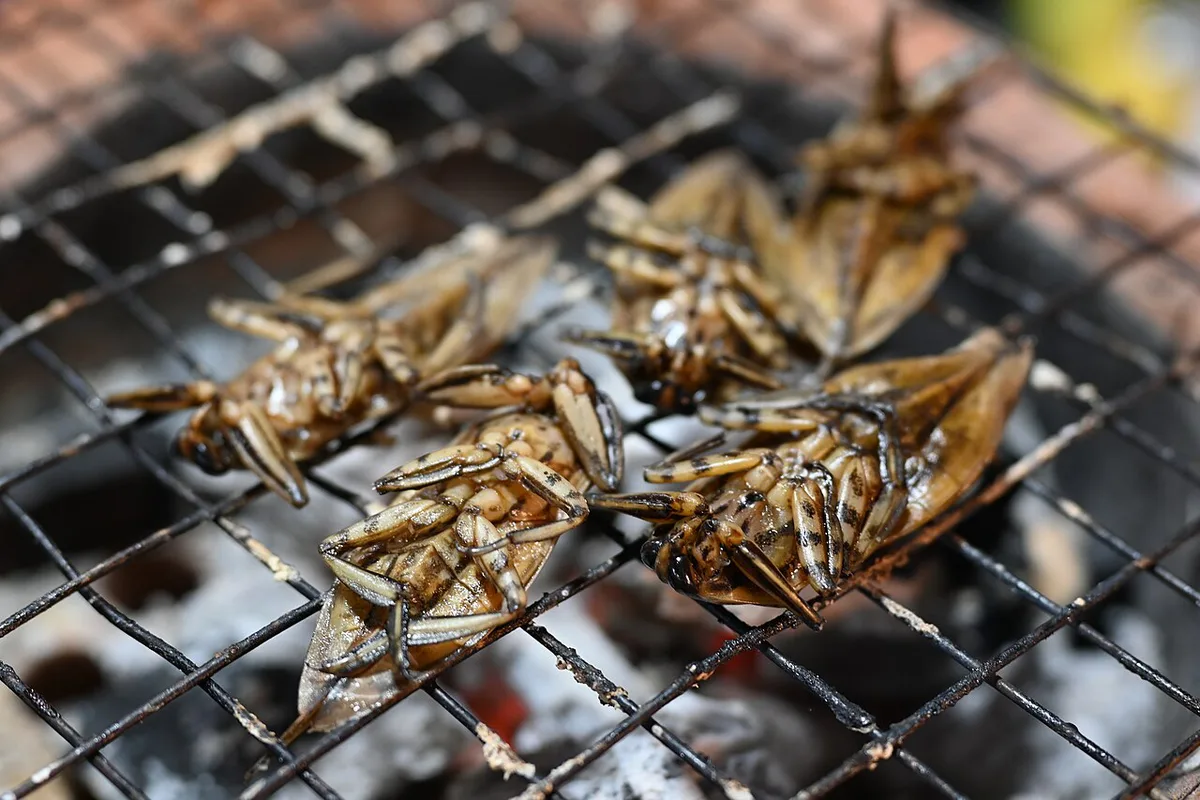
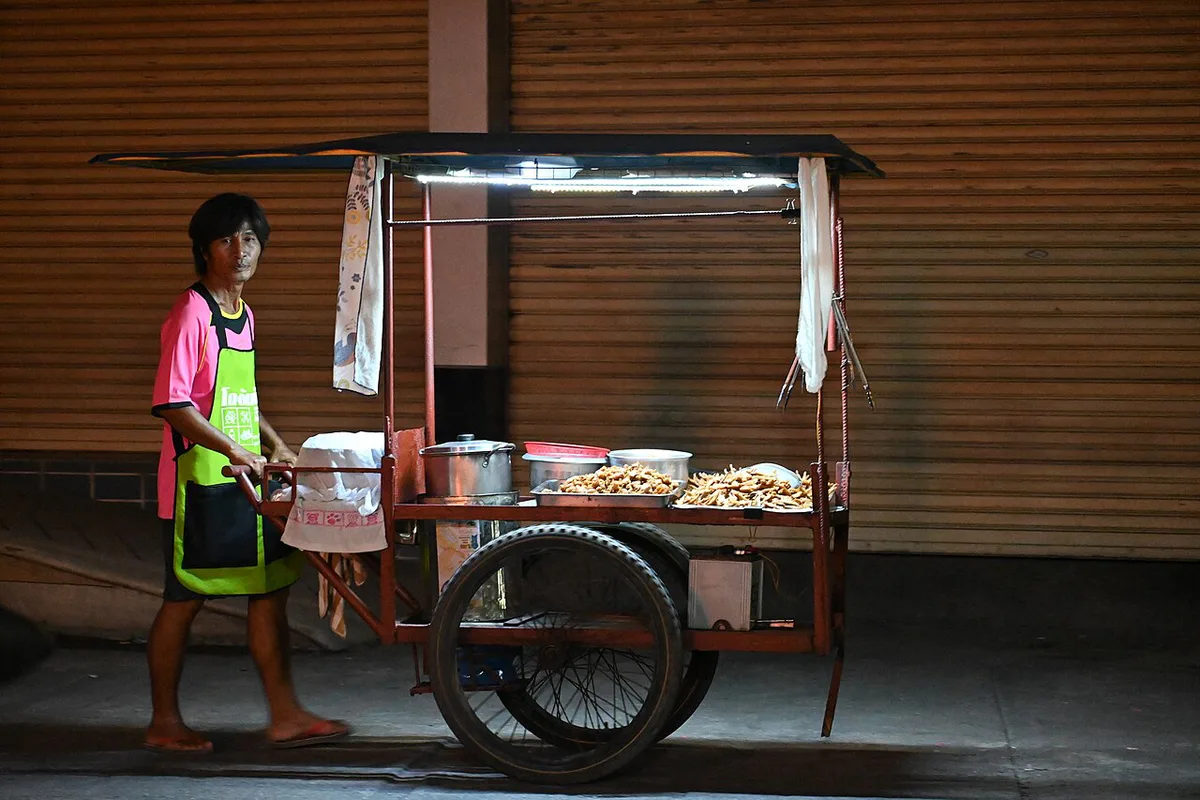
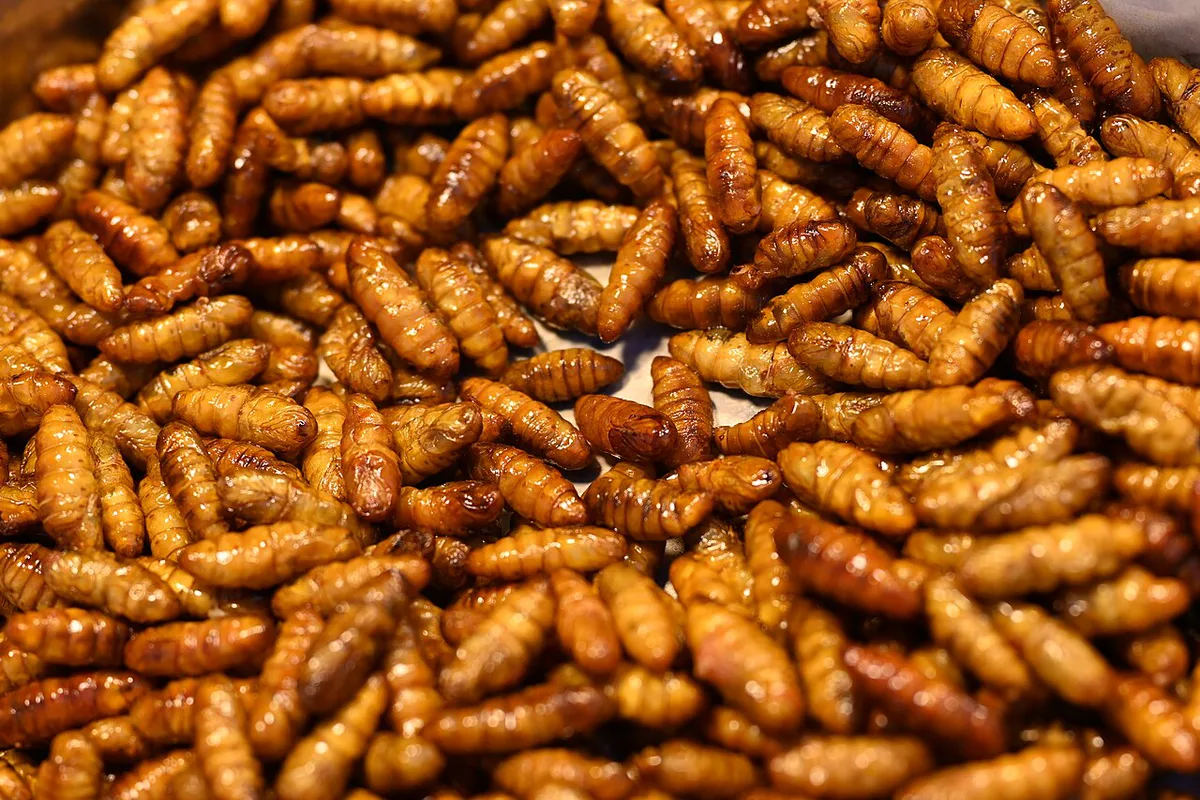
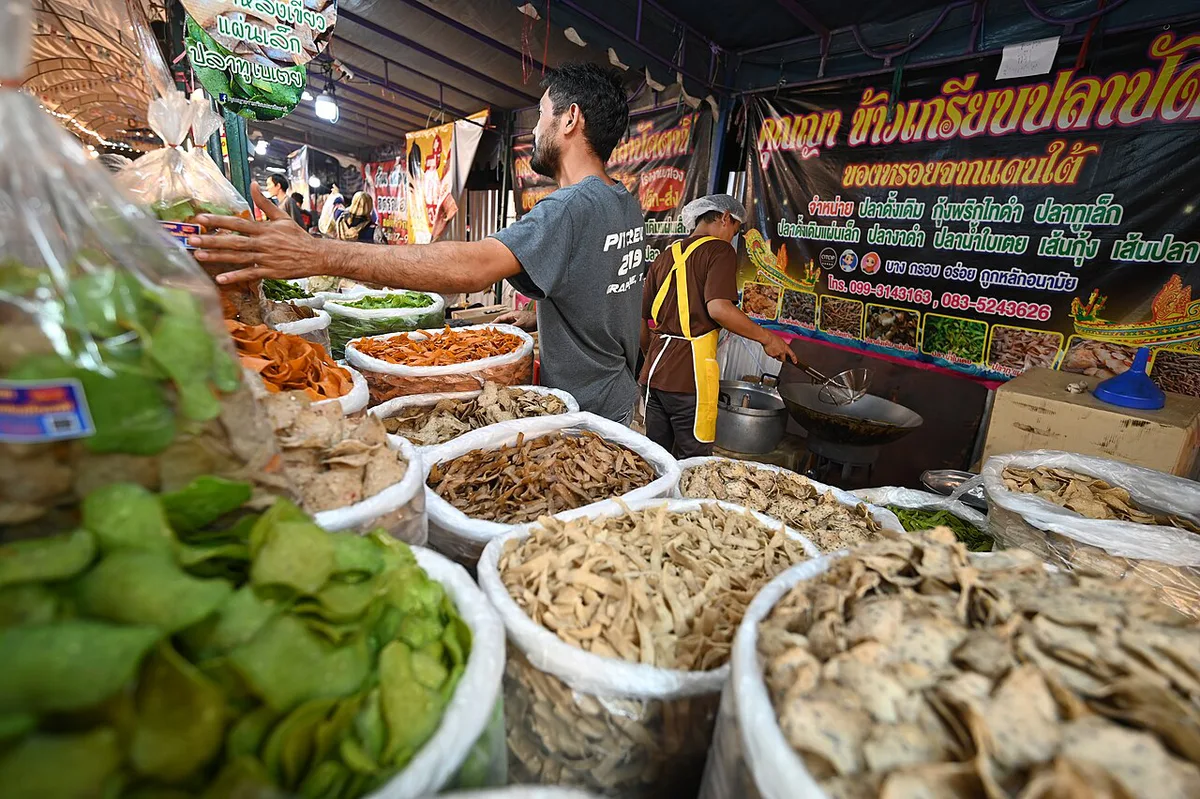
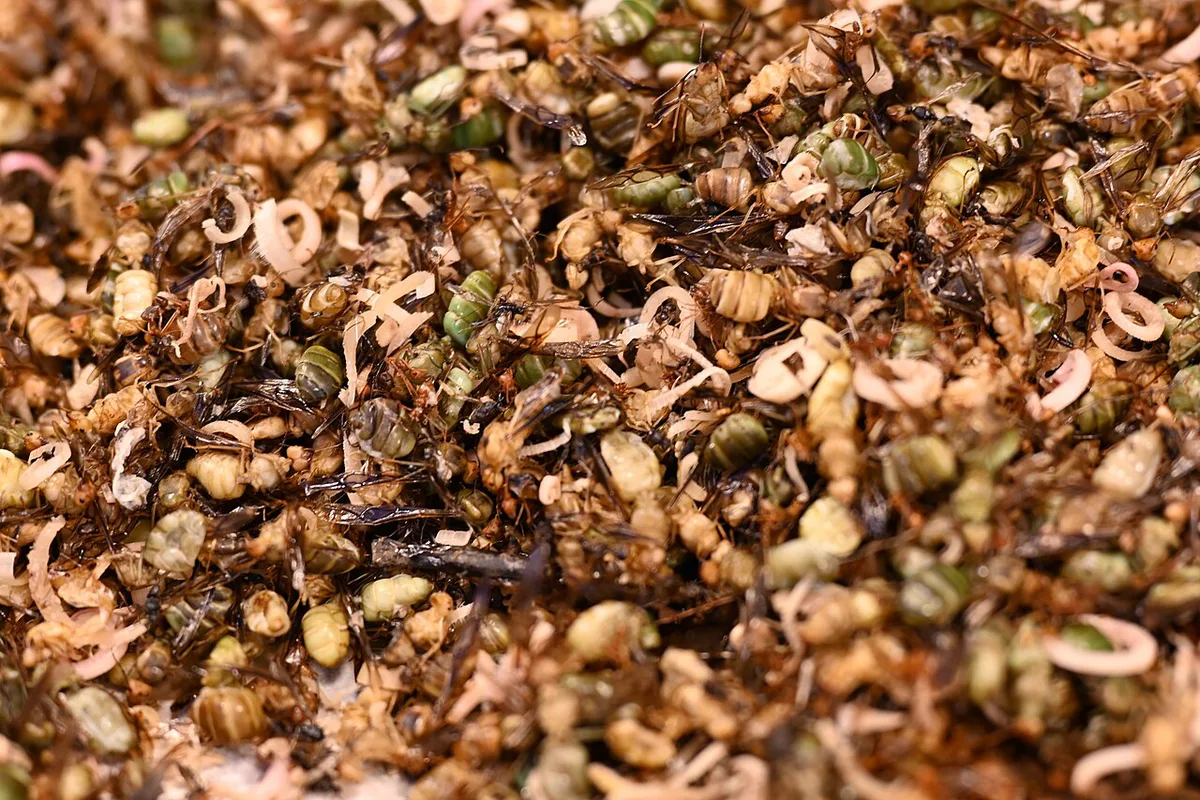
Kap klaem means "drinking food." In the evenings, scooters with sidecars park outside bars and sell sun-dried squid, meat skewers, grilled sour sausages and fried sausages. Night food markets appear in parking lots, along busy streets and at temple fairs once temperatures drop. Fried insects show up at some carts too, and they are optional. Alcohol is sold alongside this food, but you can skip it and still snack well. For general market context, see the Tourism Authority of Thailand.
Kap klaem scooters work the evening and Yaowarat is strongest after 6pm, so save it for dinner rather than breakfast.
When and where to find them
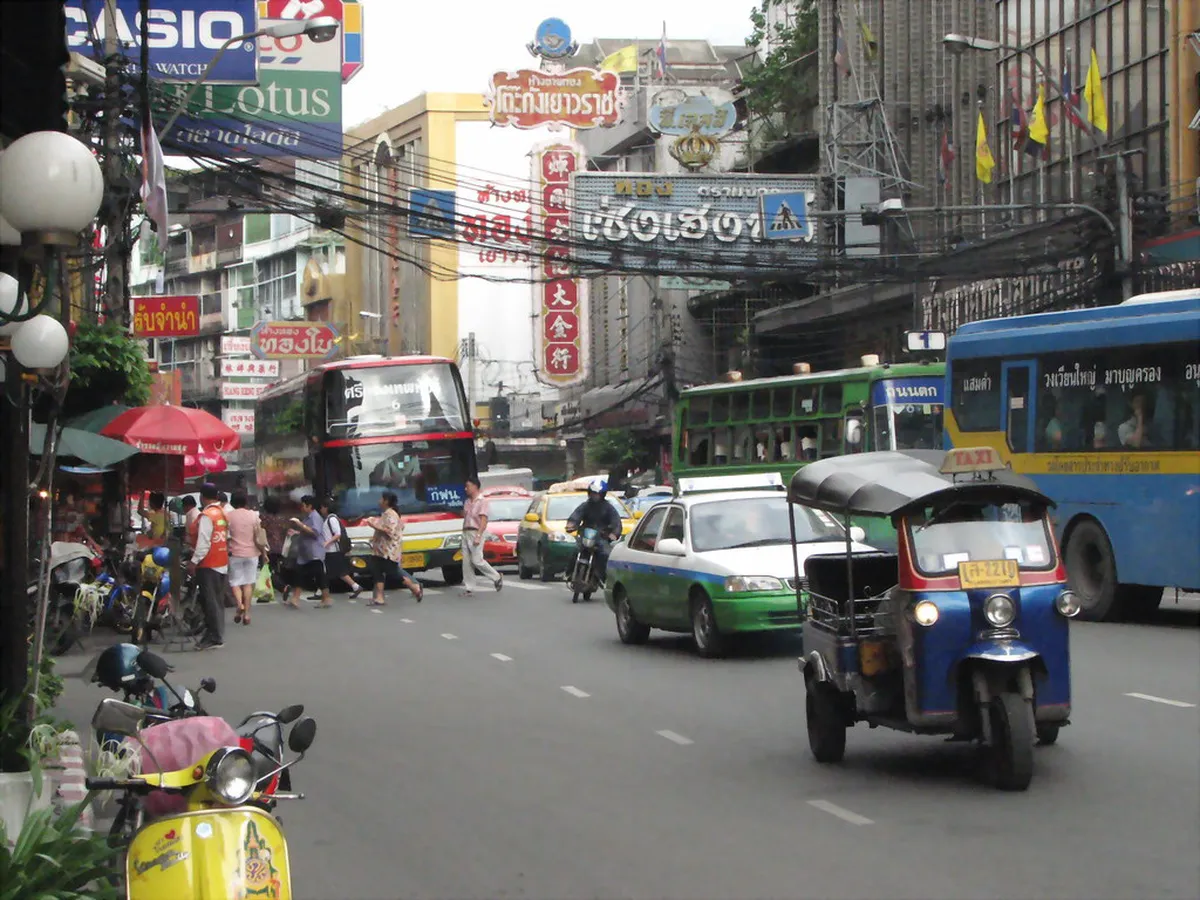
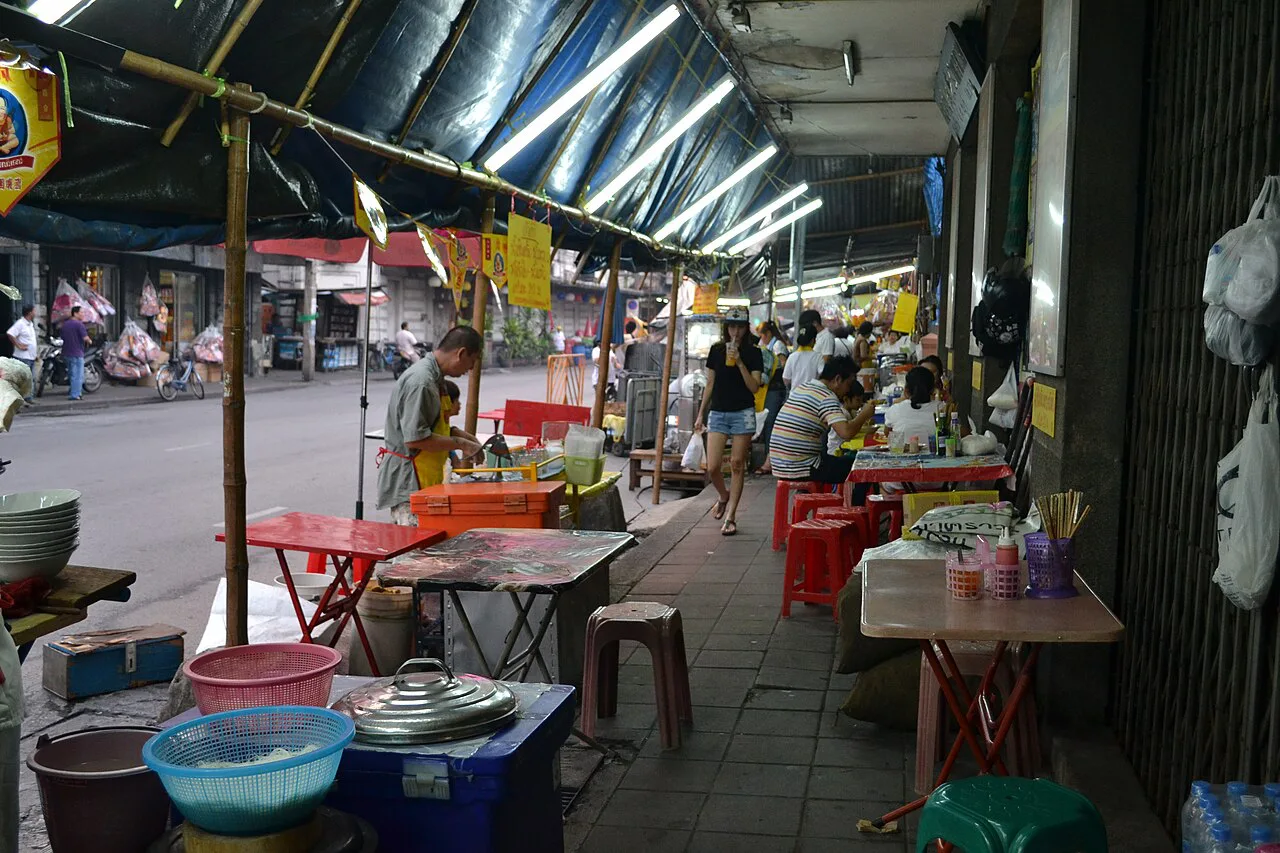
Timing matters more than location. Moo ping is a breakfast item and shows up outside BTS stations and 7-Eleven fronts in the morning. Night markets and roti carts run in the evening. Pre-made khanom trays taste best when freshly set out, so we'd buy them earlier in the day. In Bangkok, Yaowarat (Chinatown) is strongest after 6pm and is noticeably quiet on Mondays. Many central vendors take Monday off for street cleaning. In Chiang Mai, the night market near the old city's North Gate gets going after 5 PM. Stalls move or close, so check recent maps before building a route around one.
| Time | What to look for | Where |
|---|---|---|
| Morning | Moo ping with sticky rice, salapao | BTS exits, 7-Eleven fronts |
| Afternoon | Cut fruit, sugar cane juice, fresh khanom trays | Markets, roadside carts |
| Evening | Roti, khanom krok, sai krok Isan, kai tod | Night markets, Yaowarat |
| Late night | Banana roti, kap klaem skewers and squid | Outside bars, night markets |
How much to budget for Thai street snacks
Baht ranges here are approximate as reported in November 2026, and they vary by location. A moo ping stick runs about 10 to 15 baht, and a bag of sticky rice about 10 baht. Whole street dishes usually cost 40 to 100 baht, so a snack crawl of several items stays well under a restaurant meal. Famous or Michelin-listed stalls charge more. Our street food price breakdown compares the tiers in more detail. For sweets and drinks we'd ask the price before ordering when it isn't posted.
How to order and pay
Pointing works at nearly every stall. Hold up fingers for the number of sticks or pieces you want. For moo ping, "moo ping sam mai, khao niao neung" gets three sticks and one sticky rice. Carry small bills and coins. A vendor selling 10 baht skewers cannot break a 1,000 baht note at 7am. For spice, "mai pet" means not spicy and "pet nit noi" means a little spicy. Our street food ordering guide covers more phrases.
Stick prices of 10 to 15 baht mean a 1,000 baht note at 7am may not be broken, so pack coins.
Eating street snacks safely
Choose busy stalls with steady turnover and food cooked to order over high heat. Be careful with pre-made items that have sat in trays through the afternoon heat. Pick fruit that is peeled in front of you. Ease into raw and fermented items rather than ordering them on day one. If something upsets you, ask a local pharmacist for advice. Allergens deserve a flag: peanuts, shrimp, fish sauce and egg appear in many snacks. Vegetarians can look for yellow flags with the red word "jay," or say "gin jay."
- Skip a stall with no customers and food sitting out.
- Skip crushed ice at quiet carts.
- Skip anything you cannot identify if you have a shellfish or peanut allergy.
Mistakes to avoid and picks by traveler type
Four mistakes come up often. Ordering plain "spicy" on som tam is one. Carrying only large notes is another. Eating at a stall with no turnover is a third. Assuming a named stall still operates is the fourth, because Bangkok's 2017 pavement crackdown moved many vendors.
For first-timers we'd pick moo ping and banana roti. Spice-averse eaters can stick to khanom krok and fruit. Sweet tooths should chase khanom trays and roti sai mai. Late-night eaters should aim for roti carts and kap klaem skewers. If a stall looks doubtful, a 7-Eleven toastie is a safe fallback, and our 7-Eleven snack guide lists options.
Frequently Asked Questions
What are typical Thai snacks?
Typical Thai snacks include moo ping pork skewers, kai tod fried chicken, sai ua sausage, salapao steamed buns and quail eggs. On the sweet side, look for khanom krok, khanom bueang, mango sticky rice and banana roti. Cut fruit and sugar cane juice round things out.
What is the most popular Thai street food?
Among Bangkok locals, pad krapao is reportedly the most commonly eaten street dish. Moo ping, som tam and khao man gai follow close behind. Pad thai is the best known with visitors. For snacks specifically, moo ping is the everyday favorite.
Thai food notes for your next trip
Optional updates to our food guides.
You might also like
Continue reading
More guides you'll find useful