Khanom Krok: Thai Coconut Pancakes and How to Eat Them
What khanom krok is, how it tastes, how to order it fresh from Thai street stalls, and how it compares to other Thai desserts.
On this page
Last updated November 2026. Khanom krok (ขนมครก) is a Thai street-food dessert of small coconut-milk pancakes with a crisp edge and a soft, creamy centre. You find it at street stalls and markets, cooked to order in a hot mould. It is also spelled kanom krok or kanom kork, and it sits in our guide to Thai desserts as one of the easiest to try.
Featured image: Deror Avi, CC BY-SA 3.0, via Wikimedia Commons.
What Is Khanom Krok?
Khanom krok is a coconut pancake made one batch at a time in a pan with rows of round hollows. Each hollow turns out a small half-sphere, and two halves are often pressed together into a ball. English menus call it a Thai coconut pancake or coconut milk mini pancake. You will see the name written several ways: khanom krok, kanom krok, kanom kork and ขนมครก. Search for any of them and you reach the same dessert. Save the Thai script on your phone, because it helps when a stall has no English sign.
What It Tastes and Feels Like
Expect contrast in every bite. The outer edge turns crisp and lightly browned where batter meets hot metal. The middle stays soft and custardy, with a clear coconut flavour. It reads as sweet, but the richness comes from coconut milk rather than heavy sugar. Savoury toppings, where a vendor offers them, push the balance toward salty. Eat it hot, because the contrast between crisp rim and creamy centre fades quickly as it cools.
How It's Made at the Stall
Watching the cooking tells you whether a stall is worth your money. Here is what to look for.
- A pan of round hollows sitting over steady heat, with each hollow oiled or greased.
- Fresh batter ladled or poured in when you order, not scooped from a cold tray of finished pieces.
- Toppings added while the batter is still liquid, so they set into the centre.
- A thin edge that turns golden before the vendor lifts each piece out with a small tool.
- Two halves joined to make a ball, or served open-faced in a paper tray.
Toppings and Variations: Which to Choose
Toppings differ from vendor to vendor, so choose from what you see on the counter. Do not expect every stall to offer every option. If you are new to the dish, start with the plainest version to taste the coconut batter by itself.
| Your situation | What to ask for | Why |
|---|---|---|
| First time trying it | Plain coconut version | You taste the base batter and the crisp-versus-creamy contrast |
| Prefer sweet snacks | The sweet option the stall displays | Fits an after-dinner dessert stop |
| Prefer savoury snacks | A savoury topping if the stall has one | Balances the coconut richness and works as a snack rather than a dessert |
| Dietary restrictions | Ask the vendor before ordering | Batter ingredients vary by stall, and coconut is central to the dish |
How to Order and Where to Find It
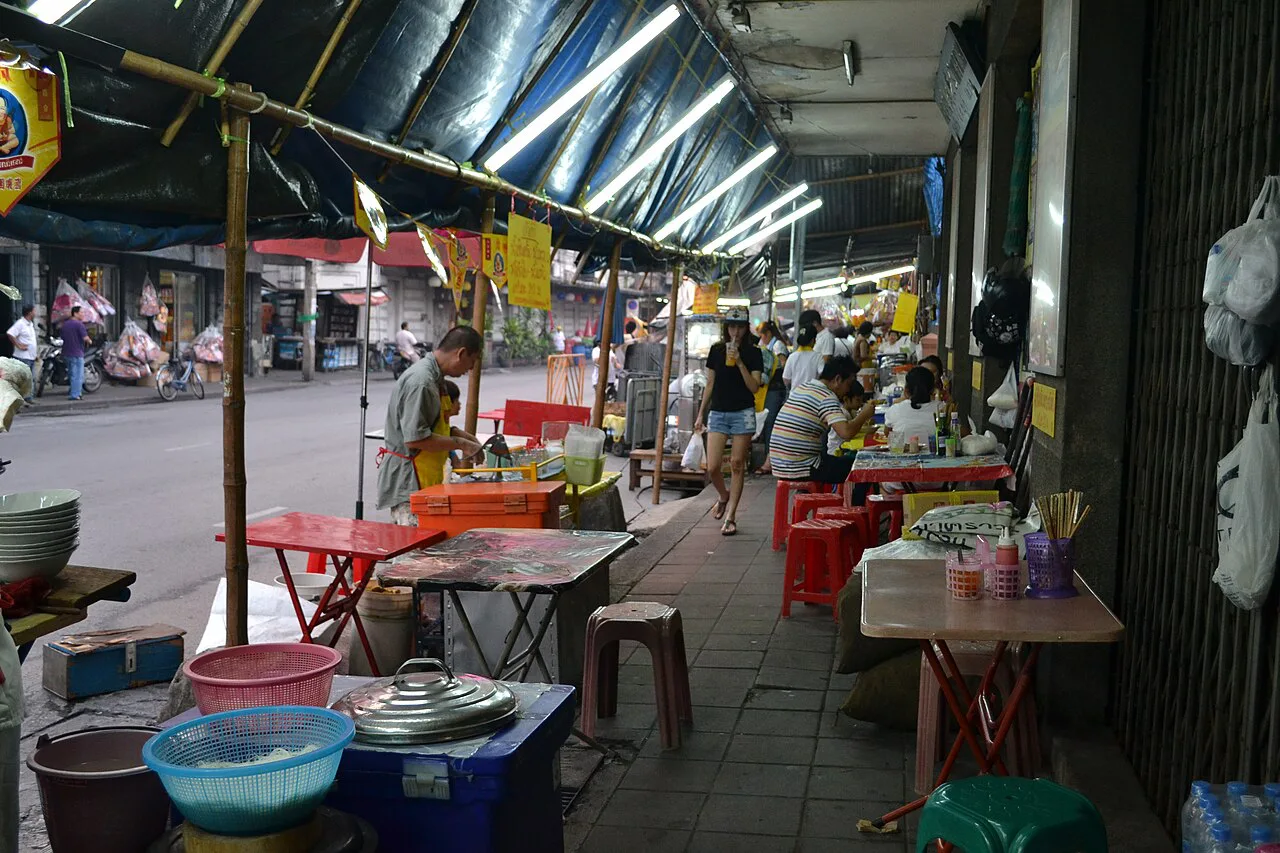
Look for khanom krok at street stalls, daytime markets and evening night markets. Cooking is done in front of you, so a small queue is a good sign. Show the Thai script ขนมครก if you are unsure how to pronounce the name. Point to the topping you want and say how many portions you need. Buy a small tray and eat it on the spot instead of ordering a big box. Price is an inexpensive street-snack level, but amounts differ by city and stall, so look at the posted price or ask first. Evening is a natural time to look for it, since night markets and street-food strips are where stalls tend to cluster.
Khanom Krok vs Similar Thai Desserts
Khanom krok is a griddled, mould-cooked snack. That sets it apart from its neighbours in the dessert family. Compared with Japanese takoyaki, the mould shape looks similar, but the batter is sweet coconut and there is no filling of octopus. Compared with a Western pancake, it is small, crisp-edged and cooked in single bites rather than a flat stack. Read our guides to Khanom Buang: Thai Crispy Crepe Guide, Where to Eat It for the crisp crepe, layered khanom chan for the steamed option and Thai Custard: Kanom Tuay vs Sangkaya Explained for a softer set dessert.
| Dessert | Cooking method | Texture | Best moment |
|---|---|---|---|
| Khanom krok | Poured into a hot mould | Crisp edge, creamy centre | Straight from the pan |
| Khanom buang | Cooked as a thin crepe | Crisp and light | Fresh, while the crisp holds |
| Khanom chan | Steamed in layers | Soft and chewy | Any time, at room temperature |
| Thai custard | Set into a smooth custard | Silky and soft | As a sit-down dessert |
Common Mistakes to Avoid
A few habits spoil the experience. Avoid these and you will taste khanom krok at its best.
- Letting it cool. The crisp edge softens fast, so eat it while it is hot.
- Taking it away for later. Pieces packed in a closed box turn soggy.
- Assuming it suits every diet. Ask the vendor about ingredients if you avoid eggs, gluten or animal products.
- Searching under one spelling only. Try kanom krok and kanom kork as well.
- Choosing a stall with finished pieces sitting out instead of batter cooked to order.
What to Eat Next
Once you have tried khanom krok, stay with coconut. Mango Sticky Rice in Thailand: When and How to Order and Thai Coconut Ice Cream: What It Is, Where to Eat It & How to Order carry the same flavour in very different textures. For a cool, sweet contrast after a hot pancake, try Tub Tim Krob: Thai Red Ruby Dessert Guide.
Thai food notes for your next trip
Optional updates to our food guides.
You might also like


Continue reading
More guides you'll find useful