Gai Yang (ไก่ย่าง): Thai Grilled Chicken, How to Order and Eat It
What gai yang is, how to order it in Thailand, what to eat with it, and how to spot a good stall. Includes Isan pairings and sauce tips.
On this page
Last updated November 2026: gai yang (ไก่ย่าง, also spelled kai yang) is Thailand's charcoal-grilled marinated chicken, closely tied to Isan cooking. Lao cooks share the dish, and Thai street stalls and markets sell it, usually with sticky rice and a papaya salad. We cover how to spot a good stall, what to order alongside, how to say it and what to expect.
Featured image: PattayaPatrol, CC BY-SA 4.0, via Wikimedia Commons.
What Is Gai Yang?
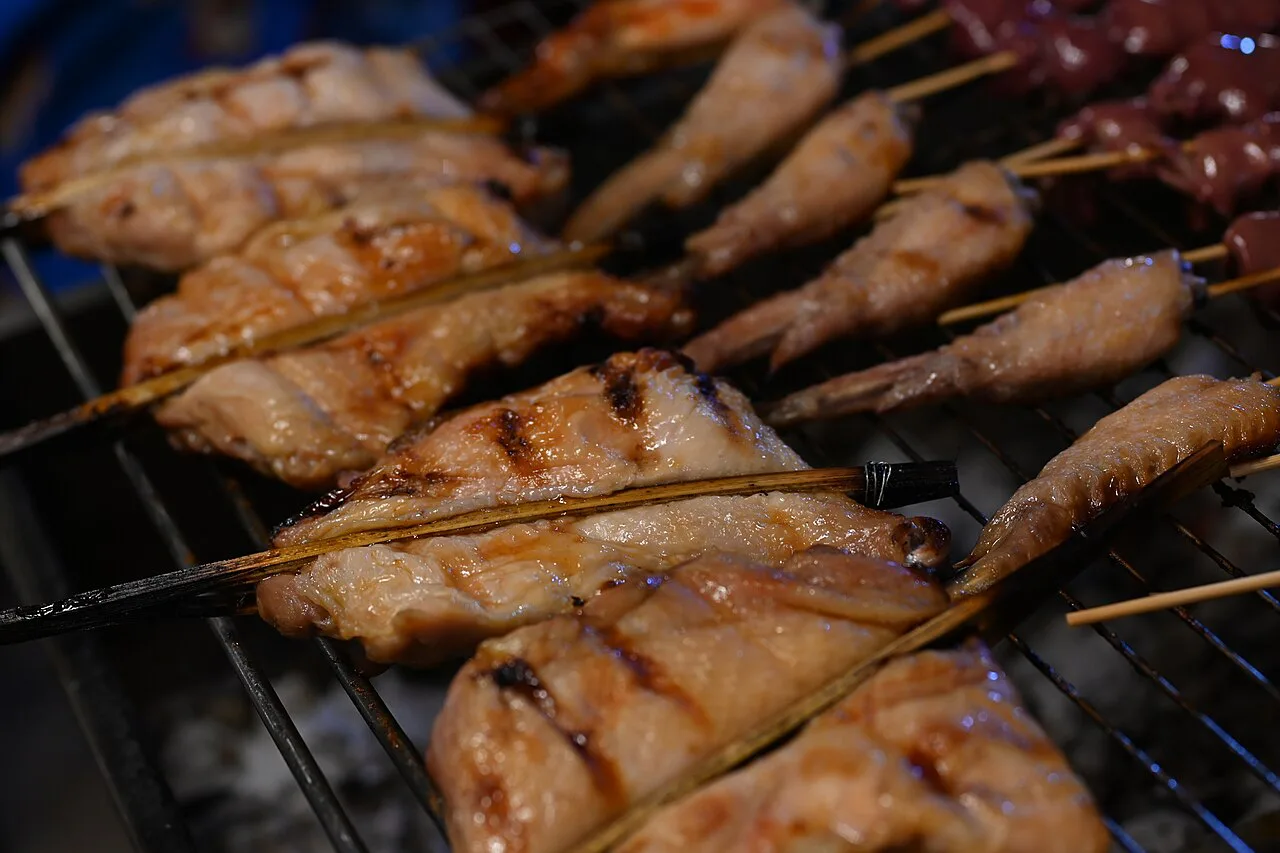
Gai yang means "grilled chicken" in Thai. Cooks usually halve a whole bird, flatten it, marinate it and grill it low over charcoal. Garlic, white pepper, coriander root and fish sauce make up the typical marinade, and some cooks add turmeric. Expect savoury, garlicky, smoky meat with browned skin rather than a crunchy fried crust. Heat and sourness come from the dipping sauce, not the chicken itself. Our rule is simple: if you are eating gai yang without sauce, you are only getting half the dish.
Origins and Regional Styles of Gai Yang
Gai yang has a shared Lao and Thai origin. Laos calls it ping kai (ປີ້ງໄກ່), and Thais may call it kai ping (ไก่ปิ้ง). Thai speakers understand that second name, but it sounds slightly old-fashioned to them. We would stick with gai yang when ordering.
Isan, the northeast, is where the dish sits most naturally on a menu, next to papaya salad and sticky rice. Bangkok kitchens grill similar birds, and Isan-style restaurants in the capital serve the full trio. Thai Muslim versions also exist and are not of Lao origin. They are often described as closer to Malaysian grilled chicken, a claim that is still poorly sourced. Treat any single-origin story with caution.
How Gai Yang Is Made on the Street
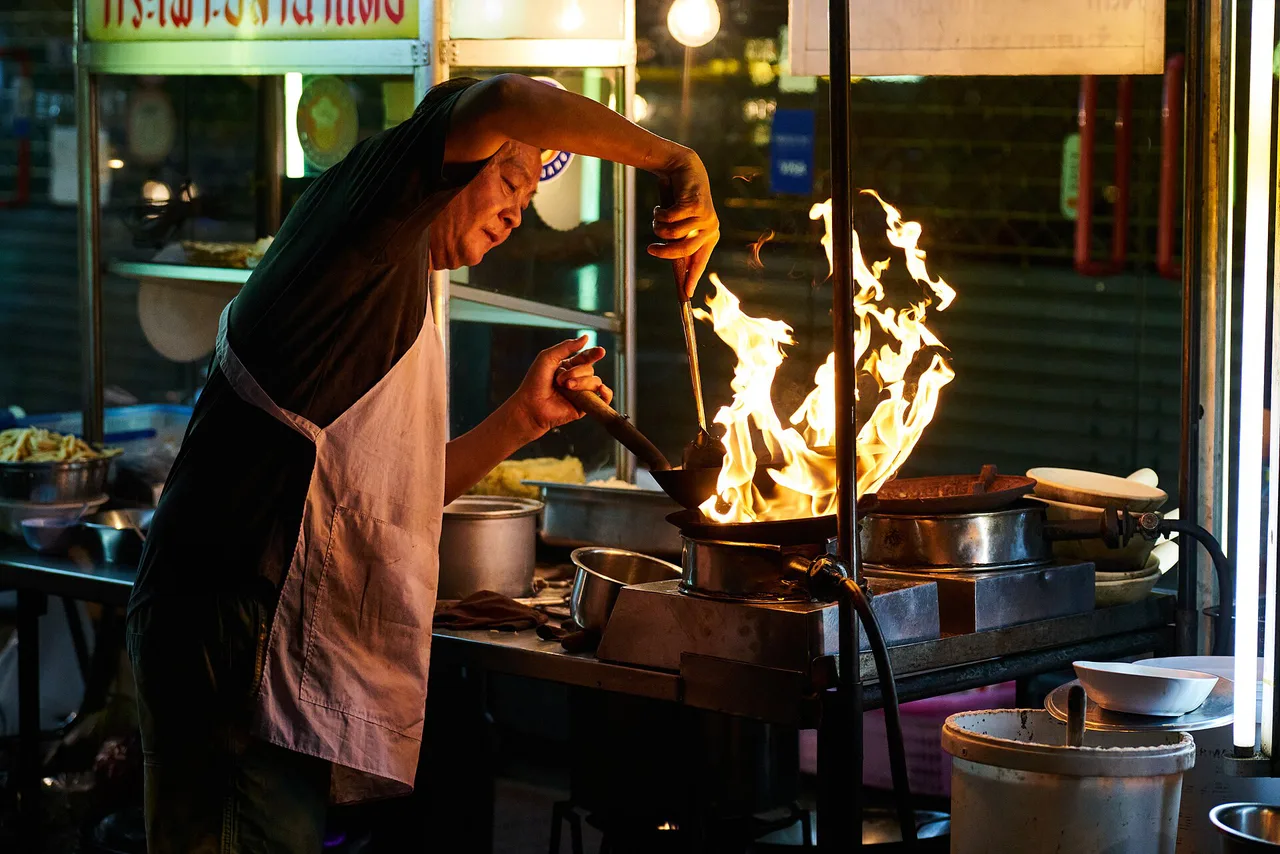
Street cooks pound garlic, pepper and coriander root into a coarse rub, then add soy, fish sauce and sugar. They coat the flattened bird and let it rest, often overnight. A good marinade needs at least 3 hours. Bamboo skewers or clamps keep the bird flat so it browns evenly. Cooks lean the birds together over a low charcoal bed and baste them with leftover marinade. One home charcoal grill took about 1.5 hours for a whole chicken. Slow heat is the point. The meat should be cooked through to the bone, not burnt or dry. When the bird is done, the cook chops it into wing, drumstick and breast pieces with a cleaver.
What to Eat With Gai Yang
The classic Isan trio is gai yang, green papaya salad and sticky rice. Each part does a job. Papaya salad brings acid and chilli heat against rich, smoky meat. Sticky rice soaks up the sauce and gives your fingers something to hold. Learn the technique in our guide to sticky rice.
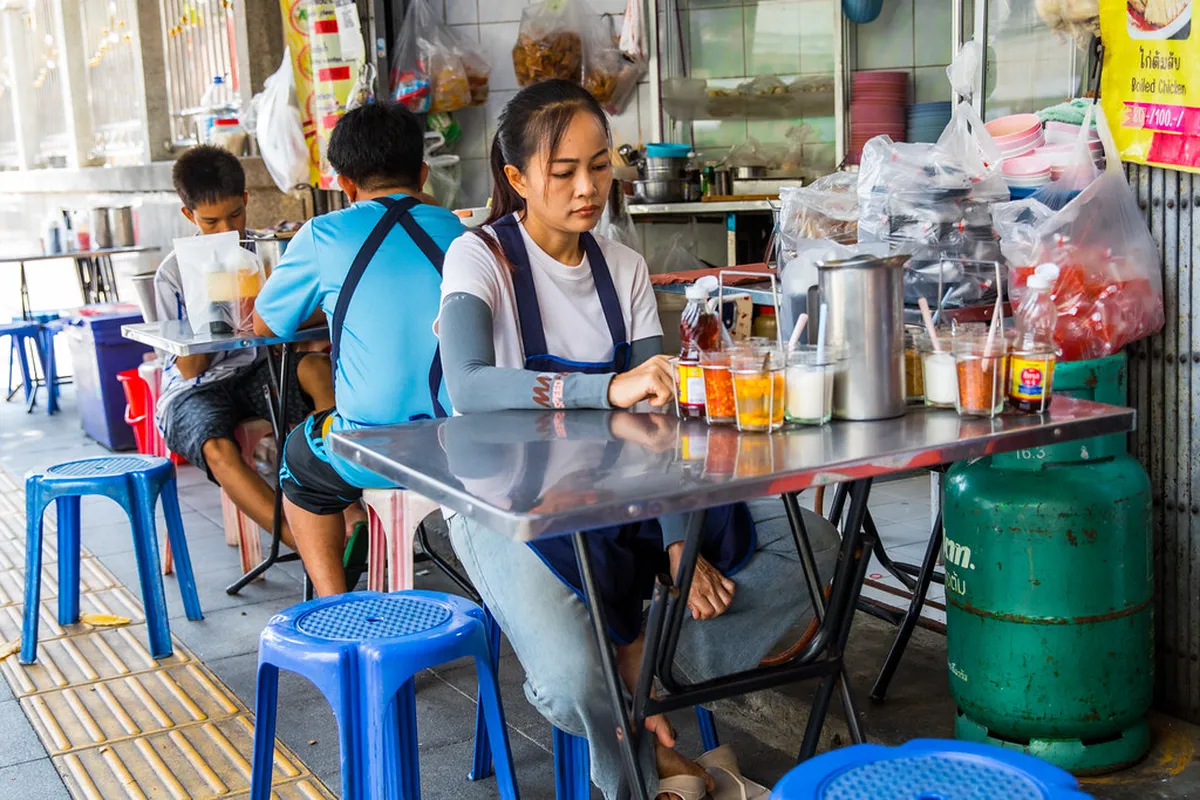
The sauce is nam jim jaew (น้ำจิ้มแจ่ว). It is built on tamarind, chilli flakes, fish sauce and sugar, plus toasted rice powder called khao kua for texture. Sweet-sour, salty and mildly hot is the usual balance, though heat varies by stall. Ask for a small bowl and taste before you commit.
Build a bigger Isan meal around the chicken. Add a plate of minced meat larb for herbs and lime. Order Isan sausages for sour, garlicky bites. A grilled pork salad adds another smoky dish. Skip the stronger fermented fish flavour of pla ra on a first meal unless you like funky, salty depth.
How to Order Gai Yang in Thailand
Say "gai yang" and point at the bird you want. Add "khao niao" (sticky rice) and "nam jim jaew" if the sauce is not already on the counter. Half a bird is ครึ่งตัว (khrueng tua), and a whole bird is ทั้งตัว (thang tua). Stalls usually chop the chicken for you. Point at the cleaver if you want pieces, or ask for a bag to take it away. We have no fixed prices to quote, since they differ by stall and city. Ask before the cleaver comes down.
Prices and portions were checked November 2026 against general market practice, and they shift often. Use this trade-off table to decide how much to buy.
| Portion | Best for | Eating pace | Trade-off |
|---|---|---|---|
| Pieces (wing, drumstick) | One person sampling | Quick, standing at the stall | Cheapest way to try it, but you may miss the juicier breast |
| Half bird | Solo diner or a couple with sides | One relaxed sitting | Balanced with sticky rice and one salad |
| Whole bird | Group of three or more | Slow, shared meal | Best flavour from the grill, but leftovers go cold quickly |
How to Spot a Good Gai Yang Stall
Your eyes tell you more than any review. These checks are our editorial judgement, not official standards.
- Charcoal, not gas: look for glowing coals and a smoky haze rather than a metal burner.
- Flattened birds on bamboo skewers or clamps, lined up and turning.
- Steady turnover: chicken that sells all day tastes fresher than chicken left to sit.
- A lunchtime crowd, especially of local workers.
- Fresh batches coming off the fire, not a tray held warm for hours.
- Sauce and sticky rice available on the spot, in clean containers.
Common Mistakes and Confusions
A few errors spoil the first plate. Avoid them and you will eat much better.
- Skipping the sauce. Nam jim jaew is half the flavour.
- Expecting crispy skin. Gai yang is grilled slowly, so the skin is browned and chewy, not fried.
- Confusing it with khao man gai, which is poached chicken on fragrant rice.
- Confusing it with kai tod, which is fried chicken.
- Buying pre-grilled chicken that has sat for hours.
- Ignoring allergens. Fish sauce and soy are typical in the marinade, so ask if either is a problem.
- Assuming every stall is halal. Thai Muslim stalls exist, but ask rather than guess.
Where to Find Gai Yang
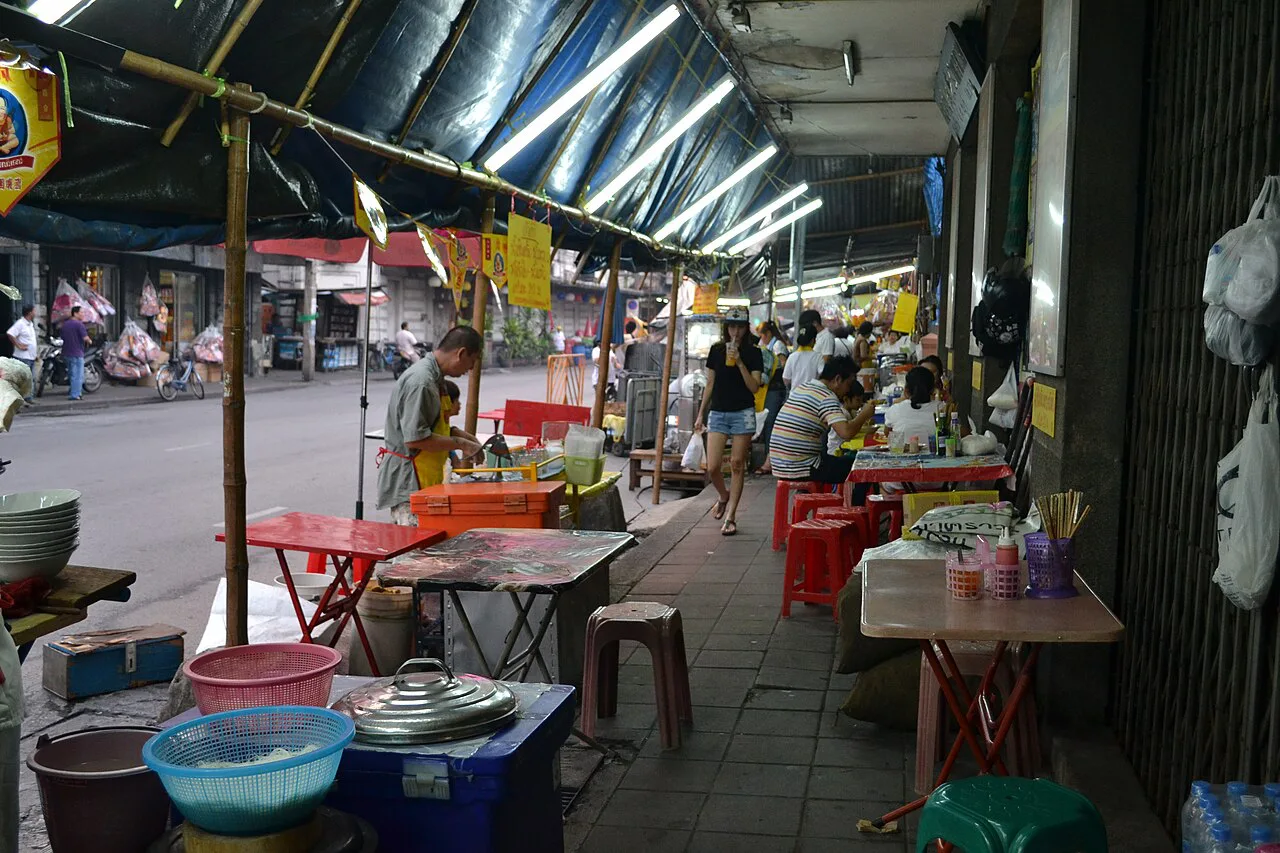
Look at markets, roadside stalls and Isan-style restaurants in Bangkok, where the full trio is common. Late morning is a sensible time to catch fresh birds before the lunch rush. For a sit-down meal, browse the MICHELIN Guide Thailand restaurant listings and look for Isan-style kitchens near you. We would not name a single stall as the best, since quality swings by day and cook.
Making Gai Yang at Home
A charcoal grill works best. Marinate the chicken for 3 hours at minimum, or overnight for deeper flavour. Pound garlic, coriander root and pepper, then add fish sauce. Whole flattened birds need about 1.5 hours over low coals. Without charcoal, a gas grill or oven still works, but you lose the smoke. Make the nam jim jaew while the chicken cooks, and serve it with sticky rice.
Street cooks often rest the bird overnight, so a home marinade of at least 3 hours is only the floor.
Thai food notes for your next trip
Optional updates to our food guides.
You might also like

Continue reading
More guides you'll find useful