Nam Tok Moo: Thai Grilled Pork Salad Explained
What nam tok moo is, how it differs from larb, how to order it in Thailand, and what to eat with it. Includes a quick home-cooking guide.
On this page
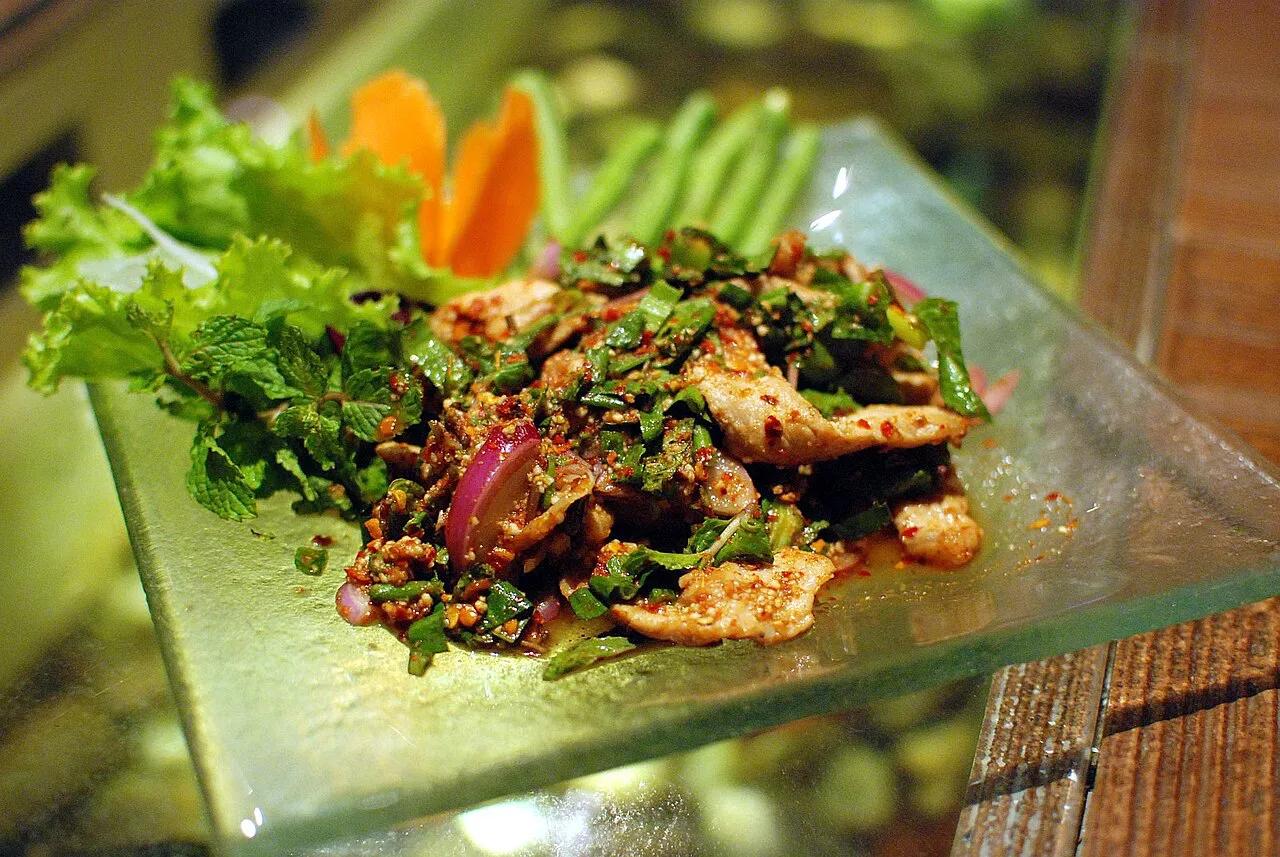
Last updated November 2026: nam tok moo is an Isan salad of grilled, sliced pork tossed with lime, fish sauce, chili, toasted rice powder and herbs. Its name means “waterfall pork”, and this waterfall salad sits among Isan's grilled meats and spicy salads. We cover what goes in it, how it differs from larb, and how to order it.
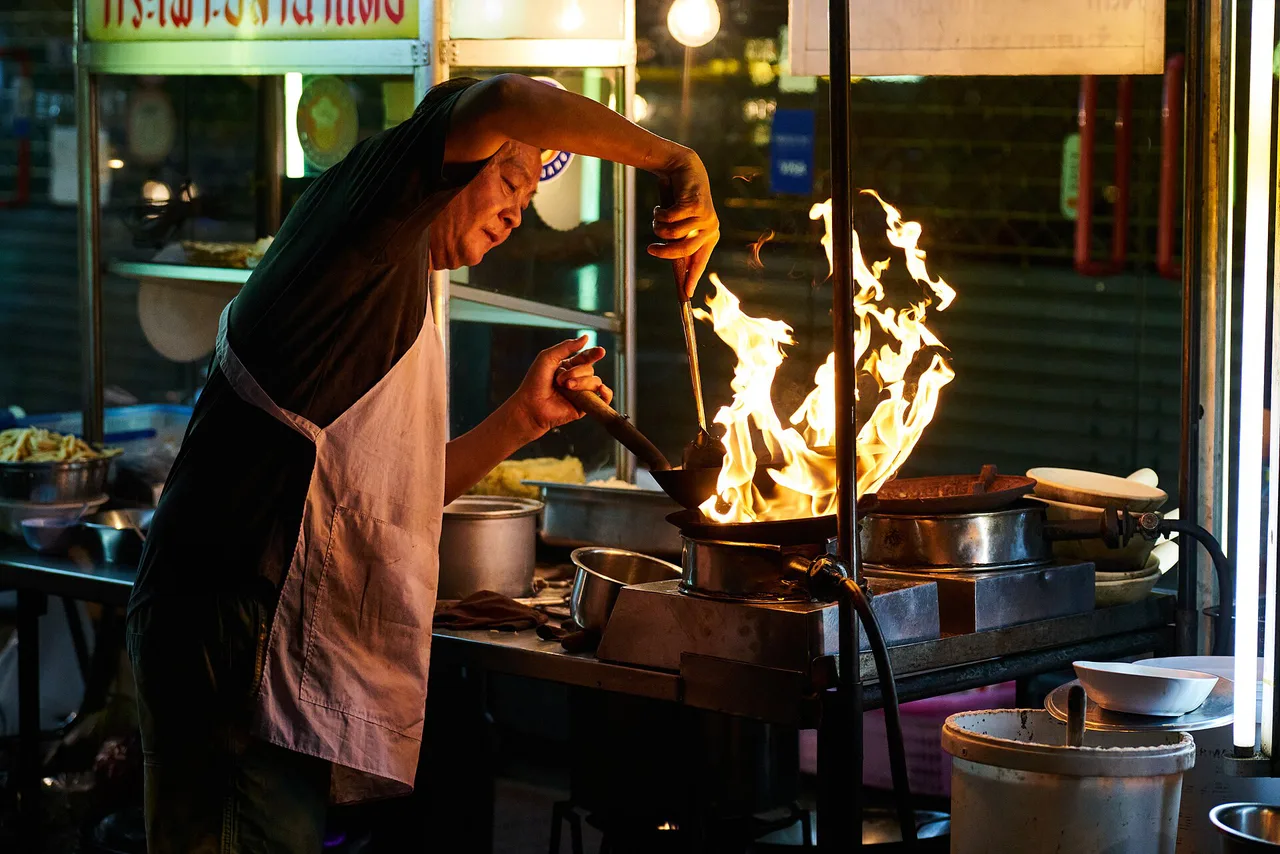
Featured image: Takeaway, CC BY-SA 3.0, via Wikimedia Commons.
What Is Nam Tok Moo?
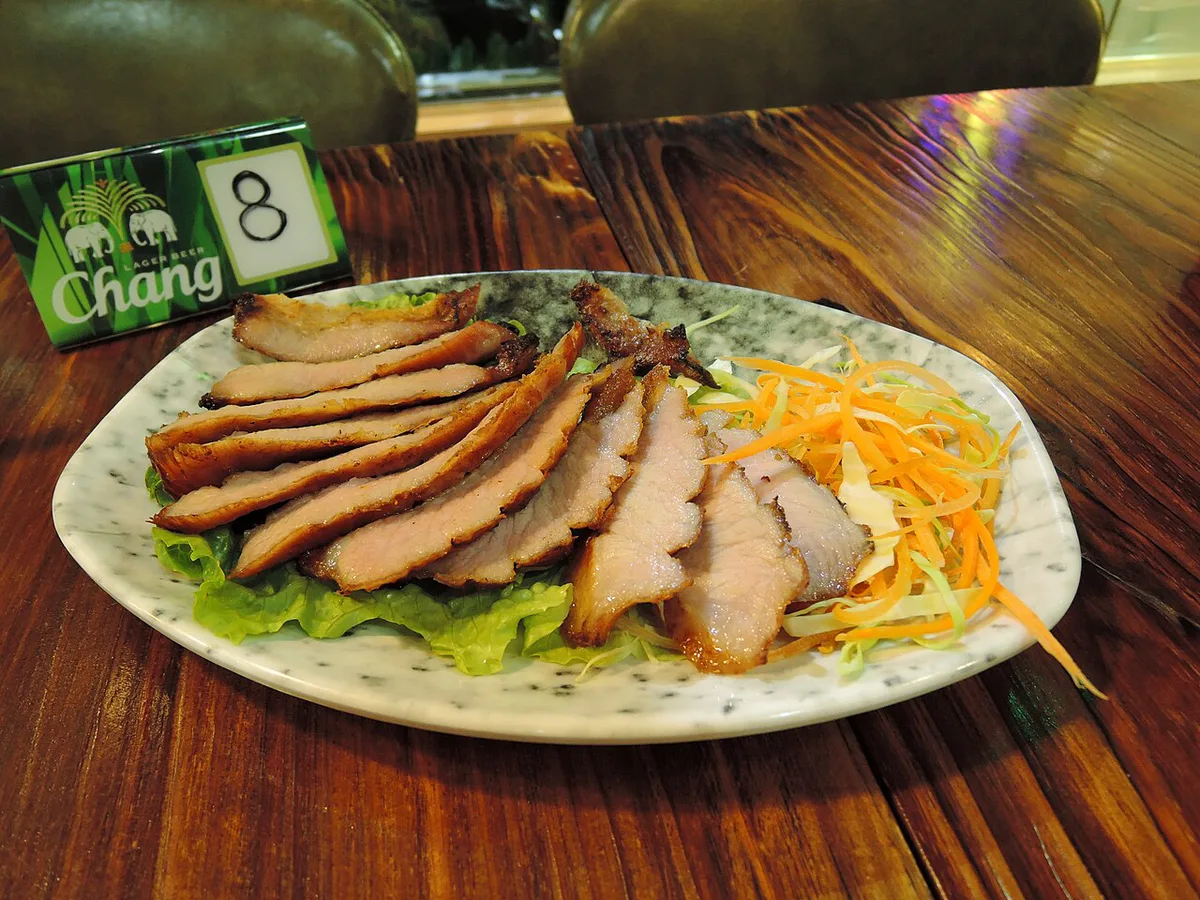
Nam tok means waterfall in Thai, and moo means pork. Nam tok moo is grilled pork cut into thin slices and dressed like a salad. It comes from Isan, the northeastern region, where cooking leans on grilled meats, spicy salads and clear broths. Isan dishes also share ground with Lao and Khmer food. Nobody can say for sure where the name comes from. One folk account points to juices dripping from the meat as it cooks. Another says the meat hisses like falling water, and that sound tells the cook it is done. We treat both as stories, not fact. Menus spell the dish several ways. Look for moo nam tok, namtok moo or nam tok moo yang, where yang means grilled. Nam tok neua is the beef version.
What's in It and What It Tastes Like
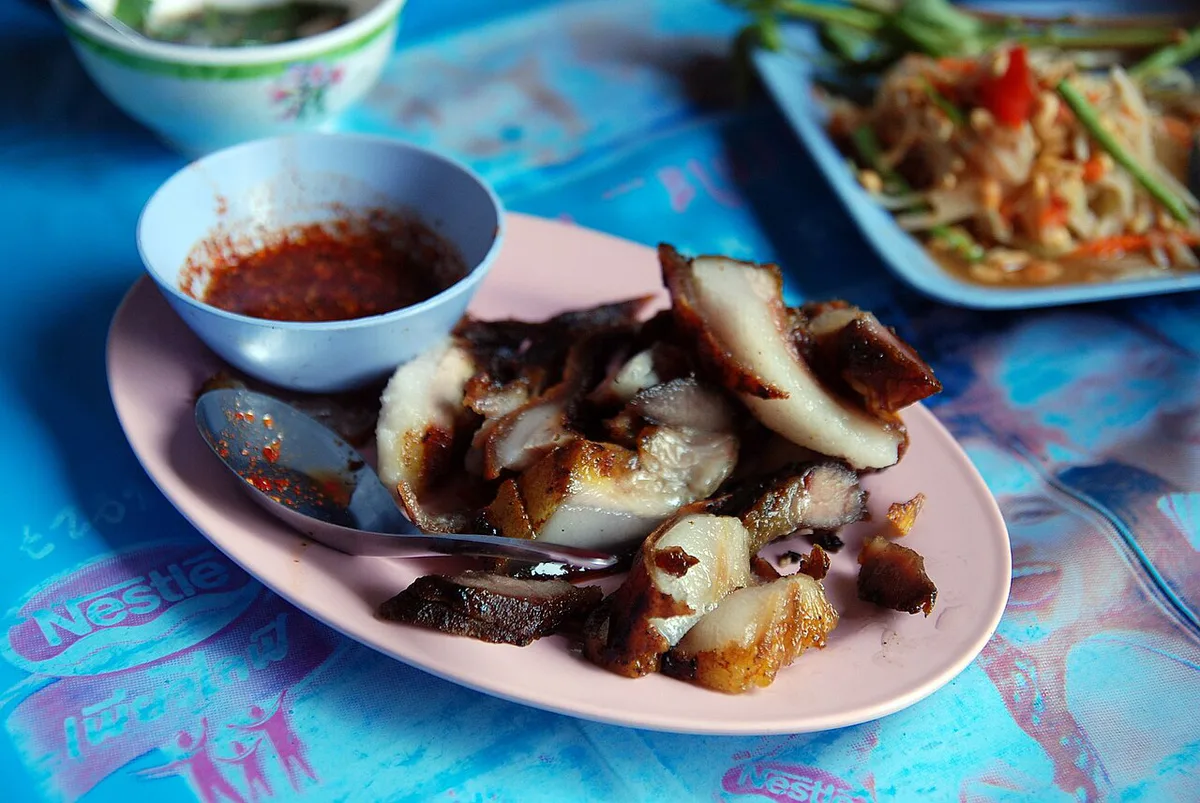
Pork neck is the usual cut. It has enough fat to stay juicy on the grill, while lean fillet dries out fast. After grilling, the pork rests and is sliced thin against the grain. Dressing is simple: lime juice for sour, fish sauce for salt, and dried chili flakes (prik bon) for heat. Sliced shallots, mint, cilantro and spring onion add a fresh, herbal edge. Khao khua does the quiet work. This toasted sticky rice powder is ground coarse, and it adds a nutty, smoky crunch while soaking up the dressing. Expect a plate that is sour, salty and spicy, with smoky pork underneath. Street versions come drier or juicier, depending on how much dressing the cook adds.
Nam Tok Moo vs Larb vs Nam Tok Neua
Nam tok moo looks like larb, and the flavors overlap. Both use lime, fish sauce, chili and toasted rice powder. The main difference is the meat. Nam tok uses grilled slices, while larb, the minced-meat salad, uses chopped or minced meat. Grilling gives nam tok an extra smoky layer. Order som tam, the green papaya salad, on the side for a crisp counterpart to the meat.
| Dish | Meat | Texture | Flavor | Best for |
|---|---|---|---|---|
| Nam tok moo | Grilled pork, sliced | Chewy slices with rice-powder crunch | Smoky, sour, salty, spicy | Grilled-meat fans |
| Larb moo | Minced pork | Soft, finely chopped | Sour, salty, spicy, herbal | Anyone who prefers tender meat |
| Nam tok neua | Grilled beef, sliced | Firm slices with rice-powder crunch | Same dressing, beefier | Beef eaters |
| Som tam | Green papaya, no grilled meat | Crisp and pounded | Tart and spicy | Balancing a meaty table |
How to Order and Eat Nam Tok Moo in Thailand
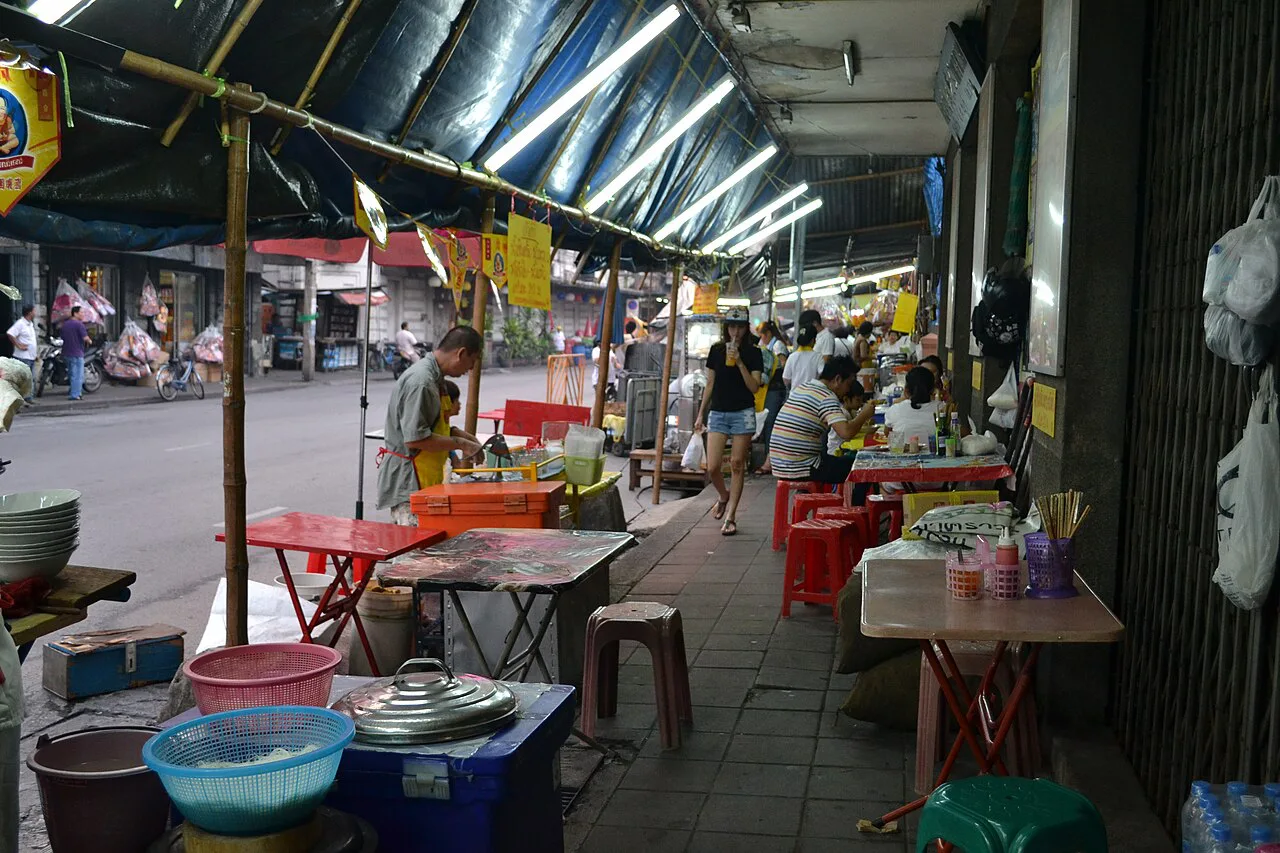
Look for it in the salad section of an Isan restaurant or at a street grill. Sticky rice usually comes alongside, though you may need to ask. Baht prices are left out here because menus differ by venue. Searchable restaurant listings are on the Michelin Guide Thailand site. Roll a small ball of sticky rice in your fingers and use it to scoop the pork. A spoon works too. See how sticky rice is served and eaten across Thailand.
- Say nam tok moo for pork, or nam tok neua for beef.
- Add sticky rice to the order if it does not arrive by default.
- Ask for less chili flakes if you want mild heat, since prik bon goes into the dressing.
- Expect a drier or juicier plate depending on the cook.
What to Eat With Nam Tok Moo
Raw vegetables are the standard side. Cabbage, green beans, cucumber and lettuce all cool the heat. Isan meals are shared, so build a spread around the salad. Add grilled chicken to share for a second smoky dish. For something sour and fermented, try Isan sour sausage. Readers who want the deeper end of regional flavor can follow up with fermented fish seasoning.
Pork, Beef or Chicken: Which Version to Choose
Moo is pork, neua is beef and gai is chicken. Pork and beef are the common versions in Thailand. Chicken turns up less often. Choose pork for a fattier, juicier bite. Choose beef for firmer slices and a beefier flavor. We'd start with pork neck, since its fat forgives a hot grill. Variations such as nam tok moo grob (crispy pork) and nam tok moo sam chan (pork belly) also exist.
Cooking at home, 400 g of pork neck for four people is a practical starting amount for a fattier, juicier bite.
Making Nam Tok Moo at Home: Key Points
This is a short guide, not a full recipe. One home recipe uses 400 g of pork neck for four people, marinated for at least 10 minutes. Sources disagree on grill times, so go by thickness. Halve thick pieces lengthwise so they cook faster. Rest the meat for 5 to 10 minutes on a plate to catch the juices, then slice it thin. Three mistakes ruin the dish. Lean or overcooked pork turns dry. Skipping khao khua loses the crunch. Slicing with the grain leaves tough strips. No khao khua on hand? Store-bought powder works, and crushed roasted peanuts are a fallback.
- Pork neck, sliced thin after grilling
- Fish sauce
- Lime juice
- Dried chili flakes
- Khao khua (toasted sticky rice powder)
- Mint, shallot and cilantro
Dietary and Spice Notes for Travelers
Fish sauce goes into both the marinade and the dressing, so the dish is not suitable for a fish allergy. Pork rules it out for halal diets, and you should not assume otherwise. Beef nam tok neua avoids pork, but ask how it is cooked. Dried chili flakes set the heat, and the dressing is typically quite spicy. Pork is grilled until cooked through, not served raw. If herbs bother you, ask to leave out the cilantro. Try it if you like spice and fresh herbs. Skip or adapt it if your spice tolerance is low.
Thai food notes for your next trip
Optional updates to our food guides.
You might also like


Continue reading
More guides you'll find useful