Larb (Laab): What It Is and How to Order It in Thailand
What larb is, how Thai and Lao versions differ, raw versus cooked, and how to order and eat it like a local in Isan.
On this page
Last updated November 2026: larb (also spelled laab or laap) is a Lao-origin minced-meat salad eaten across Thailand, especially in Isan. It is dressed with lime, fish sauce, chili, fresh herbs and toasted ground sticky rice. Eat it with sticky rice and raw vegetables or lettuce, and use our notes below to pick the right version.
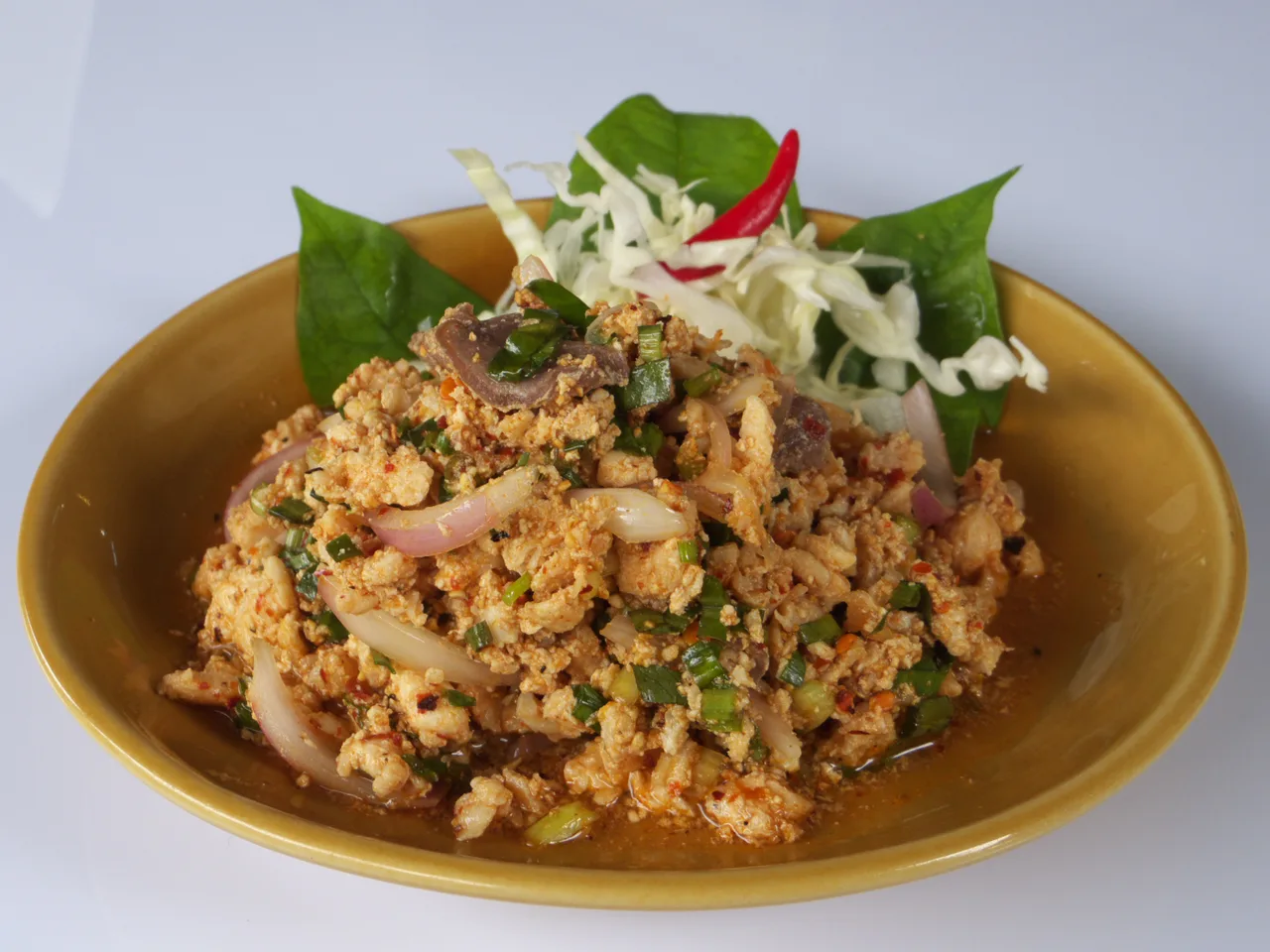
Featured image: Vee Satayamas, CC BY 4.0, via Wikimedia Commons.
What Is Larb?
Larb is a salad built on minced meat, not on leaves. Cooks toss the meat with lime juice, fish sauce, chili, herbs and toasted rice powder. Its origin is Lao, and Thai kitchens in areas with large Lao communities cook it constantly. Isan, in the northeast, is where most travelers meet it. We cover the region's other staples in our guide to the wider Isan table. Spellings vary, and larb, laab and laap all name the same dish. We treat larb as a family of dishes rather than one recipe. Every cook sets the sour, salty and spicy balance differently.
What Goes Into Larb
Five flavors define the dish: sour, salty, spicy, herbal and toasty. Lime supplies the sour and fish sauce supplies the salt and savory depth. Fresh chilies bring heat. Shallots, mint, cilantro and scallion add the herbal layer. Toasted ground sticky rice, called khao khua, adds a nutty crunch and softens the dressing so it clings to the meat. Meat is usually pork, chicken, beef or duck, and mushroom versions exist. Fish sauce sits in nearly every version, so it matters for allergies. Cooks also use fermented fish in other Isan dishes, as our note on fermented fish seasoning explains.
Isan vs Northern Thai Larb
Isan larb is the version most visitors expect. It is quick, sharp and fresh, with lime, fish sauce and rice powder doing the work. Northern Thai larb is commonly described as a different style. Cooks there use a dried-spice paste, cook the meat, and sometimes add offal or blood. A Western-style recipe version often browns the meat and may add cabbage, carrot or ginger. Treat that as a deviation, not a standard.
| Style | Seasoning base | Served | Rice powder | Heat |
|---|---|---|---|---|
| Isan larb | Lime, fish sauce, chili, herbs | Warm or room temperature | Yes | Varies by cook |
| Northern Thai larb | Spice paste, varies by cook | Cooked, often warm | Varies by cook | Varies by cook |
| Western-style recipe larb | Lime, fish sauce, extras such as ginger or lemongrass | Hot or cold | Varies by cook | Usually milder |
Which Larb Should You Order?
Meat choice changes texture more than flavor. Pork is the default in many Isan restaurants, and chicken is the gentlest starting point. Raw versus cooked is the bigger decision. Cooked larb is called suk. Raw beef or pork versions, including larb dip and blood-based larb luat, carry a food-safety risk. Public health agencies, including WHO and Thailand's health authorities, advise against raw meat for pregnant people, young children, older adults and anyone with a weakened immune system. If you are unsure, ask for suk. Our pick for a first order is chicken or pork, cooked.
| Order | Texture and flavor | Spice expectation | Traveler note |
|---|---|---|---|
| Larb moo (pork) | Rich, juicy, the common default | Varies by cook | Skip if you avoid pork |
| Larb gai (chicken) | Lean, mild, easy first choice | Varies by cook | Good first order |
| Larb neua (beef) | Chewy, deeper meat flavor | Varies by cook | Ask whether it is cooked or raw |
| Larb ped (duck) | Fatty, strong flavor | Varies by cook | Cooked is the usual style |
| Mushroom larb | Earthy, meat-free texture | Varies by cook | Fish sauce is still typical |
| Raw (dip, luat) | Soft, tangy, very fresh | Varies by cook | Higher risk; ask for suk instead |
How to Eat Larb
Pinch a ball of sticky rice, press it into the larb and eat it by hand. Learn the technique in our guide to eating sticky rice by hand. Wrap spoonfuls in lettuce or dip raw vegetables in the juices. Larb works best as one dish among several. A classic Isan table pairs it with Isan papaya salad. Add Isan grilled chicken and a basket of sticky rice, and three dishes cover the table. For another side, try Isan fermented sausage. If you want a close cousin, grilled-pork salad uses a similar dressing with sliced meat.
Ordering Tips and Mistakes to Avoid
Larb is easy to order, and a few phrases and habits prevent most disappointments. Say mai phet for not spicy, or phet nit noi for a little spicy. Stalls can usually adjust chili, but not fish sauce, so allergy sufferers should skip the dish. Pork is common, so travelers who need halal food should ask about the cook's meat and whether the kitchen is certified.

- Order suk (cooked) if you cannot tell whether a stall serves raw meat.
- Skip raw larb if you are pregnant, immunocompromised, or traveling with young children.
- Expect the meat to be moist, not browned. Heavy browning turns it into a stir-fry.
- Do not skip the rice powder. It gives larb its crunch and nutty smell.
- Add lime last at home. Early lime dulls the herbs and makes the meat gray.
- Do not expect gluten-free certainty. Seasoning additions such as soy or oyster sauce vary by cook.
Making Larb at Home: Quick Notes
This is a sidebar, not a recipe, because larb varies by region and cook. Toast raw sticky rice in a dry pan until golden and nutty. Cooks quote anywhere from about 4 to 10 minutes depending on heat. Grind it coarsely in a mortar. Hand-chopped meat gives a coarser, better texture than pre-ground, and many cooks prefer thigh meat for chicken. Expect about half an hour of work in total. Serve in lettuce cups for a lighter meal.
Quoted toasting times run 4 to 10 minutes depending on heat. Pull it once golden and nutty, since that is the crunch the rice powder brings.
Frequently Asked Questions
Is larb usually chicken or pork?
Both are common, and pork (larb moo) is the usual default in many Isan restaurants. Chicken (larb gai) is a milder choice. Beef, duck and mushroom versions also appear.
How do you pronounce laab?
Say it roughly as "lahp", with a long a and a soft final sound. Larb, laab and laap are different spellings of the same word.
What is the difference between Lao larb and Thai larb?
Larb is Lao in origin, and Thai versions in Isan are close relatives. Thai cooks and regions adjust seasoning, meat and heat. Northern Thai larb is commonly described as spice-paste based and cooked.
Thai food notes for your next trip
Optional updates to our food guides.
You might also like


Continue reading
More guides you'll find useful