How to Eat Thai Food: Utensils, Sharing & Etiquette
Spoon and fork, shared dishes, table condiments and noodle-bowl rules: a practical guide to eating Thai food like a local, with common mistakes to avoid.
On this page
Last updated November 2026. Knowing how to eat Thai food starts with three habits: hold the spoon in your dominant hand, use the fork to push food onto it, and share every dish across the table. Chopsticks are for noodles, fingers are for sticky rice, and seasoning happens at the table after you taste.
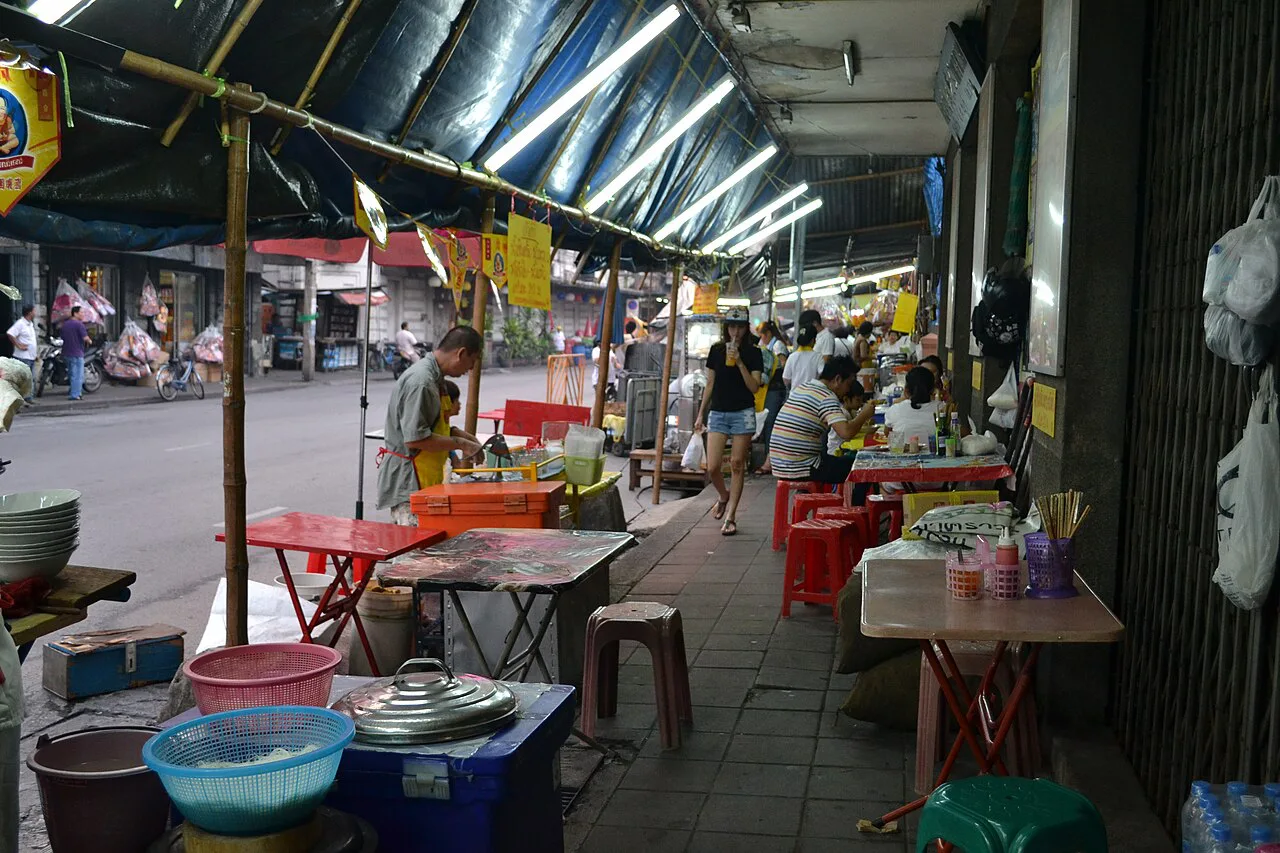
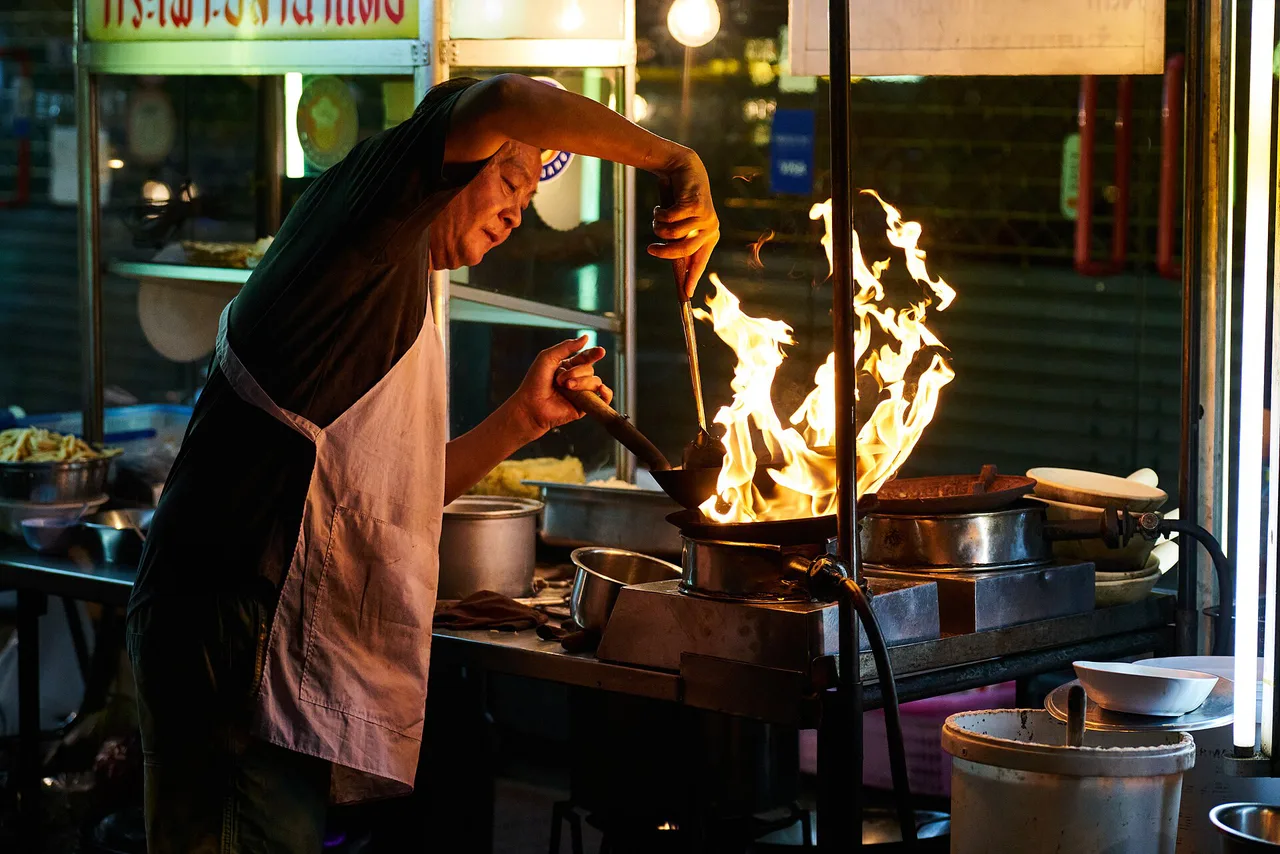
Featured image: T.Tseng, CC BY 2.0, via Flickr.
The short answer: spoon, fork, share
Thai meals are built around individual plates of rice and several shared dishes. You eat with a spoon and fork, and you season to your own taste. Keep these five rules in mind and you will fit in at most tables.
- Spoon in your dominant hand, fork in the other.
- Push food onto the spoon with the fork, then eat from the spoon.
- Use chopsticks only for noodle dishes.
- Take food from shared dishes with the serving spoon, not your own.
- Taste before you add chili, sugar, fish sauce or vinegar.
Which utensils to use and when
A spoon and fork handle almost everything on a Thai table. Hold the spoon in your dominant hand, usually the right. Use the fork in your other hand to scoop and arrange rice and toppings onto the spoon. Locals mainly eat from the spoon, and the fork rarely goes into the mouth. Most dishes arrive in bite-size pieces, so knives are uncommon in local restaurants. If you face a larger piece, such as steamed fish or grilled chicken, press the edge of your spoon down to cut it. Chopsticks appear with noodle dishes, often alongside a short, deep soup spoon. Pick up noodles, meat and vegetables with the chopsticks and sip broth from the spoon. If chopsticks feel awkward, ask for a spoon and fork instead. Sticky rice is the exception to every rule above. In the north and northeast, people commonly roll it into a small ball with their fingers and dip it into food. You will see this at streetside som tam stalls. Using a spoon and fork is still polite, especially when you share a meal with other people. When you finish, place the spoon and fork together on your plate.
How shared meals work
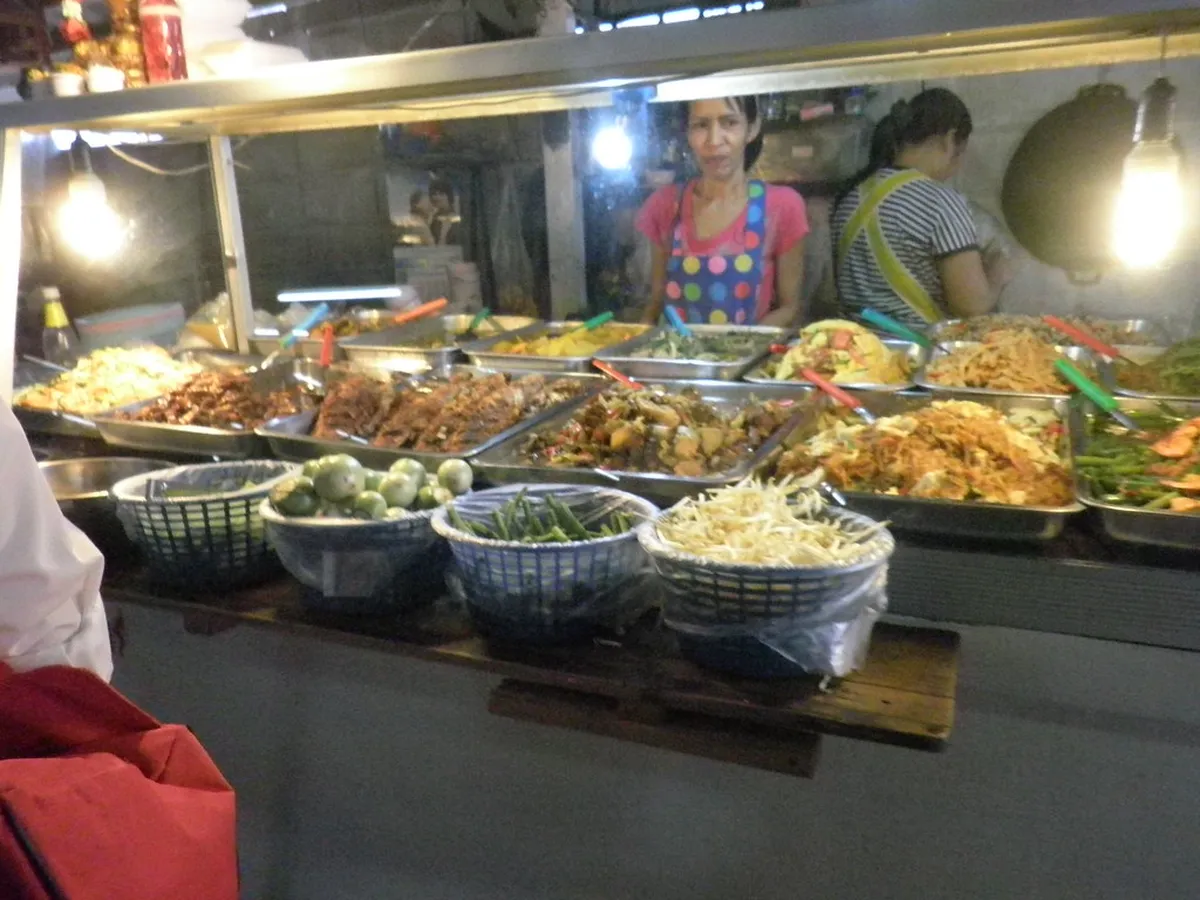
Thai groups order several dishes to share rather than one main each. A balanced order mixes something dry, such as a stir-fry, with a soup, a salad and a curry. Each person gets an individual plate of rice. Every shared dish should have its own serving spoon. Scoop a portion onto your rice, then eat from your plate with your own spoon. Soup and curry often come with small bowls and a ladle for individual portions. Dishes may not arrive all at once, so eat as they appear and keep the pace relaxed. Avoid these first-timer mistakes:
- Using chopsticks for every dish.
- Eating lemongrass stalks, lime leaves or galangal slices.
- Putting the fork in your mouth.
- Dipping your own spoon into a shared bowl.
- Adding chili before you have tasted the dish.
How to eat Thai food by dish type
Utensils shift slightly from dish to dish. Use this table as a quick reference.
| Dish type | Utensils | Condiments | Common mistake |
|---|---|---|---|
| Rice plate (khao pad, pad krapow) | Spoon and fork | Chili flakes, fish sauce, sugar | Seasoning before tasting |
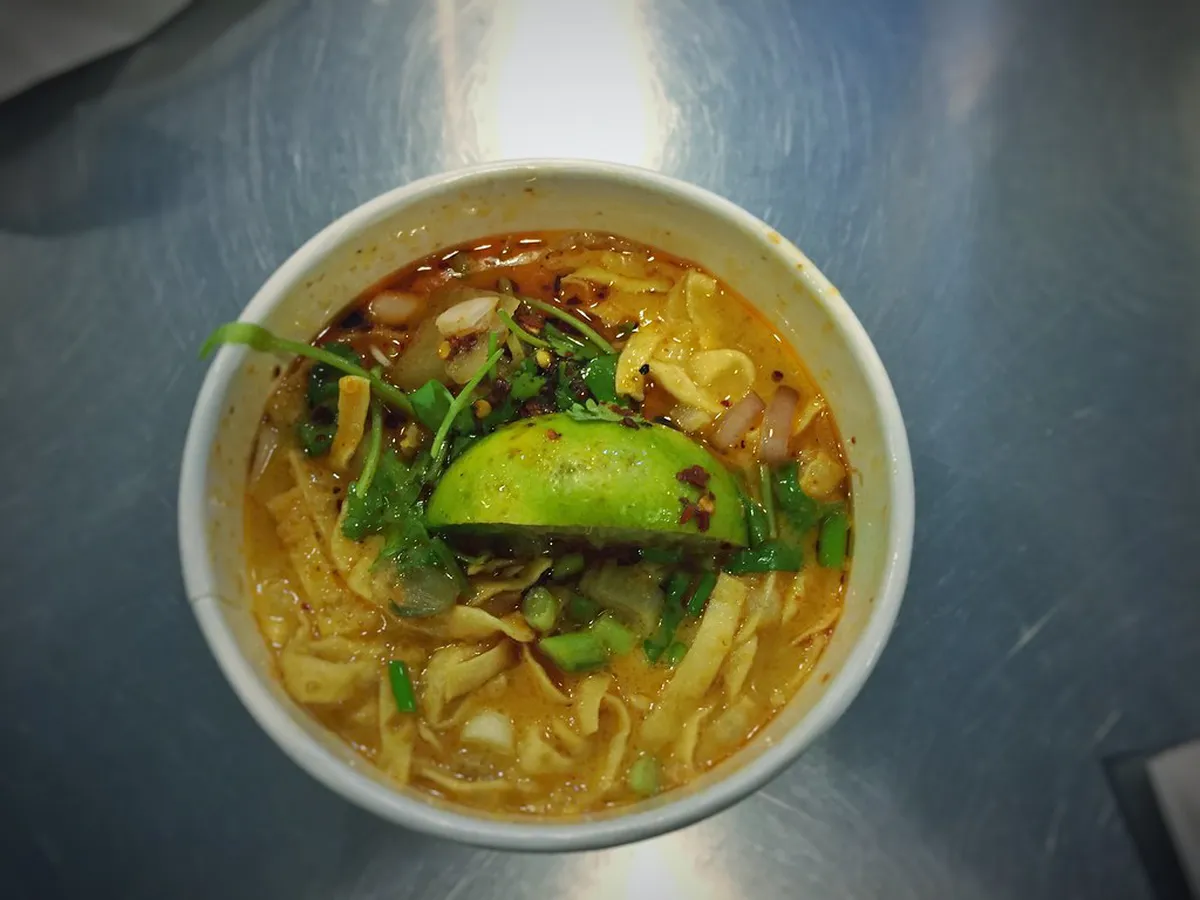
| Noodle soup | Chopsticks and soup spoon | Chili flakes, sugar, vinegar | Leaving chopsticks stuck upright in the bowl |
| Stir-fried noodles (pad thai) | Fork and spoon | Lime, peanuts, chili flakes | Swapping in chopsticks by default |
| Curry with rice | Spoon and fork | Often none needed | Pouring all the curry on at once |
| Som tam with sticky rice | Fingers for rice, spoon and fork for salad | Usually seasoned already | Taking a fiery bite on an empty stomach |
| Whole fish | Spoon and fork, spoon edge to cut | Dipping sauce if served | Using a knife that is not on the table |
| Dessert (mango sticky rice) | Spoon, sometimes a small fork | None | Skipping the sticky rice with the mango |
Using table condiments
Thai diners adjust flavor at the table. A common caddy holds fish sauce, dried chili flakes, sugar and chili vinegar. Noodle stalls are especially likely to have one. Taste the dish first, then add a small pinch and stir. Build up gradually, because chili flakes are easy to add and impossible to remove. Seasoning is not rude at casual venues. Hold back at fine-dining rooms, where the kitchen has already balanced the dish. Ratings from the MICHELIN Guide Thailand point to many such rooms. Our guide to Thai condiments explains what each jar does.
Street stall, restaurant or home
Each setting changes the rhythm slightly. At a street stall, you often sit on a plastic stool, order from a short list and receive one plate. Many stalls put a small bowl of soup beside the main dish, though not all do. Casual restaurants lean toward shared dishes with rice for each person. At someone's home, wait for the host or eldest person to begin. Fine dining follows a set sequence, so skip the condiments. Payment methods vary by venue. See our notes on what meals cost in Thailand before you order. Our page on tipping at Thai restaurants covers the bill.
- Street stall: one plate, condiments on the table, fast turnover.
- Casual restaurant: shared dishes, individual rice, serving spoons.
- Home meal: wait for the senior person, accept second helpings.
- Fine dining: set courses, minimal seasoning.
Etiquette that matters, and what doesn't
A few habits carry real weight. Wait for the most senior person to start. Eat slowly, since Thai meals are social and unhurried. Do not blow your nose at the table. After a spicy bite, simply wipe your nose quietly. Resting your chin in your hand while talking to an elder can read as disrespectful. Elbows on the table are tolerated, though less polite. Thai hosts are generally forgiving of visitors who slip up. Official overviews from the Ministry of Culture show how central shared meals are to Thai life. Our full Thai food etiquette guide goes deeper.
Handling spice and dietary needs
Ask for less heat when you order. Short phrases work best, and our Thai Food Phrases: What to Say When Ordering (With Thai Script) list gives you ready-made requests. When a bite is too hot, eat plain rice or a milder shared dish rather than reaching for water alone. Coconut-based curries and soups tend to be gentler than a fiery salad. Flag allergies and vegetarian needs clearly, because fish sauce and shrimp paste appear in many dishes. Name the ingredient you need to avoid rather than just saying you are allergic. Written notes on your phone help at busy stalls.
Frequently Asked Questions
How to eat Thai red curry?
Spoon curry over your plate of rice, then eat with spoon and fork. Add a little at a time so the rice does not turn soggy. Leave any lime leaves or chili stems on the plate.
What is Thai curry typically served with?
Thai curry is typically served with plain rice, eaten from your own plate. Some curries, such as yellow curry, come with cucumber or pickled shallots on the side. Shared curry arrives with its own serving spoon.
What do Thai people normally eat?
Everyday meals center on rice with a mix of dishes: a stir-fry, a soup, a salad or dip, and often a curry. Noodle dishes are common for quick meals at stalls. In the north and northeast, sticky rice replaces plain rice at many tables.
Thai food notes for your next trip
Optional updates to our food guides.
You might also like


Continue reading
More guides you'll find useful