Jay Food in Thailand: What It Is, What's Excluded and How to Eat It
What jay (เจ) food means in Thailand, how it differs from vegetarian and vegan, which ingredients are excluded, and how to order it with confidence.
On this page
Last updated November 2026: a yellow flag with red เจ lettering tells you a stall serves jay food in Thailand, a strict plant-based practice that goes further than ordinary vegetarian eating. This guide explains what jay excludes, how to order it, and where choice thins out. Use it to decide whether jay suits your diet before you queue.
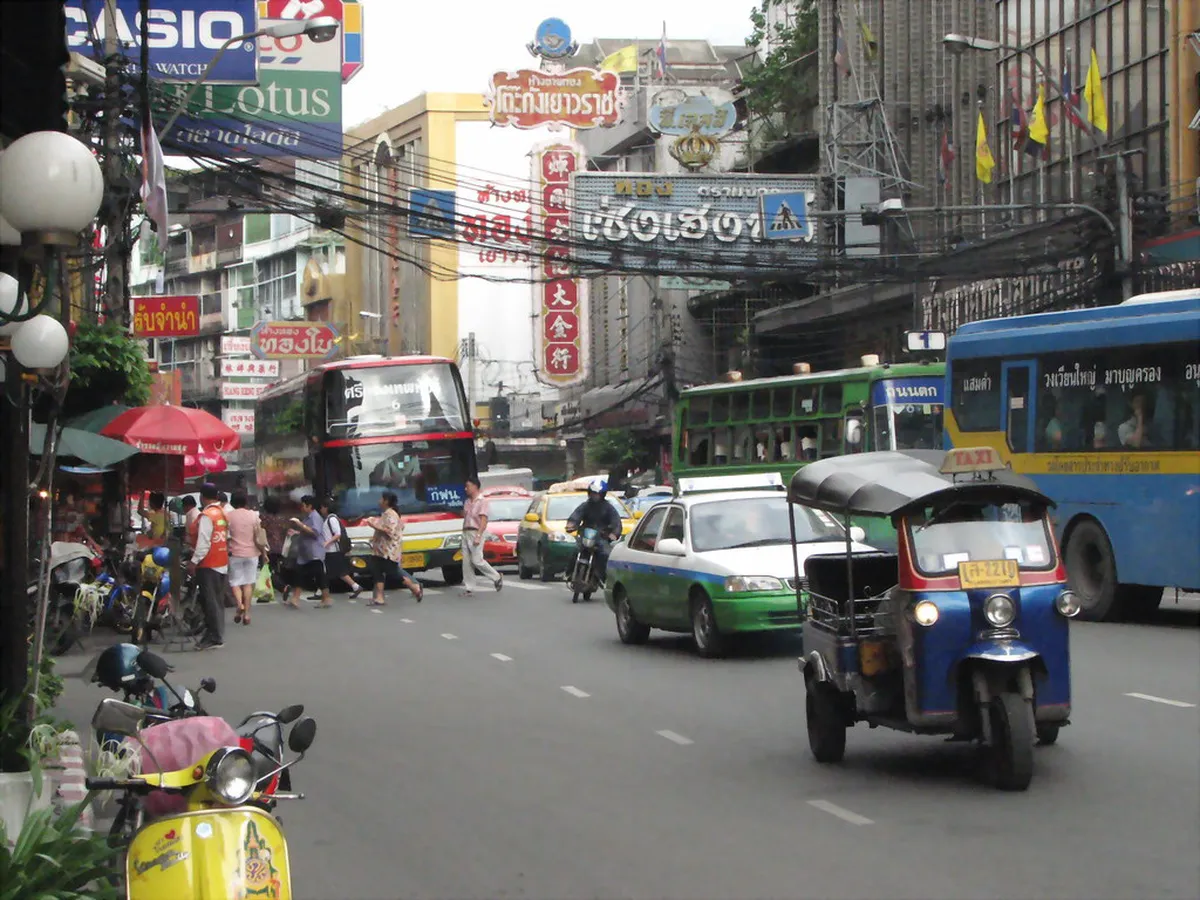
Featured image: Marco Nürnberger, CC BY 2.0, via Flickr.
What Is Jay Food in Thailand?
Jay (เจ) is a religiously grounded way of eating, practiced mostly by Thai-Chinese communities. Cooks avoid meat, fish, shellfish, alcohol and psychoactive substances. They also leave out five pungent vegetables: onion, garlic, chives, rakkyo and spring onion. Yellow flags with red เจ lettering hang in front of stalls and restaurants that follow the rules. Yellow-sticker items appear on convenience-store shelves too. Observance peaks during an annual vegetarian festival, which is tied to reverence for the Goddess of Mercy, Guanyin. For the wider picture of meat-free eating, start with our broader Thai vegetarian guide.
Jay vs Vegetarian vs Vegan: What's Different
Jay is often labeled "vegetarian" in English, but the rules differ. Ordinary vegetarian food may include egg and dairy. Vegan food excludes them. Jay adds a ban on five pungent vegetables and on alcohol, which neither diet requires. Practices vary by community and vendor, so treat the egg and dairy cells below as the points to ask about.
| Item | Jay | Vegetarian | Vegan |
|---|---|---|---|
| Meat, fish, shellfish | Excluded | Excluded | Excluded |
| Egg and dairy | Varies by vendor; ask | Usually allowed | Excluded |
| Onion, garlic, chives, rakkyo, spring onion | Excluded | Allowed | Allowed |
| Alcohol and psychoactive substances | Excluded | Allowed | Allowed |
What You Can and Can't Eat
Jay kitchens replace animal products with tofu, wheat gluten, mushrooms and vegetables. Pungent vegetables are the surprise for most visitors. Dishes that normally rely on garlic and spring onion are cooked without them. Some stalls use mock meat made from soy or gluten, so a dish can look like pork and still be jay. One reported claim says oysters are permitted, based on a legend about the monk Xuanzang. It is rarely stated and not a rule to rely on, so skip it. Alcohol is out, as are psychoactive substances of any kind.
- Fish sauce and shrimp paste: standard in Thai cooking, so ask about them.
- Oyster sauce: common in stir-fries, and not safe to assume absent.
- Egg: appears in fried rice, noodles and sauces.
- Dairy: appears in desserts and some drinks.
- Garlic and onion: easy to miss in chili pastes and dipping sauces.
How to Spot and Order Jay Food
Look for the yellow flag first. Check that the lettering reads เจ in red. A plain "vegetarian" sign alone does not guarantee that onion, garlic, egg or fish sauce are left out. Say กินเจ (gin jay), which means "eat jay". Then confirm the details out loud. Point to the dish and ask the cook directly. Show the phrases below on your phone if your pronunciation is shaky.
- กินเจ (gin jay): "eat jay", the basic request.
- ไม่ใส่น้ำปลา (mai sai nam pla): no fish sauce.
- ไม่ใส่ไข่ (mai sai kai): no egg.
- เจหรือเปล่า (jay rue plao): "is this jay?"
Jay Dishes to Look For
Five dishes give you a sense of the range. Availability depends on the stall, so treat this as a list of what to scan for rather than a guaranteed menu. Each is a jay-style version of a familiar Thai dish.
- Tom yum jay: sour, spicy soup. Usually available where soups are served.
- Kanom jeen nam ya: soft rice noodles with coconut curry and vegetables. Variable by stall.
- Pad pak bung fai daeng: stir-fried morning glory. Usually available at stir-fry counters.
- Tom jap chai: herbal soup with plenty of vegetables. Variable by stall.
- Nam prik noom: raw vegetables with a dipping sauce. Variable, since many versions use garlic and fish products.
When and Where to Find Jay Food
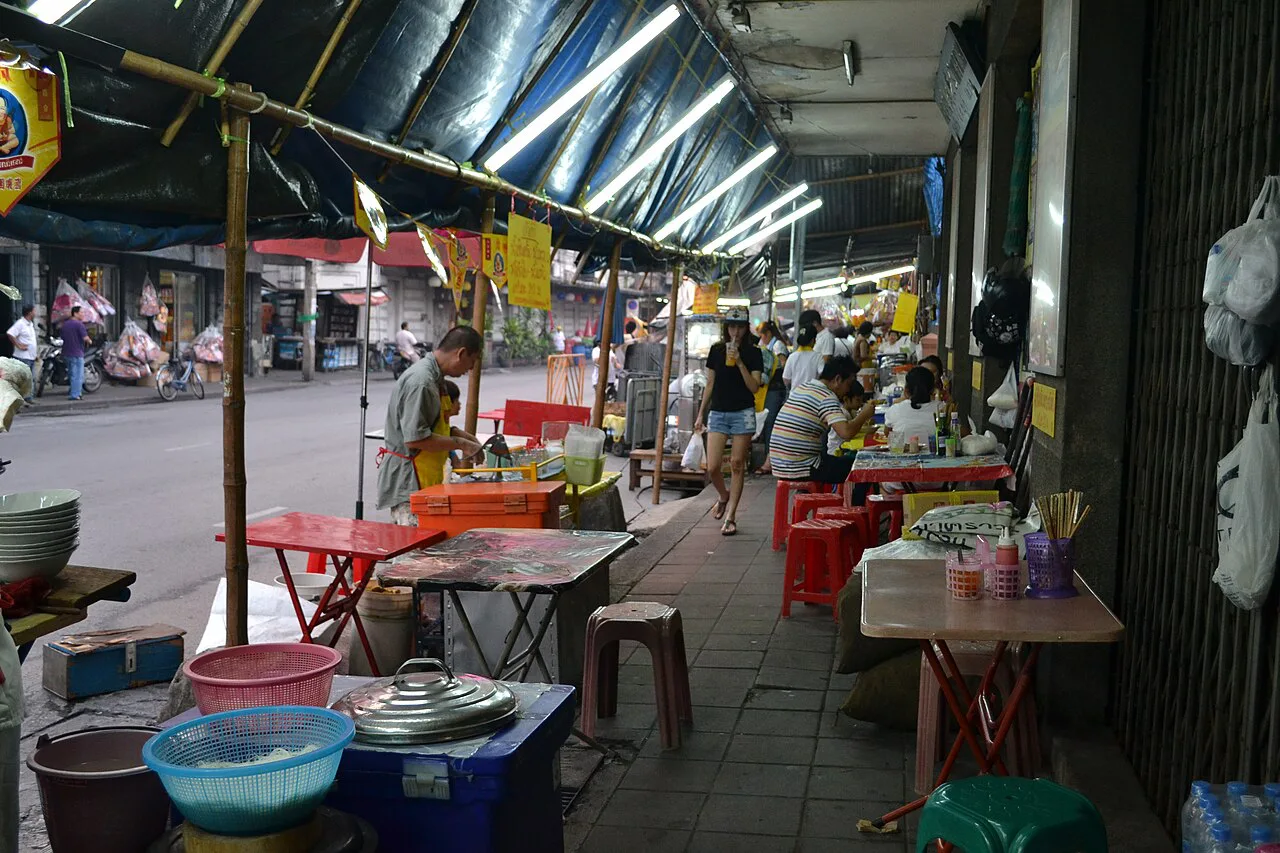
Festival dates follow a lunar calendar and change each year. Look up the current year's dates with an official Thai tourism source or a local Chinese shrine before you plan around them. During the festival, yellow flags multiply and ordinary stalls often switch to jay menus. Outside it, look for standing jay restaurants and Buddhist vegetarian canteens, some of them run by temples. Choice concentrates in areas with Thai-Chinese communities, including parts of Bangkok. In smaller towns, expect fewer options and ask locally. Always confirm a venue is open before you travel, because temple-linked kitchens may keep short or irregular hours.
Budget, Crowds and Practical Trade-offs
Jay stalls usually price dishes close to regular street food, since the base ingredients are cheap. Mock-meat dishes and restaurant sit-downs can cost more. Festival week brings queues at popular stalls and some regular vendors close for the period. Arrive early for the fullest selection. Carry small notes, because many stalls take cash only. Expect a simpler flavor profile without garlic, so use table condiments to adjust.
Which Diet Fits You?
Jay is not a universal fit. Strict vegans should still ask about egg, dairy and honey, and can read our vegan travel guide for Thailand. Vegetarians can eat jay comfortably, though pungent vegetables are off the menu. Jay is not automatically gluten-free, because wheat gluten and soy sauce are common. Our gluten-free Thailand guide covers that separate need. Jay is not automatically halal either, since halal rules depend on certification, not on being meat-free. The Halal Science Center at Chulalongkorn University is the institutional source for halal standards. Our halal food guide lists what to look for instead.
For trip-planning details, see MICHELIN Guide Thailand.
Thai food notes for your next trip
Optional updates to our food guides.
You might also like


Continue reading
More guides you'll find useful