Vegan Thailand: How to Eat Vegan Travel Guide
Plan a vegan trip to Thailand: hidden fish sauce and shrimp paste to avoid, phrases to use, where to eat, and what to expect by region.
On this page
Last updated November 2026: vegan thailand travel is workable, but a dish labelled vegetarian can still contain fish sauce, oyster sauce, shrimp paste or egg. Learn a handful of Thai phrases and pick the right kind of eatery, and most meals become straightforward. Below you will find a hidden-ingredient table, an ordering script, and a region-by-region view of where choice is widest.
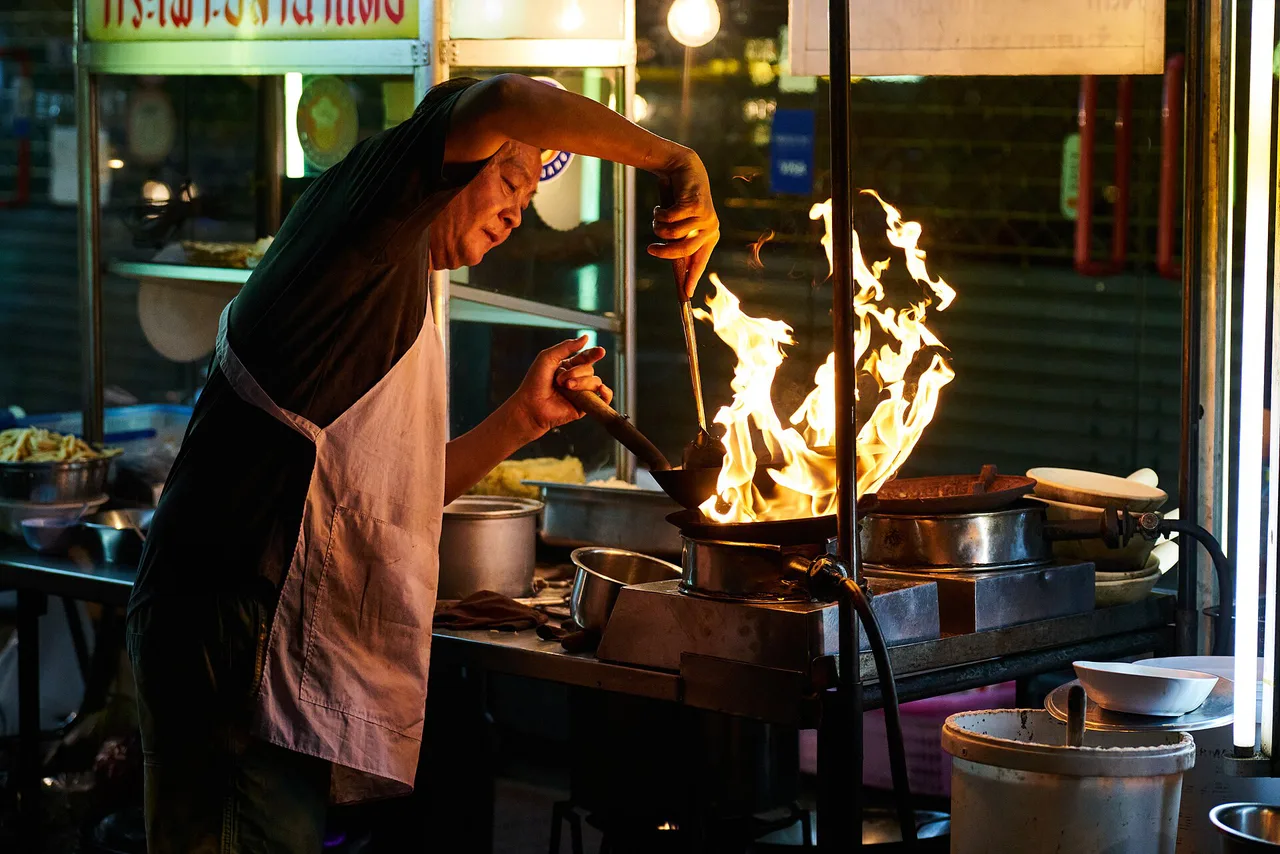
Featured image: Takeaway, CC BY-SA 3.0, via Wikimedia Commons.
Is Vegan Thailand Travel Easy?
Yes, with preparation. Thai cooking leans on vegetables, tofu, mushrooms and rice, and dairy rarely appears. The trouble is seasoning. Many kitchens add a little fish sauce, dried shrimp, oyster sauce or egg to dishes that look plant-based. Plain "vegetarian" is therefore a starting point, not a guarantee. If you are still deciding how strict to be, our broader guide to vegetarian eating in Thailand covers the basics. This page goes further for travelers who avoid every animal product.
What Is and Isn't Vegan in Thai Food
Most Thai flavour comes from a few sauces and pastes. Several of them are animal-derived. Curry pastes often include shrimp paste (gapi), so a vegetable curry on an ordinary menu is rarely vegan by default. Pad thai sauce is often made in advance with fish sauce, and egg is common in the noodles. Stir-fried vegetables frequently get oyster sauce, even in dishes marked vegetarian. The table below lists the usual traps.
| Dish | Usual hidden ingredient | What to ask for |
|---|---|---|
| Pad thai | Fish sauce, egg | No fish sauce, no egg |
| Som tam (papaya salad) | Fish sauce, dried shrimp | No fish sauce, no dried shrimp |
| Green or red curry | Shrimp paste in the curry paste | Vegan curry paste, or a vendor who confirms it |
| Pad krapow (holy basil stir-fry) | Oyster sauce, fish sauce, meat | Tofu or mushrooms, no oyster sauce |
| Stir-fried vegetables | Oyster sauce | Soy sauce only |
| Tom yum | Fish sauce, shrimp-based paste | No fish sauce, no shrimp |
| Fried rice | Egg, fish sauce, oyster sauce | No egg, no sauces except soy |
How to Order Vegan in Thailand
Many Thai cooks do not know the word "vegan". A short list of exclusions works better. Say it plainly: no meat, no fish, no oyster sauce, no egg. Add fish sauce and shrimp paste for curries and salads. Show the Thai script on your phone if the vendor looks unsure. Ask again when the dish arrives if anything smells of fish. Speaking up costs nothing, and most cooks adapt a stir-fry without fuss.
| English | Thai script | Romanization |
|---|---|---|
| No fish sauce | ไม่ใส่น้ำปลา | mai sai nam pla |
| No shrimp paste | ไม่ใส่กะปิ | mai sai kapi |
| No oyster sauce | ไม่ใส่น้ำมันหอย | mai sai nam man hoi |
| No egg | ไม่ใส่ไข่ | mai sai khai |
| Jay (strict vegetarian) food | อาหารเจ | ahan jay |
- Mistake to avoid: assuming a vegetarian sign covers sauces.
- Mistake to avoid: trusting a pre-mixed sauce at a street stall.
- Mistake to avoid: skipping the egg request on noodles and fried rice.
Where to Eat Vegan: Restaurant Types Compared
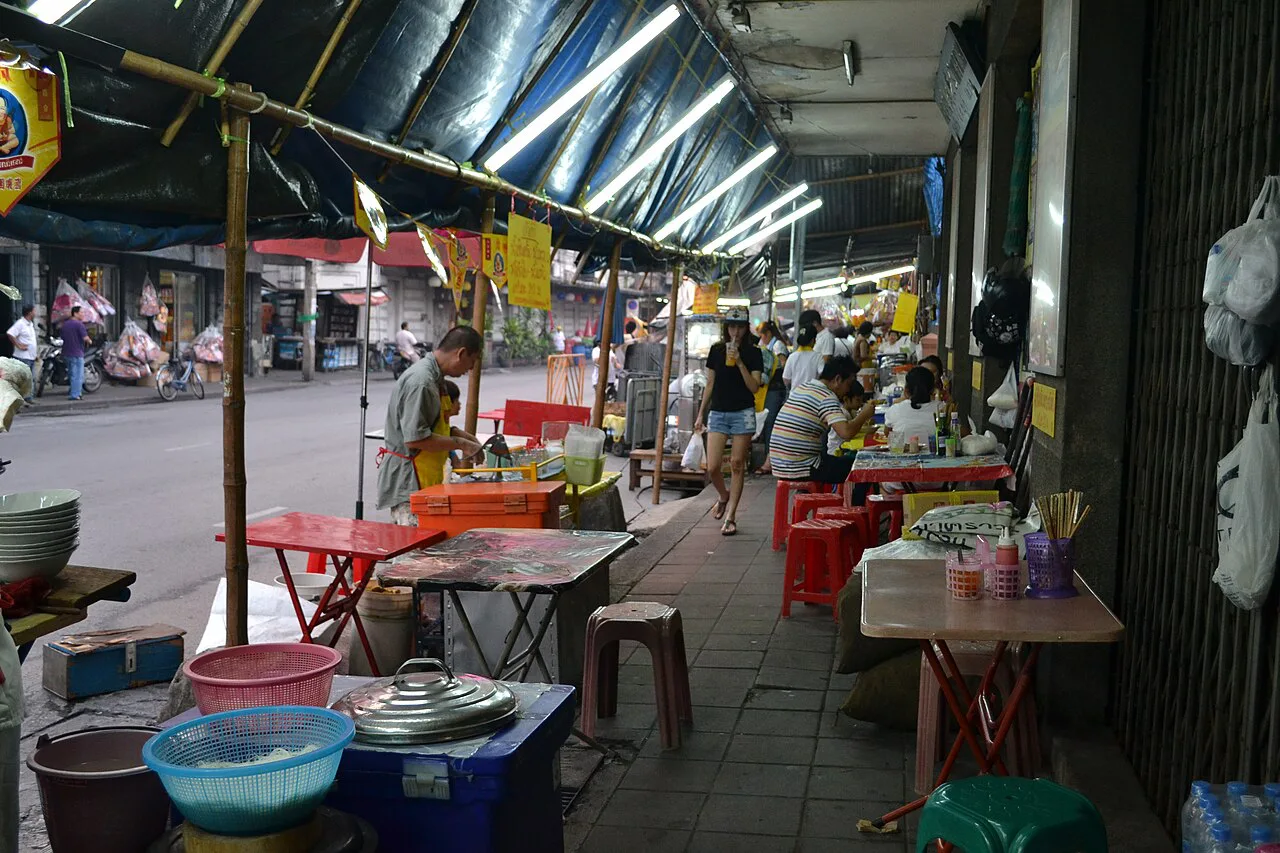
Where you eat matters as much as what you order. Dedicated vegan restaurants carry the lowest risk. Stalls with a yellow flag marked เจ follow jay rules, which exclude meat and fish. Jay is its own system, and some jay food may still use egg or dairy, so strict vegans should ask. Our jay food guide explains the rules in detail. Ordinary restaurants and street stalls carry the highest risk of hidden sauces.
| Option | Reliability | Cost level | Ease of communication | Best for |
|---|---|---|---|---|
| Vegan restaurant | High | Mid | Easy | Strict vegans, first-time visitors |
| Jay (เจ) vendor | Medium to high | Low | Easy to moderate | Budget meals, festival season |
| Regular restaurant | Low to medium | Mid | Moderate | Variety, with careful requests |
| Street stall | Low | Low | Harder | Fruit, grilled corn, simple stir-fries |
| Hotel or resort | Medium | High | Easy | Families, guests with allergies |
Vegan Food by Region
Choice changes sharply across the country. In Bangkok, you can usually find dedicated vegan cafes and jay stalls, so planning means picking a neighborhood and checking listings. Chiang Mai has a strong reputation among vegan travelers and offers vegan restaurants and cooking classes, which makes it the easiest base for strict eaters. On the southern islands, tourist resorts cater to plant-based diets, but quiet villages may offer only rice, fruit and omelettes. In smaller towns, expect to rely on jay stalls, markets and cooks willing to adapt a stir-fry. Carry fruit and nuts as backup.
Best Vegan Thai Dishes to Try
These dishes adapt well once you name the exclusions.
- Mushroom larb: a herby salad with chilli, lime and toasted rice; ask for soy sauce instead of fish sauce.
- Morning glory stir-fry (pad pak boong): a quick side of greens; request no oyster sauce.
- Tofu curries: yellow, massaman or panang; confirm the paste has no shrimp.
- Papaya salad: ask for no fish sauce and no dried shrimp.
- Mango sticky rice: check the coconut milk and toppings before ordering.
Seasonal and Festival Eating
Thailand's vegetarian festival fills cities with jay stalls for a few days each year. Dates change annually, so check the Tourism Authority of Thailand site before you plan around them.
Planning Tools and Trip Logistics
HappyCow and Google Maps filters help you find vegan restaurants near your hotel. Read recent reviews, since small vegan cafes open and close often. Allergies need extra care, because fish, shellfish, egg and peanut all appear in Thai kitchens.
Dietary Overlaps
Many needs overlap with vegan eating. Travelers avoiding wheat can start with our gluten-free Thailand guide. Muslim travelers will find a separate set of rules in the halal food guide. For certification questions, the Halal Science Center at Chulalongkorn University is a useful reference. Vegan, halal and gluten-free needs all depend on asking about sauces.
For trip-planning details, see MICHELIN Guide Thailand.
Frequently Asked Questions
What is vegetarian called in Thailand?
Strict vegetarian food is called jay, written เจ and pronounced like "jeh". Look for yellow flags with red lettering at stalls. Jay excludes meat and fish, but ask about egg and dairy if you are vegan.
What Thai food is vegan?
Mushroom larb, morning glory stir-fry and tofu curries are good options once you ask for no fish sauce, shrimp paste, oyster sauce or egg. Dedicated vegan restaurants and jay stalls make ordering easier.
Thai food notes for your next trip
Optional updates to our food guides.
You might also like

Continue reading
More guides you'll find useful