Nam Ngiao: What It Is, How to Eat It, Where to Try
Nam ngiao explained: what is in this Northern Thai noodle soup, where the name comes from, how to eat it, and how it differs from khao soi.
On this page
Last updated November 2026: nam ngiao (น้ำเงี้ยว) is a spicy, slightly sour Northern Thai noodle soup built on a pork and tomato broth. Shan, or Tai Yai, cooks are credited with the dish, and it now sits firmly inside Lanna cooking. Below you will find what goes in the bowl, how to eat it, and how it differs from khao soi.
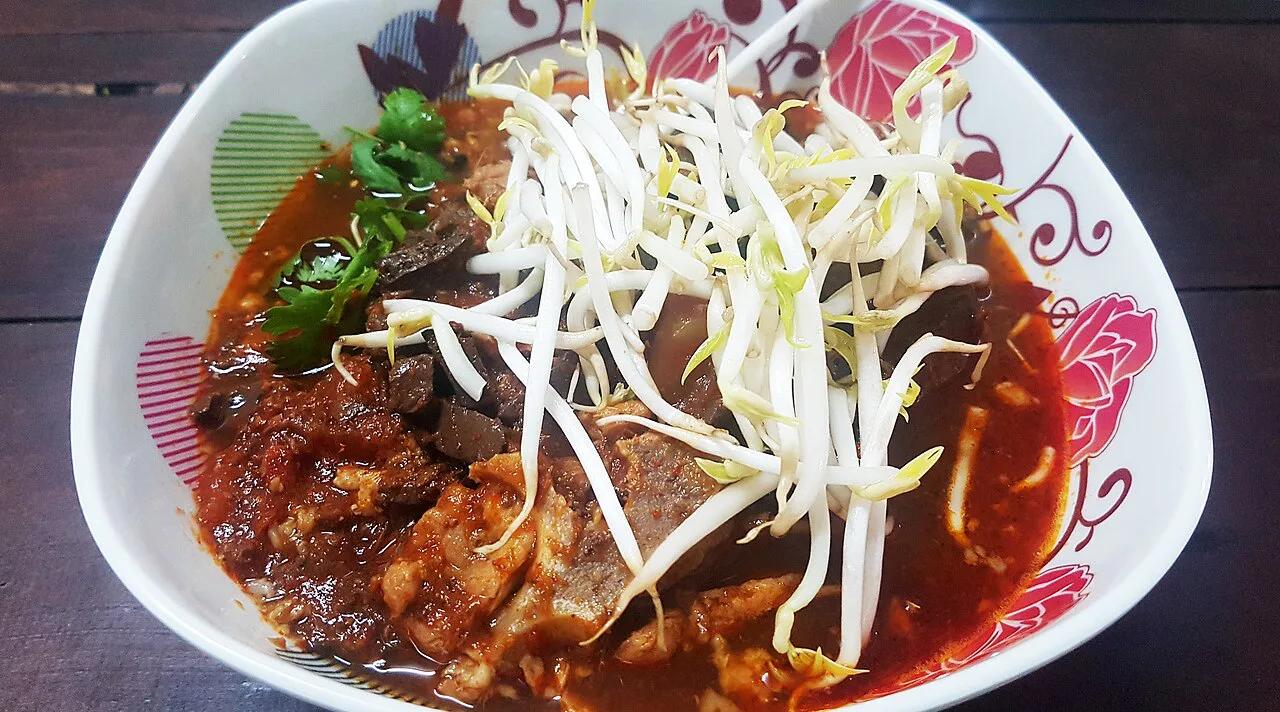
Featured image: Bitterschoko, CC0, via Wikimedia Commons.
What Nam Ngiao Is and Where It Is Eaten
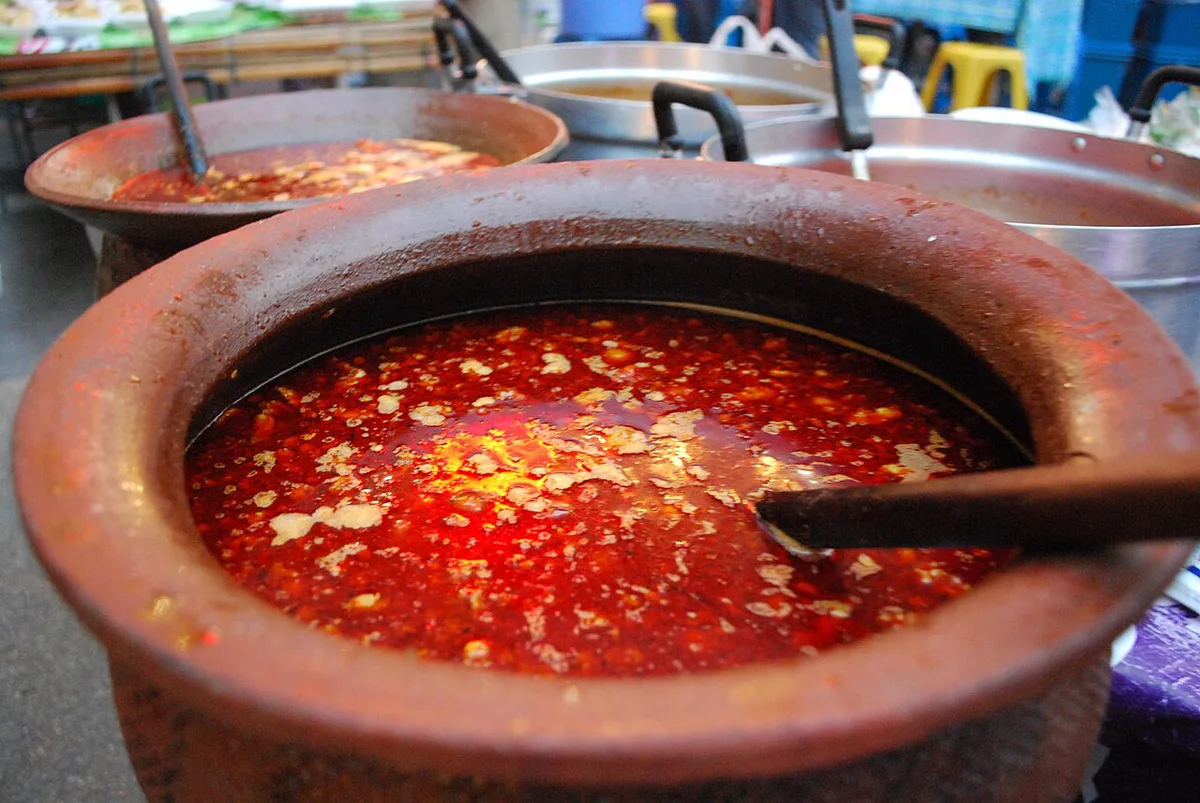
Nam ngiao is a broth-based noodle soup, not a mild curry. Tomatoes give it a gentle sourness, and dried chili supplies the heat. Pork ribs or bones form the base, and cubes of blood curd float among the noodles. Most bowls arrive over khanom chin, thin fermented rice noodles, which is why menus often print khanom chin nam ngiao. Sources link the dish to Chiang Mai, Chiang Rai and Mae Hong Son. It is also described as a Lanna celebration food, especially north of Phrae. For wider context on regional cooking, see our Northern Thai food guide.
What Goes in a Bowl of Nam Ngiao
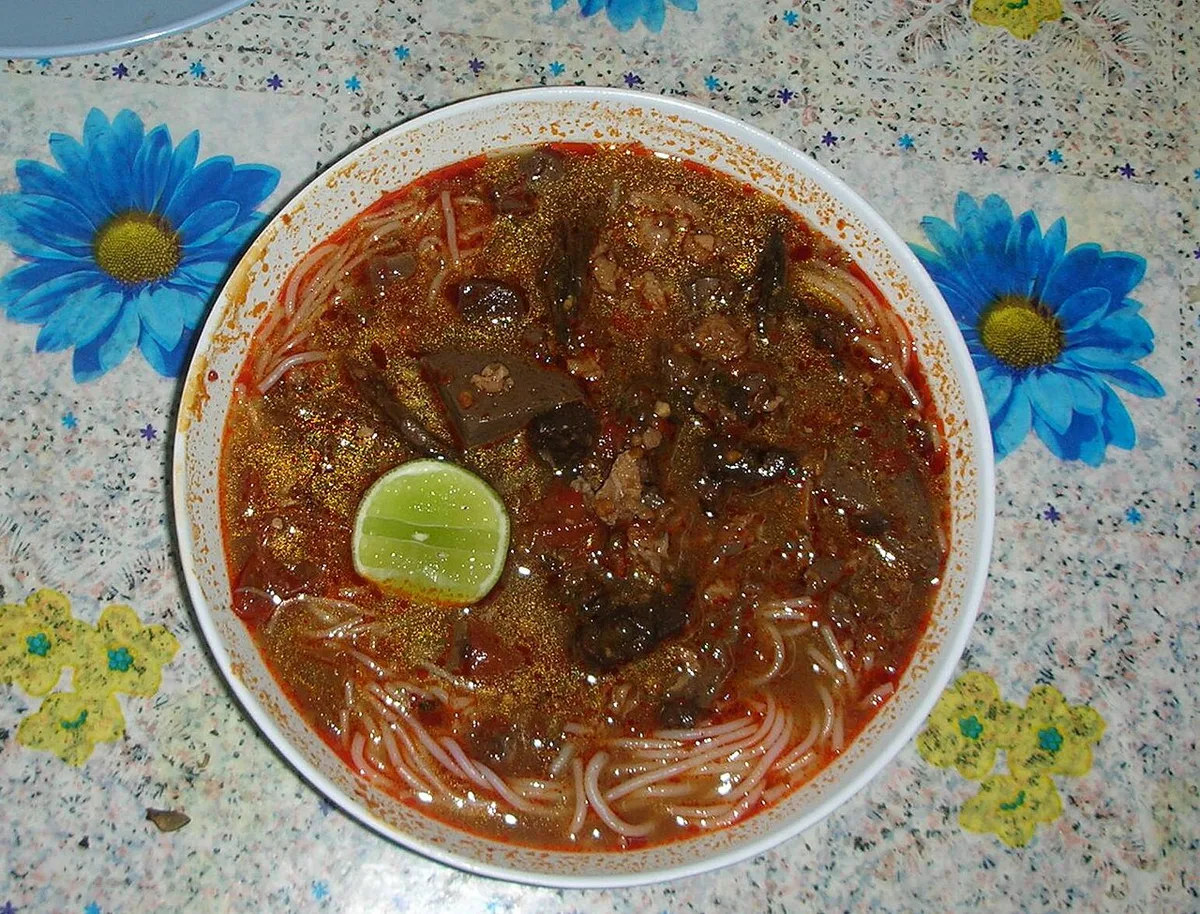
Broth starts with pork bones or spare ribs, and some cooks use chicken feet. Chili paste and tomato build the color and the tang. Dok ngio, the dried flowers of the Bombax ceiba tree, add color and a distinct flavor. Tua nao, a fermented soybean, adds savory depth. Optional extras include ground pork and beef, and shrimp paste sometimes stands in for tua nao. Home recipes exist if you want to cook it later. Bowls on the road vary from cook to cook.
- Broth: pork bones or ribs, chili paste, tomato
- Blood curd: diced pork or chicken blood, set into soft cubes
- Dok ngio: dried Bombax ceiba flowers
- Tua nao: fermented soybean, often in a flat disc shape
- Optional: ground pork, beef, shrimp paste
Why It Is Called Nam Ngiao
Nam means water or soup in Thai. Ngiao is where sources part ways. One theory says northern Thais once used ngiao for people of Shan descent. A second theory points to ngio, the Thai name for the Bombax ceiba flowers in the pot. Neither is settled, so treat any single origin story with caution. Shan roots do fit the dish, which is associated with Shan State and with Tai Yai communities in Myanmar, Yunnan and northern Thailand.
How to Order and Eat Khanom Chin Nam Ngiao
Order by name and say which noodle you want. Khanom chin is the common choice, though kuaitiao sometimes replaces it. Common sides include lime, bean sprouts and long bean. Pickled mustard greens, shredded cabbage, cilantro and fried garlic often go on top. Crispy pork rinds add crunch on the side. Taste the broth before adding anything. Squeeze in lime next, then add greens to cut the richness. Stir in extra chili gradually, since dried chili is already in the pot.

- Pork blood curd: ask whether it is in the bowl if you avoid blood.
- Tua nao: fermented soybean, so flag soy concerns.
- Shrimp paste: sometimes used in its place, so flag shellfish concerns.
- Chili level: ask for less heat before the bowl is built.
- Mistake to avoid: treating it as a mild curry.
- Mistake to avoid: skipping the sides, which balance the broth.
- Mistake to avoid: expecting identical bowls in every province.
Nam Ngiao vs Khao Soi
Both are Northern Thai noodle dishes, and first-timers often mix them up. Khao soi is the coconut-curry noodle bowl covered in our khao soi guide. Nam ngiao is thinner, tomato-driven and sour-spicy. In our editorial assessment, khao soi is the gentler first order for anyone wary of offal.
| Feature | Nam ngiao | Khao soi |
|---|---|---|
| Broth | Pork and tomato with chili paste | Coconut curry |
| Noodles | Commonly khanom chin rice noodles | Egg noodles, often with crispy noodles on top |
| Signature items | Blood curd, dok ngio, tua nao | Meat, pickled greens, lime |
| Flavor | Tangy, spicy, savory | Rich, creamy, mildly spiced |
| Best for | Adventurous eaters who accept blood curd | Cautious first-timers |
Where to Try Nam Ngiao in Northern Thailand
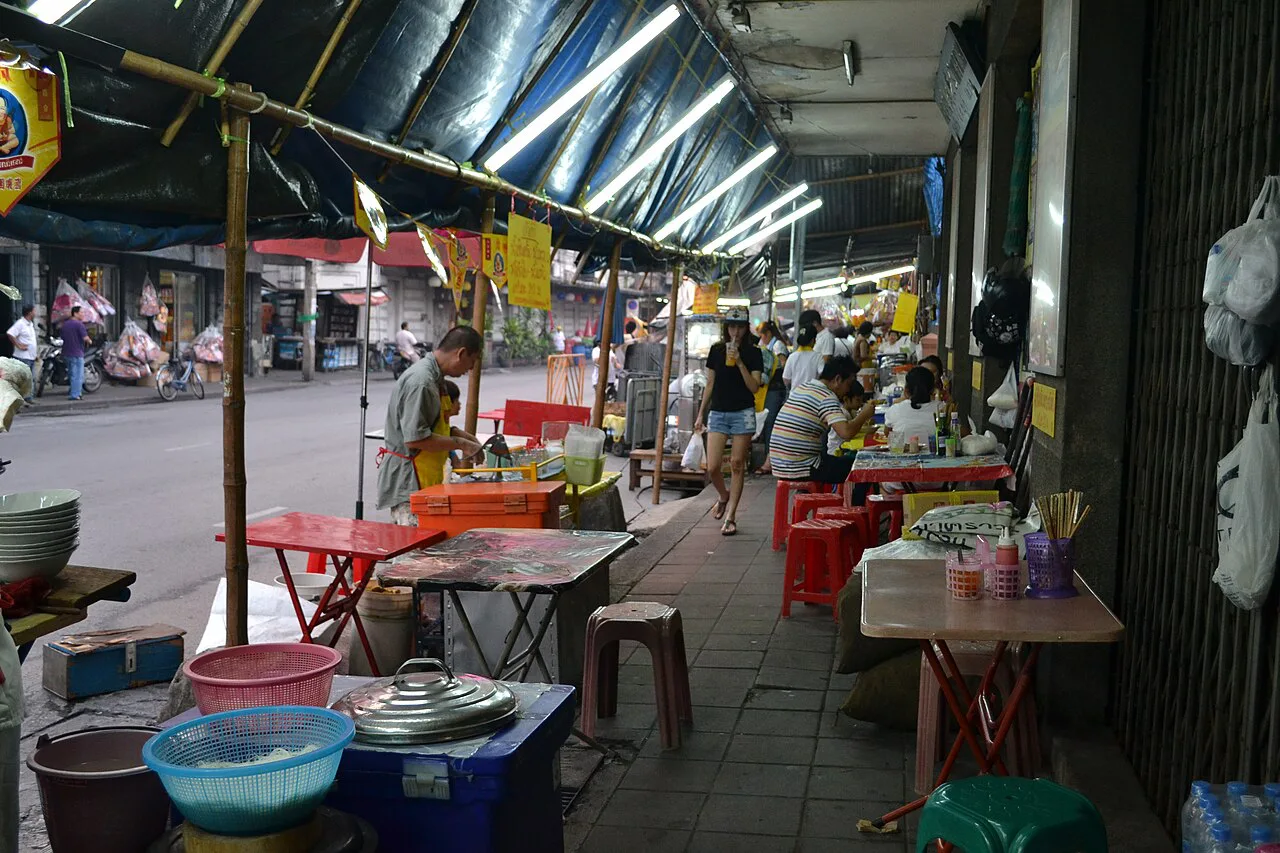
Start in Chiang Mai or Chiang Rai, where nam ngiao is widely served. Mae Hong Son is especially associated with the dish. Look for a stall or restaurant that makes it as a specialty rather than as an extra menu line. In our editorial assessment, balance matters most. Broth should taste tangy and spicy at once, with a savory edge from tua nao. Dok ngio in the pot and fresh sides on the table are good signs. Cooking schools in Chiang Mai name a few specialist shops, but hours and addresses change, so check a current map listing before you set out.
What to Eat With Nam Ngiao
Order nam ngiao as one dish among several. Northern Thai sausage is a herb-heavy grilled side that suits the broth's tang. Tomato-based pork chili dip repeats the tomato note and comes with raw vegetables. Pork belly in a rich Burmese-style curry gives a sweeter, heavier contrast. Green roasted chili dip adds a smoky, bitter edge alongside sticky rice. For the full menu of regional dishes, return to the Northern Thai food hub.
Frequently Asked Questions
What is kanom jeen nam ngiao?
Kanom jeen nam ngiao is nam ngiao served over fermented rice noodles. Kanom jeen and khanom chin are two spellings of the same noodle, and it is the most common pairing.
Thai food notes for your next trip
Optional updates to our food guides.
You might also like


Continue reading
More guides you'll find useful