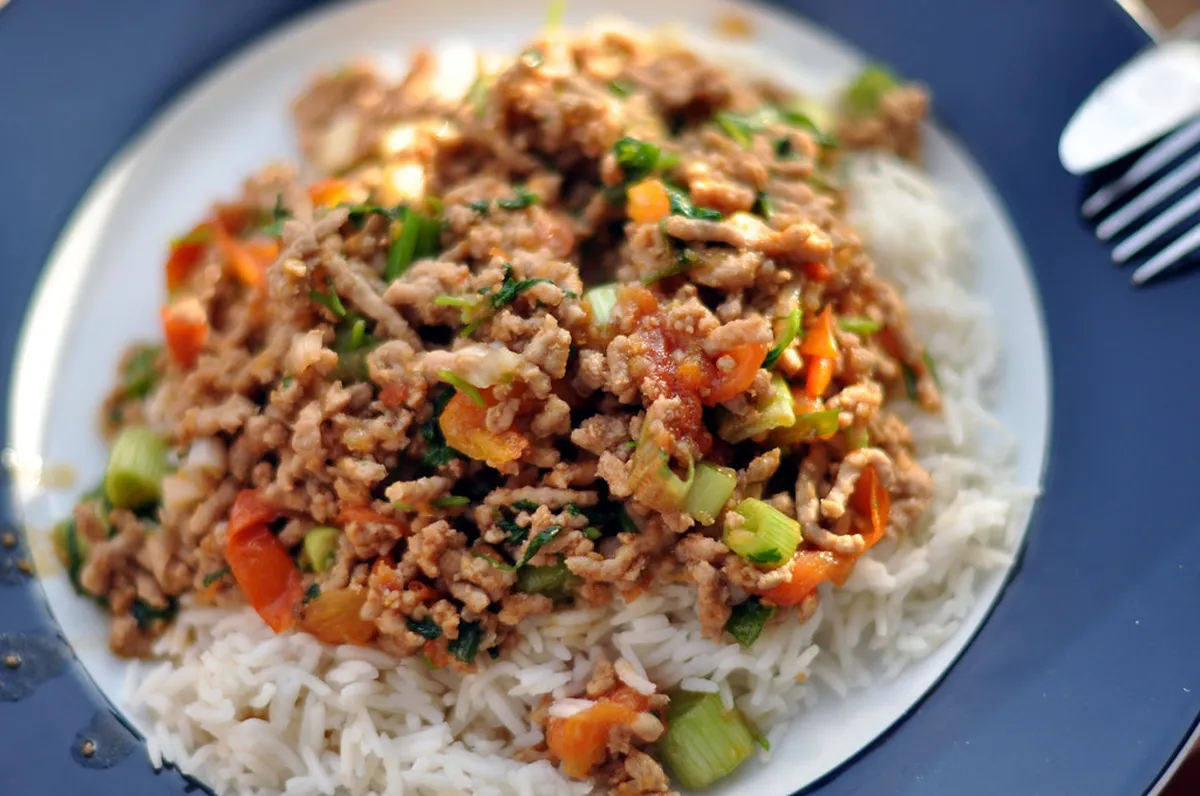
Nam Prik Ong: Northern Thai Pork & Tomato Dip, How to Eat It
What nam prik ong is, how Northern Thais eat it, how it differs from nam prik noom and nam ngiao, and how to order it. Includes dietary notes.
On this page
Last updated November 2026. Nam prik ong is a Northern Thai dip of pork mince and tomato cooked down with chili paste, served warm with raw and steamed vegetables and sticky rice. It is mild, sweet-sour and savory, and it anchors many shared meals across Northern Thai cooking. Here is how to spot it, order it and eat it, plus how it differs from two similar-sounding dishes.
Featured image: cyclonebill, CC BY-SA 2.0, via Flickr.
What Nam Prik Ong Is
Nam prik ong comes from Northern Thailand, the Lanna food region. Pork mince and chopped tomato simmer slowly in a paste of dried chilies, shallots, garlic, lemongrass, kaffir lime leaf and shrimp paste. Sugar and fish sauce finish the seasoning. Nam means water and prik means chilies, so "nam prik" is the general Thai label for chili-based dips and sauces. Texture sits between a sauce and a relish. It is thick enough to cling to a cucumber spear and loose enough to spoon over rice. Flavor leans sweet-sour from the tomato, with savory depth from the pork and shrimp paste. Heat is gentle compared with many Thai dips, because the tomato and pork soften the dried chili. Expect a dark red-orange color and a slick of oil on top.
How Nam Prik Ong Is Eaten in Northern Thailand
Nobody eats this dip alone. It arrives in a small bowl or mini pan, with a plate of vegetables around it. Typical dippers include raw cucumber and cabbage, plus steamed or blanched greens and carrots. Sticky rice comes in a small basket. Fried pork rinds (kaeb moo) often sit on the plate too, adding a salty crunch. You eat by hand. Pinch off a small ball of sticky rice, press it flat, and use it to scoop a little dip. Then take a vegetable in the other hand. Or dip the vegetable directly and eat the rice on the side. The dip is meant to be shared, so everyone at the table reaches into the same bowl. It sits beside other dishes on a spread rather than serving as a main course. See our guide to Northern Thai dishes for the wider table.
Nam Prik Ong vs Nam Prik Noom vs Nam Ngiao
Menus in the north list three dishes that get mixed up. All three are related and all three are distinct. Nam prik ong is the tomato-and-pork dip. Roasted green chili dip is built on charred green chilies instead and has no tomato-pork base. Tomato-pork noodle soup shares the tomato-and-pork profile but arrives as a bowl of broth and noodles. Use the table to tell them apart at a glance.
| Dish | Base | Texture | Role at the meal | Heat |
|---|---|---|---|---|
| Nam prik ong | Pork mince, tomato, chili paste | Thick, spoonable dip | Shared dip with vegetables and sticky rice | Mild |
| Nam prik noom | Roasted green chilies | Coarse, mashed dip | Shared dip with vegetables, pork rinds and sticky rice | Brighter, often hotter |
| Nam ngiao | Tomato and pork in broth | Soup with noodles | Single noodle bowl | Moderate |
Where and How to Order It
Look for northern-style restaurants and market food stalls across Chiang Mai and the surrounding provinces. Set meals and shared platters often include it. Read menus for the words "nam prik" and then check the second word. If you see "ong", you are getting the tomato-pork dip. Ask for a plate of vegetables to go with it, usually written as "phak". A simple request such as "nam prik ong, khao niao" gets you the dip and sticky rice. Order it alongside other dishes, since it works best as part of a spread. Prices vary by venue, so read the menu board before you sit down.

- Spot it: look for "nam prik ong" on menus, often grouped with other dips.
- Order it: ask for sticky rice (khao niao) and a vegetable plate.
- Add crunch: request fried pork rinds (kaeb moo) if they are not already on the plate.
- Share it: order one bowl for the table, not one per person.
Dietary and Heat Notes
Nam prik ong is not suitable for vegetarians, halal diets or shellfish allergies as served. The base is pork mince, and shrimp paste and fish sauce add seafood content. Cooks rarely swap these out, so a vegetarian version only exists if the kitchen makes it to order. Tell staff your restriction before ordering, and expect a likely "no" at a busy market stall. For heat, the dip is mild by default. Ask for "mai phet" (not spicy) or "phet nit noi" (a little spicy) if you are sensitive. Eating it with sticky rice and cool cucumber tempers any remaining kick.
- Contains pork, shrimp paste and fish sauce.
- Not vegetarian, halal or safe for shellfish allergies unless made to order.
- Heat is mild; ask for "mai phet" to go gentler.
What to Pair With Nam Prik Ong
Build a northern meal around the dip. Add grilled herb sausage for a smoky, spiced contrast to the sweeter dip. Bring in slow-cooked pork curry for a richer, deeper pork dish. Finish with coconut curry noodles if you want a noodle bowl alongside the sticky rice. Keep a plate of fresh vegetables on the table throughout, since they cut through the richer dishes.
Making Nam Prik Ong at Home
You can recreate the dip without travelling. Gather pork mince, ripe tomatoes, shallots, garlic, lemongrass, kaffir lime leaf, dried chilies and shrimp paste. Season with sugar and fish sauce. Serve it warm with sticky rice and a mix of raw and steamed vegetables. Keep the vegetables seasonal and crisp. Adjust the chilies to your heat tolerance, since the dip should stay mild and balanced.
Thai food notes for your next trip
Optional updates to our food guides.
You might also like


Continue reading
More guides you'll find useful