Gaeng Hang Lay: Northern Thai Pork Curry Guide
Gaeng hang lay is a northern Thai pork curry without the coconut milk. Learn how it tastes, where to look for it, and how to order it.
On this page
Last updated November 2026: gaeng hang lay is a northern Thai pork belly curry made without coconut milk. Menus also spell it hung lay or hang le, and some call it Chiang Mai curry. Our guide covers the flavor, how to order it, and where it fits in a 8 Northern Thai Food Dishes to Try and How to Order Them spread.
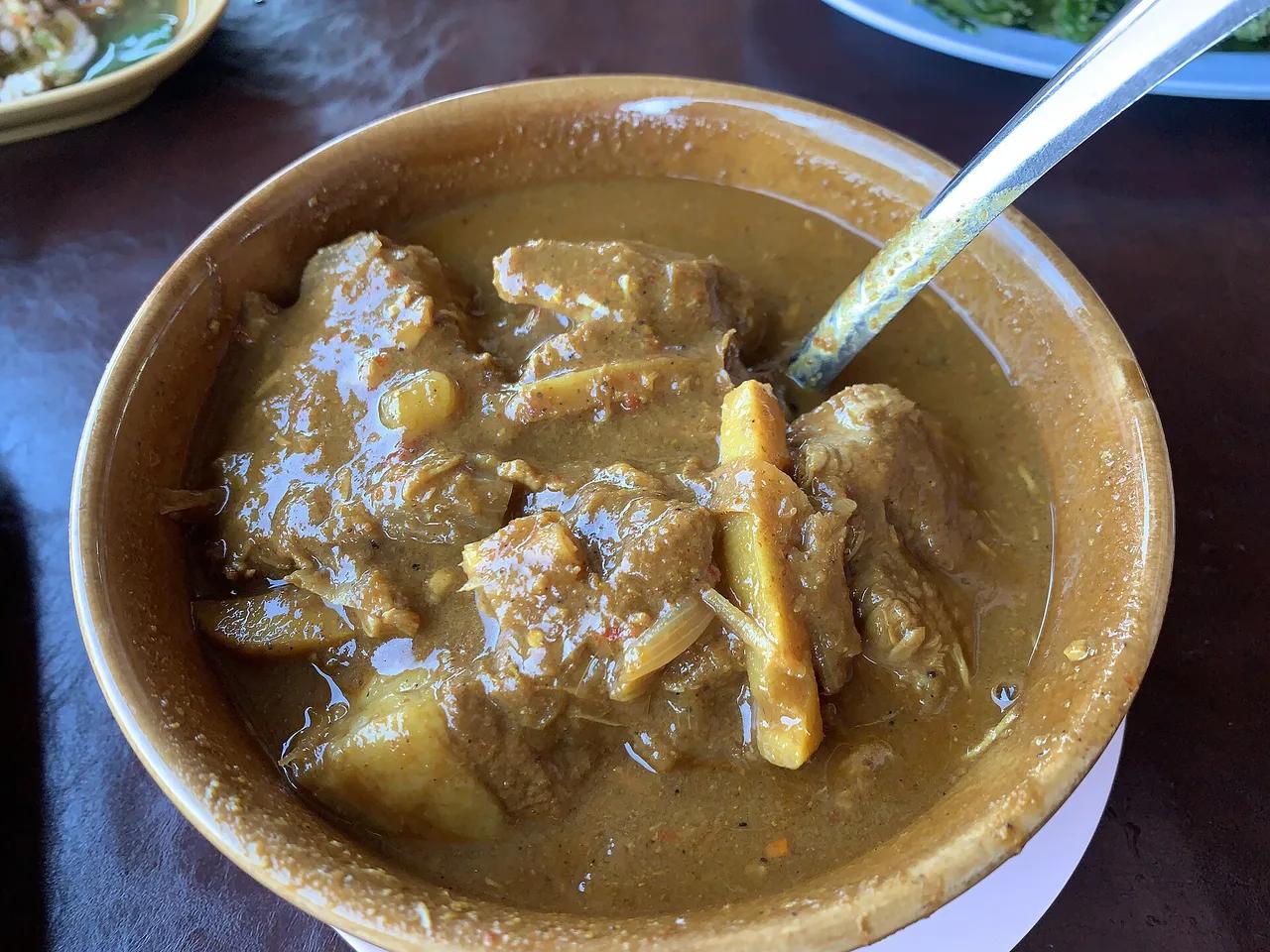
Featured image: Chainwit., CC BY-SA 4.0, via Wikimedia Commons.
What Is Gaeng Hang Lay?
Gaeng hang lay is a slow-cooked pork curry from northern Thailand, and pork belly is the classic cut. It is usually linked to Burmese-style curries, and the name echoes the Burmese pork curry known as hin lay. Cooks in Chiang Mai and the wider north adapted it over time.
Expect chunks of fatty pork in a thick, dark, oily sauce. There is no coconut milk in it. Tamarind, ginger, garlic, turmeric and a spiced curry powder do the work instead. Spellings vary widely, so learn three: hang lay, hung lay and hang le.
What It Tastes Like
Sweet, sour and savory arrive together, with ginger giving a warm bite underneath. Many first-timers ask why it tastes sweet when there is no coconut. The answer is a mix of rendered pork fat, sugar and tamarind, which adds tartness as well as a fruity depth.
Turmeric and curry powder give a dry, earthy spice rather than the creamy richness of a Central Thai coconut curry. Heat sits in the background. Chile level varies from cook to cook, so ask before you assume it is mild.
Compare it with Khao Soi Guide: Northern Thai Curry Noodle Soup, which is a coconut-based noodle curry. Gaeng hang lay is richer in pork and sharper with ginger, and it is eaten with rice instead of noodles.
Where to Eat Gaeng Hang Lay in Northern Thailand
Start in Chiang Mai, and look for places that describe their food as northern Thai or Lanna. Restaurants serving a full northern menu are the most reliable bet.
Market stalls that sell ready-made curries from trays are another good option. You point, the vendor scoops, and the dish comes with rice. Khao soi shops sometimes keep a pot of it as a side. Temple fairs and local festivals can also feature it, since the dish suits big shared pots.
Restaurants aimed squarely at tourists often skip it and lean on better-known curries. A menu of only pad thai and green curry is a poor sign. Ask staff directly whether they cook the northern pork curry that day.
How to Order Gaeng Hang Lay
Read the menu for any of the spellings: hang lay, hung lay or hang le. English menus may also say Northern Thai pork curry or Chiang Mai curry. If you see none of these, say the dish name aloud and point at the pork.
It arrives with plain steamed rice. Sticky rice is a common northern alternative at many tables, so ask for it if you prefer to eat with your hand.
Pork is central here. Travelers who avoid pork should skip it. A vegetarian version is not standard, and asking for one is likely to be hard, so treat that as a practical judgment rather than a guarantee.
It is usually a shared dish. Order one portion of it for the table and balance it with something fresh or sharp.
Gaeng Hang Lay vs Khao Soi and Other Northern Dishes
Travelers mix these dishes up because they all sit on northern menus. This table keeps them apart. For the noodle dishes, see our guides to Khao Soi Guide: Northern Thai Curry Noodle Soup and Nam Ngiao: What It Is, How to Eat It, Where to Try. Our Sai Oua: Northern Thai Sausage, How to Eat It guide covers the sausage.
| Dish | What it is | Main protein | Eaten with | Best for |
|---|---|---|---|---|
| Gaeng hang lay | Thick, sweet-sour pork curry with no coconut milk | Pork belly | Rice or sticky rice | Travelers who want a slow-cooked, non-coconut curry |
| Khao soi | Curry noodle soup | Chicken or beef, depending on the shop | Noodles with pickled greens and lime | First-time visitors wanting a noodle bowl |
| Nam ngiao | Northern noodle soup | Pork | Noodles | Travelers who like a tangy, tomato-led broth |
| Sai oua | Herbal grilled sausage | Pork | Sticky rice and dips | Sharing a starter or side |
- Order it if you want a slow-cooked pork curry without coconut milk.
- Skip it if you avoid pork.
- Skip it if you want something light.
- Ask about chile level first if you dislike heat.
Build a Northern Thai Meal Around Gaeng Hang Lay
Treat the curry as the rich center of a shared table, and then add contrast. Grilled Sai Oua: Northern Thai Sausage, How to Eat It brings herbs and char. A dip such as Nam Prik Ong: Northern Thai Pork & Tomato Dip, How to Eat It adds tomato and pork in a looser, tangier form. Nam Prik Noom (น้ำพริกหนุ่ม): Northern Thai Green Chili Dip Guide offers a smoky green chile dip that suits raw vegetables.
Pick one pork-heavy main, not three. Gaeng hang lay is fatty, so balance it with the vegetables and sharper dips. Sticky rice ties the table together. Then finish with a noodle bowl such as khao soi at a separate meal rather than the same one.
For more dishes to build around, browse our wider guide to northern Thai cooking.
Making It at Home
Cooks keep the recipe short and the simmer long. Typical ingredients are pork belly, ginger, garlic, shallots, tamarind, peanuts, palm sugar, fish sauce and a curry paste or spice powder with turmeric. A common home simmer runs 40 to 45 minutes, until the shallots fall apart and the meat turns tender.
Tamarind and sugar set the sweet-sour balance, so taste as you go. Serve it with rice, as you would at a northern table.
Thai food notes for your next trip
Optional updates to our food guides.
You might also like


Continue reading
More guides you'll find useful