Nam Prik Noom (น้ำพริกหนุ่ม): Northern Thai Green Chili Dip Guide
What nam prik noom is, how hot it is, what to eat it with, and how it differs from other Northern Thai dips. A traveler's guide.
On this page
Last updated November 2026: nam prik noom (น้ำพริกหนุ่ม) is a Northern Thai dip of roasted young green chilies, shallots and garlic, pounded into a smoky, mildly hot paste. We cover what to dip, how it differs from nam prik ong, and how to order it without surprises. For the wider table, start with our Northern Thai food overview.
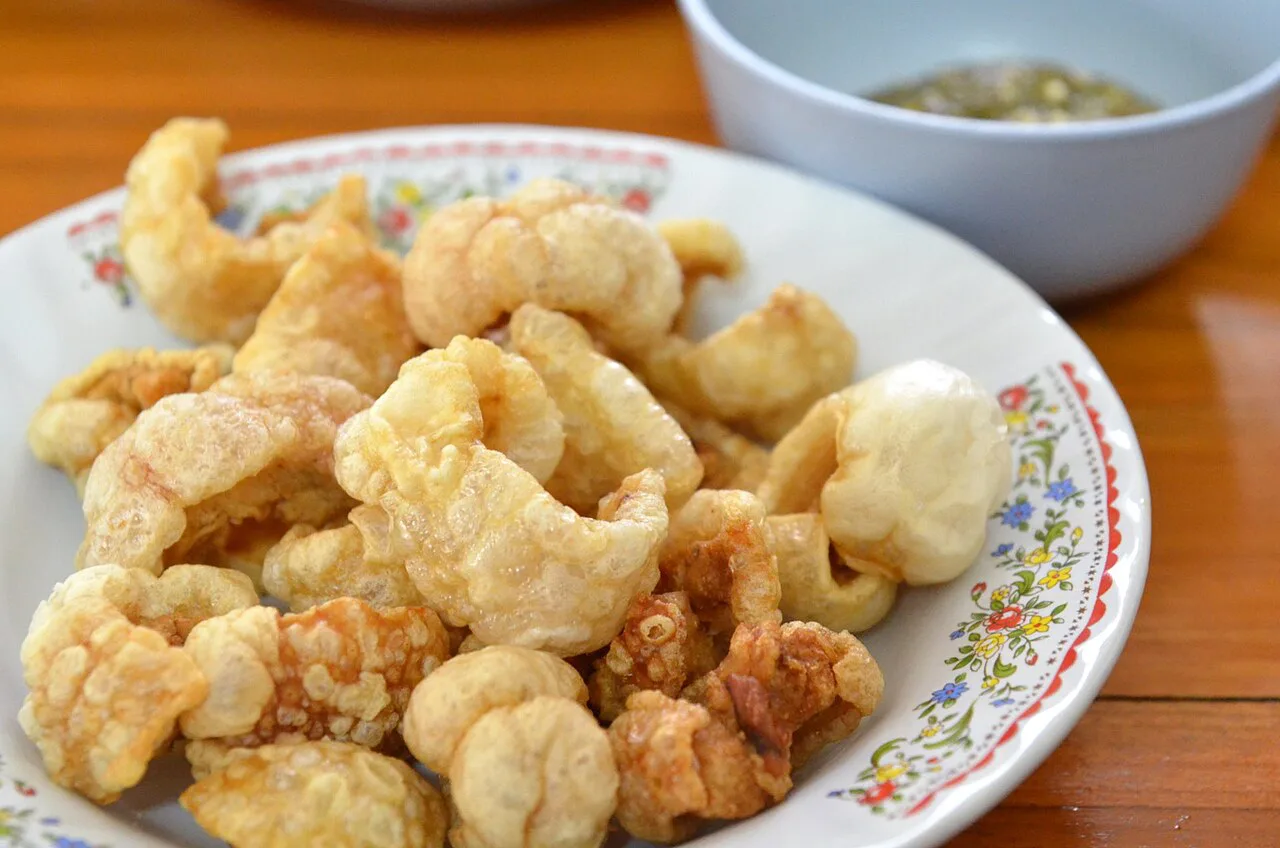
Featured image: Takeaway, CC BY-SA 3.0, via Wikimedia Commons.
What Is Nam Prik Noom?
Nam prik noom is a roasted green chili dip from Northern Thailand. Menus write it น้ำพริกหนุ่ม, and English spellings include nam phrik noom and naam prik noom. Reference sources also list it for Northeastern Thailand. Texture lands close to guacamole: a coarse, spoonable paste rather than a smooth sauce. Flavor is smoky from the charred skins, salty from fish sauce and herbal from cilantro. Heat is mild to moderate, so we'd call it a sensible first Northern Thai dip for visitors. Home cooks often translate the name as "young chili dip". We won't guess at what "noom" means beyond that.
What's In It And How It's Made
Cooks roast or grill green chilies, shallots and garlic whole and unpeeled until the skins char. Everything is then peeled where needed and pounded in a mortar into a paste. Fish sauce seasons it, and coarsely chopped cilantro goes on top. Some versions add lime juice. Sesame seeds appear in a few home recipes, but we'd skip them if you want the traditional profile. Charring is the whole point, because it turns sharp raw chilies into something sweet and smoky.
How To Eat It: What Comes On The Platter
Nam prik noom is a shared dip. A bowl lands in the middle of the table and everyone scoops with their own vegetables or rice. Sticky rice is the classic base. Fried pork rinds (cab moo, แคบหมู) add crunch, and grilled meat is a common partner. In a Northern spread, grilled sai oua sausage fits the same role. Here is what to expect.
| On the platter | Role with the dip | Notes |
|---|---|---|
| Raw vegetables | Fresh crunch | Carrots, cabbage and string beans are typical in home recipes |
| Steamed vegetables | Softer, milder scoop | Good if you prefer cooked produce |
| Sticky rice | Starch base | Pinch a ball, then dip |
| Jasmine rice | Starch base | Common in home-style meals |
| Fried pork rinds (cab moo) | Crunchy scoop | Often served alongside vegetables |
| Grilled meat | Rich partner | Dip between bites |
Nam Prik Noom vs Other Northern Thai Dips
Northern Thailand has several chili dips, and they differ more in method than in name. Nam prik noom is roasted, then pounded. Nam Prik Ong: Northern Thai Pork & Tomato Dip, How to Eat It is a cooked dip built on tomato and minced pork, so it eats richer and saucier. Shrimp paste chili dip (nam prik gapi) is another relative that sits outside the Northern style. Use the table to pick.
| Dip | Base | Texture | Best with |
|---|---|---|---|
| Nam prik noom | Roasted green chilies, shallots, garlic | Coarse, smoky paste | Raw or steamed vegetables, pork rinds, sticky rice |
| Nam prik ong | Tomato and minced pork, cooked down | Thick, saucy | Vegetables and rice, see our nam prik ong page |
| Nam prik gapi | Shrimp paste with chilies | Pungent paste | Rice with fresh or fried sides |
Authentic vs Adapted Versions
Traditional nam prik noom uses long young green chilies. Abroad, cooks swap in what the grocery store stocks. Jalapeño and banana pepper versions exist and taste close, though heat is less predictable. Poblano with roasted eggplant gives a mellower, smoother dip. A red chili and tomato version also turns up and shifts the flavor toward sweet and sharp. Regional detail matters too. In Isaan, cooks use plaa ra (fermented fish) where Northern versions use shrimp paste. If a dip abroad tastes sweet and soft, it is probably an adaptation rather than the Northern original.
Ordering Tips: Heat, Sharing And Dietary Notes
Use this short checklist when you order nam prik noom at a Northern Thai table. Sharing from a central bowl is normal, so you won't need your own portion.
- Heat: ask for a milder batch when you order, since chili strength varies by cook.
- Sharing: scoop from the common bowl onto your rice, then add vegetables.
- Fish sauce: standard in the dip, so it is not vegetarian by default.
- Shrimp paste: some versions include it, so shellfish-allergic travelers should ask first.
- Raw vegetables: ask for steamed ones if you would rather eat cooked produce.
Making Nam Prik Noom At Home
Roasting is slow, but the work is simple. Rachel Cooks Thai lists about 2 hours total for 4 servings, with 30 minutes under a high broiler and 1 hour of cooling. A Saveur poblano version runs closer to 13 minutes of broiling. A hot-sauce maker's Carolina Reaper version broils for about 5 minutes. Expect the speedier recipes to give a different dip. Our angle is eating it, so for a full recipe follow one of those cooks.
Plan your evening around the broiler. One recipe spends 30 minutes under a high broiler, while another broils for about 5 minutes.
Where It Fits In A Northern Thai Meal
Nam prik noom works as a starter dip or a side to a Northern platter. Pair it with sticky rice and vegetables for a light meal. Add grilled meat for a heavier one. Next to khao soi curry noodles, it is the fresh, sharp counterpoint. A bowl of gaeng hang lay pork curry brings richness to the same table. Nam ngiao noodle soup rounds out a broader Northern order.
Thai food notes for your next trip
Optional updates to our food guides.
You might also like


Continue reading
More guides you'll find useful