8 Northern Thai Food Dishes to Try and How to Order Them
What to eat in Northern Thailand: khao soi, sai oua, nam prik ong and more, with flavour notes, heat levels and tips for ordering a Khan Tok meal.
On this page
Last updated November 2026. Northern Thai food, also called Lanna cuisine, is salty, mildly hot, smoky and herb-led, and it is eaten with sticky rice and fresh vegetables. Signature orders include khao soi, sai oua, nam prik ong and nam prik noom. Below are 8 dishes with heat notes, a comparison table and a one-day tasting plan.
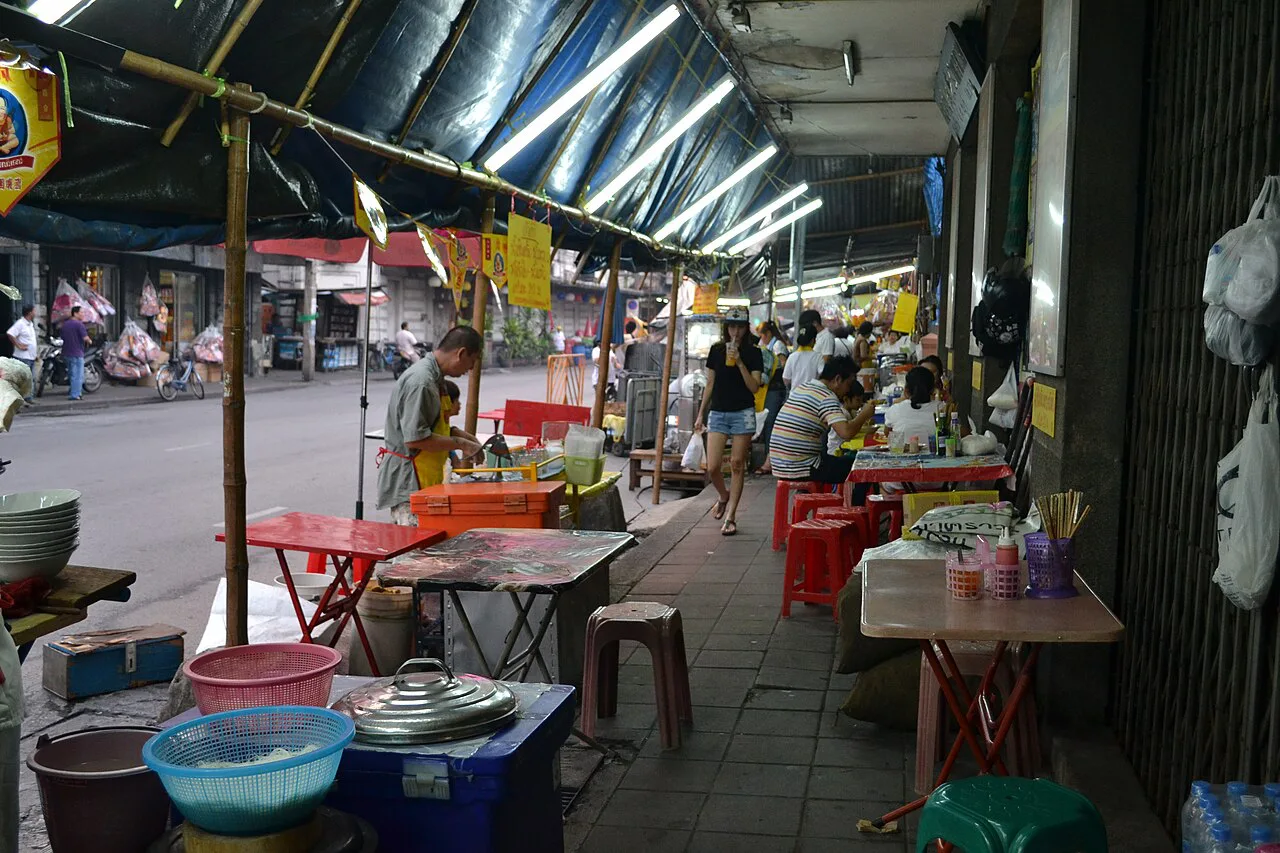
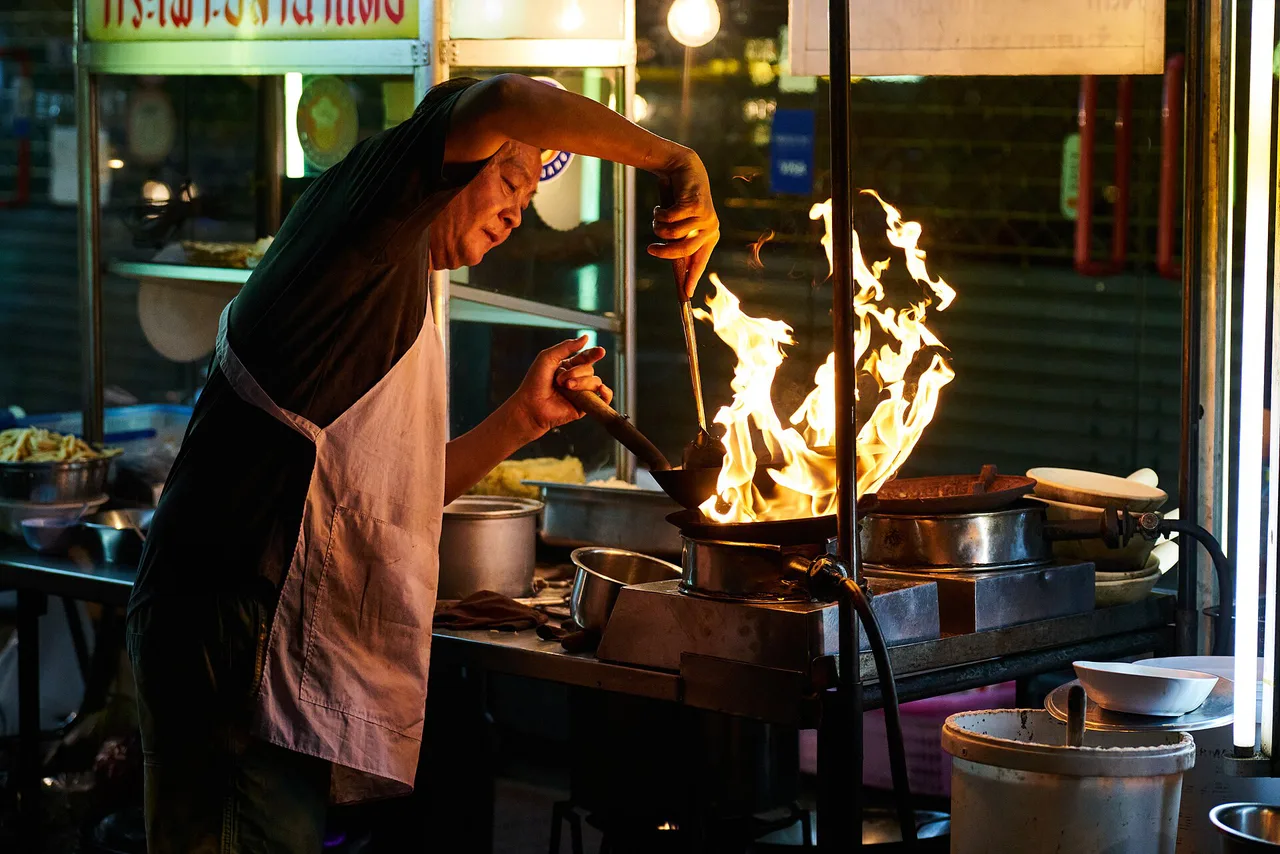
Featured image: Chainwit., CC BY-SA 4.0, via Wikimedia Commons.
Northern Thai food at a glance
Northern Thai cooking grew up in mountainous country, once home to the Lanna Kingdom. Lanna stayed outside Siam until the 19th century. Its trade ties to Burma, Laos and China left marks on the menu. Gaeng hang lay is the clearest Burmese-influenced example. Spellings vary on menus: khao soi or khao soy, nam prik or nam phrik, gaeng or kaeng, hang lay or hungley.
- Flavour profile
- Salty first, with little sweetness.
- Heat runs mild to medium.
- Grilling gives a smoky edge.
- Herbs such as lemongrass, galangal and kaffir lime leaf carry the aroma.
- Sticky rice, raw vegetables and boiled vegetables sit beside almost every dish.
8 Northern Thai food dishes to try first
Start with khao soi, then work toward the funkier plates. Recipes differ from cook to cook, so treat these descriptions as a baseline.
1. Khao soi
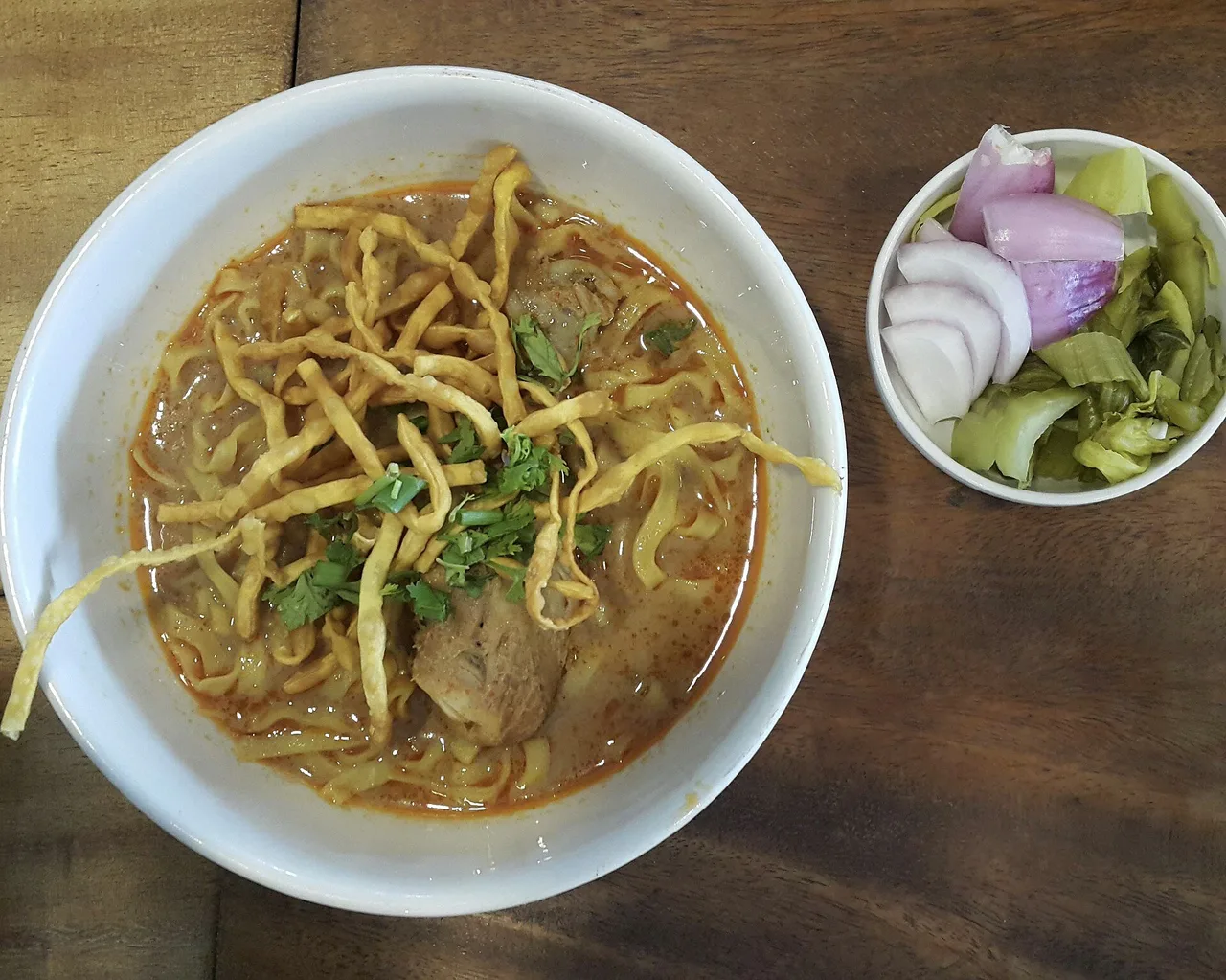
Khao soi is mild coconut yellow curry poured over soft egg noodles, with chicken, pork or beef. Crisp fried noodles go on top, with lime, shallot, pickled mustard greens and chili on the side. Expect a creamy, salty bowl with gentle heat.
Our khao soi guide covers toppings and variations. It is the safest first order for nervous eaters. Anyone avoiding coconut or meat should ask about adaptations.
2. Sai oua
Sai oua is the herbal grilled pork sausage often called Chiang Mai sausage. Minced pork meets dried chili, lemongrass, kaffir lime leaves, shallots and galangal. Charcoal grilling gives it a smoky, deep flavour.
Order it as a shared starter beside sticky rice. Read more in our sai oua guide. Pork-free diets rule it out.
3. Nam prik ong
Nam prik ong is a pork and tomato dip, and probably the mildest chili dip around. Minced pork, chili paste and tomatoes give it a red colour and a salty, sweet, slightly sour taste. Scoop it with seasonal vegetables and sticky rice.
Compare it with its green cousin, Nam Prik Noom (น้ำพริกหนุ่ม): Northern Thai Green Chili Dip Guide. Our nam prik ong guide explains how to eat it. Good for heat-shy diners, but it contains pork.
4. Nam prik noom
Nam prik noom is a green chili dip built on roasted green chilies, garlic and shallots. Its colour suggests mildness, but it runs mild to medium and surprises many first-timers. Pair it with khaep mu, crunchy pork crackling, which tempers the heat.
Raw or cooked vegetables also work as scoops. See our nam prik noom guide for more. Low-spice eaters should taste a small dab first.
5. Gaeng hang lay
Gaeng hang lay is a stewed pork belly curry with Burmese roots. Ginger, turmeric and tamarind season it, giving a balance of salty, sweet and mildly spicy. Traditional versions skip coconut milk, though modern cooks may add it for a creamier sauce.
Eat it with rice. Our gaeng hang lay guide goes deeper. Anyone avoiding pork belly should look elsewhere.
6. Khanom jeen nam ngiao
Khanom jeen nam ngiao is a tomato-based noodle soup over rice noodles with pork. Its broth gets depth from dok ngiao, a dried local flower, and cubes of pork blood. Fried garlic, chili, pickled mustard greens and bean sprouts go on top. Flavours run salty, sweet and sour, and it is normally not spicy unless you add dried chili.
Think of it as the alternative to khao soi for noodle fans. Our nam ngiao guide has the detail. Skip it if blood is a dealbreaker.
7. Kaeng khanun
Kaeng khanun is an unripe jackfruit dish that is closer to a soup than a curry. It uses no curry powder or coconut milk. Unripe jackfruit, cherry tomatoes, local herbs and pork make a savoury, hot and sour bowl.
It is associated with weddings and Thai new year celebrations. Adventurous eaters will enjoy it. Anyone wanting a sweet or creamy curry should choose khao soi instead.
8. Larb kua
Larb kua is the Lanna version of the spicy, sour minced pork salad known from Isan. Here the pork is stir-fried (kua in the northern dialect) with pork blood and a blend of dried local spices. Expect strong flavour, medium heat and a heavy herb aroma.
Eat it with sticky rice and vegetables. It suits confident eaters who want a Khan Tok-style main. Anyone avoiding blood or pork should pass.
Pick northern Thai food by your preference
Use this table to match a dish to your heat tolerance and dietary limits. Vegetarian adaptation depends on the cook, so ask when ordering.
| Dish | Heat level | Main protein | Blood or fermented items | Vegetarian-adaptable | Best for |
|---|---|---|---|---|---|
| Khao soi | Mild | Chicken, pork or beef | No | Ask when ordering | First-timers |
| Sai oua | Mild to medium | Pork | No | No | Grilled-meat fans |
| Nam prik ong | Very mild | Pork | No | Ask when ordering | Heat-shy diners |
| Nam prik noom | Mild to medium | None, pork crackling on side | No | Ask when ordering | Dip lovers |
| Gaeng hang lay | Mild | Pork belly | No | No | Rich curry fans |
| Nam ngiao | Mild unless spiced | Pork | Pork blood | No | Noodle soup fans |
| Kaeng khanun | Hot and sour | Pork | No | Ask when ordering | Adventurous eaters |
| Larb kua | Medium | Pork | Pork blood | No | Bold flavours |
How a Khan Tok or Northern Thai meal works
Khan Tok is a Lanna-style set served on a small tray or table to welcome guests. Expect about 5-6 small dishes at once. Typical plates include sticky rice, dips such as nam prik ong or nam prik noom, seasonal vegetables, sai oua, khaep mu and gaeng hang lay. Roll a small ball of sticky rice by hand. Dip it, share dishes and eat in any order. Khan Tok dinners at restaurants often come with Lanna dance shows. Not every restaurant serves them. Tourist shows can differ from home-style meals.
Where and when to eat it
Match the dish to the venue type. Morning markets suit sai oua and dips with sticky rice. Noodle shops are the place for khao soi and nam ngiao, and curry dishes are common at lunch. Evening food stalls grill sausage and pork. Sit-down Lanna restaurants serve the full range, and Khan Tok venues serve the dinner set. Chiang Mai is the likeliest base. For restaurant ideas, browse the MICHELIN Guide Thailand. Opening times vary by vendor, so ask locally.
Cost and effort trade-offs
Street stalls and market counters are the cheapest and fastest option, usually a single dish eaten standing or on a plastic stool. Casual noodle and curry shops cost a little more and give you a seat. A Khan Tok evening is the priciest and slowest, since you pay for the set, the setting and often a show. Check the current menu price at each venue.
Mistakes to avoid and dietary notes
Do not trust the colour of the green dip. Nam prik noom can be hotter than it looks. Blood appears in nam ngiao and larb kua. Raw or fermented pork shows up in naem and some larb. Menus lean heavily on pork, which is hard for halal and vegetarian travelers. Fish sauce and shrimp paste may hide in dips. Ask for adaptations politely, and treat any reply as a best effort rather than a guarantee.
Sample one-day tasting plan
Build the day around lighter plates early and the strongest flavours at night.
Dinner in the tasting plan shares several dishes, while a Khan Tok set brings 5-6 small dishes at once, so arrive hungry for that night.
- Breakfast
- Order sai oua with sticky rice and a mild dip such as nam prik ong.
- Lunch
- Choose khao soi, or nam ngiao if you want a tomato broth.
- Dinner
- Share gaeng hang lay, nam prik noom with khaep mu, and larb kua with sticky rice.
Frequently Asked Questions
What does Northern Thai curry taste like?
Khao soi is creamy, salty and mildly hot. Gaeng hang lay balances salty, sweet and mild spice, with ginger and tamarind notes. Kaeng khanun is a hot and sour soup-like curry.
Explore More Guides
Keep planning your trip with these guides.
Guides
Thai food notes for your next trip
Optional updates to our food guides.
You might also like

Continue reading
More guides you'll find useful