Thai Breakfast: 8 Dishes and How to Order Them
What Thais eat for breakfast, from jok to pa thong go. Includes a dish chooser, ordering phrases, dietary notes and drinks.
On this page
Last updated November 2026. Thai breakfast is usually savory and rice-based, bought from a street stall or morning market rather than eaten at a sit-down meal. Typical orders include jok, khao tom, pa thong go, khao niao moo ping and a bag of warm soy milk. Below you get a dish chooser, ordering phrases and dietary notes, and the wider Thai food guide covers the rest of the day.
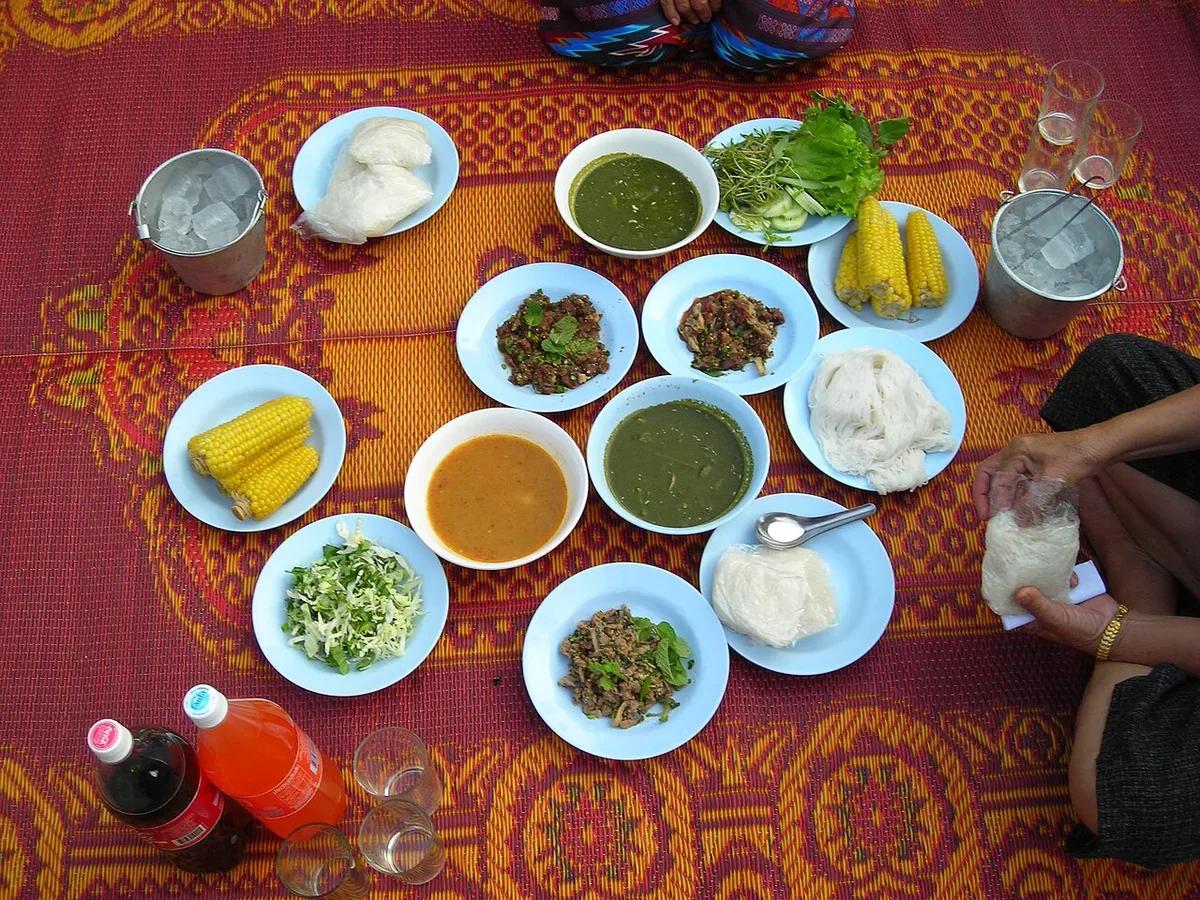
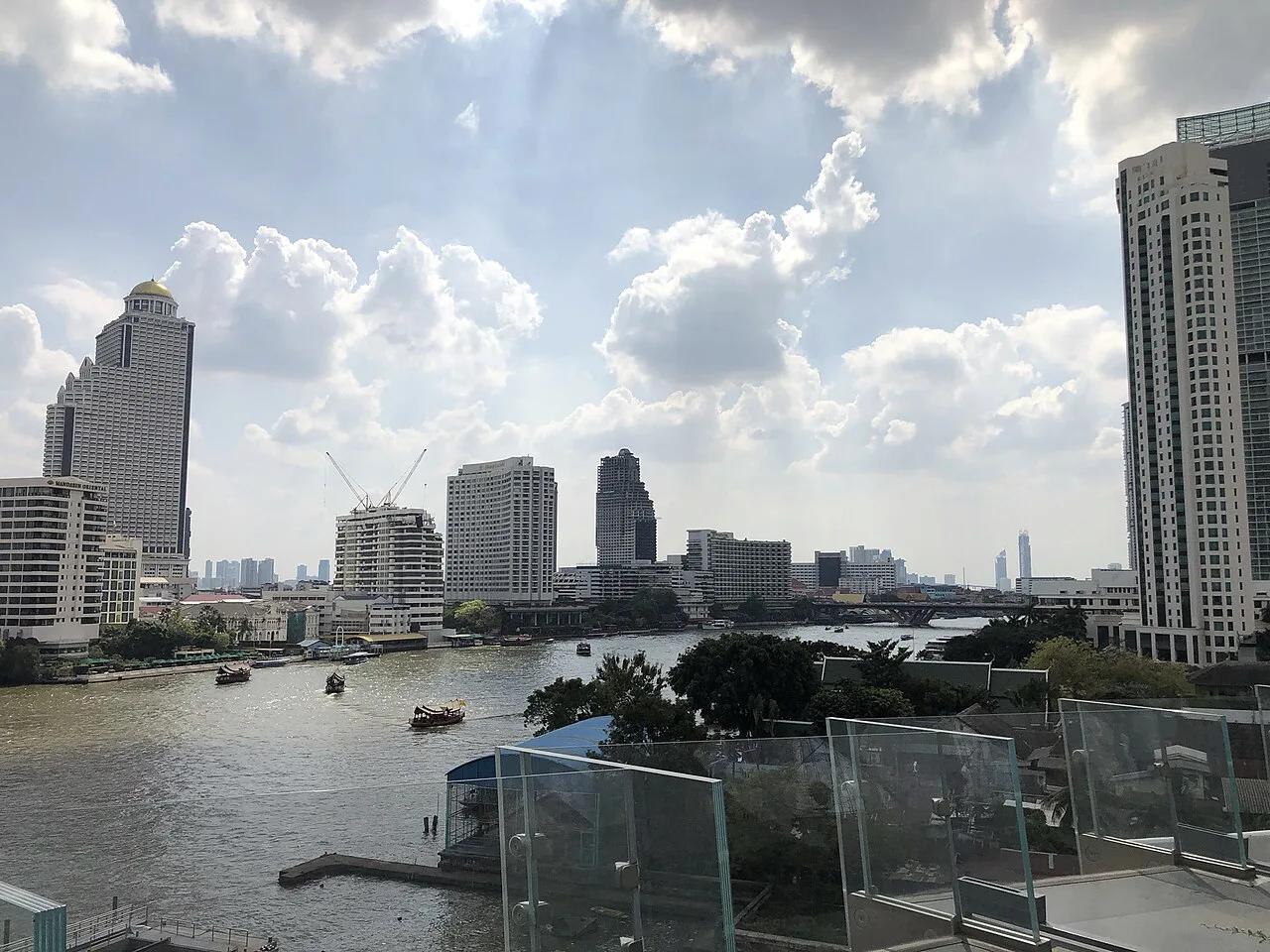
Featured image: User:Mattes, Public domain, via Wikimedia Commons.
What a Thai breakfast looks like
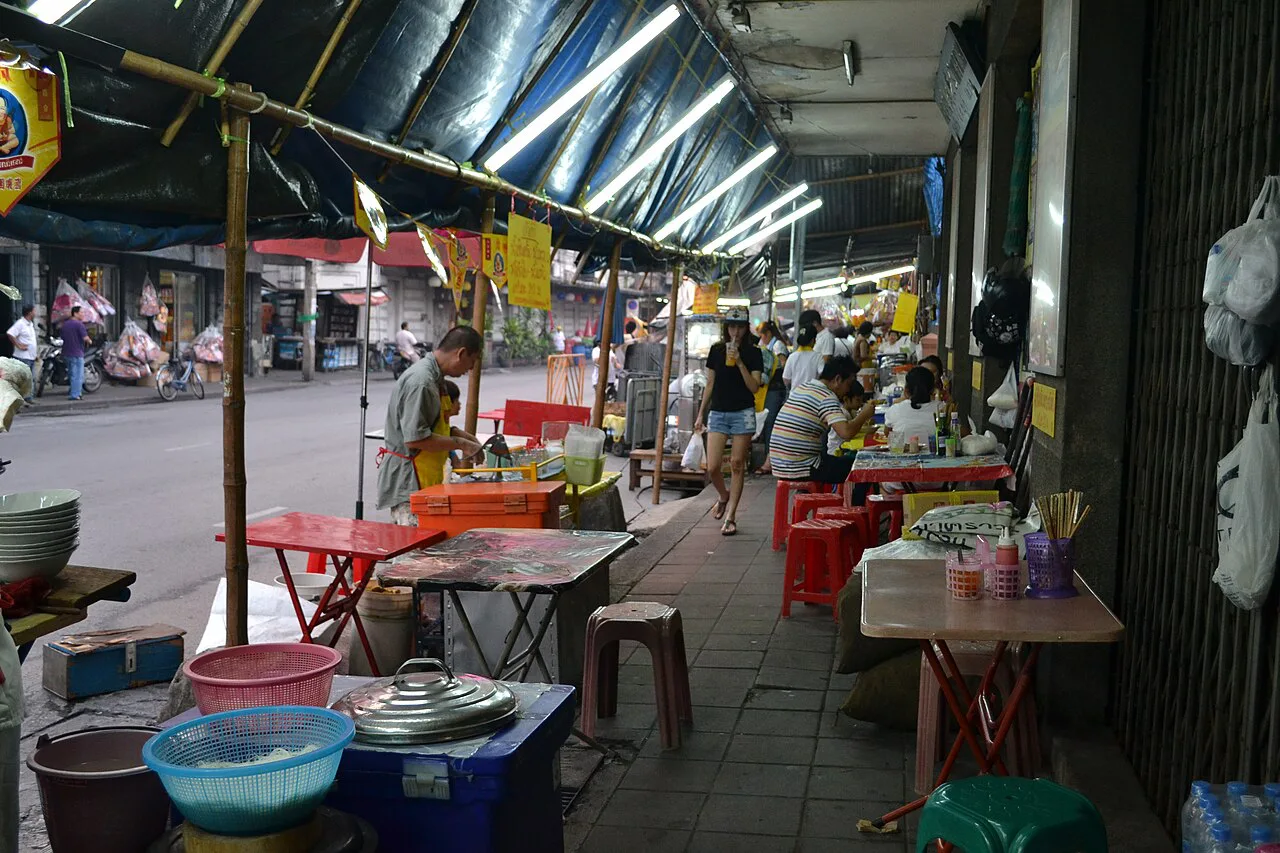
Breakfast in Thailand is quick, small and often eaten standing or perched on a plastic stool. Rice porridge, grilled pork, steamed buns and fried dough sticks all count as a normal morning meal. Many people buy a bag or box and eat on the way to work. Western-style eggs and toast exist, but they are mostly a hotel and café habit. Think of the morning as a series of small, cheap purchases rather than one big plate.
Thai breakfast dishes at a glance
Use this chooser when you are standing in front of a stall and cannot read the signs. Spice and ingredients vary from vendor to vendor, so treat the columns as typical patterns.
| Dish | What it is | Savory or sweet | Spice | Usually contains | Best for |
|---|---|---|---|---|---|
| Jok | Thick, smooth rice porridge with ginger and coriander | Savory | Mild; chili added at the table | Pork, egg | A gentle first meal |
| Khao tom | Clearer, soup-like rice dish with whole grains | Savory | Mild to medium | Pork, egg, sometimes seafood | A lighter bowl |
| Pa thong go | Fried dough sticks | Mildly sweet | None | Wheat, sometimes egg | Dipping in soy milk |
| Khao niao sangkhaya | Sticky rice with coconut custard | Sweet | None | Coconut, egg | A sweet start |
| Salapao | Steamed bun with a filling | Savory or sweet | None to mild | Pork, egg or red bean | Eating on the move |
| Khao niao moo ping | Grilled pork skewers with sticky rice | Savory | Mild; dip may be hot | Pork | A filling handheld meal |
| Kai kata | Eggs cooked in a small metal pan | Savory | Mild | Egg, often pork or bacon | Western-leaning appetites |
| Nam tao hu | Warm soy milk | Lightly sweet | None | Soy | Pairing with fried dough |
Savory staples: jok, khao tom, salapao and grilled pork
Jok is the standard rice porridge. Rice is simmered until it breaks down into a smooth, thick bowl. Cooks usually add ginger, coriander and an egg, and many add pork. Khao tom is similar in spirit but looks clearer and more like soup, with the grains staying separate. Both are easy to find near markets and often come with sliced chili and soy sauce on the table. For more bowls of this kind, browse the other rice dishes and the soup dishes.
Salapao are steamed buns sold from carts. Fillings include pork, egg and sweet red bean, so ask what is inside before you buy. Moo ping are marinated pork skewers grilled over charcoal. They typically come in a bag with a ball of sticky rice, which makes them a portable meal.
Sweet and fried: pa thong go and khao niao sangkhaya
Pa thong go are golden fried dough sticks, crisp outside and soft within. Vendors often sell them next to a soy milk seller, and the two are a common pair. Some stalls add a sweet custard dip. Khao niao sangkhaya is sticky rice topped with coconut custard, usually sold in small wrapped portions. Both work as a light second stop after a savory bowl. Look for more bite-sized options at the snack stalls covered in our snack guide.
What Thais drink for breakfast
Soy milk, called nam tao hu, is a classic morning drink. It is usually served warm and lightly sweet, and some vendors stir in extra ingredients. Coffee and tea are the other staples. Thai iced coffee and Thai iced tea are made with sugar and often condensed milk, so they taste sweet. Hot versions are common at the same stalls.
To cut the sugar, say "wan noi" (a little sweet) when you order. Say "mai sai nam tan" if you want no sugar added. Some vendors still add a default syrup, so taste before you commit to a second cup.
How to order and when to go
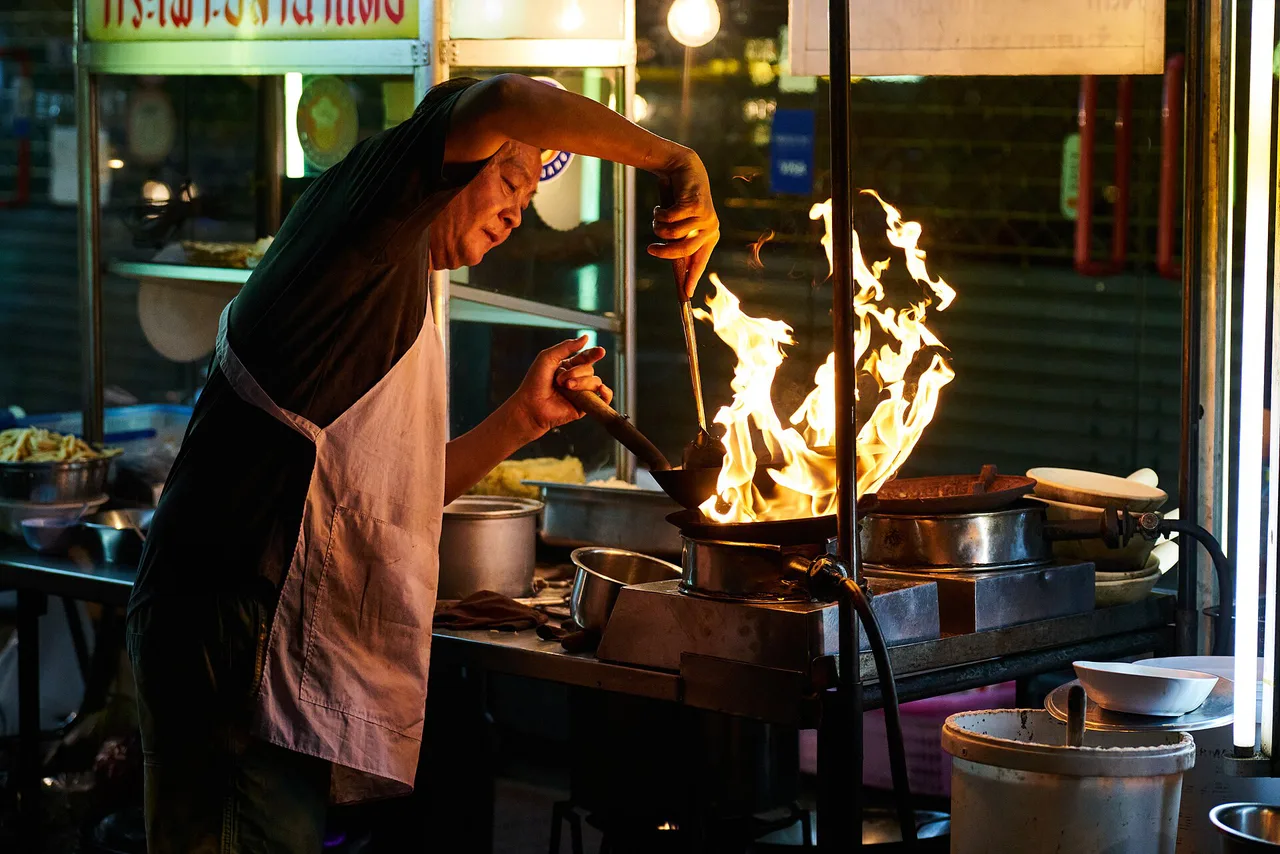
Most morning stalls run on a point-and-pay system. Look at the trays or pots, point, and hold up fingers for the number of portions. Many vendors do not have English menus, and photos or a handwritten board are common. Carry small cash, since card readers are rare at this level.
Timing follows a general pattern. Morning markets and street carts tend to be busiest early, and the best items can sell out before the late-morning rush. Hotel breakfasts run on fixed hours, so ask the front desk.
A few phrases help:
- Mai phet: not spicy
- Mai sai prik: no chili
- Wan noi: a little sweet
- Mai sai moo: without pork
Street stall, market or hotel buffet?
Each option suits a different traveler. Compare them before you decide how to spend your first morning.
| Factor | Street stall or market | Hotel buffet |
|---|---|---|
| Cost | Generally cheap per item | Usually moderate; compare menus |
| Time | Fast, order and eat in minutes | Slower, fixed seating hours |
| Variety | Narrow, but specialized | Wide, with Western options |
| Hygiene confidence | Pick busy stalls with fast turnover | Predictable and easy to judge |
| Best for | Adventurous eaters and early risers | Families, jet lag, late starters |
Breakfast for vegetarians, mild-food eaters and kids
Vegetarian breakfast needs a direct question. Broths and fillings often include pork, and jok may be cooked with pork stock even when the bowl looks plain. Ask for "jay" food or point to a vegetarian sign, and check the egg situation too. Fried dough, sticky rice with custard and plain soy milk are the easiest picks. More options sit in our vegetarian options guide.
Mild-food eaters should start with jok, salapao or fried dough, and leave the chili jar alone. Kids usually enjoy dipping fried dough in warm soy milk. The milder dishes list covers lunch and dinner.
Kai kata and Thai-Western breakfast
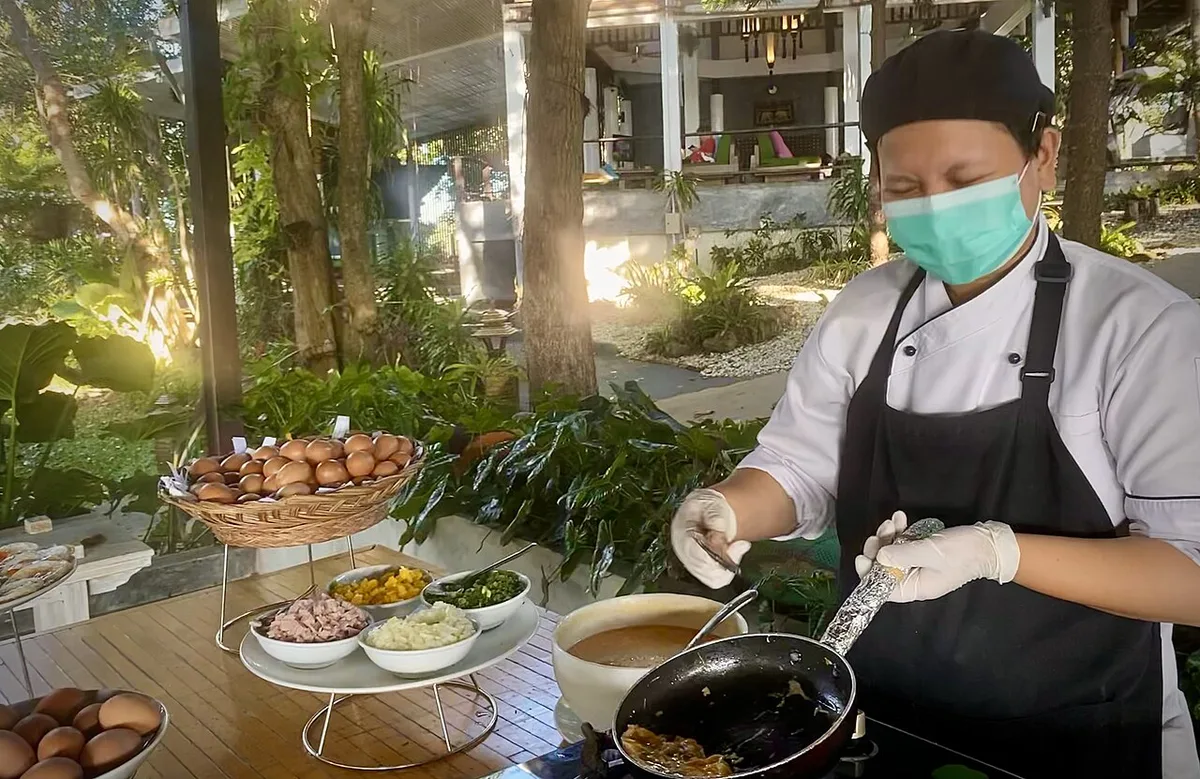
Kai kata is a pan of eggs cooked with bacon or minced pork, vegetables and sliced chili, served with toast. One cooking school in Khao Lak describes it as increasingly popular at local dim sum restaurants. Treat it as a local hybrid rather than a national standard. Guesthouses and cafés elsewhere may offer their own version of a pan breakfast.
Mistakes to avoid
A few habits trip up first-time visitors. Avoid them and your first morning goes smoothly.
- Arriving late, when the best items are often gone
- Assuming every stall has an English menu
- Expecting eggs and toast as the default
- Skipping the question about pork in vegetarian bowls
- Ordering iced coffee without asking about sugar
Thai food notes for your next trip
Optional updates to our food guides.
You might also like
Continue reading
More guides you'll find useful