Thai Coconut Ice Cream: What It Is, Where to Eat It & How to Order
Thai coconut ice cream explained: what it is, how it's served, toppings, where to find it in Thailand, and what to know before you buy.
On this page
Last updated November 2026. Thai coconut ice cream, sold as ai-tim kati, is a coconut-milk scoop served with toppings like peanuts, sticky rice and corn. This guide covers how it is served, where to find it, and how to pick a good vendor. It also fits into the wider Thai dessert guide as the cold counterpart to warm coconut sweets.
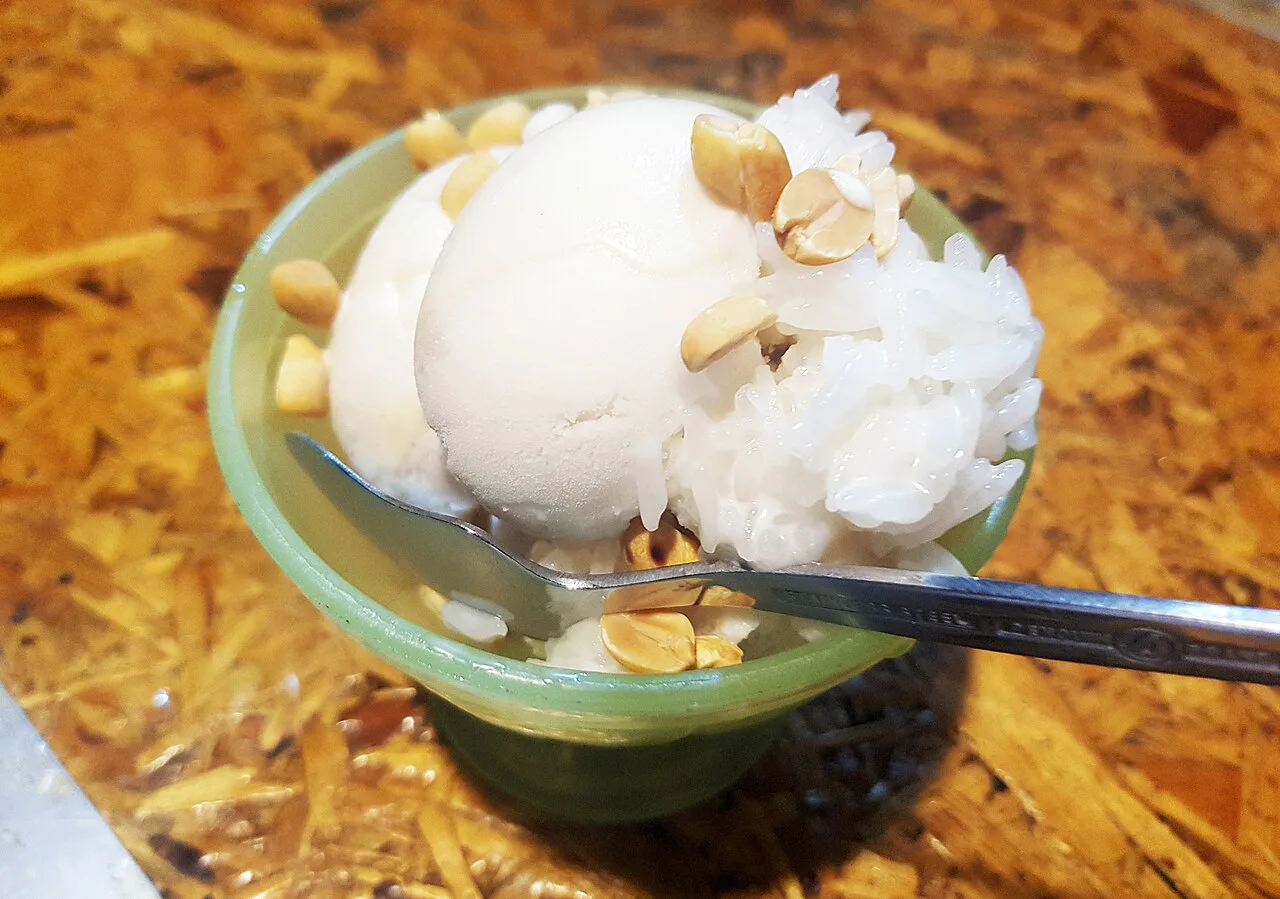
Featured image: Index Librorum Permissorum, CC0, via Wikimedia Commons.
What Thai Coconut Ice Cream Is (and How It Differs From Dairy Ice Cream)
Thai coconut ice cream is a frozen dessert built on coconut milk or cream rather than cow's milk. In Thailand it is commonly called ai-tim kati, with kati meaning coconut milk. Street carts and market stalls sell it by the scoop.
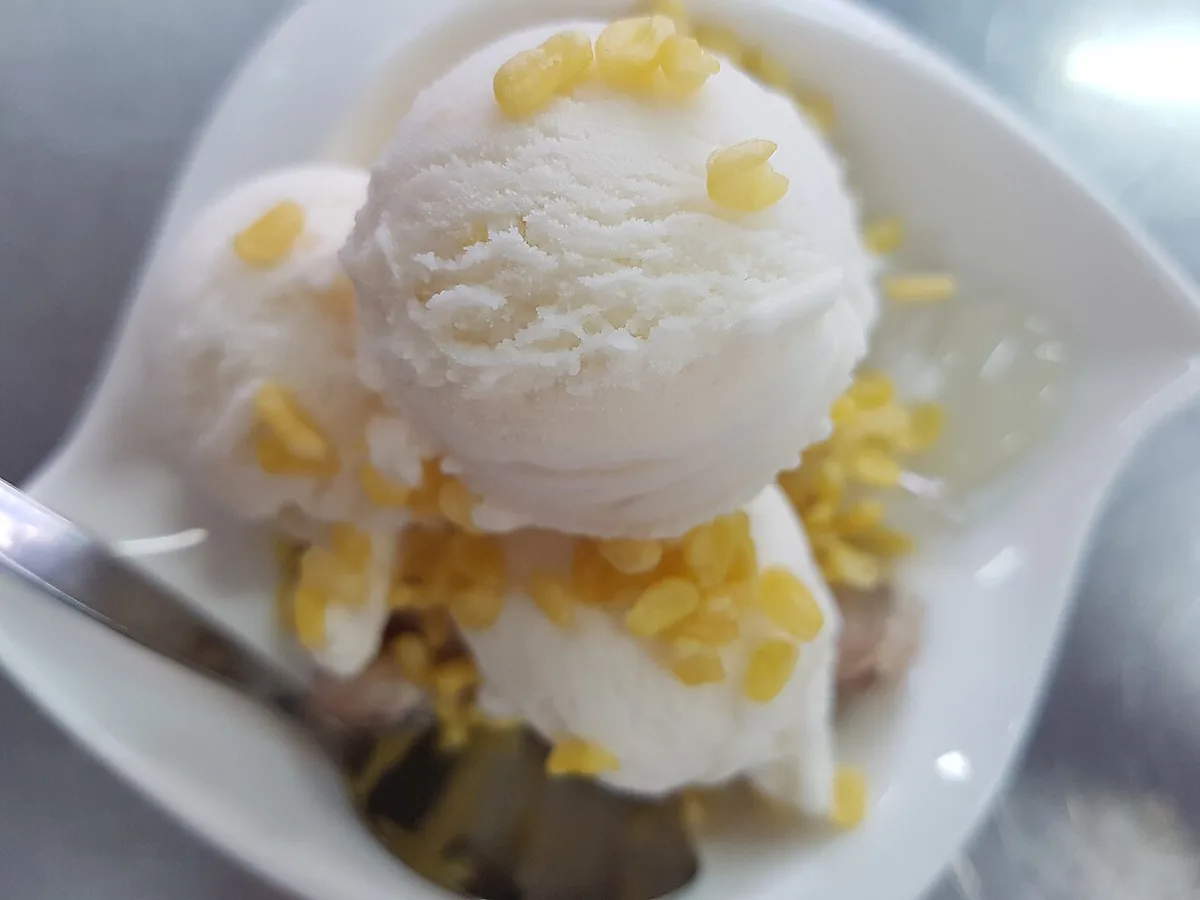
The flavor is rich, lightly sweet and distinctly coconut. Texture is denser and a little icier than a custard-style dairy scoop. Many versions are dairy-free because the fat comes from coconut. Recipes vary, though, and some home versions add egg yolks. A cart that sells the street style rarely lists ingredients, so ask if it matters to you.
What sets it apart is the serving, not just the base. A scoop usually arrives with savory-sweet toppings that dairy ice cream rarely gets. That is why it reads as a Thai dessert first and an ice cream second.
How It's Typically Served and Common Toppings
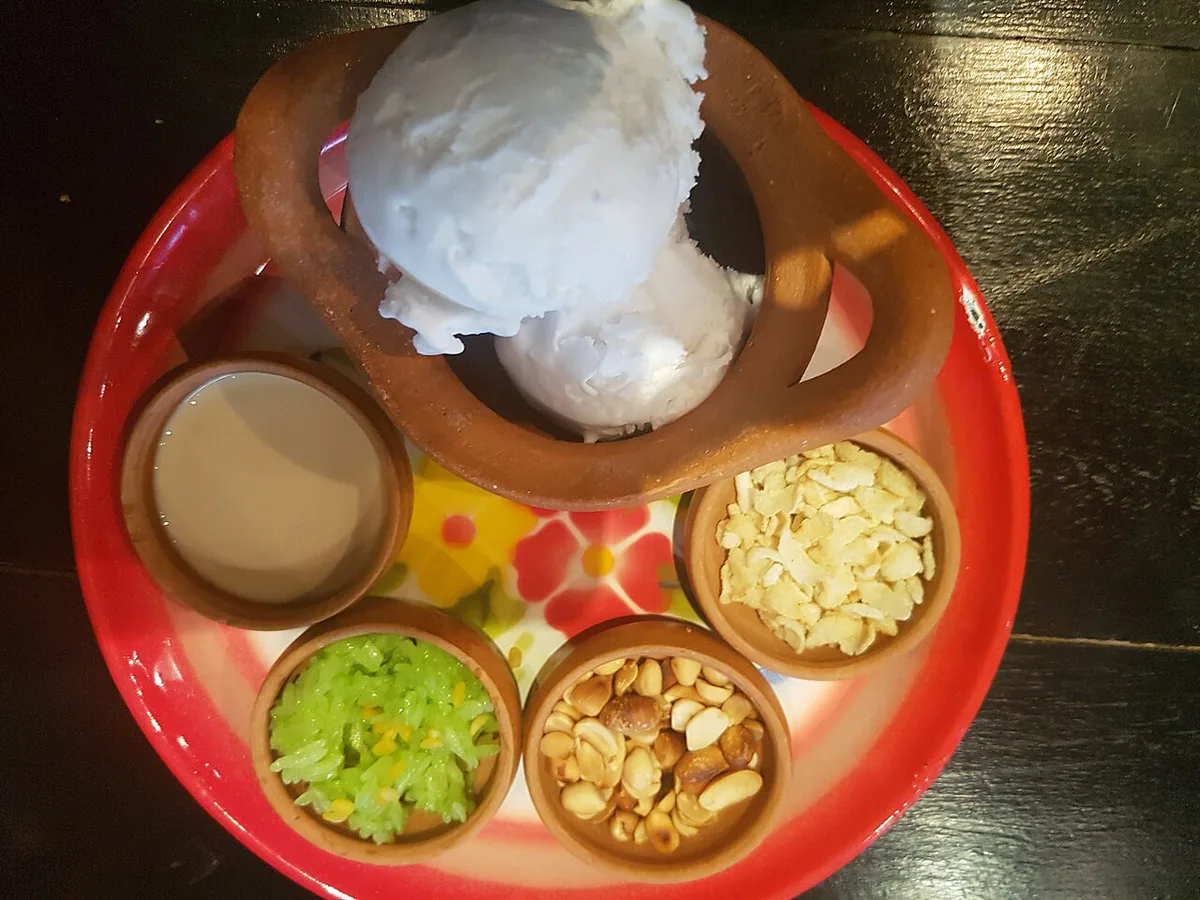
Vendors serve the ice cream in a few standard ways. You can get it in a paper or plastic cup, in a halved coconut shell, or tucked inside a soft bun. The bun version turns a snack into something close to a sandwich.
Toppings are where each vendor shows a personal style. Common choices include:
- Roasted peanuts, for crunch and a salty edge
- Sticky rice, which adds chew and sweetness
- Sweet corn kernels
- Jackfruit pieces, soft and fragrant
Where to Find It in Thailand: Street Carts, Markets, Cafés and Malls
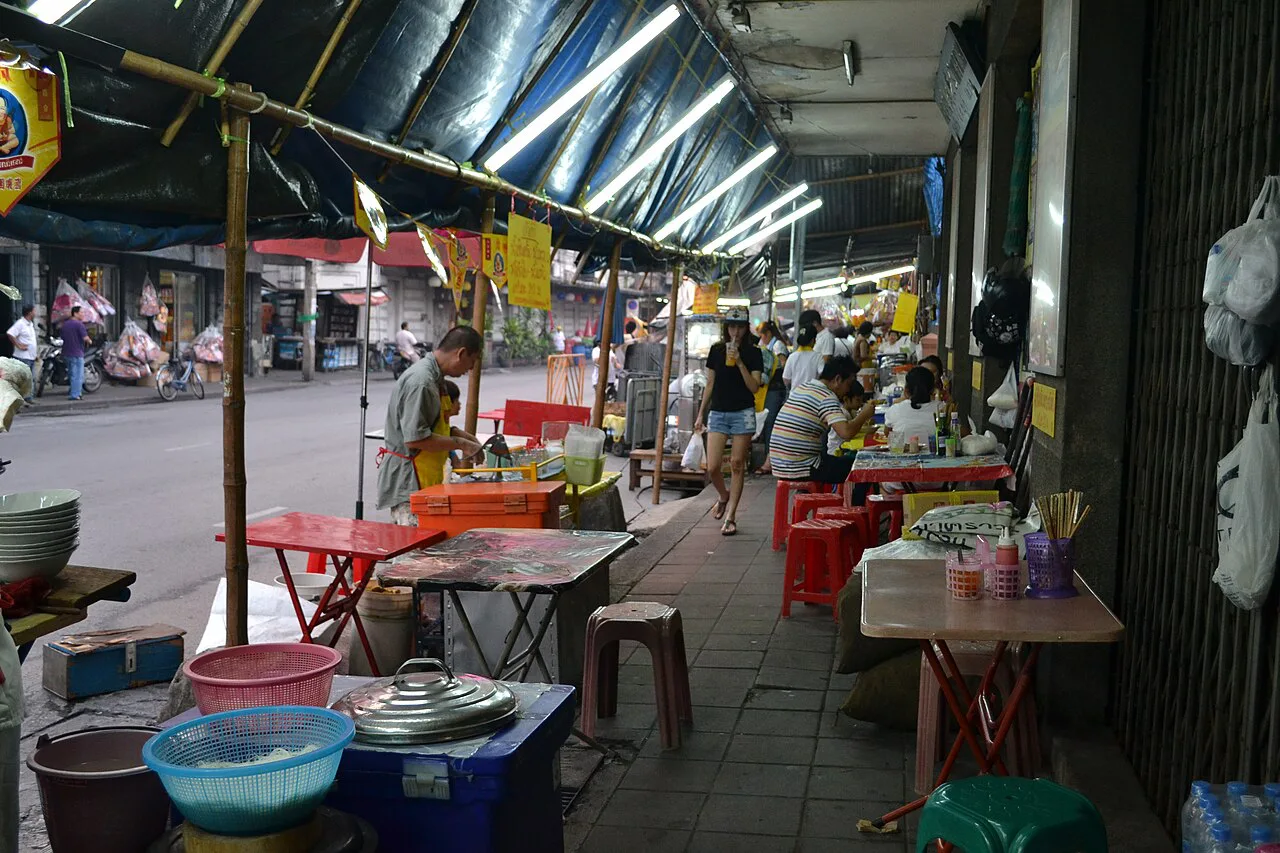
Look for push carts with a freezer drum and a row of topping tubs. They tend to park near markets, night markets, tourist streets and beach promenades. Dessert shops and mall food courts also sell coconut ice cream, usually in a tidier cup with set toppings.
No single place is the one to visit. The better approach is to browse any busy food market and watch which cart has the steadiest line. Small vendors often take cash only, so carry small notes.
Late afternoon and evening are good times to look. Heat drives demand, so stock turns over faster and the ice cream is fresher.
| Factor | Street cart or market stall | Café or dessert shop |
|---|---|---|
| Serving | Cup, coconut shell or bun | Cup or bowl, often with set toppings |
| Topping choice | Flexible, you point and pick | Fixed menu combinations |
| Cost level | Usually the lowest | Usually higher than a cart |
| Cash | Often cash only | Cards more likely, especially in malls |
| Melt in heat | Fast, so eat right away | Seating and air conditioning help |
| Best for | Atmosphere and variety | Comfort and clear allergen answers |
How to Choose a Good Vendor
A few quick checks help when you are choosing between carts. Start with the line. A busy cart sells through its stock, so the ice cream is fresh. Then look at the surface of the ice cream itself.
- Pick carts with steady turnover and a creamy, even surface.
- Skip tubs that look slumped, watery or pooled at the edges.
- Watch for clean scoops and covered toppings.
- Choose shade or a seat so the scoop does not melt in your hand.
- Go in the cooler part of the day if your stomach is sensitive.
Cost and Value: Street vs. Dessert Shop
Prices are set by each vendor and change between tourist areas and local markets, so no single baht figure is reliable. Expect a street cart to be the cheaper option. A café or mall dessert shop usually charges more for a similar portion. In return you get seating, cooler air and clearer ingredient answers.
Value comes down to the topping count and how fast you can eat. A bun or coconut-shell serving costs more than a plain cup. Ask for the price before the vendor starts scooping, especially in busy tourist streets.
Dietary Notes: Dairy-Free, Vegan, Nuts and Eggs
Coconut milk is the usual base, so many street versions are dairy-free. That does not guarantee a vegan scoop. Some cooks add egg yolks to the base, and vendors may add sweetened condensed milk to toppings. Ask before you buy.
Some cooks add egg yolks, and the popular home custard method chills at least 6 hours before freezing, so ask about eggs first.
Peanuts are the most common topping, and they sit in open tubs beside the others. Cross-contact is easy at a small cart. If you have a nut allergy, a café with a clear ingredient list is the safer choice. Pointing at a topping and saying no peanuts is not a reliable shield on a busy stall.
For general eating guidance, see the Michelin Guide Thailand for restaurants that publish menus in English.
Making a Version at Home: What Matters
A full recipe belongs elsewhere, but a few trade-offs explain why the street version tastes different. Fat content matters most. Canned coconut cream freezes into something scoopable, while thinner coconut milk freezes rock hard.
One popular home method cooks an egg-yolk custard for roughly 6 to 11 minutes, until it coats a spoon. It then chills at least 6 hours before freezing. That method calls for the juice of about 3 limes to balance the coconut. Recipes differ, and a lime-free version is just as valid.
Home batches have no stabilizers. Let a tub soften in the fridge for 30 to 60 minutes before scooping. Eat it within about 7 days for the best flavor. You can freeze it without a machine by folding in mix-ins just before the tub goes into the freezer.
Mistakes to Avoid
A few habits spoil the experience for first-time visitors:
Home tubs need 30 to 60 minutes to soften before scooping, but a street scoop melts quickly in heat, so eat it right away.
- Letting the scoop sit while you take photos, since it melts fast in tropical heat
- Assuming every serving is dairy-free or egg-free without asking
- Ordering peanuts by default when you have a nut allergy
- Buying from a cart with melted, re-frozen looking ice cream
- Arriving without small notes for a cash-only vendor
Pairing With Other Thai Desserts
Coconut ice cream sits with the cooling end of the Thai dessert range. It pairs naturally with sweet rice dishes, since sticky rice is already one of its toppings. Try it after sweet rice with ripe mango for a double coconut finish.
For another warm street snack, try coconut-rice pancakes from a market griddle. Coconut-milk soups make a good comparison too. Rice-flour balls in coconut milk are served warm. Pandan noodles in coconut milk arrive cold over ice.
Another cold choice is water chestnut in coconut milk, which sits close to the ice cream in spirit. Whatever you choose, the scoop works best as the last stop on a food-market walk.
Thai food notes for your next trip
Optional updates to our food guides.
You might also like



Continue reading
More guides you'll find useful