Fresh Coconut in Thailand: Where to Buy & What to Order
Where to buy fresh coconut in Thailand, young vs roasted, how to spot sweetened fakes, what to expect to pay, and how to eat the flesh.
On this page
Last updated November 2026: fresh coconut in Thailand usually means a green young coconut (maprao awn), chopped open at a cart or market stall and handed over with a straw. Order it plain, ask for a spoon, and scrape out the soft flesh once the water is gone. A 2008 traveler's report put the price at ฿10 to ฿20, and prices have risen since.
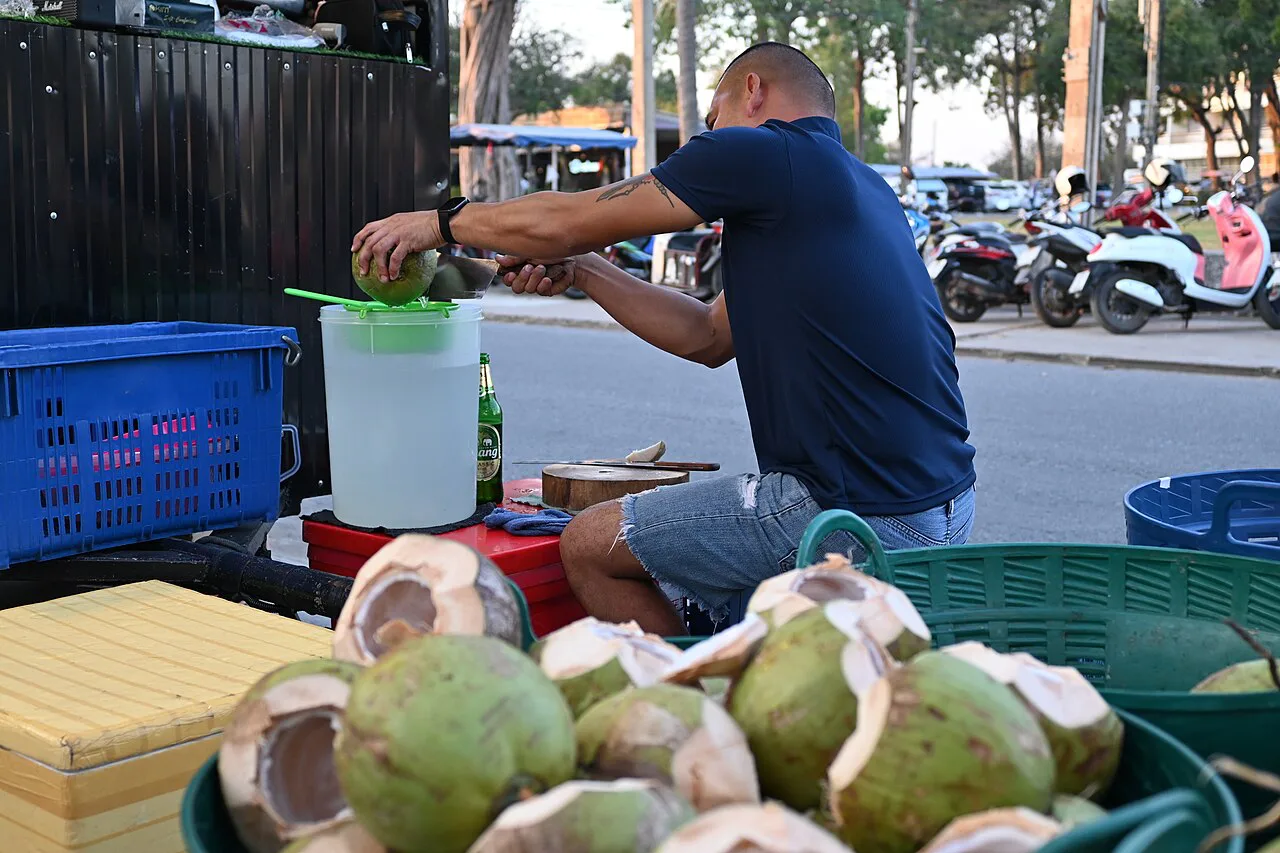
Featured image: PattayaPatrol, CC BY-SA 4.0, via Wikimedia Commons.
Fresh Coconut in Thailand: What to Order and What to Pay
Order a young green coconut, called maprao awn. Vendors chop it open on the spot and add a straw. Ask for a spoon as well, because the soft flesh is half the point. A 2008 traveler's report recorded ฿10 as the usual price, with ฿15 occasionally and ฿20 at the top. Today's prices are higher, so treat those numbers as a floor. Tourist areas cost more than local markets. More drinks are covered in our guide to Thai drinks.
Types of Fresh Coconut in Thailand
Four versions turn up in markets and shops. Young coconut is the default and the best first order. Roasted coconut is the sweeter alternative, with a black scorch mark from the fire. Many coconuts are trimmed to a pointed diamond shape with a flat base, which makes the vendor's chop easier. Bottled young coconut is a different product, covered in the checklist below.
| Type | Thai name | What you get | Best for |
|---|---|---|---|
| Young green coconut | maprao awn | Clear water, flesh from soft to thick and firm | First-time orders |
| Roasted coconut | maprao pao | Smaller white coconut with a scorch mark and sweeter juice | Anyone who likes sweeter drinks |
| Vendor-trimmed coconut | Not applicable | Husk cut into a diamond shape with a flat bottom | Easy chopping and carrying |
| Bottled young coconut | Not applicable | Almost certainly sweetened | Skipping, if you want the real thing |
Where to Buy Fresh Coconut
Young coconut is found in most open-air markets and is widely sold by street vendors. Roasted coconut sits in the same places. Beach stands on Phuket, Koh Samui and Krabi sell to tourists, and island prices tend to be higher than mainland markets.
- Open-air markets: young coconut is stocked at most of them.
- Street vendors: widely available, often with roasted coconut too.
- Beach stands: common on Phuket, Koh Samui and Krabi, at tourist-zone prices.
- Restaurants: some carry whole coconuts, and these are sometimes sweetened.
- Convenience stores and supermarkets: expect pre-packed coconut, so read the label.
How to Order and Eat It
Point at the coconut you want, or say maprao awn for young and maprao pao for roasted. Romanization varies from sign to sign. Ask the vendor to chop it open and add a straw. One 2008 report found that vendors do not usually provide spoons, and the author carried a spoon in the bag. Drink the water first. Then split the husk or ask the vendor to open it wider, and scrape out the flesh. Young flesh ranges from soft to thick and firm. Roasted flesh peels off by hand, so no spoon is needed. Do not discard a coconut that still has flesh inside.
Spotting Sweetened or Pre-Opened Coconuts
A genuine fresh coconut is cut open in front of you. Several imitations are easy to spot once you know what to look for.
- Top already cut off: the contents may have been replaced with sweetened coconut and agar jelly.
- Plastic bottle from a vendor: almost certainly sweetened.
- Restaurant coconut: sometimes sweetened, so ask before ordering.
- Sweet roasted juice: this is natural, because cooking concentrates the sugars.
Price Expectations by Setting
No central price list exists for street coconut. The 2008 report found ฿10 at markets and vendors, rising to ฿20, and roasted coconut cost about the same. Use that as a floor and compare prices at the next cart before paying a premium. Tourist zones sit at the top of the range.
Cooking coconut is a separate product: a 2008 stall sold 1 kilogram of shredded coconut for ฿24.
| Setting | Relative price level |
|---|---|
| Local open-air market | Lowest |
| Street cart or vendor | Low |
| Restaurant | Moderate |
| Beach stand or tourist zone | Highest |
Safety and Common Concerns
A whole coconut stays sealed until the vendor chops it, so a coconut cut open in front of you is the simplest choice. Pre-opened and bottled versions raise the sweetener question more than any safety one. For current health and regional travel guidance, see the Tourism Authority of Thailand. Health claims about electrolytes or illness remedies are not covered here, because they need a medical source.
Coconut Beyond the Drink
Kanom krok are coconut-rice hotcakes sold almost only as street food. The 2008 report priced them at ฿10 for 9 or 10 pairs. Some coconut ice cream is made only from coconut, while other brands contain dairy. Local markets often have a press turning out coconut milk. That milk is made for cooking, and the water added to it varies. In 2008, a stall near Sukhumvit Soi 55 pressed 1 kilogram of shredded coconut for ฿24 and used boiled water on request. For other cold drinks, try Thai Iced Tea (Cha Yen): What It Is and How to Order. Sweet and milky, Nom Yen (Thai Pink Milk): What It Is, Taste and How to Order is another option. ChaTraMue is a Thai tea brand worth knowing. When the day cools down, a local Thai Beer Guide: Singha vs Chang vs Leo is the alcoholic alternative.
In the 2008 report, kanom krok cost ฿10 for 9 or 10 pairs, the same as a fresh coconut.
Thai food notes for your next trip
Optional updates to our food guides.
You might also like


Continue reading
More guides you'll find useful