Foi Thong: Thai Golden Egg Threads Dessert Explained
What foi thong is, where it came from, why it's served at celebrations, and where to try or buy it in Thailand.
On this page
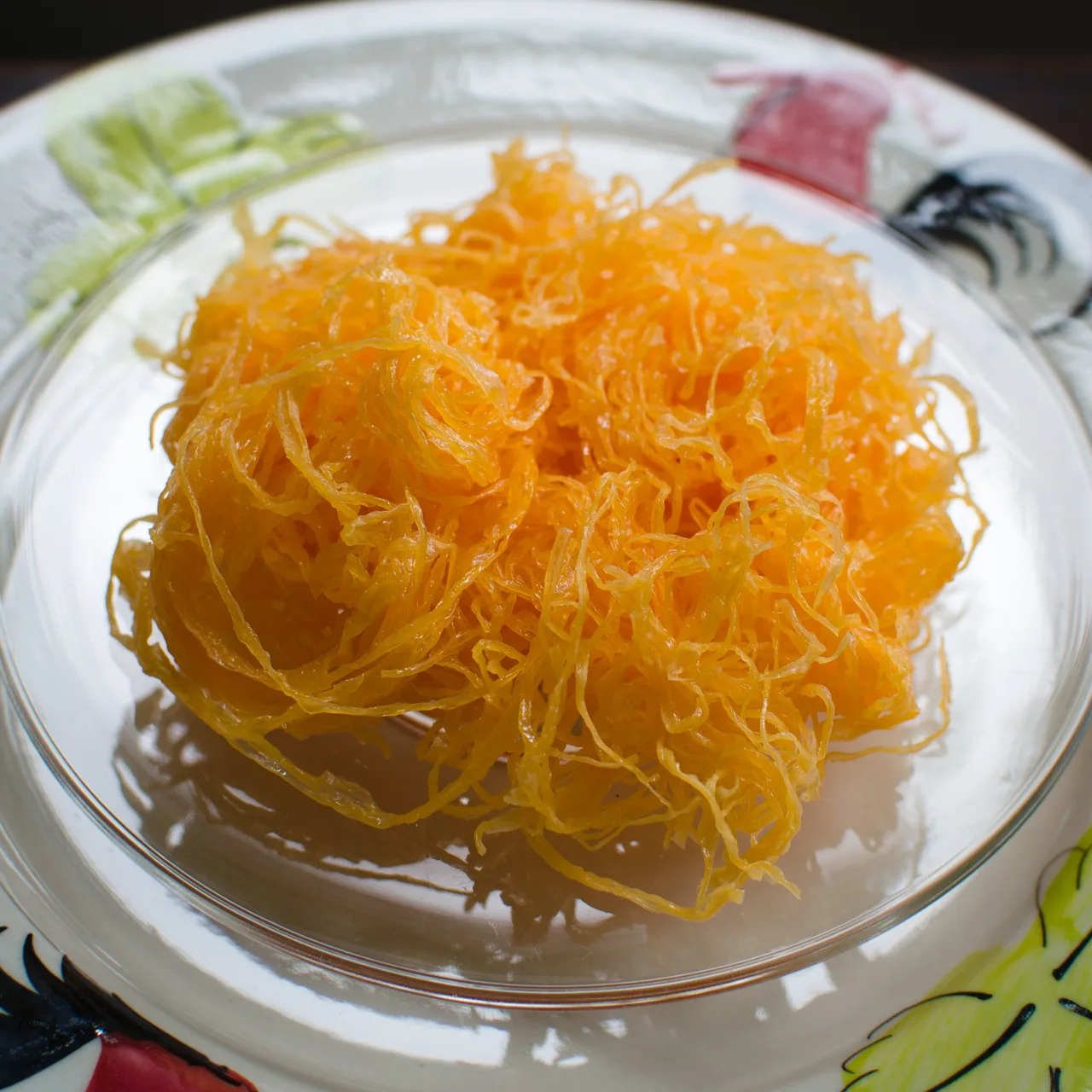
Last updated November 2026: foi thong (ฝอยทอง) is a traditional Thai dessert of egg yolk drizzled into hot sugar syrup, set into fine golden threads, and folded into small nests or bundles. Expect a sweet, silky tangle scented with jasmine or pandan, not a noodle dish. Our guide covers its origin, its role at weddings, and how to find and buy it, as part of the Thai desserts guide.
Featured image: Takeaway, CC BY-SA 3.0, via Wikimedia Commons.
What Is Foi Thong?
Foi means thread and thong means gold. Together they describe exactly what you see: strands the color of fine gold wire. Cooks pour egg yolk through a tiny opening into boiling sugar syrup. Yolk sets within moments into thin strands. Cooks then lift the strands out and fold them into neat bundles. Texture is soft and slightly springy, closer to sweet silk than to pasta. Sweetness tends to be high, with a gentle egg richness underneath. Jasmine or pandan in the syrup adds a floral note that keeps the sweetness from tasting flat.
Where Foi Thong Comes From
Thai foi thong descends from Portuguese fios de ovos, which means egg threads. Food historians link fios de ovos to convents and monasteries, possibly as early as the 14th or 15th century. Laundry was a common convent service, and egg whites were used to starch clothes. That left a large surplus of yolks. Portuguese explorers and traders probably carried the recipe to Asia between the 16th and 18th centuries. Thai tradition credits Maria Guyomar de Pinha, known as Thao Thong Kip Ma, with introducing the sweet in the Ayutthaya period. Her name is attached to several Portuguese-influenced Thai sweets. Egg-thread sweets turn up in other cuisines too:

- Portugal and Brazil: fios de ovos, used in desserts and as a garnish
- Spain: huevo hilado, meaning spun egg
- Japan: keiran somen, meaning hen's egg noodle
- Cambodia: vawee
- Malaysia: jala mas, meaning golden net
Why Foi Thong Shows Up At Weddings And Celebrations
Gold stands for prosperity in Thai culture, and the name foi thong says gold outright. Long, unbroken threads are commonly explained as a wish for a long, lasting marriage. That symbolism makes the sweet a regular presence at weddings and other ceremonies. You may see it arranged on a tray of auspicious sweets or served to guests as a small bundle. Treat these readings as popular explanations, not fixed rules. Families and regions vary in which sweets they choose.
How Thai People Eat Foi Thong
Foi thong works in three roles. Served alone, a small nest of threads sits on a plate or in a paper cup and is eaten with fingers or a fork. As a topping, it adds sweet, soft strands over other desserts. As a garnish, a few threads dress up a ceremonial platter. Its richness suits contrast. Crisp, folded Khanom Buang: Thai Crispy Crepe Guide, Where to Eat It gives a crunch against the soft strands. Cold, icy Tub Tim Krob: Thai Red Ruby Dessert Guide cuts through the sugar. Warm Bua Loy: Thai Rice Balls in Warm Coconut Milk in coconut milk offers a chewy balance. A plate of Mango Sticky Rice in Thailand: When and How to Order pairs richness with richness, so keep portions small. Do not confuse foi thong with Lod Chong: Singapore vs Classic and How to Order, whose noodle-like green jelly strands are served cold in coconut milk.
Where To Find Foi Thong In Thailand
Foi thong is a sweet-shop and market item, not a restaurant main. Look for it beside other traditional sweets such as Khanom Krok: Thai Coconut Pancakes and How to Eat Them. Quality and freshness differ by setting, so match the source to your plan.
| Setting | Freshness | Price level | Best for |
|---|---|---|---|
| Traditional sweet shop | High; often made in small batches | Mid | Gift boxes and trying a well-made version |
| Fresh market stall | High; sold the same day | Low | Sampling a single nest or bundle |
| Supermarket or packaged | Varies; check the printed date | Low to mid | Carrying home |
| Ceremonial setting | Made for the occasion | Not for sale | Seeing the cultural role at weddings and ceremonies |
Buying And Bringing It Home
Fresh foi thong tastes best and has the softest texture. Packaged versions travel better. Read the printed best-before date instead of trusting a vendor's guess, because shelf life depends on the maker and the packing. Many recipes use duck egg yolk, sometimes mixed with chicken yolk. Ask which one a shop uses if you care about richness. Foi thong contains egg and a lot of sugar. It is not vegetarian-safe by default for travelers who avoid eggs, and some ingredients in packaged versions may be animal-derived. Ask the seller about ingredients if you follow a dietary rule. Humidity softens the threads, so keep packs sealed and away from heat in your bag. Avoid these common mistakes:
- Expecting a savory dish: it is a dessert, and a sweet one
- Confusing it with noodles or vermicelli
- Assuming it is vegetarian or allergen-free
- Buying loose, unsealed bundles for a long trip
- Skipping the date on the pack
How Foi Thong Is Made, In Brief
Makers strain the yolks first for a smooth flow. They boil sugar and water, often with pandan or jasmine, until the syrup bubbles steadily. Yolk is then drizzled in circles through a fine opening, so thin threads form on contact. Cooks lift the cooked strands out with chopsticks or skewers, fold them, and rest them to cool. Repeating this for every batch is slow, which is why homemade and shop-made versions cost more effort than they look. Quality varies with syrup heat, thread thickness, and how well the yolk was strained. Thin, even, glossy threads signal careful work.
Foi Thong Versus Other Thai Egg Desserts
Egg yolk anchors a whole family of Thai sweets. Foi thong is the thread form, while others use yolk in drops or small shaped pieces. For a softer, spoonable egg dessert, read our guide to Thai Custard: Kanom Tuay vs Sangkaya Explained. Browse the full range in the Thai dessert hub before you plan a sweet-shop stop.
| Dessert | Form | Main idea |
|---|---|---|
| Foi thong | Fine golden threads, folded into bundles | Yolk set in sugar syrup |
| Thong yip | Small pinched, flower-like sweet | Yolk-based sweet cooked in syrup |
| Thong yod | Small golden drop | Yolk-based sweet cooked in syrup |
| Thai custard | Soft, spoonable | Egg set into a custard |
Frequently Asked Questions
What is foi thong made of?
Foi thong is made from egg yolk, sugar, and water. The syrup is often scented with jasmine or pandan. Many recipes use duck egg yolk, sometimes mixed with chicken yolk.
What is the Thai dessert made with egg yolk?
Foi thong is the best-known Thai dessert built on egg yolk. Thong yip and thong yod belong to the same yolk-based family of sweets. Each has its own shape.
Thai food notes for your next trip
Optional updates to our food guides.
You might also like

Continue reading
More guides you'll find useful