Guay Jub (Kuay Jap): Thai Rolled Noodle Soup Guide
What guay jub is, how Bangkok and Isan versions differ, what to order, who should skip it, and how to find a good bowl.
On this page
Last updated November 2026: guay jub (also spelled kuay jap or kuay jub, and written ก๋วยจั๊บ in Thai) is a soup of rolled rice-noodle tubes in a peppery pork broth, topped with crispy pork. Bowls usually come with offal and a boiled egg. Our guide covers the main styles, how to order, one Bangkok shop on Chan Road, and where the dish sits among the wider Thai noodle soups.
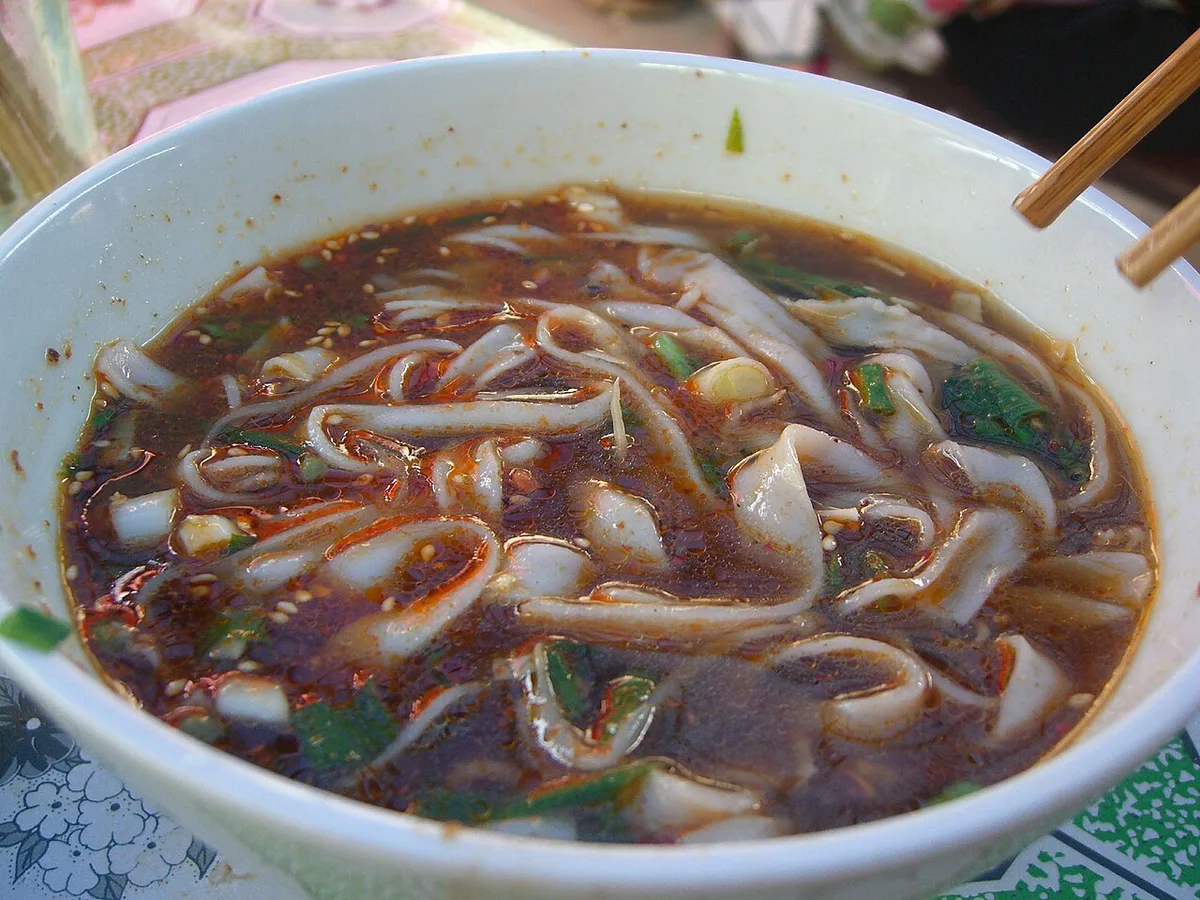
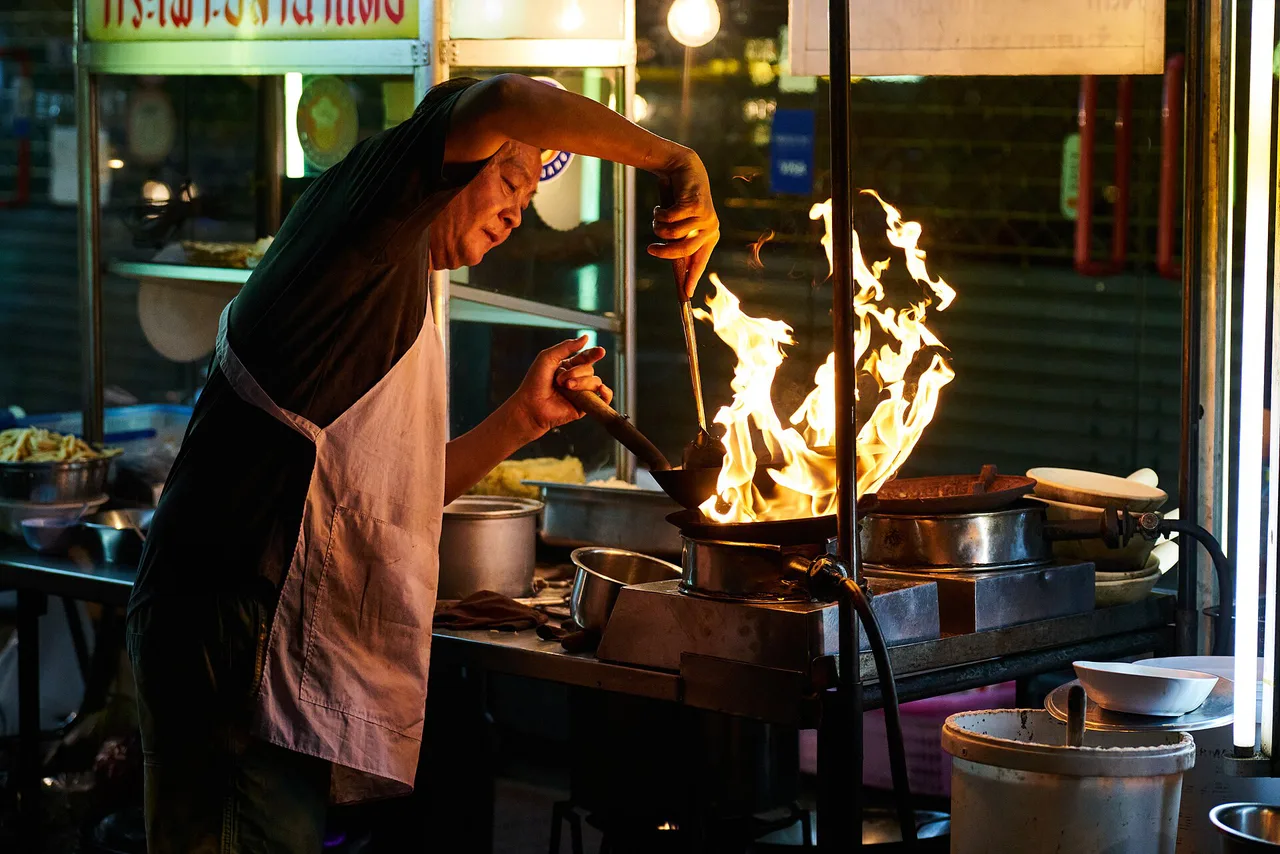
Featured image: Vee Satayamas, CC BY-SA 4.0, via Wikimedia Commons.
What Is Guay Jub?
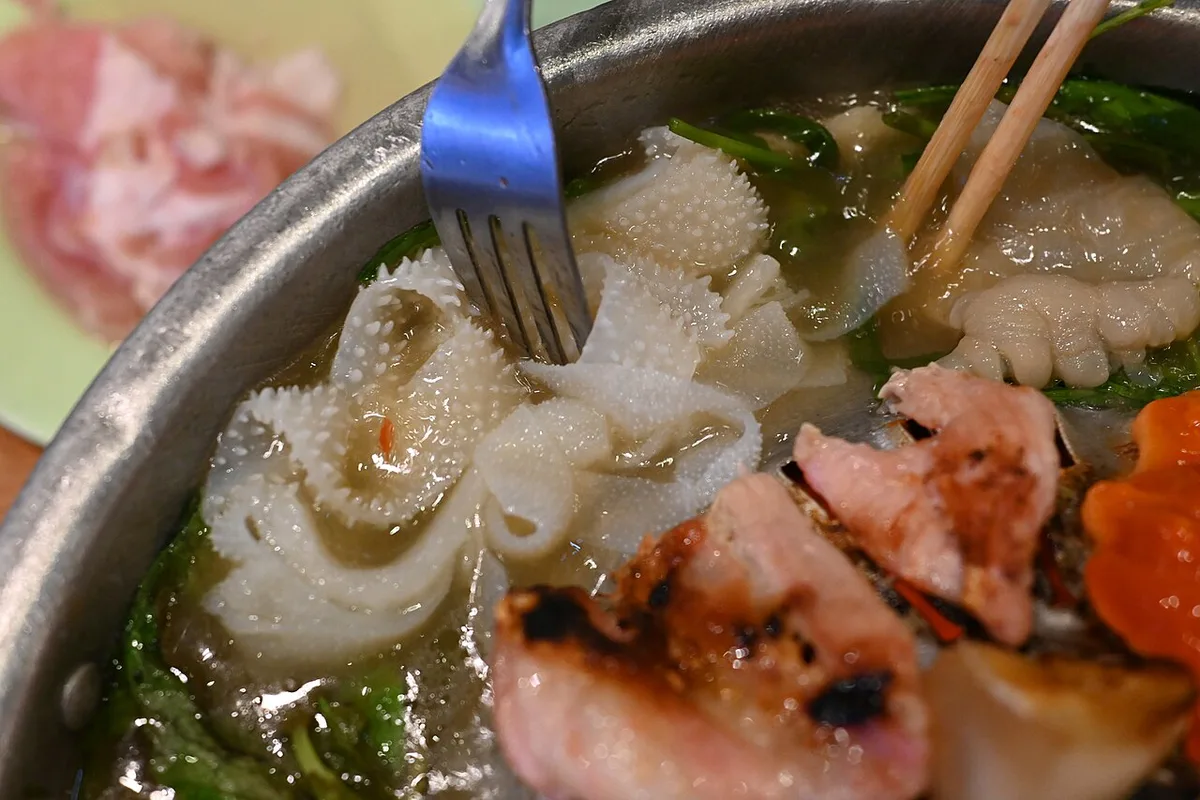
Guay jub is a noodle soup built on rice noodles that curl into tubes as they cook. The broth is pork-based and driven by white pepper. Slow-cooked pork with crisp skin sits on top. The format traces to Chinese immigrant cooking and is usually described as Teochew-style in Bangkok. It differs from the flat or long noodles most visitors know from kuay tiao. Expect pepper first, then pork depth, then the chew of the rolled noodles. Spelling varies on menus, so look for ก๋วยจั๊บ if the romanization does not match.
- Noodle shape: rolled tubes, not flat or long strands
- Broth: white pepper and pork, sweet and peppery in Bangkok
- Toppings: crispy-skinned pork, boiled egg, and often offal
- Usual meal slot: a daytime meal, from morning into mid-afternoon
Guay Jub Styles: Bangkok Teochew vs Ubon and Isan Versions
Not every bowl matches the Bangkok template. Thai-language food posts also show an Ubon-style bowl made with fresh noodles and crispy pork sausage (หมูยอ). That version is sometimes labelled Vietnamese-style (ญวน). A Lao-style rice-noodle soup called ข้าวเปียก appears in the same search results. Treat the table as a starting point, since regional origins vary by cook. First-timers should start with the Bangkok style, which is the easiest to find.
| Style | Broth | Noodle | Topping | Best for |
|---|---|---|---|---|
| Bangkok Teochew-style | Sweet, peppery pork | Rolled tubes | Crispy-skinned pork, egg, offal | First-timers in Bangkok |
| Ubon-style | Check with the cook | Fresh noodles | Crispy pork sausage (หมูยอ) | Diners who want a different texture |
| Lao-linked ข้าวเปียก | Varies by shop | Check locally | Varies | Curious eaters seeking relatives of the dish |
How to Order and What Comes in the Bowl
Point to ก๋วยจั๊บ on the sign or menu and say how many bowls you want. Offal is standard in Bangkok's traditional shops. It can be left out, though regulars rarely do. Offal adds a mineral depth to the second half of the bowl. Eat the broth first, then the pork, where crisp skin meets softened layers underneath. Pepper heat builds gradually rather than hitting at once. Table condiments let you adjust seasoning after you taste.
- Ask for the bowl without offal if you are unsure. Staff can usually skip it.
- Add extra crispy pork or an egg if the shop offers them.
- Mistake to avoid: stirring everything in at once. Taste the plain broth first.
- Mistake to avoid: leaving the noodles to sit. Rolled noodles soften as they cool.
- Mistake to avoid: assuming pork-free. Pork broth and pork toppings are the base.
Where to Eat Guay Jub in Bangkok
Guay Jub Mr. Jo sits on Chan Road in Bang Kho Laem. It carries Michelin Plate recognition for 2024 and 2025. The Plate marks consistent cooking rather than a star. Bowls here are sweet and peppery, with slow-cooked pork under crispy skin. Google lists a 4.5 rating across 4,609 reviews. The shop serves from early morning until the kitchen winds down in mid-afternoon. A small front room fills first, then the larger rear dining area. Bang Kho Laem is off the main tourist noodle circuit of Yaowarat, Bang Rak and the old town. Make the trip a deliberate one, and plan a bowl there rather than squeezing it between sights.
Cost, Timing and Practical Tips
Mr. Jo sits at the ฿ price tier, the lowest band in Michelin's scale. Prices and hours checked November 2026 against Michelin's listing, so confirm current figures with the shop. A local noodle shop is cheap, but Plate recognition draws queues. Broth can run out before closing, so arrive early. Daytime-only service means dinner plans need a different noodle stop. Pork-free and halal diners should skip guay jub, since the broth and toppings are pork. Diners who dislike pepper heat or offal can ask for a milder bowl, but texture still differs from flat noodles.
Plate recognition draws queues, and a 4.5 rating across 4,609 reviews means arriving before the broth runs out.
Guay Jub vs Other Thai Noodle Soups
Peppery clear broth sets guay jub apart from most Thai noodle bowls. Compare it with these dishes in our cluster. Each contrast stays short, since the shops vary.
- Thailand's boat-style soups use a different broth, so check the shop before assuming similarity.
- Yentafo-style noodle soup differs in broth and toppings, and Jay Jia Yentafo is on the same Plate tier.
- Gravy-topped noodles arrive in thick sauce, while guay jub keeps a clear peppery broth.
- Stir-fried soy noodles are a dry dish, while guay jub is a soup.
- Northern Thai noodle soup is a regional soup with its own character, worth trying on a northern trip.
Thai food notes for your next trip
Optional updates to our food guides.
You might also like

Continue reading
More guides you'll find useful