Kua Kling: Southern Thai Dry Curry (What It Is and How to Order)
Kua kling is a Southern Thai dry-fried curry. Learn what's in it, how spicy it gets, and how to order it in Thailand.
On this page
Last updated November 2026: kua kling is a Southern Thai dry-fried curry, made by stir-frying minced meat with curry paste until the paste coats every crumb. Expect turmeric, a heavy chili load and no coconut-milk sauce. Use this guide to decode the name, judge the heat and order with confidence, then keep exploring Southern Thai Food: 8 Dishes to Order and How to Eat Like a Local.
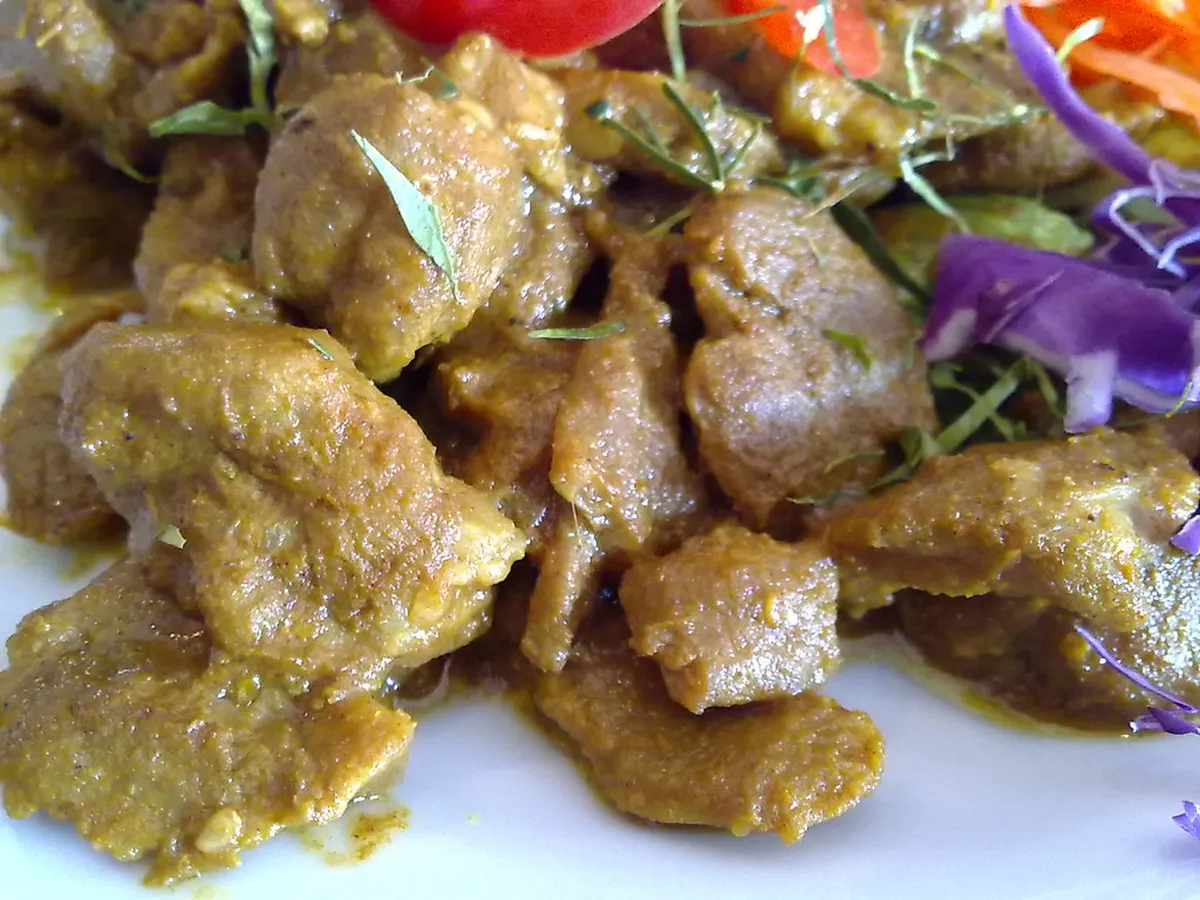
Featured image: TheDeliciousLife, CC BY 2.0, via Flickr.
What Is Kua Kling?
Kua kling is a dry curry from Southern Thailand. Meat is stir-fried with curry paste, and the paste clings to the meat instead of pooling in a sauce. Pork, beef and chicken are all used. Pork is the version most often written on menus.
You will see several spellings in English: kua kling, khua kling and kua gling. In Thai script the dish is คั่วกลิ้ง. The pork version is คั่วกลิ้งหมู. Screenshot that script before you go, because romanization is not standardized on signs.
Think of it as the flavor of a saucy curry packed onto each crumb of meat. That is why one small spoonful hits harder than most wet curries.
What Goes Into Kua Kling
The paste does the work. Typical ingredients are red chili, lemongrass, garlic, turmeric, cilantro, galangal and shrimp paste. Palm sugar and fish sauce season the finished dish. Turmeric gives the meat its yellow-orange color and an earthy edge.
Meat choice changes the texture. Minced pork gives a loose, crumbly, slightly oily result. Beef is firmer. Chicken is leaner and drier. Home cooks also make it with crumbled tofu, but that is a home adaptation rather than a restaurant norm.
- Paste: red chili, lemongrass, garlic, turmeric, cilantro, galangal, shrimp paste
- Seasoning: palm sugar and fish sauce
- Common meats: pork, beef, chicken
- Texture: dry, crumbly, with no sauce pooling on the plate
How Spicy Is Kua Kling?
Very. Southern Thai cooking is often fiercely hot, and kua kling is among the hotter dishes you can order. Because there is no coconut milk to cushion the paste, the chili lands directly on your tongue.
You can soften the experience without changing the dish. Eat each bite with a generous spoonful of plain jasmine rice. Order a cooling side such as fresh cucumber or a mild soup. Start with a small portion on a shared table, so you can stop at one taste.
If you want less heat, ask before the kitchen cooks. Useful phrases are ไม่เผ็ด (mai phet, not spicy) and เผ็ดน้อย (phet noi, a little spicy). Romanization varies, so point at the script if your pronunciation fails. A cook may still keep it hotter than you expect, since the paste itself carries the chili.
| What you say | Thai script | What to expect |
|---|---|---|
| Not spicy | ไม่เผ็ด | Cook may reduce the chili; the dish may still taste hot |
| A little spicy | เผ็ดน้อย | Best starting point for first-timers |
| Regular order | (no request) | Full local heat; plan on extra rice |
Kua Kling vs. Other Thai Curries
Most Thai curries arrive in a bowl of sauce. Kua kling does not. Compare it with three other dishes you may meet at a Southern table. Gaeng Som: Southern Thai Sour Curry Guide is a sour curry soup. Fish-based Gaeng Tai Pla: Southern Thai Fish Curry Guide (What It Tastes Like and How to Order) is another punchy Southern curry. Coconut-rich Massaman Curry: What It Is, How to Order It in Thailand sits at the gentler end.
The table below keeps the comparison to broad, typical traits. Individual cooks vary.
| Dish | Sauce or dry | Typical heat | Key flavor | Suits |
|---|---|---|---|---|
| Kua kling | Dry, paste coats the meat | Very high | Turmeric, chili, shrimp paste | Heat lovers who like concentrated flavor |
| Gaeng som | Thin, soupy sauce | Medium to high | Sour and spicy | Diners who want a sour, brothy dish |
| Gaeng tai pla | Sauce-based | High | Pungent, fish-forward | Adventurous eaters |
| Massaman curry | Rich coconut-milk sauce | Mild to medium | Warm spice, rich and sweet | Cautious first-time curry eaters |
Where To Find And How To Order Kua Kling
Look for Southern-style restaurants and rice-curry shops, where trays of ready-made dishes sit behind a counter. Kua kling is a regional specialty, so many Thai restaurants aimed at visitors do not list it. A menu without it is normal, not a sign that you missed something.
At a counter shop, point at the dish and ask for rice with it. In a sit-down restaurant, show the Thai script คั่วกลิ้งหมู and name your meat in plain terms. Pork is หมู (muu), beef is เนื้อ (nuea) and chicken is ไก่ (gai).
Cost is usually in line with an ordinary rice plate or shared dish. Exact prices differ by town and shop, so read the board or menu on the spot.
What To Eat With It
Plain jasmine rice is the default partner. A Southern meal often adds several dishes for the table, and kua kling is the intense one among them.
For a breakfast-style Southern plate, Khanom Jeen: Thai Fermented Rice Noodles & Curry Guide brings rice noodles with curry toppings. A cooler, herb-heavy option is Khao Yam: Southern Thai Rice Salad, What It Is and How to Order It, a rice salad that offsets the heat. For a milder rice dish in the same culinary region, Khao Mok Gai: Thai Chicken Biryani & Where to Eat It is a turmeric-tinted chicken biryani-style plate. Add Roti Mataba in Thailand: What It Is and Where to Try It if you want bread to calm the spice, though that pairing is a traveler's choice rather than a fixed tradition.
Dietary Notes And Mistakes To Avoid
Kua kling is not vegetarian. Shrimp paste and fish sauce are core ingredients, so it is usually not pescatarian either. Pork is the common meat, which matters for halal and pork-avoiding travelers. Ask for beef or chicken, or skip the dish if you cannot confirm the paste. Tofu versions exist in home kitchens, but do not expect them at restaurants.
A few ordering errors repeat. Avoid them and the dish goes much more smoothly.
- Ordering it at full heat on your first try with no rice nearby
- Assuming it has a sauce and waiting for a bowl of curry
- Expecting it on every tourist menu instead of asking at Southern shops
- Forgetting the shrimp paste when you have a seafood allergy or dietary rule
- Relying on one romanization instead of showing the Thai script
Continue Exploring Southern Thai Food
Once you have tasted kua kling, widen the table. Our Southern Thai food guide maps the region's other dishes, from noodle breakfasts to sour curries, so you can build a full meal around the heat.
Thai food notes for your next trip
Optional updates to our food guides.
You might also like


Continue reading
More guides you'll find useful