Gaeng Som: Southern Thai Sour Curry Guide
Gaeng som is Thailand's sour, spicy, coconut-free curry. Learn what's in it, how southern Thai versions differ, and how to order it.
On this page
Last updated November 2026: gaeng som is a sour, spicy, water-based Thai curry with no coconut milk, and tamarind is the usual souring agent. Southern cooks typically make it fish-forward and turmeric-yellow, unlike the orange sour soup of central Thailand. Use this guide to learn what is in the bowl, how to order it, and where it sits in a meal of southern Thai cooking.
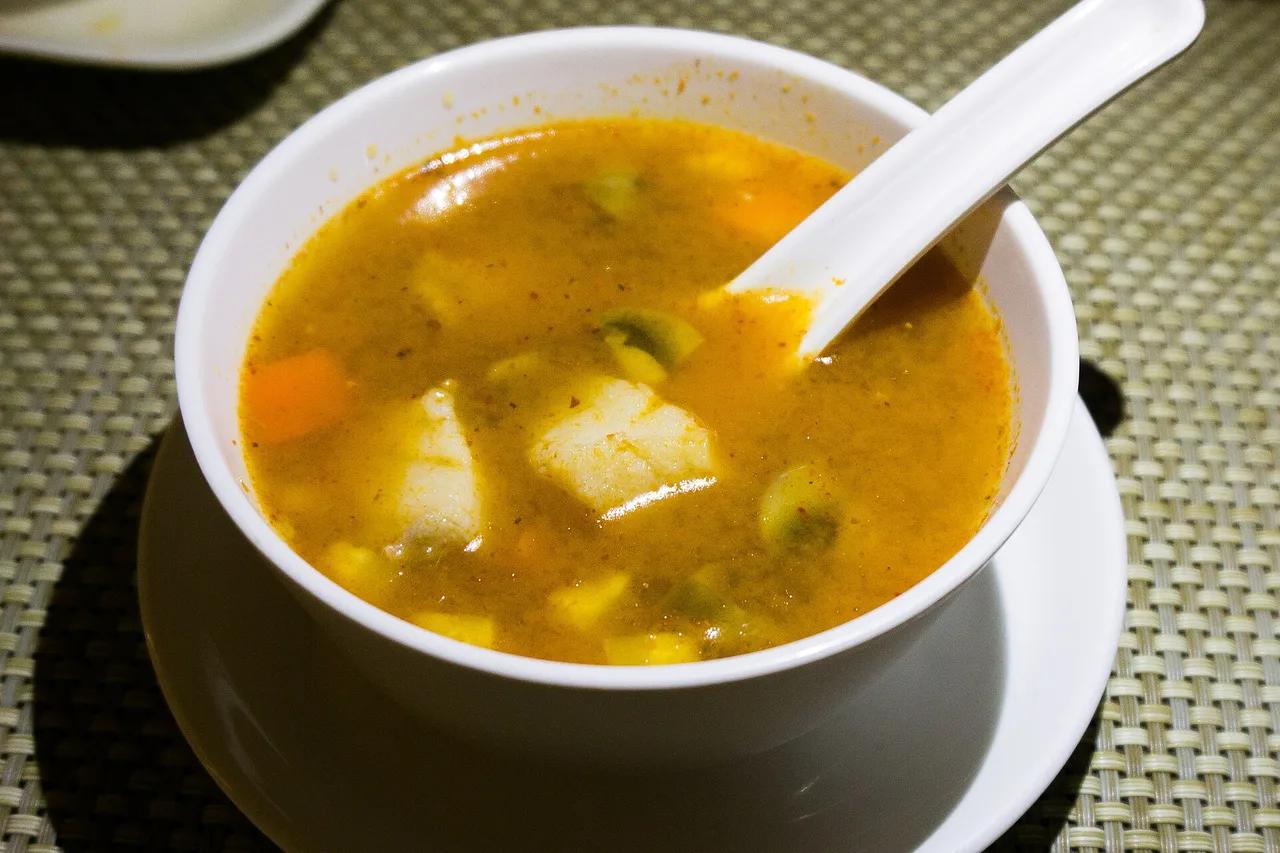
Featured image: Sumit Surai, CC BY-SA 4.0, via Wikimedia Commons.
What Gaeng Som Is
Gaeng som is a water-based, sour and spicy curry, and many people call it a soup. The base is broth, not coconut milk. Tamarind supplies the tang. Seafood and vegetables fill the bowl.
On a menu you may see it spelled แกงส้ม, kaeng som, gaeng som or "sour curry". Some English menus say "orange curry", which usually points to the central Thai style. A southern kitchen may write แกงส้มใต้, or "gaeng som tai", to mark its regional version. Shrimp versions often appear as kaeng som kung.
You eat it with rice and other dishes, not as a lone bowl of soup.
How Southern Thai Gaeng Som Differs
Central Thai gaeng som is the orange, lightly sweet sour soup that many visitors meet first. Southern gaeng som is typically a deeper yellow because the paste leans on fresh turmeric. It also tends to run hotter and more savory.
Fish is the usual centerpiece in the south. The sourness stays sharp, and the heat arrives with the first spoonful. Treat these as typical patterns, not rules. Every cook adjusts the paste, the sourness and the chile level.
For the wider regional context, the cluster hub on southern Thai cooking covers what else belongs on the table.
What Goes In It
Most versions start with a chile paste pounded from dried red chiles, garlic, shallots and shrimp paste. Southern pastes typically add fresh turmeric. One well-known chef's version, from Andy Ricker of Pok Pok, also uses shrimp and krachai (a rhizome sometimes called fingerroot). Treat that as one cook's recipe, not the definition.
Tamarind makes the broth sour. Fish sauce adds salt, and a little palm sugar rounds the edges.
Vegetables vary with the season and the cook. Common choices include:
- Thai morning glory (water spinach)
- Pumpkin
- Long beans
- Chayote, daikon and napa cabbage in some versions
- Sliced omelet, which some cooks add as a topping
How to Order Gaeng Som
Start by choosing a protein. Fish is the classic southern pairing, and shrimp is the common alternative. Some cooks serve an omelet-and-vegetable version that suits people who dislike strong seafood flavors.
Heat is the second decision. Southern versions can be fiery, so say so early if you prefer less. A simple phrase is "mai phet" (not spicy). A kitchen may still use a ready-made paste, so the result can stay lively. Ask for rice on the side and eat the curry in small spoonfuls over each bite.
Dietary flags matter here. Shrimp paste and fish sauce are typically baseline ingredients, so the dish is usually not vegetarian, vegan or shellfish-free. Ask the cook directly. Practice varies by kitchen, and typical ingredients are not a guarantee.
For price, shared rice-and-curry shops usually cost less than restaurants aimed at tourists. Ask for the price before you order if it is not posted.
What to Eat Gaeng Som With
A southern meal puts several dishes around one pot of rice. Gaeng som supplies the sour, wet element. Pair it with something dry and savory to balance it.
Dry-fried southern kua kling makes a strong contrast against the broth. A plate of southern rice plate shows how the region mixes herbs and rice. For a noodle option, khanom jeen noodles are often served with curries.
Add fresh vegetables or raw herbs on the side to cool the heat.
Is Gaeng Som for You?
Order gaeng som if you prefer sour and spicy over rich and creamy. Skip it if you dislike fish-forward broths, strong shrimp-paste flavor or high heat. Coconut-based curries are the gentler path.
The table compares it with two other southern-table dishes. Blank-free cells show only what is generally known, so ask the cook about the specifics.
| Dish | Base liquid | Dominant flavor | Typical protein | Best for |
|---|---|---|---|---|
| Gaeng som | Water or broth | Sour, spicy | Fish or shrimp | Diners who like tang and heat |
| Massaman Curry: What It Is, How to Order It in Thailand | Coconut milk | Rich, mild, creamy | Varies by kitchen | Diners who want comfort and richness |
| Southern fish curry | Water-based | Fiery, pungent | Fish | Heat seekers who want another southern fish dish |
Common Mistakes With Gaeng Som
A few simple errors spoil the first bowl. Avoid them and the dish makes more sense.
- Expecting coconut richness. It is a sour broth, not a creamy curry.
- Ordering without asking about shrimp paste. It is typically in the paste.
- Judging it as a bowl of soup. It is meant to be eaten over rice with other dishes.
- Ordering it extra spicy on the first try. Start milder and add chile at the table.
- Treating one recipe as the standard. Cooks vary the sourness, heat and vegetables.
How It Is Made, in Brief
Cooks pound or blend the chile paste, then whisk it into water with tamarind, fish sauce and palm sugar. Vegetables go in first and fish or shrimp goes in last, so it stays tender. This guide is about eating it, so look to a dedicated recipe if you want quantities.
Frequently Asked Questions
What do Thai people call curry?
The Thai word is gaeng, also spelled kaeng. Gaeng som means sour curry. Many dishes with gaeng in the name are soupy, so the word covers more than thick, coconut-based curries.
What are southern Thai dishes?
Gaeng som is one example. Others include dry-fried kua kling and the fiery fish curry gaeng tai pla. Khanom jeen noodles and khao yam rice also come from the region.
Thai food notes for your next trip
Optional updates to our food guides.
You might also like


Continue reading
More guides you'll find useful