Southern Thai Food: 8 Dishes to Order and How to Eat Like a Local
Southern Thai food is spicy, sour and turmeric-rich. Learn 8 key dishes, heat levels, breakfast vs. dinner picks and how to order beyond resort menus.
On this page
Last updated November 2026: southern Thai food is the cuisine of Thailand's peninsula, built on heat, sourness, turmeric and fermented shrimp paste. It also carries Chinese, Malay and Muslim influences that most resort menus never show. Use this guide to pick eight dishes, match them to a meal and order beyond the tourist menu.
Featured image: Takeaway, CC BY-SA 4.0, via Wikimedia Commons.
What Makes Southern Thai Food Different
Southern cooking leans on turmeric, fermented shrimp paste (kapi), fresh herbs and bitter stink beans, known as sator. Curries run hotter here than elsewhere in Thailand. Michelin Guide Thailand points to kua kling as a signature dry curry and notes the region's extra spice. Heat has practical roots: poorer families once needed only a spoonful of fiery curry to flavor a whole bowl of rice. Northern Thai food stays closer to its indigenous roots, with simple soups, grilling and raw dishes. Moving south adds layers. Indian traders arrived about 1,000 years ago, Malay and Muslim cooks followed, and Chinese settlers brought the wok. Fish and seafood, fresh or preserved, turn up in many dishes because the sea is never far away.
8 Southern Thai Food Dishes to Try
These eight dishes cover curries, noodles, rice and bread. Each one links to its own guide for ingredients and ordering detail. If you only try three, pick gaeng som, kua kling and khanom jeen. Together they show the sour, dry-fried and breakfast sides of the cuisine.
Roti mataba and khao mok gai carry the Indian influence that traders brought about 1,000 years ago.
1. Gaeng som (sour curry)
Gaeng som is a sour curry with no coconut milk, so it eats lighter than most Thai curries. Its paste combines dried and fresh chilies, fermented shrimp paste and finger root, pounded with palm sugar. Tamarind and fish sauce add acidity and umami, while extra turmeric gives the southern version its yellow color. Locals may call it gaeng leung for that reason.
Order it at lunch with plain rice and a fried side. Our sour curry guide covers the paste in detail. Skip it if sour heat is not your thing.
2. Kua kling (dry curry)
Kua kling is a dry curry with no sauce to soften it. Ground pork is stir-fried with yellow curry paste over low heat until the meat takes on the roasted flavor. It finishes with julienned kaffir lime leaf and fresh chilies, so heat and fragrance reach every crumb.
Eat it with rice and a cooling vegetable or an omelet on the side. Our dry curry guide explains how to calibrate the spice. Skip it if you avoid pork or want a mild first plate.
3. Massaman curry
Massaman is a rich, coconut-based curry that reflects the Muslim influence on southern cooking. It is slow-cooked and gentler than the sour and dry curries, which makes it a sensible first order for heat-wary eaters.
Pair it with something crisp or sharp so the table stays balanced. Our massaman curry guide covers the flavor profile. Skip it if you want sour, fiery food or avoid coconut.
4. Khao mok gai
Khao mok gai is spiced chicken and rice, the southern Muslim take on biryani. Biryani and roti are among the Muslim dishes found across Thailand, but the south offers many more versions.
Expect fragrant, yellow-tinged rice with chicken and a sauce on the side, usually eaten as a filling meal rather than a snack. Our chicken and rice guide has the details. Skip it if you want fiery, sour flavors, since the heat is secondary here.
5. Khanom jeen
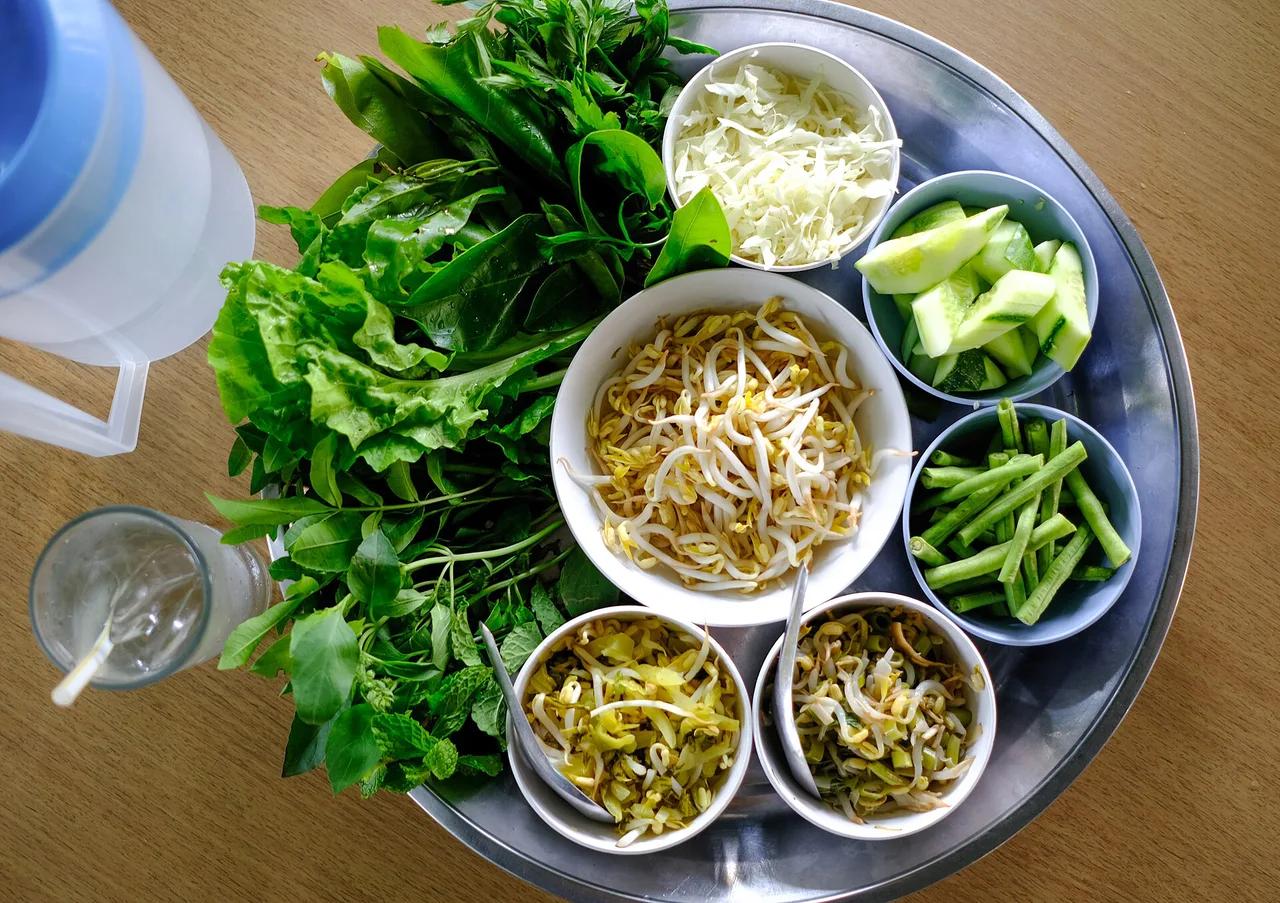
Khanom jeen is a plate of rice noodles served with curry and fresh vegetables, and it is a classic southern breakfast. Trang is known for indulgent breakfast menus, so a morning there is a good time to try it.
You choose the curry, which sets the heat, and pile on raw greens to cool the plate. Our breakfast noodle guide covers the toppings. Skip it if you want a sweet or light morning meal.
6. Khao yam
Khao yam is a rice salad tossed with fresh herbs and a savory dressing. It is another dish locals eat at breakfast. Each bite is a mix of textures and herbal freshness, with chili adding heat to taste.
Ask what the dressing contains if you avoid fish or shrimp products, since many southern sauces use them. Our rice salad guide explains the components. Skip it if you prefer hot, cooked dishes first thing.
7. Gaeng tai pla
Gaeng tai pla is a fish-innard curry with humble origins. Fishermen grilled leftover innards and small fish over charcoal, then stirred them into the curry. Lemongrass tempers the briny smell, and the smoky fish suits a heap of rice.
It is among the hottest dishes in the cuisine. Our fish-innard curry guide explains how to ask for less heat. Skip it if strong fish aromas or high heat put you off.
8. Roti mataba
Roti mataba is a stuffed, griddled roti that reflects the Muslim and Indian influence on the south. It suits breakfast and is usually served with a curry or pickle for dipping.
Fillings and sauces vary by stall, so watch what is made fresh and point to what looks best. Our stuffed roti guide covers variations. Skip it if you want a light meal, since it is rich and filling.
Heat and Flavor Cheat Sheet
Use this table to balance a meal across heat, sourness and richness. Thai ordering is about contrast, so avoid stacking three coconut curries. Pair a rich curry with something fried or a simple soup. A sour curry works well beside a mild stuffed roti, and khanom jeen adapts to whichever curry you pick.
| Dish | Heat | Flavor | Format | Best meal |
|---|---|---|---|---|
| Gaeng som | Hot | Sour, salty, turmeric | Soupy, no coconut | Lunch |
| Kua kling | Very hot | Dry, aromatic, savory | Dry-fried pork | Lunch or dinner |
| Massaman curry | Mild to medium | Rich, coconut, gently sweet | Thick curry | Dinner |
| Khao mok gai | Mild | Spiced, savory | Rice and chicken | Lunch |
| Khanom jeen | Depends on the curry | Varies, fresh greens | Noodles with curry | Breakfast |
| Khao yam | Mild to hot | Herbal, savory | Rice salad | Breakfast |
| Gaeng tai pla | Very hot | Smoky, briny, fiery | Thin curry | Lunch or dinner |
| Roti mataba | Mild | Savory, rich | Griddled bread | Breakfast |
Regional Map: Andaman Coast, Gulf Coast, Hat Yai and the Deep South
The Andaman coast, including Phuket and Trang, carries Peranakan, or Baba Nyonya, culture. This blend of Chinese and Southeast Asian cooking appears in food and dress. Cantonese, Hakka, Teochew and Hokkien communities live in the south and shape its menus. On the Gulf side, Nakhon Si Thammarat is known for its curry stalls. Hat Yai is a city food hub, famous for fried chicken marinated with soy sauce, coriander, pepper, palm sugar and cumin. The deep south borders Malaysia. In provinces like Pattani, many people are Muslim, speak Yawi (a Malay dialect) and eat food closer to Malay cooking, such as beef simmered in sweet coconut milk.
Breakfast, Lunch or Dinner: When to Eat What
Mornings suit khanom jeen, khao yam and roti mataba. Trang is especially associated with generous breakfast spreads. Midday is for rice-and-curry setups, where you can combine gaeng som, kua kling and a fried side. Evenings favor seafood, Hat Yai fried chicken and heavier curries. Stall hours vary by town, so ask locally which dishes sell out early.
How to Order and Where to Eat
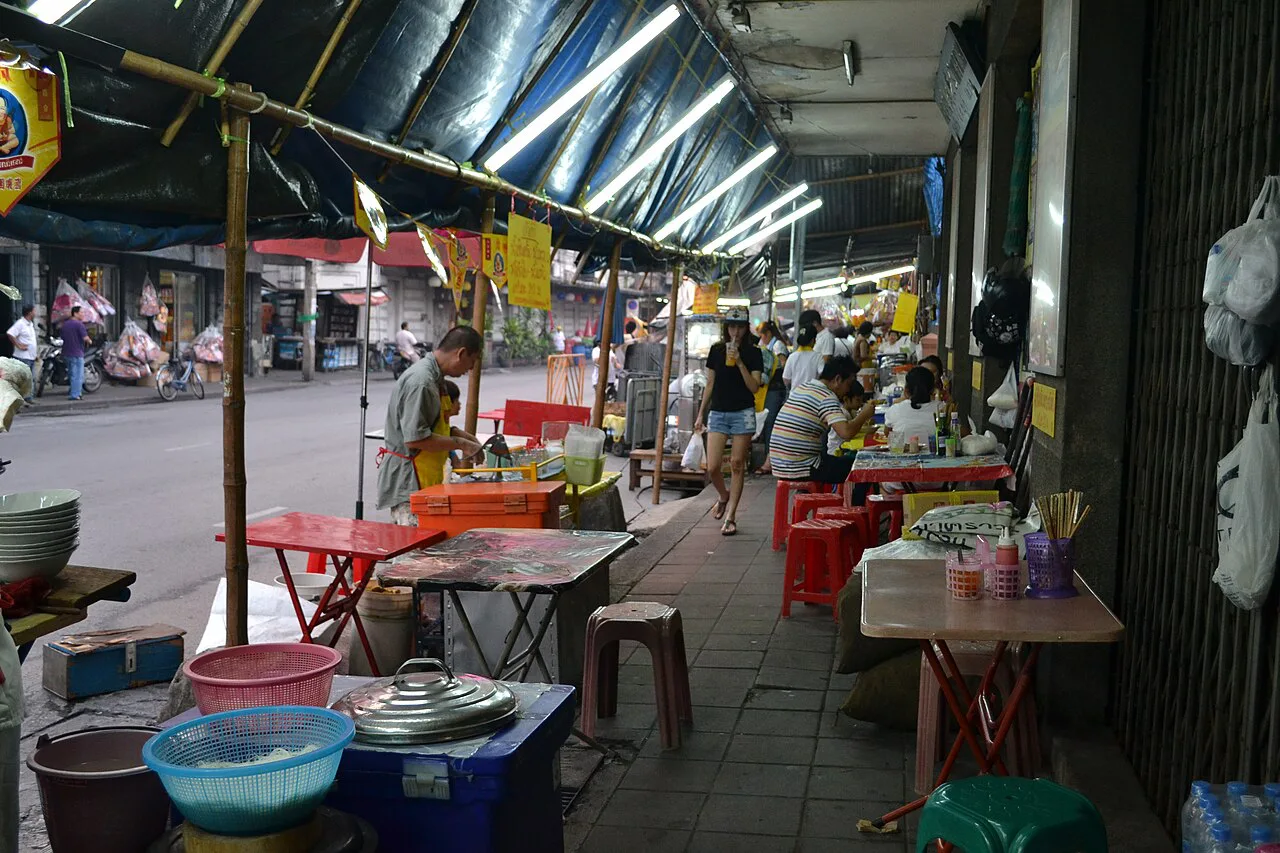
Look for curry stalls, especially around Nakhon Si Thammarat. These have no menus, just a long counter with 8 to 28 dishes. Point at what you have not tried and order across contrasts, such as one curry, one fried dish and a vegetable plate. Some stalls are converted house fronts, with family photos on the walls and seats under a semi-open roof. Others run like a traditional kitchen. Both are informal. Seafood restaurants are the pricier end. They tend to lean Chinese in style, and a menu on an island like Ko Samui can read much like one in Bangkok. In relative terms, curry stalls and markets are cheap, while sit-down seafood restaurants and resort menus cost the most. Check current prices on the spot, since none are fixed.
Curry stalls with 8 to 28 dishes on the counter are where to point, but check for shrimp paste first if you avoid shellfish.
Dietary, Halal and Spice Notes
About 5% of Thais are Muslim, and the share rises as you travel south. Halal options are easier to find in the deep south and in Muslim neighborhoods, but ask locally rather than assuming. Shrimp paste is built into many pastes, including sour curry, so shellfish allergies need a clear conversation. Fish sauce is common too. Vegetarian eating is difficult because shrimp paste and fish products hide in sauces. Calibrate heat before ordering: ask for a level you can handle, and taste a bite first. Sator, the stink bean, has a strong smell and a bitter taste that surprises first-timers.
Common Mistakes to Avoid
Most disappointment comes from a short list of avoidable choices. Check these before you order.
- Ordering "Thai spicy" without calibrating. Southern curries run hotter, so start lower.
- Assuming every curry uses coconut milk. Gaeng som has none.
- Skipping sator because of its smell. It is the region's emblematic ingredient.
- Eating only at the resort or backpacker café. Most tourists never taste local southern dishes.
- Ordering three similar curries. Balance rich dishes with fried or simple ones.
Frequently Asked Questions
What is the difference between northern and southern Thai cuisine?
Northern Thai food is simpler and closer to its indigenous roots, with soups, grilling and raw dishes. Southern food is hotter and more layered, shaped by Indian, Malay, Muslim and Chinese influences.
Explore More Guides
Keep planning your trip with these guides.
Guides
- Gaeng Som: Southern Thai Sour Curry Guide
- Kua Kling: Southern Thai Dry Curry (What It Is and How to Order)
- Massaman Curry: What It Is, How to Order It in Thailand
- Khao Mok Gai: Thai Chicken Biryani & Where to Eat It
- Khanom Jeen: Thai Fermented Rice Noodles & Curry Guide
- Khao Yam: Southern Thai Rice Salad, What It Is and How to Order It
- Gaeng Tai Pla: Southern Thai Fish Curry Guide (What It Tastes Like and How to Order)
- Roti Mataba in Thailand
Thai food notes for your next trip
Optional updates to our food guides.
You might also like

Continue reading
More guides you'll find useful