Khao Mok Gai: Thai Chicken Biryani & Where to Eat It
Khao mok gai is Thailand's spiced turmeric chicken rice, a Thai take on biryani. Learn what's on the plate, how it differs from biryani, and how to order it.
On this page
Last updated November 2026. Khao mok gai is Thai turmeric chicken rice, often called the Thai chicken biryani. Spiced chicken sits with or under yellow rice and arrives with a sharp green chilli sauce. This guide covers what is on the plate, how it differs from biryani, and how to order it, with links into our wider coverage of Southern Thai Food: 8 Dishes to Order and How to Eat Like a Local.

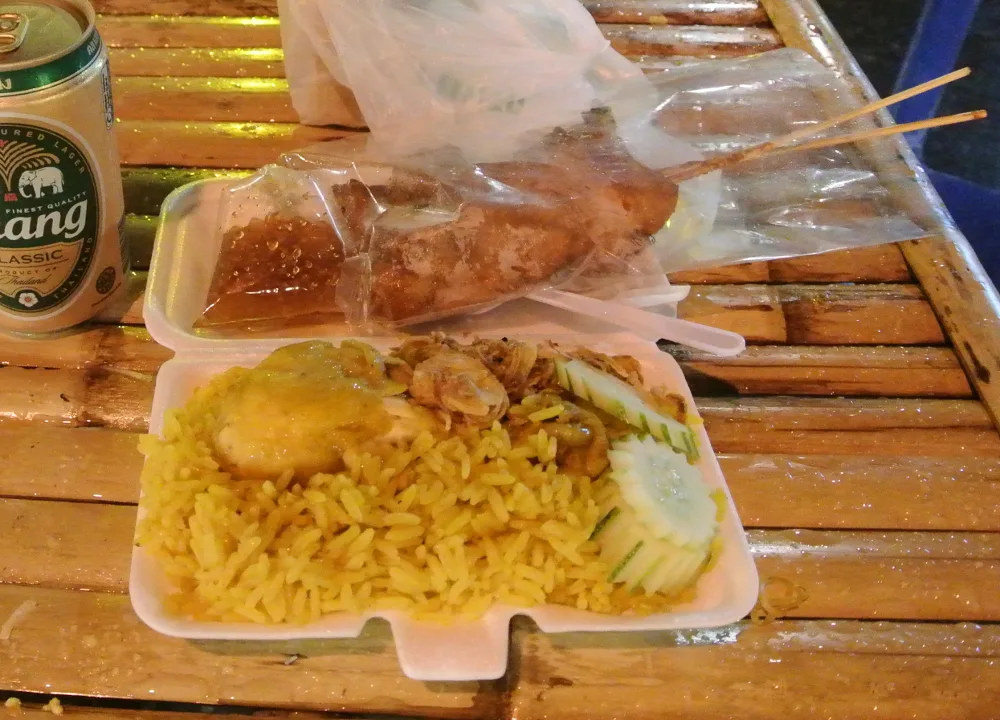
Featured image: Tonbi ko, CC BY-SA 3.0, via Wikimedia Commons.
What Is Khao Mok Gai?
Khao mok gai is a rice dish built around spiced chicken and turmeric-yellow rice. Many Thais and visitors describe it as Thailand's version of chicken biryani. You will also see it spelled khao mok kai, or written in Thai as ข้าวหมกไก่.
The name breaks into three words. "Khao" is rice and "gai" is chicken. "Mok" here means to bury or place underneath, so the dish reads roughly as chicken buried in rice. That matches how it is cooked, with the chicken and rice finished together.

The dish is widely said to have arrived through Indian Muslim cooks. Shops selling it are still often Muslim-run, yet the plate is popular with Thais of every background. That Muslim-community link is one reason it turns up so often in southern food conversations.
Khao Mok Gai vs Biryani and Other Thai Chicken Rice
Biryani is the clearest comparison, but the two plates eat differently. Thai versions lean on a cold, sharp green sauce rather than a raita-style side. Fried shallots and sliced cucumber finish the plate.
Khao man gai is another chicken-and-rice dish that visitors often mix up with it. Khao man gai is the Hainanese-style plate, with plain poached chicken and rice. Khao mok gai is the yellow, spiced one. If the rice is not yellow and fragrant with spice, you have probably ordered something else.
| Feature | Khao mok gai | Typical biryani | Khao man gai |
|---|---|---|---|
| Rice | Turmeric-yellow, spiced | Spiced, often layered | Plain, cooked in chicken fat and stock |
| Chicken | Spiced, cooked with or set on the rice | Spiced, cooked with or between rice layers | Poached or steamed |
| Sauce | Chilli, coriander and mint sauce, sweet-sour | Often a yogurt-based side | Savory dipping sauce |
| Garnish | Fried shallots, sliced cucumber | Varies by region | Cucumber and herbs |
| Muslim-run link | Common | Common | Not specific |
What's on the Plate: Chicken, Rice, Sauce, Sides
Start with the rice. A good plate smells of spice and turmeric, and the grains stay separate rather than mushy. Chicken usually comes bone-in, either resting on the rice or cooked into it.
The sauce is the main Thai signature. It blends green chilli, garlic, mint and coriander with sugar and vinegar, so it is sweet, sour and hot. Spoon it over each bite rather than mixing it all in at once.
Fried shallots add crunch on top. Sliced cucumber cools the heat. Some shops add a clear broth on the side, though that varies by vendor.
- Rice: yellow, fragrant, separate grains
- Chicken: spiced, often bone-in, on or under the rice
- Sauce: green chilli, mint and coriander, served alongside
- Toppings and sides: fried shallots, cucumber, sometimes broth
Where and When to Eat Khao Mok Gai in Thailand
Look for Muslim-run shophouse restaurants, morning markets and southern-food stalls. These are where the dish is most often sold. It sits comfortably in the region covered by our southern Thai food guide, though shops elsewhere also serve it.
Timing varies by shop. Many sellers treat it as a breakfast or lunch dish, and some run out by mid-afternoon. Ask locally about opening times instead of assuming dinner service.
A few quick checks help you pick a stall. See whether the rice is visibly yellow. Check that chicken is displayed or served with the sauce. Notice whether locals are queuing at midday.
For sit-down options, restaurant directories such as the Michelin Guide Thailand selection can help you shortlist places by area. A Muslim-run shop will often sell flatbread too, which pairs well with a Muslim-run shop roti on the side.
How to Order Khao Mok Gai
Say "khao mok gai" and point to the chicken if you are unsure. Written menus may read ข้าวหมกไก่, or use the spelling khao mok kai.
To adjust heat, use "mai phet" for not spicy or "phet noi" for a little spicy. Chilli sits mostly in the sauce, so you can also ask for it on the side. Heat and chicken cuts vary by vendor, so taste a little before pouring.
Pork-free expectations apply at most Muslim-run shops, since the cuisine and community follow halal practice. Halal status is vendor-specific, so look for halal signage or ask the seller directly.
Cost and Time: What to Expect
Khao mok gai is a casual shophouse and stall dish, typically a budget meal. Check the posted menu for current prices.
Common Mistakes to Avoid
A few small errors spoil the plate for first-time eaters.
- Ordering khao man gai by accident. If you want the spiced yellow rice, say khao mok gai.
- Pouring all the sauce at once. Add it in small spoonfuls and taste first.
- Arriving late. Popular shops may sell out of chicken by mid-afternoon.
- Assuming every plate comes with broth. Ask if you want it.
- Assuming halal status without asking. Look for signage or confirm with the seller.
What to Eat Next
Pair khao mok gai with other southern flavors to build a fuller meal. Our write-up of a curry with similar crossroads roots shows the same cultural mixing. For a contrasting rice dish, try a southern herb rice salad.
Heat lovers can go further with a dry-fried southern curry. A southern sour curry brings a sharper, soupier contrast. Adventurous eaters can move on to a tai pla curry.
Morning is also the time for a southern rice-noodle breakfast, which suits the same early market stops.
Thai food notes for your next trip
Optional updates to our food guides.
You might also like

Continue reading
More guides you'll find useful