Khanom Jeen: Thai Fermented Rice Noodles & Curry Guide
Khanom jeen is Thailand's soft fermented rice noodle served with curry and fresh herbs. Learn the sauces, how to eat it, and what to order.
On this page
Last updated November 2026: khanom jeen are soft, lightly fermented Thai rice vermicelli, served with a curry-style sauce and fresh vegetables and herbs, often at breakfast. In the south, bowls come with spicy sauces and a large tray of raw greens, a style covered in our southern Thai food guide. Below, you will learn how to pick a sauce, build a bowl and order with confidence.
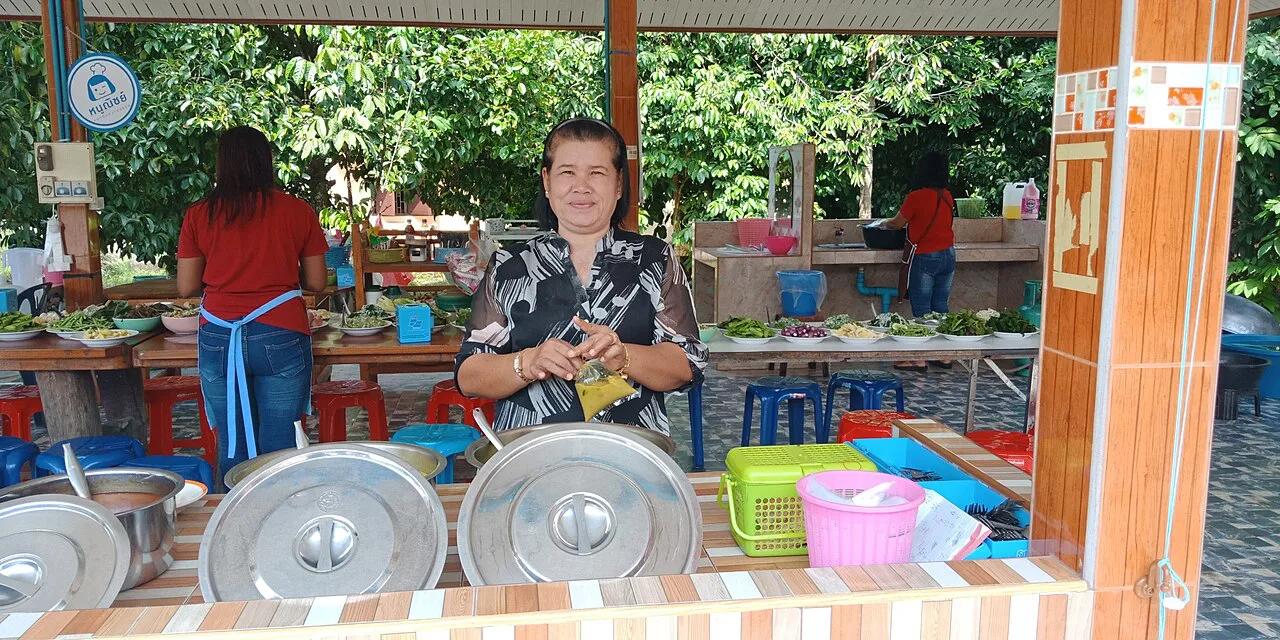
Featured image: Supisara.plus, CC BY-SA 4.0, via Wikimedia Commons.

What Is Khanom Jeen?
Khanom jeen (ขนมจีน, also spelled kanom jeen) is a Thai rice noodle dish. The noodles are rice vermicelli, lightly fermented so they stay soft and silky. They are usually sold as small nests, and you ladle sauce over them yourself or have it ladled for you.

Think of the noodle as a vehicle. The sauce defines the dish, and the raw vegetables and herbs on the side finish it. Khanom jeen is not a broth soup, so expect a thick, curry-like topping rather than a bowl of liquid.
The Sauces: What Goes on Top
Pick your sauce first. The classic pairing is nam ya (น้ำยา), a coconut fish curry. Nam ya kati is the creamy, slightly spicy version made with coconut milk. In Malaysia, a similar noodle curry is called laksa lemak.
Southern cooks also serve sharper, hotter toppings. One is a fish-based sauce related to the curry in our Gaeng Tai Pla: Southern Thai Fish Curry Guide (What It Tastes Like and How to Order) profile. Compare the table below, then ask the vendor which sauces are on offer that day.
| Sauce | Flavor and heat | Base | Best for |
|---|---|---|---|
| Nam ya (น้ำยา) | Rich, savory, mildly to moderately spicy | Fish and coconut milk | First-timers who want creamy comfort |
| Southern-style nam ya | Hotter and more herbal | Fish curry paste, with a stronger chili hit | Travelers who like heat |
| Fish-based sour curry sauces | Sharp, salty, assertive | Fish and chili, no coconut cream | Confident spice eaters |

- Low heat tolerance: start with a creamy coconut nam ya and add chili at the table.
- Medium heat: try the southern-style nam ya and use the vegetables to cool each bite.
- High heat: ask for the sharper fish-based sauces and go lightly on the chili at first.
How to Eat Khanom Jeen Like a Local
Start with the noodle nest and a few scoops of sauce. Then head to the self-serve tray of fresh vegetables and herbs. Typical choices include chopped bean sprouts, cucumber, string beans, cabbage, fresh herbs and dried chilies.
Build the bowl as you go. Pile the vegetables beside or on top of the noodles, then mix everything together with a spoon and fork. Add dried chili last and a little at a time, since you can always add more but cannot take it out.
Skipping the vegetable tray is the most common miss. The crunch and fresh herbs balance the rich sauce, so the dish tastes flat without them.
Khanom Jeen in Southern Thailand
Southern Thai cooking leans spicy, and khanom jeen follows suit. Expect bold sauces and a generous platter of raw vegetables, sometimes with pickles, set out so you can serve yourself. Our southern Thai food hub places the dish among the region's other staples.

Order it as a breakfast. A bowl is light enough to start the day and strong enough to wake you up.
Where and When to Find It
Khanom jeen is a morning food. Look for it at morning markets, street vendors and small local shops that open early. Many stalls sell out of sauce by late morning, so go early for the best choice.
Some vendors offer several sauces side by side in large pots. Point at what you want if you do not read Thai. For another southern breakfast, try Roti Mataba in Thailand: What It Is and Where to Try It, which works well as a second stop.
Ordering Tips and Dietary Notes
Ask for less heat by saying "mai phet" (ไม่เผ็ด), which means not spicy. Add chili yourself from the tray. Vendors often adjust the sauce only slightly, so taste before you commit.

Diets need care. Nam ya is made with fish, and fish sauce is common in Thai sauces, so vegetarians should not assume a bowl is meat-free. Fish and shellfish allergies need an explicit conversation, ideally with a written note in Thai.
- Do not expect a noodle soup. It is a noodle-and-sauce dish.
- Do not assume it is mild. Southern sauces can be hot.
- Do not skip the vegetable and herb tray.
- Do not mix in all the chili at once.
How Khanom Jeen Compares to Other Southern Thai Dishes
Khanom jeen sits between a noodle dish and a curry. For a sour, spicy curry eaten with rice, try Gaeng Som: Southern Thai Sour Curry Guide. For dry, fiery stir-fried heat, order Kua Kling: Southern Thai Dry Curry (What It Is and How to Order).
If you want a rice dish with the same fresh-herb idea, Khao Yam: Southern Thai Rice Salad, What It Is and How to Order It is a cold rice salad. For a heartier meal, see Khao Mok Gai: Thai Chicken Biryani & Where to Eat It. Coconut-curry fans can contrast nam ya with Massaman Curry: What It Is, How to Order It in Thailand, which is richer and sweeter.
Frequently Asked Questions
What are kanom jeen noodles?
Kanom jeen is another spelling of khanom jeen. They are lightly fermented rice vermicelli noodles that stay soft and silky. They are served with curry sauce and raw vegetables.
What kind of noodles are used in Thai dishes?
Thai cooking uses many noodle types, and rice noodles are among the most common. Khanom jeen are one example, sold as soft fermented rice vermicelli.
Thai food notes for your next trip
Optional updates to our food guides.
You might also like


Continue reading
More guides you'll find useful