Khao Yam: Southern Thai Rice Salad, What It Is and How to Order It
Khao yam is Southern Thailand's herb-packed rice salad with nam budu dressing. Learn what's in it, how variants differ, and how to order it.
On this page
Last updated November 2026: khao yam (also spelled khao yum or kao yum) is a Southern Thai rice salad served at room temperature, tossed with fresh herbs, vegetables and toasted coconut. Its signature dressing is nam budu, a sweet, salty and sour sauce built on fermented anchovy, and the dish echoes Malay nasi kerabu. Use this guide to spot it on a menu, then branch out through our Southern Thai food guide.
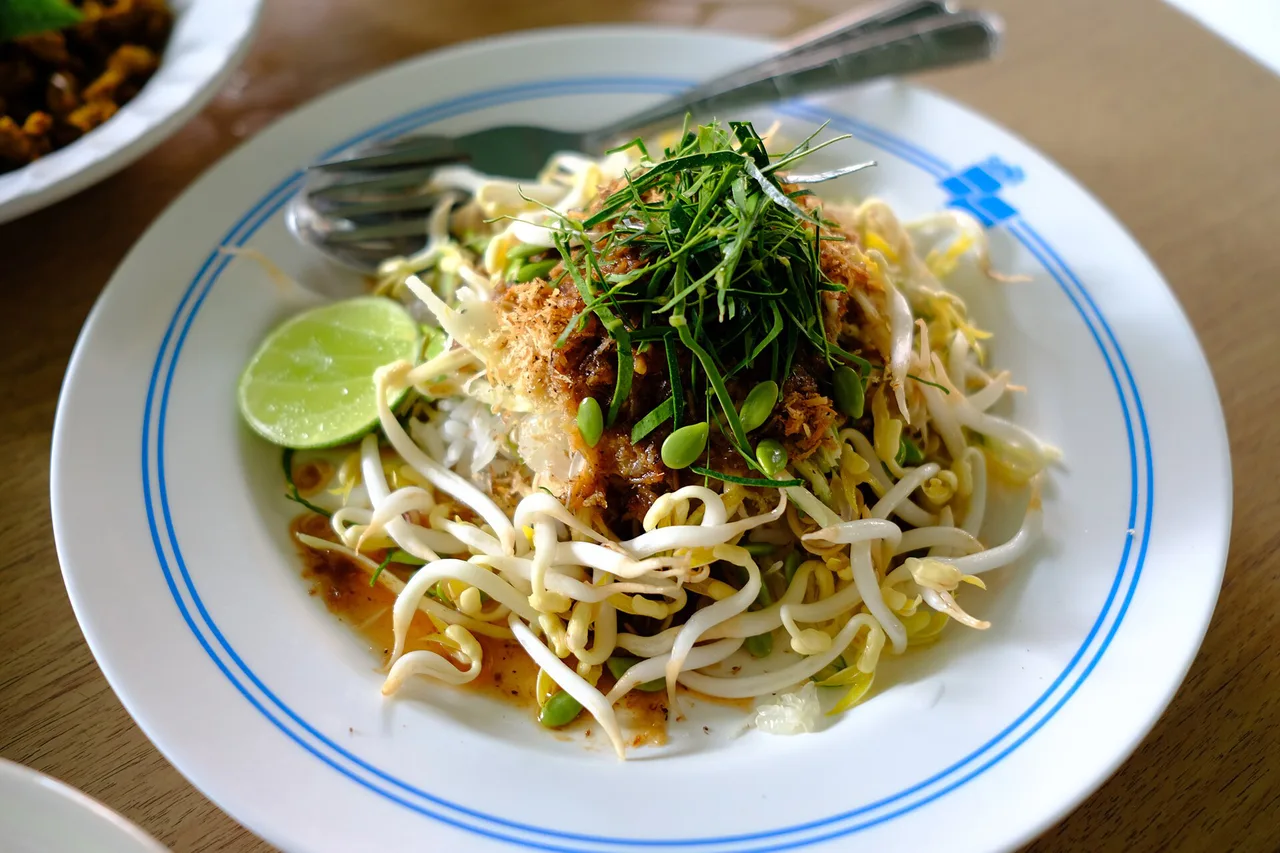
Featured image: Takeaway, CC BY-SA 4.0, via Wikimedia Commons.
What Is Khao Yam?
Khao means rice in Thai. Yam describes a mixed, dressed dish, so khao yam is simply a rice salad. Menus spell it khao yam, khao yum or kao yum, and the Thai script is ข้าวยำ. Southern Thailand is its home, and Malay influence runs through much of that region's cooking. Nasi kerabu, the Malay rice salad, is the closest relative. Cooks in Bangkok have reportedly adopted khao yam as a clean-eating lunch, so you may meet a lighter bowl there. In the south, expect a plate built around nam budu.
What's in a Plate of Khao Yam
Start with the rice. Cooks often dye it blue with butterfly pea flower, though white, yellow (turmeric or saffron) and pink (beet) rice also appear. Rice is served at room temperature, never steaming hot. Toasted coconut adds nutty crunch. One published home recipe toasts shredded coconut for 30–35 minutes until dark brown. That same recipe serves 4–6 and takes 1 hour, so ordering a plate is easier than cooking one. Nam budu ties everything together. Budu is a fermented anchovy sauce, and the dressing balances it with sweet and sour notes.
- Rice: blue from butterfly pea flower, or white, yellow or pink
- Toasted coconut: shredded coconut cooked until dark brown and fragrant
- Herbs and vegetables: lemongrass, kaffir lime leaves, long beans, bean sprouts and shallots
- Dried shrimp: a salty, chewy topping in many versions
- Nam budu: the sweet, salty and sour dressing that defines the dish
Khao Yam Variants Compared
Khao yam changes by cook and by province. Ko Yo Island in Songkhla Lake gives its name to one style. Cooks there mix the rice with rice noodles in coconut milk, prawns, chili powder and coconut flakes. Use this table to compare the main versions you may meet.
| Variant | Rice | Dressing | Protein and extras | Region |
|---|---|---|---|---|
| Classic blue-rice khao yam | Often dyed blue; white, yellow or pink also used | Nam budu | Dried shrimp or shrimp, herbs, toasted coconut | Southern Thailand |
| Khao yum Ko Yo | Rice mixed with rice noodles in coconut milk | Fish sauce or budu with galangal, palm sugar, lemongrass and kaffir lime leaves | Prawns, chili powder, coconut flakes | Ko Yo Island, Songkhla Lake |
| Khao yum pak dai | Varies by cook | Varies by cook | Varies by cook; Ko Yo style is described as a variation of it | Southern Thailand |
| Nasi kerabu | Similar rice salad | Differs from the Thai version | Differs by cook | Malay cooking, linked to many Southern Thai dishes |
How to Order and Eat Khao Yam
Look for ข้าวยำ or the spellings khao yam, khao yum and kao yum. Southern restaurants, markets and street vendors all sell it. Ask what hours a vendor serves it, since timing varies. Toss the rice, toppings and dressing together at the table before you eat. One home recipe uses 10–15 fresh Thai chiles, so heat can build fast. Say mai phet (ไม่เผ็ด) to ask for no spice. Want a bolder fermented-fish flavor afterward? Try Gaeng Tai Pla: Southern Thai Fish Curry Guide (What It Tastes Like and How to Order).
When you want less heat, ask for chili on the side, since one home recipe uses 10–15 fresh Thai chiles.
- Match the name: ข้าวยำ, khao yam, khao yum or kao yum
- Ask whether nam budu arrives on the plate or in a side bowl
- Say mai phet for no heat, or ask for chili on the side
- Name your allergy before ordering
- Read the menu board for the current price, since no fixed rate exists
Dietary Notes and Who Should Skip Khao Yam
Common versions use shrimp paste, dried shrimp, fresh prawns, fish sauce or budu. Budu is fermented anchovy, so fish appears even when shellfish does not. Vegetarian and pescatarian travelers should assume animal products are present. Shellfish-allergic travelers should skip it unless the cook confirms the whole plate. Ask mai sai goong (ไม่ใส่กุ้ง) for no shrimp and mai sai kapi (ไม่ใส่กะปิ) for no shrimp paste. Those requests may not remove a fish-sauce dressing, so a written allergy card helps.
- Shellfish allergy: dried shrimp, prawns and shrimp paste are common
- Vegetarian or pescatarian: fish sauce and budu are typical
- Raw-herb avoiders: most toppings arrive fresh
- Low heat tolerance: ask for chili on the side
Where to Find Khao Yam
Southern Thailand is the source. Songkhla and Ko Yo Island in Songkhla Lake anchor the Ko Yo style. Browse the Michelin Guide Thailand restaurant selection to shortlist kitchens in the region you are visiting. Then scan each menu for ข้าวยำ. Bangkok kitchens also serve lighter versions. Use these cues to judge a venue.
- Nam budu served in a small bowl beside the rice
- A pile of fresh, raw herbs rather than a pre-mixed tub
- A southern menu with curries and stir-fries alongside
- Naturally colored rice, such as butterfly pea blue
Khao Yam vs Other Southern Thai Dishes
Khao yam is the cool, fresh pick in hot weather or after a heavy meal. Curries and stir-fries suit hungrier or cooler days. For a sour southern curry, order Gaeng Som: Southern Thai Sour Curry Guide. For a dry, fiery stir-fry, try Kua Kling: Southern Thai Dry Curry (What It Is and How to Order). A milder, richer option is Massaman Curry: What It Is, How to Order It in Thailand. Another rice dish with Muslim influence is Khao Mok Gai: Thai Chicken Biryani & Where to Eat It. If you want noodles, look at Khanom Jeen: Thai Fermented Rice Noodles & Curry Guide. For a street-food breakfast pairing, add Roti Mataba in Thailand: What It Is and Where to Try It. Return to the Southern Thai food hub to plan your full menu.
Frequently Asked Questions
What is khao in Thai?
Khao means rice. It opens many dish names, including khao yam. Another example is Khao Mok Gai: Thai Chicken Biryani & Where to Eat It.
What are some examples of Thai rice dishes?
Khao yam is the cool, herbal rice salad of the south. For a spiced, Muslim-influenced rice dish, try Khao Mok Gai: Thai Chicken Biryani & Where to Eat It. Southern meals also pair rice with sour curries such as Gaeng Som: Southern Thai Sour Curry Guide.
Thai food notes for your next trip
Optional updates to our food guides.
You might also like


Continue reading
More guides you'll find useful