Langsat Fruit in Thailand: Longkong vs Duku, Season and How to Eat It
Langsat explained for Thailand travelers: how it differs from longkong, duku and longan, when it's in season, how to peel it without sticky hands, and whether it's worth buying.
On this page
Last updated November 2026: langsat (Lansium domesticum) is a small, yellow-brown, sweet-tart fruit that grows in clusters, with translucent, segmented flesh. In Thailand, the sweeter, near-seedless cultivated type is sold as longkong. Here is how to tell the types apart, when to buy, and how to peel one without sticky fingers.
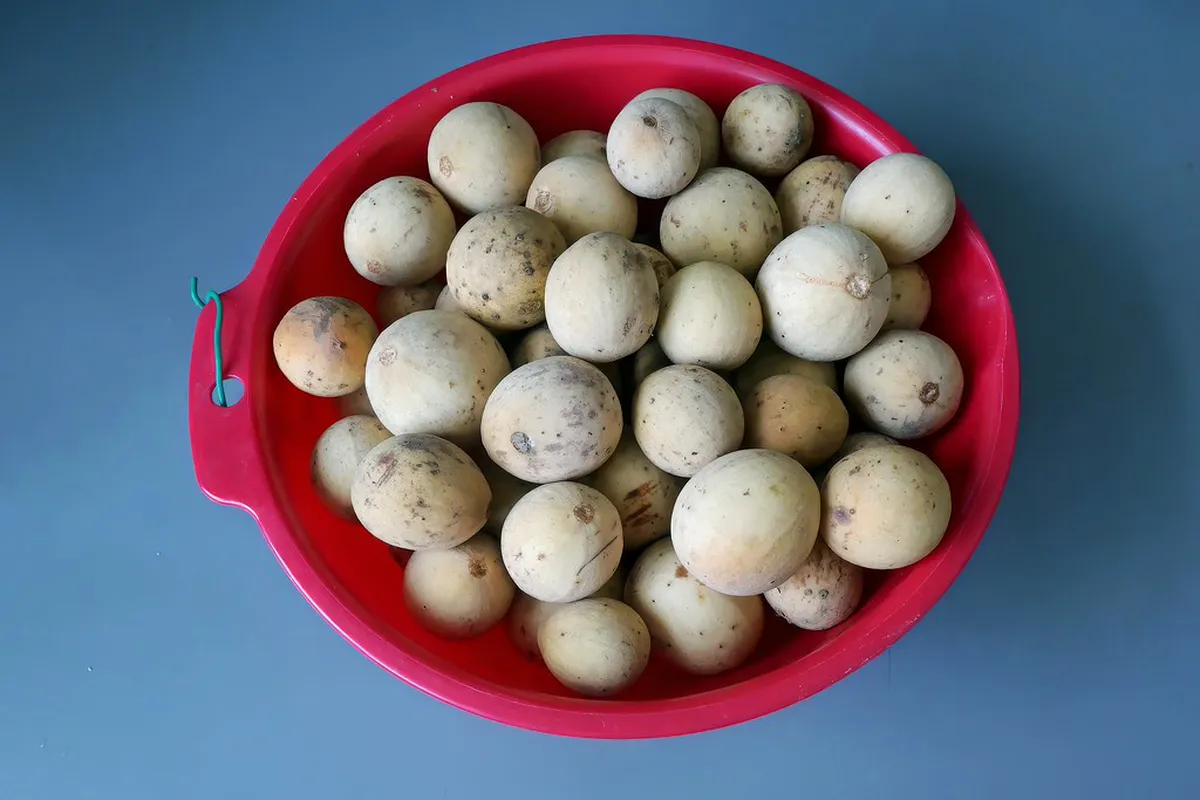
Featured image: chooyutshing, Public Domain Mark 1.0, via Flickr.
What Is Langsat?
Each fruit measures roughly 2 to 4 cm across, with pale yellow to light-brown skin that is often slightly velvety. Fruits dangle in tight clusters along the branch. Peel one and you find white, juicy segments, a bit like a tiny garlic bulb. Flavor runs sweet-tart with a grapefruit-like edge, and the flesh is firm rather than watery. Thai sellers label the fruit langsat or longkong, depending on the type. Langsat is one of many fruits in our Thai fruit guide.
Langsat vs Longkong vs Duku: Which One Are You Buying?
All four names below describe types of one species. Sellers use them loosely, so treat the table as typical patterns rather than hard rules. In southern Thailand, longkong is the type most widely grown. Ask the seller whether the fruit leaves sticky sap, because latex is the quickest clue to the type.
| Type | Fruit and skin | Latex | Taste | Seeds |
|---|---|---|---|---|
| Langsat | Smaller, thinner skin | Typically heavy, milky | More sour | Usually present |
| Duku | Larger, rounder, thicker skin | Typically little or none | Sweeter | Fewer |
| Duku-langsat | Medium size | In between | Balanced | Varies |
| Longkong | Thick skin, widely grown in southern Thailand | Typically very little | Sweet | Nearly seedless |
Is It Longan? How to Tell Look-Alikes Apart
Langsat hangs in clusters of fruit along a branch, and its flesh splits into segments. Longan flesh is one solid piece around a single hard, round seed. That one check settles most mix-ups. A bitter bite almost always means an unripe fruit or a chewed seed, not a different species. Spit out the seed and move on to the next segment.
Fruit at 2 to 4 cm across is still easy to separate from longan, because langsat splits into segments while longan is one solid piece.
When Is Langsat in Season in Thailand?
Langsat season mainly runs from April to October, with a peak in June and July. Some growing areas get two harvests in a year. Narathiwat and Yala in the south are named langsat country, and Uttaradit is also known for its langsat. Fruit outside those months is rarer and costs more. Our Thai fruit season calendar shows where langsat sits against mango, durian and mangosteen months.
How to Buy: Market vs Tourist Street
Buy at a local fruit market in peak season. Beach-street stalls and off-season fruit cost noticeably more for the same bunch. Prices checked November 2026 were not firm enough to quote, so ask for the per-kilo price before the seller bags anything. Langsat does not ripen after picking, so choose ripe fruit on the spot.
Buying for a week ahead overshoots, because fruit kept in the fridge lasts 4 to 5 days.

| Mistake to avoid | Why it matters |
|---|---|
| Buying green or pale fruit | It will not sweeten after picking |
| Buying on a beach street | Prices run higher than at local markets |
| Assuming every bunch is longkong | Langsat types leave sticky latex |
| Stocking up for a week | Fresh fruit keeps only a few days |
- Pick fruit with firm, intact skin and fresh stems.
- Reject cracked skin, dark spots or soft patches.
- Look for ants on the cluster, which signal overripe or damaged fruit.
- Ask whether it is longkong if you want low latex and few seeds.
How to Peel and Eat Langsat (Without the Sticky Mess)
Pinch the skin near the stem end until it splits, then peel it back. Pull the segments apart and check each one for a seed. Eat only the translucent flesh. Seeds are bitter, so discard them. Latex-heavy fruit can glue your fingers after two or three pieces. Soap does not shift it. An alcohol wipe, a little cooking oil, or a lime or orange slice does. Sourer fruit works well with a pinch of salt or chilli-salt. Keep fruit in the fridge for 4 to 5 days.
- Peel over a bowl to catch drips of latex.
- Split the skin at the stem end.
- Pull out segments and discard seeds.
- Wipe hands with alcohol, oil or citrus.
Nutrition and Health: What You Can Say Safely
Langsat is mostly water. Its carbohydrate comes from natural sugar, with small amounts of potassium and a little vitamin C. Figures vary by type and season, so treat it as a light snack rather than a nutrient source. People managing blood sugar should ask a health professional how much fruit suits them. In folk practice, dried peel was burned as a mosquito repellent. Do not rely on it.
Is Langsat Worth Trying? Who It Suits
Try it if you enjoy tart, citrusy fruit and visit between June and July. Skip it if you dislike peeling or sticky hands. Choose longkong for a sweeter, easier first taste. Pair it with a bag of mangosteen from the same market. For bolder flavors, try durian or a chilled pomelo. Mango fans can compare it with Thai Mango Guide: Varieties, Season and How to Eat It varieties.
For trip-planning details, see Lansium domesticum.
Frequently Asked Questions
What is duku fruit in English?
Duku has no separate English name. It is the larger, thicker-skinned, sweeter type of the same species as langsat, Lansium domesticum. It typically leaves little or no latex.
How do lanzones taste?
Lanzones is the Philippine name for the same fruit. Expect sweet-tart juicy segments with a grapefruit-like edge. Sourer types suit a pinch of salt.
Thai food notes for your next trip
Optional updates to our food guides.
You might also like
Continue reading
More guides you'll find useful