Rambutan in Thailand: Taste, Season and How to Eat It
What rambutan tastes like, how to open and store it, and how to buy it fresh at Thai markets. Includes a quick comparison with lychee and longan.
On this page
Last updated November 2026. Rambutan is a small red fruit with soft, hairy spines, translucent white flesh and a sweet, mildly acidic flavor. Peel it by hand, discard the seed, and eat the flesh fresh. This guide covers how to open it, how to pick good fruit at Thai markets, and how it differs from lychee and longan, as one part of our Thai fruit guide.
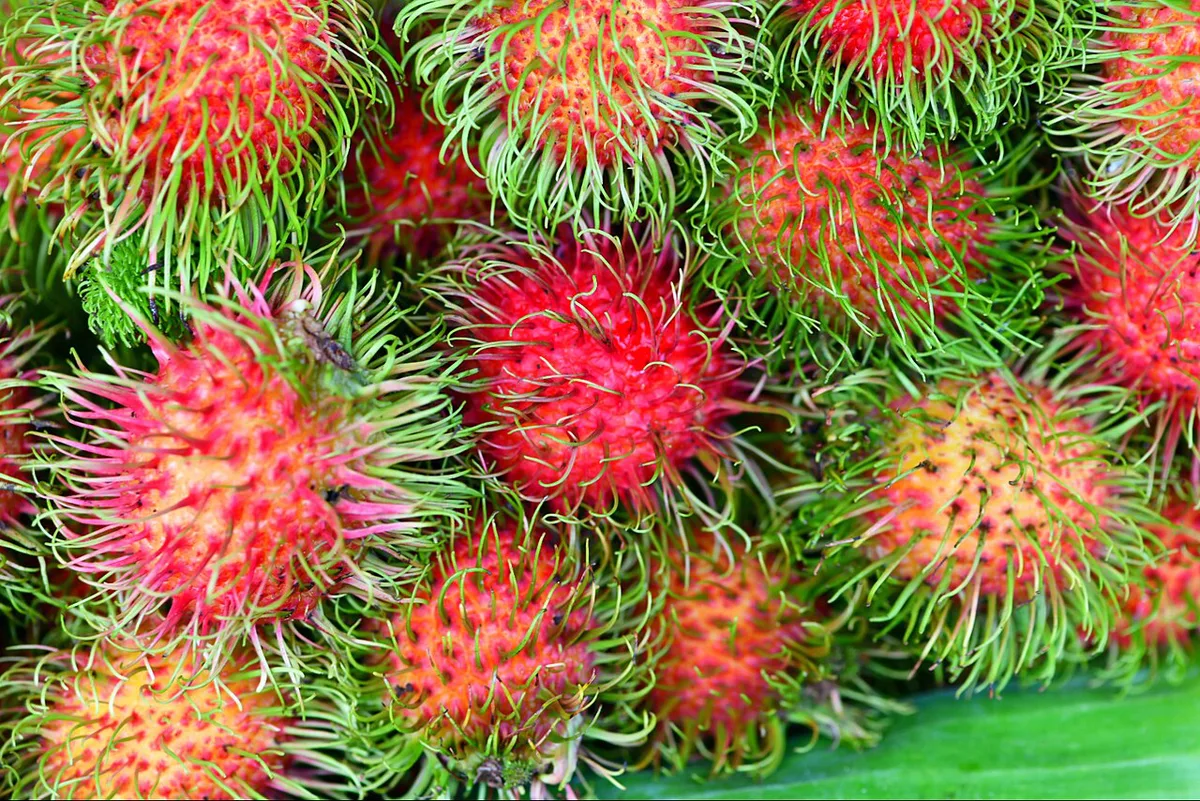
Featured image: Susan Slater, CC BY-SA 4.0, via Wikimedia Commons.
Quick answer: what rambutan is and how it tastes
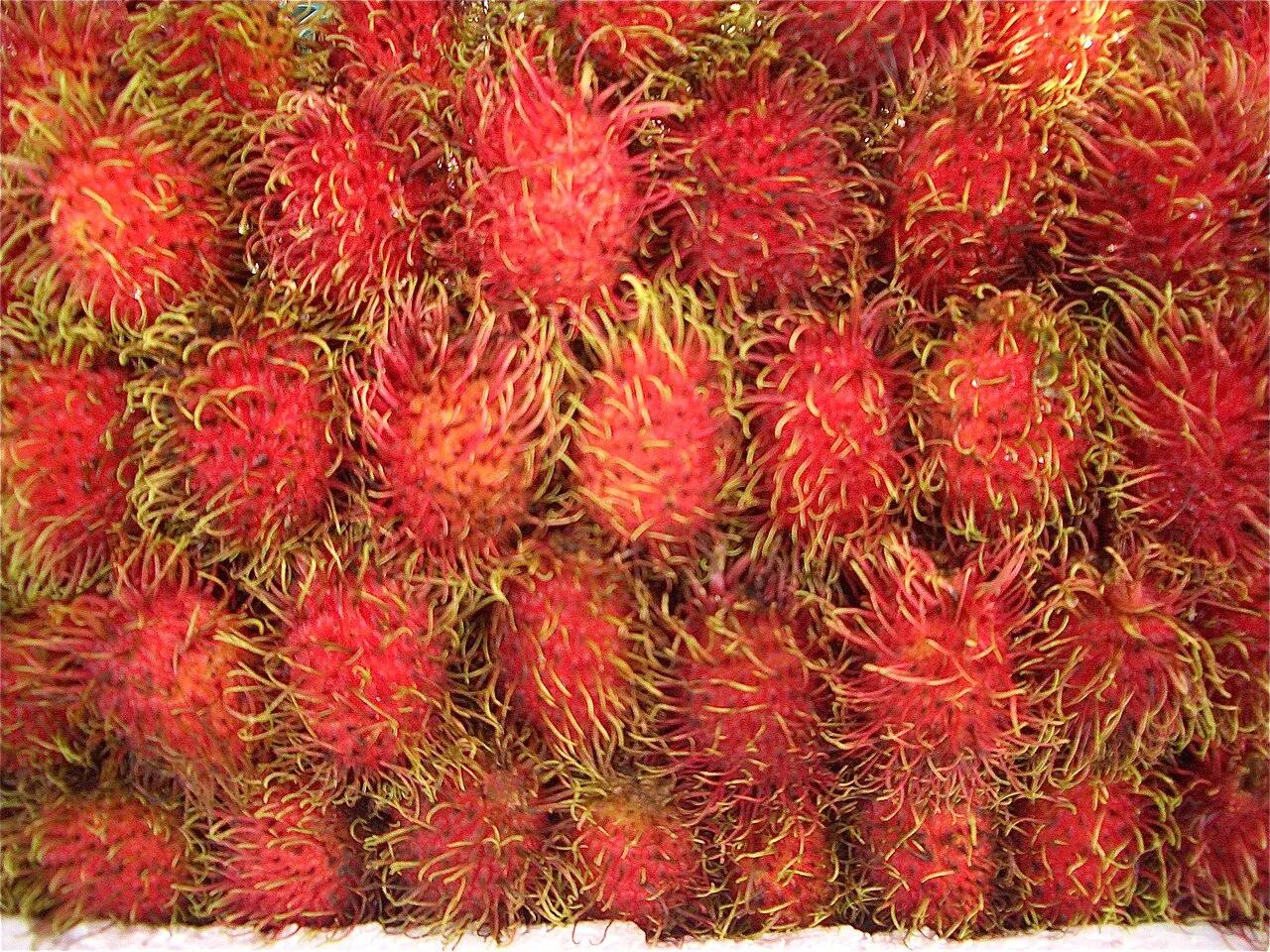
Rambutan (Nephelium lappaceum) grows in loose hanging clusters, typically 10 to 20 fruits per cluster. Each fruit is roughly 3 to 5 centimeters across. Its leathery rind is covered in soft spines. Inside, the flesh is white to pale pink, juicy and slightly chewy. It tastes sweet and fruity with mild acidity, and some people pick up notes of strawberry and grape. The name comes from the Malay word "rambut", meaning hair. Rind color ranges from red to orange and yellow, though red is the one you will see most often.
How to open and eat rambutan
The spines look fierce, but they are soft and not sharp. You can handle the fruit freely. There are three easy ways to get inside.
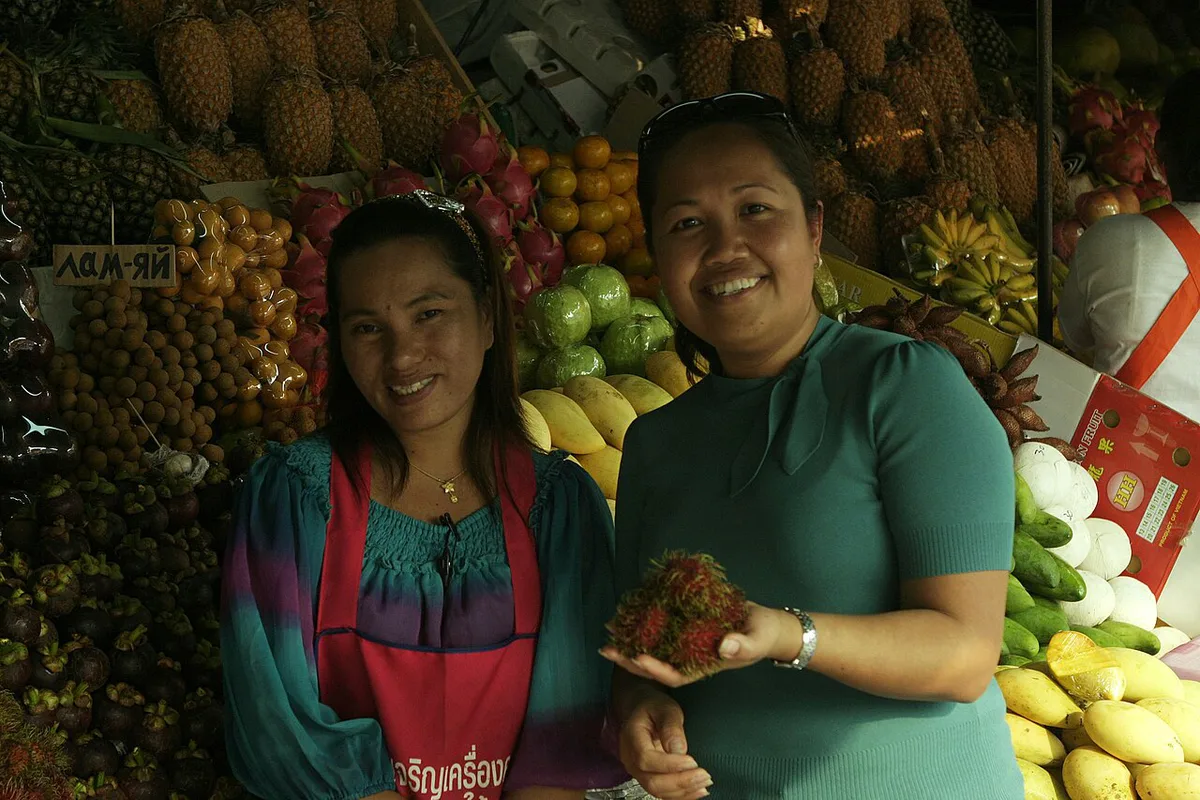
- Peel by hand: pinch the rind and pull it away, much like an orange.
- Use a knife: make one shallow cut around the middle and pull the halves apart.
- Twist: hold both ends and twist in opposite directions until the rind pops open.
Eating rambutan flesh and handling the seed
Eat the flesh straight from the hand and discard the seed. Some varieties are freestone, so the flesh slips off the seed cleanly. Others cling to it, and you will need to nibble around it. The seed is reported to be edible only when cooked, so do not eat it raw. The juice is sticky, so keep a napkin or wet wipe in your bag. Eating over a bin or a plate helps, since the rind and seed add up quickly.
Rambutan season in Thailand
Trees in tropical Southeast Asia can fruit twice a year, so you may find rambutan in more than one stretch of the calendar. Exact months differ by growing region and year. For current timing, check the Thai Department of Agriculture or a provincial tourism office. Our Thai fruit season calendar places rambutan alongside the other fruits you will see at the same stalls.
How to choose and buy good rambutan at Thai markets
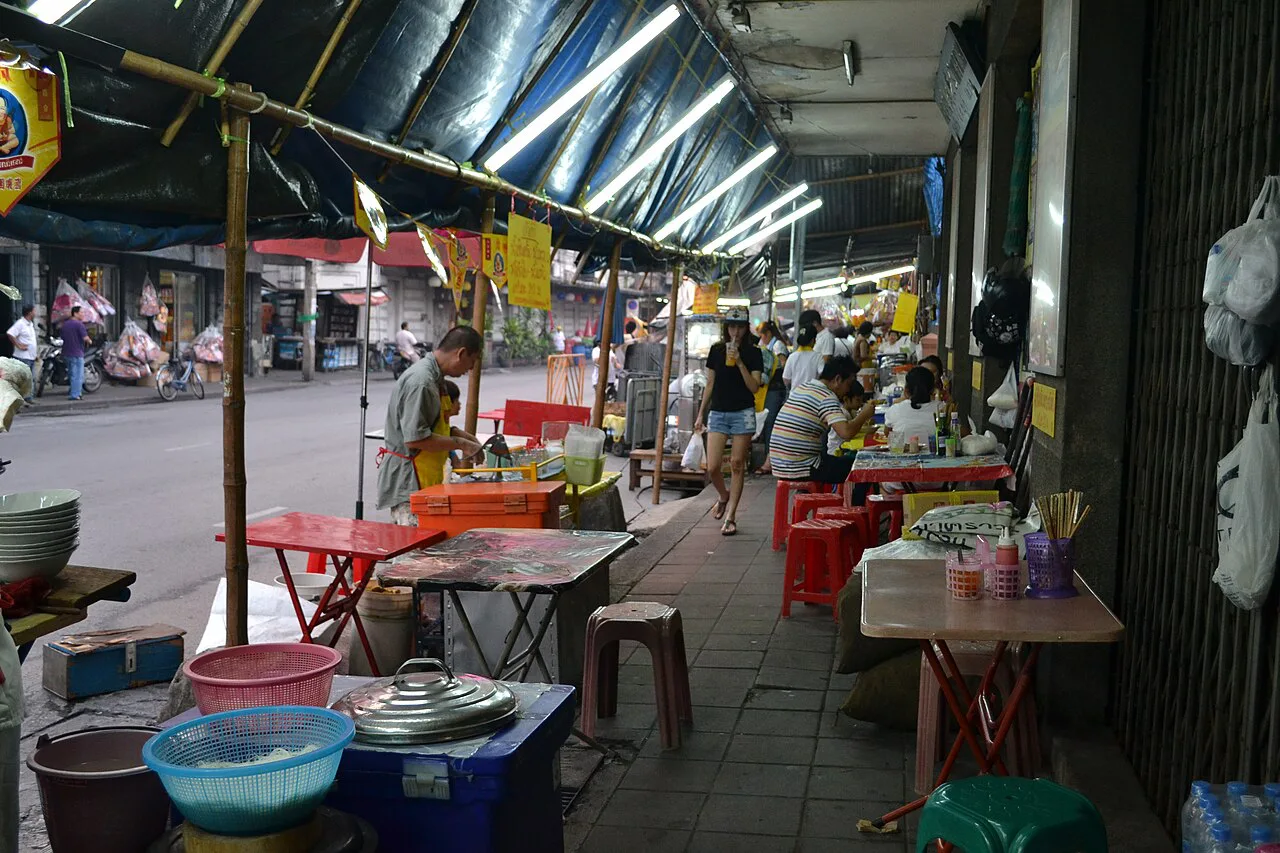
At a fresh market or roadside fruit stall, look closely before you pay. Rambutan does not ripen after picking, so the fruit you buy is the fruit you get. Ask the vendor for the price per kilo or per bag, and compare two stalls before you commit. Vendors may also sell peeled fruit in cups or bags, so ask what is on offer. Check that peeled fruit is kept cold.
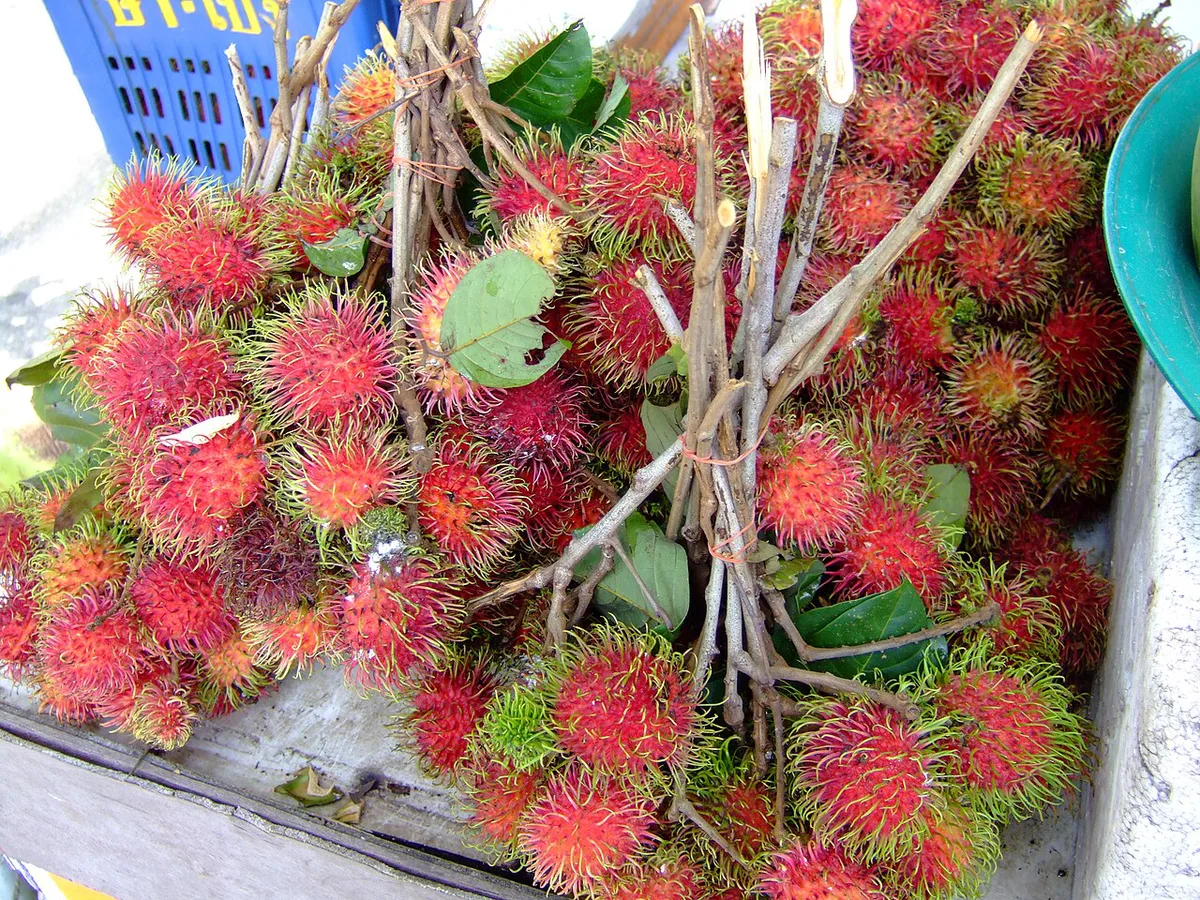
Whole clusters carry typically 10 to 20 fruits per cluster, so one bunch lets you check many fruits at once before you pay.
| Option | Pros | Trade-offs |
|---|---|---|
| Whole fruit | Usually cheaper per piece; lasts longer | You peel it yourself; sticky hands |
| Pre-peeled cup or bag | Ready to eat on the spot | Shorter life; check that it is kept cold |
- Choose bright, even color across the whole fruit.
- Look for spines that are flexible and fresh, not black or dry.
- Skip fruit that is leaking or has soft spots.
- A whole cluster usually looks fresher than loose fruit sitting in a pile.
How to store rambutan
Rambutan has a short shelf life, and sources disagree on how short. A cautious range is 2 to 3 days in the fridge, wrapped in a damp paper towel inside a ventilated bag. Some growers claim up to two weeks for very fresh fruit. In Thailand's heat, plan for the short end. Buy only what you will eat within a day or two. In a hotel room, use the minibar or fridge and keep the fruit away from strong-smelling food.
Since fruit bought at a stall does not ripen after picking, it has only the 2 to 3 days in the fridge.
Rambutan vs lychee vs longan
Rambutan and lychee belong to the same botanical family, Sapindaceae, so the flesh feels similar. Longan is the smaller, brown-skinned cousin. Our longan fruit guide covers it in detail.
| Fruit | Rind | Flesh and flavor |
|---|---|---|
| Rambutan | Red, orange or yellow, with soft spines | White, juicy, sweet with mild acidity |
| Lychee | Rough, reddish, without spines | White, juicy, perfumed and sweet |
| Longan | Smooth, light brown | Translucent, sweet, with a small dark seed |
What to try after rambutan
If you like the texture of rambutan, try langsat next. For something richer, look at mangosteen. Both turn up at the same markets. Our main Thai fruit page maps out the rest of the lineup.
Common mistakes to avoid
Most problems come from buying carelessly or storing badly.
- Buying dull, blackened fruit and hoping it ripens later.
- Leaving fruit in a warm bag for hours.
- Eating the raw seed.
- Buying peeled fruit that is not kept cold.
- Buying more than you can eat in two or three days.
For trip-planning details, see Rambutan.
Frequently Asked Questions
What to do with rambutan?
Eat it fresh, straight from the hand, after peeling off the rind and discarding the seed. The flesh also works in fruit salad, over sorbet, or simmered into a simple syrup.
Is rambutan related to lychee?
Yes. Both belong to the Sapindaceae family. Rambutan has softer spines and a slightly more acidic flavor than lychee.
Thai food notes for your next trip
Optional updates to our food guides.
You might also like


Continue reading
More guides you'll find useful