Thai Eating Habits: Sharing, Rice, Spoon & Fork
How Thais eat day to day: shared dishes, rice at the center, spoon-and-fork rules, sticky rice, spice and table manners for visitors.
On this page
Last updated November 2026. Thai eating habits follow one pattern: shared dishes, a plate of rice for each person, and a spoon and fork instead of knife and chopsticks. Once you know that rhythm, a street stall, a food court and a family table all make sense. Our guide to Thai Food Culture: 7 Things That Define How Thailand Eats covers the wider picture, and this page stays on behavior.
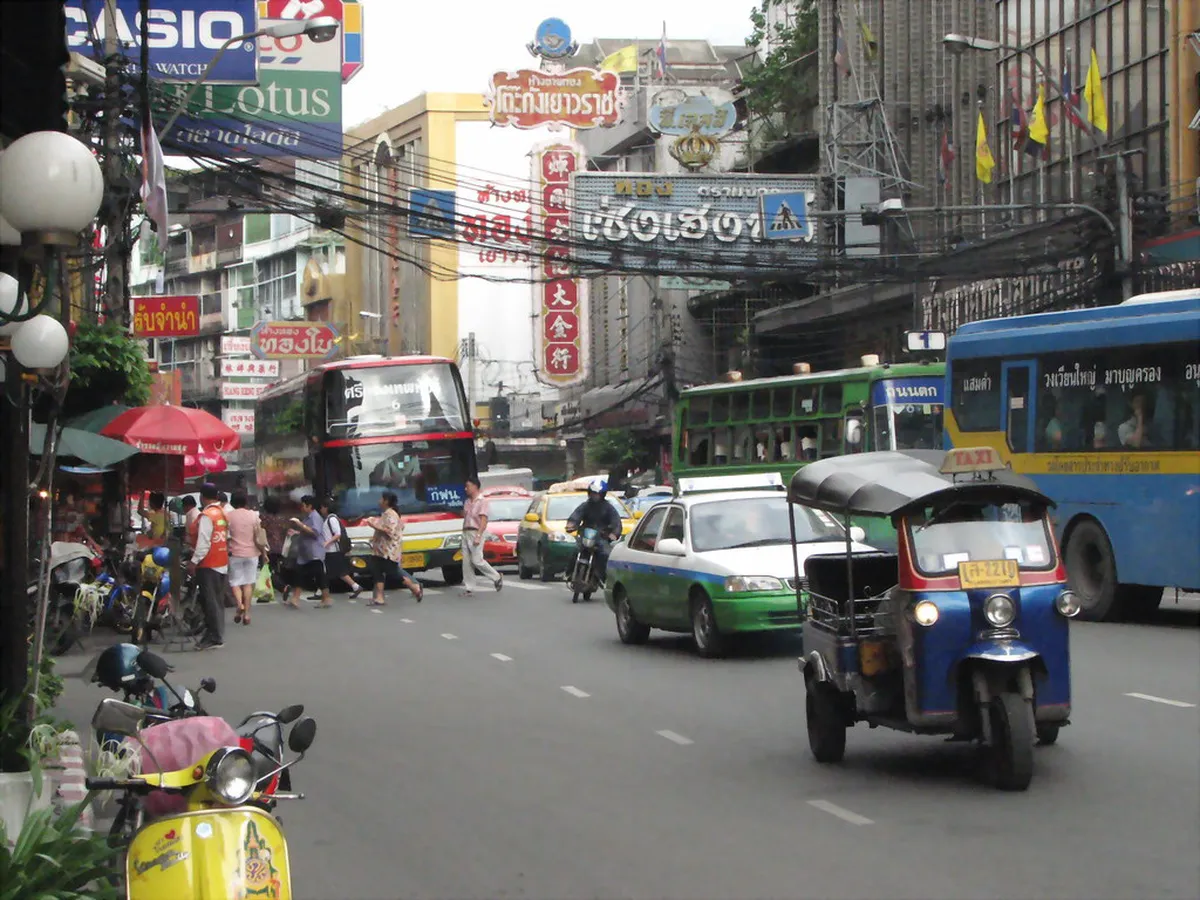
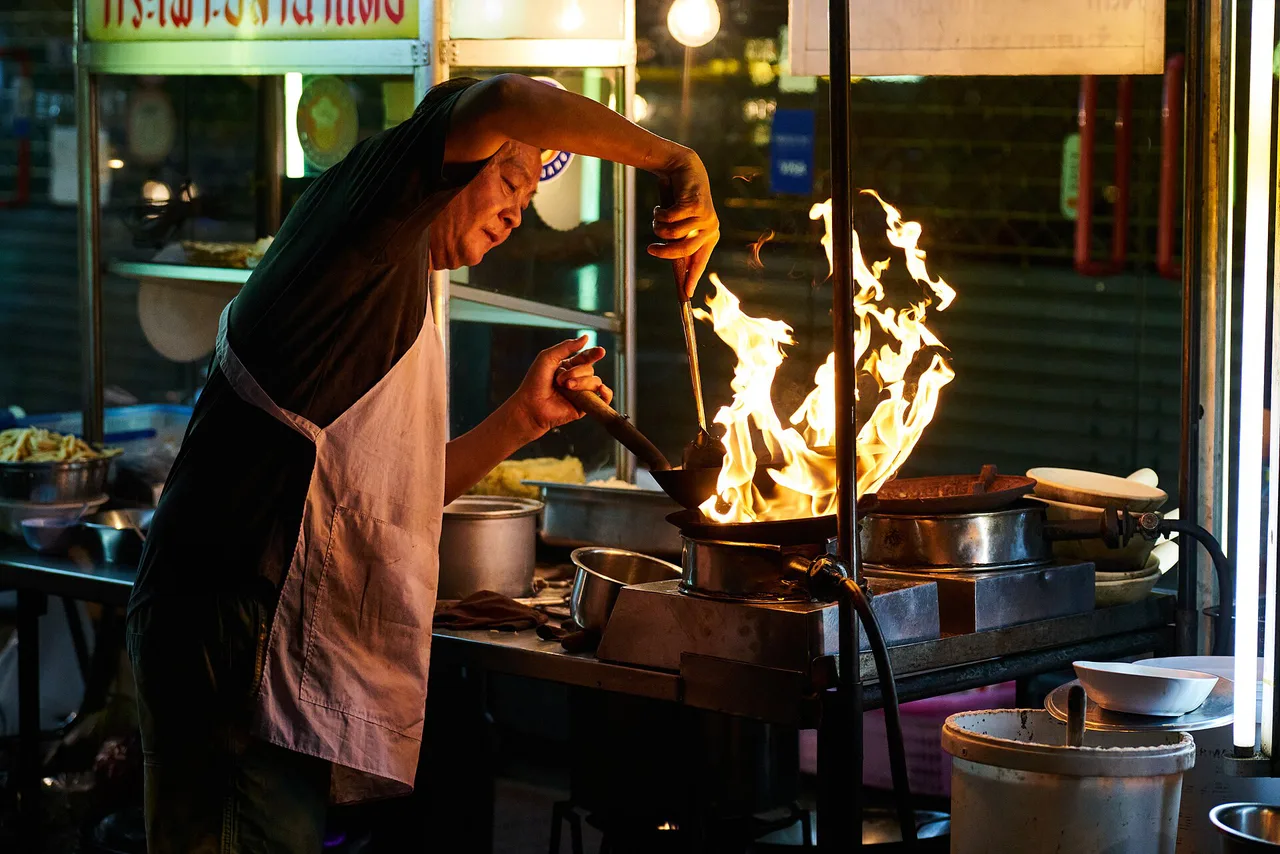
Featured image: PattayaPatrol, CC BY-SA 4.0, via Wikimedia Commons.
Thai Eating Habits at a Glance
Thai meals are social first and individual second. Six habits explain most of what you will see at the table.
- Dishes are shared, and nobody owns a plate of curry or salad.
- Rice is the base, and each diner gets a portion of their own.
- The spoon goes in the right hand and the fork in the left.
- Chopsticks mostly appear with noodles.
- Hands are for sticky rice and a few finger foods, and always the right hand.
- Flavors are balanced across the whole meal: sweet, sour, salty, bitter and hot.
A Typical Day of Eating
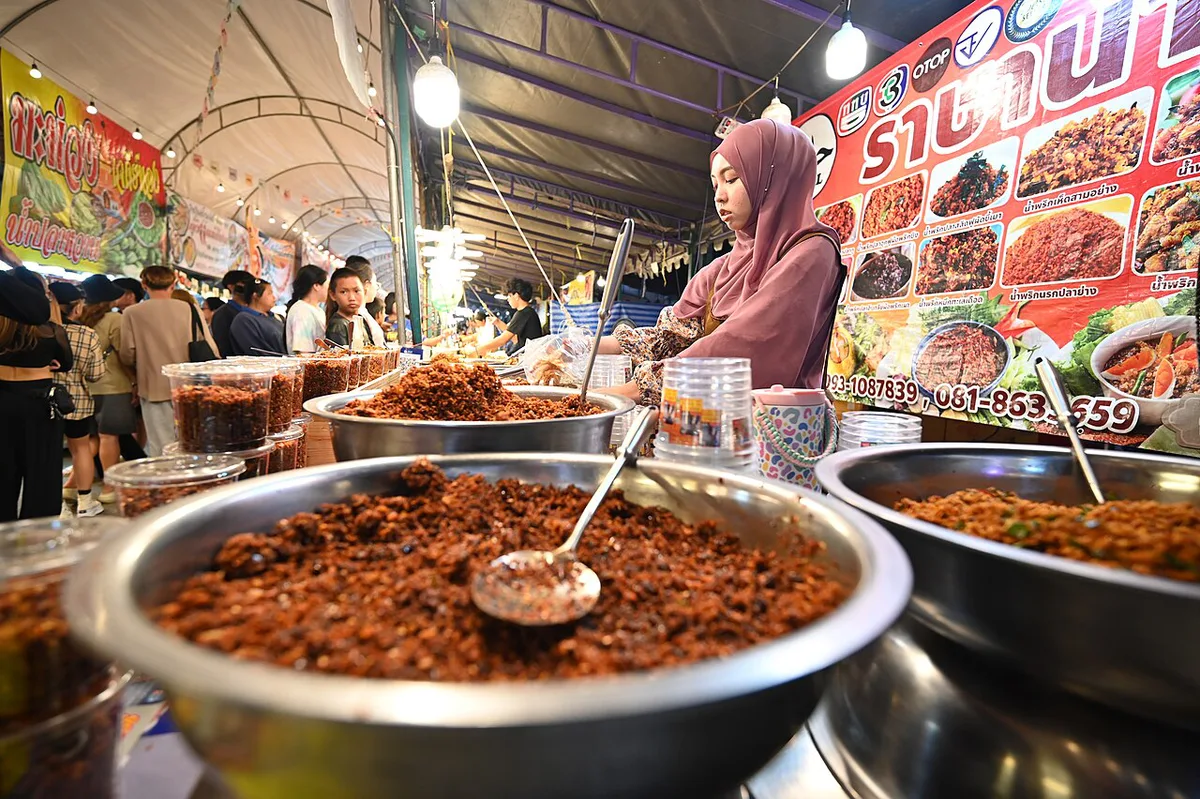
Thais snack often, but there are three main meals, and dinner is the big one. Breakfast is often built from the night before, which is why fried rice is common. Another morning favorite is jok, a savory rice porridge topped with minced pork, egg or spring onion. Lunch is usually a one-dish meal, such as curry over rice or stir-fried vegetables with noodles. Dinner is communal and the only meal with several dishes. Desserts tend to appear at lunch or even breakfast rather than after dinner. Fruit such as mango or papaya is the simplest sweet.

| Meal | Typical format | Shared or solo | Common setting |
|---|---|---|---|
| Breakfast | Jok, fried rice or leftovers | Mostly solo | Market stall, home |
| Lunch | One dish over rice or noodles | Mostly solo | Food court, street stall |
| Dinner | Several dishes with rice | Shared | Restaurant, home |
| Snacks | Fruit, grilled items, sweets | Either | Street vendors |
| Late drinking food | Small plates for a group | Shared | Bars, open-air restaurants |
Sharing and Ordering at a Thai Meal
Dishes arrive in the middle of the table, with serving spoons beside them. Each person gets rice and a plate. You take a spoonful of one dish, eat it with rice, then reach for another. Small portions at a time are polite, because you are helping others before yourself. As a rule of thumb, groups order about one dish per person. Treat that as a guide, not a law. Solo diners should look at one-dish meals, since a full spread needs company.
Ordering for 4 or more suits dinner, the only meal with several dishes, since lunch is usually a single dish.
- Ordering for 1: pick a single dish over rice or a noodle bowl.
- Ordering for 2: choose two dishes, perhaps one curry or stir-fry plus a salad or soup.
- Ordering for 4 or more: roughly one dish each, mixing a soup, a curry, a fried dish and something fresh.
Spoon, Fork, Chopsticks and Hands
Thai cutlery means a spoon and a fork. The spoon does the eating, and the fork only pushes food onto it. No knife is needed because meat is cut into small pieces before cooking. Chopsticks belong to noodles. If noodles arrive in a bowl, chopsticks are normal. If they come on a plate, use the spoon and fork. Chinese-style noodle shops are where chopsticks feel most natural, and our comparison of Thai and Chinese food explains the crossover. Using chopsticks for rice marks you as a visitor.
| Dish | Tool |
|---|---|
| Rice with curry or stir-fry | Spoon and fork |
| Noodle soup in a bowl | Chopsticks and spoon |
| Noodles on a plate | Spoon and fork |
| Sticky rice | Right hand |
| Grilled skewers and snacks | Fingers of the right hand |
Rice and Noodles: Rules That Surprise Visitors
Rice sits at the center of the table, and the common greeting translates roughly as "have you eaten rice yet?". Rice usually arrives in its own bowl or on the side of your plate. Many Thais avoid stirring it into other dishes. You eat one dish at a time with a mound of rice beside it. Sticky rice works differently. Pull off a small piece with your right hand, roll it into a ball, and use it to scoop up dips and salads. Customs about leaving a little rice or finishing every grain vary by household and region. Watch your hosts and follow their lead. Noodles are mostly a lunch or snack food, and flavors are adjusted with the condiment set.
Table Manners That Matter, and Ones That Don't
Firm norms are few. Eat with your right hand when hands are involved, because the left is traditionally seen as unclean. Skip nose-blowing at the table, and avoid licking your fingers. Wash your hands before eating. Softer norms are less strict. Waiting for a second helping, or leaving a little food, depends on who is hosting. Tourist-facing restaurants are relaxed about all of this. In a home or homestay, remove your shoes at the door and wait to be shown a seat. Eating together matters more than perfect technique.
Spice, Condiments and Customizing Your Plate
Thai food is not always hot. Chilies reached Thailand in the 16th century, and cooks soften heat with coconut milk and fresh herbs. Meals aim for balance, so a fiery curry is paired with something milder, such as a salad or dip. Most tables carry a condiment set. Expect fish sauce with sliced chili (prik nam pla), sugar, dried chili flakes and vinegar. Diners adjust their own plate. Add a little at a time, since each spoonful changes the balance. You can also ask for less chili when ordering. Fish sauce, or nam pla, is fermented for up to a year, and its salty depth anchors many dishes. To go deeper, read about the spices behind Thai heat. Our page on the herbs used in Thai cooking covers lemongrass and galangal.
Regional Habits in the North, Isan, Center and South
Habits shift by region, so treat the table below as a generalization. Sticky rice is tied to the north and Isan. Central Thailand leans toward steamed jasmine rice with spoon and fork. Spice levels also differ, with the south known for intense heat. If you travel between regions, expect your tools to change with the rice.
| Region | Typical rice | Eating style | Spice (general) |
|---|---|---|---|
| North | Sticky rice | Often by hand | Milder, herb-forward |
| Isan | Sticky rice | Often by hand | Spicy and tangy |
| Central | Jasmine rice | Spoon and fork | Balanced sweet and salty |
| South | Jasmine rice | Spoon and fork | Intense, seafood-heavy |
Street Stall, Food Court, Restaurant and Home
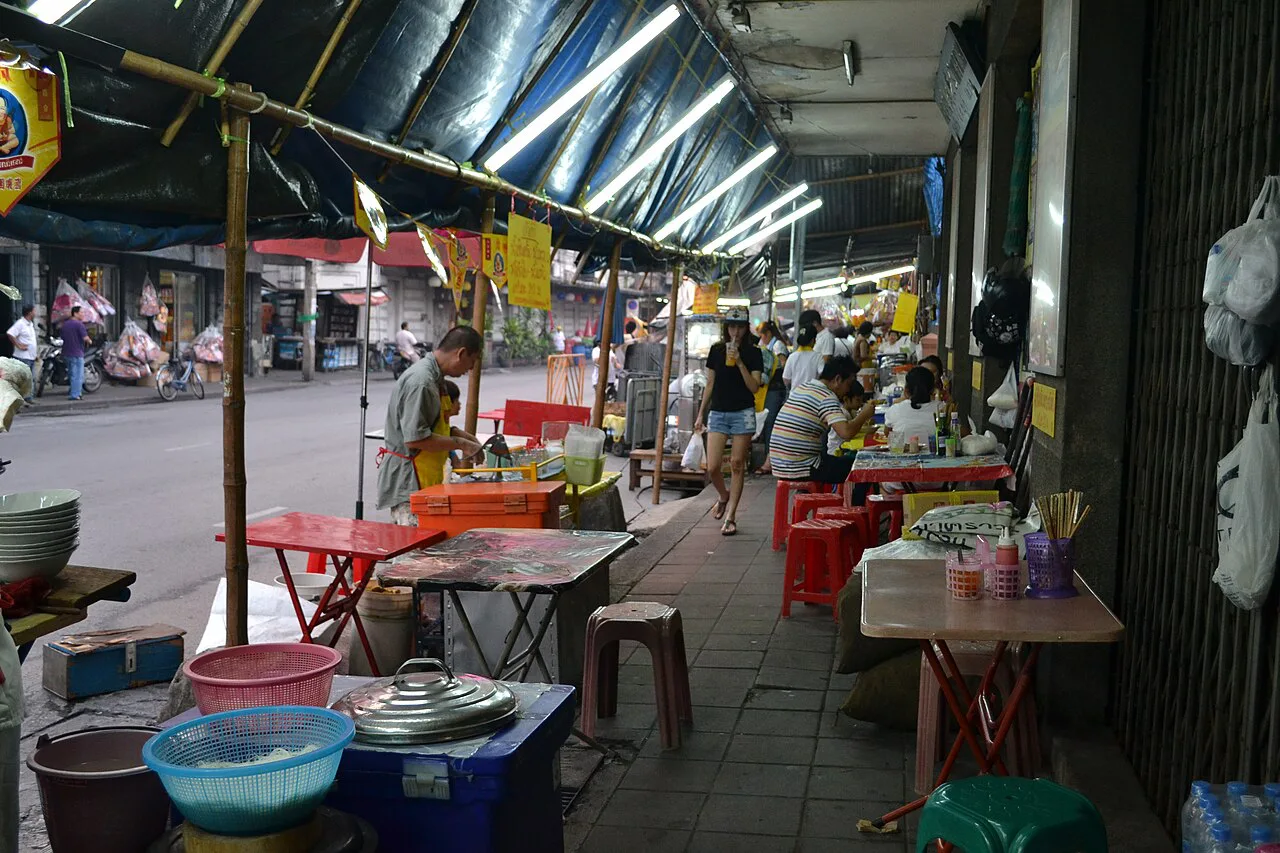
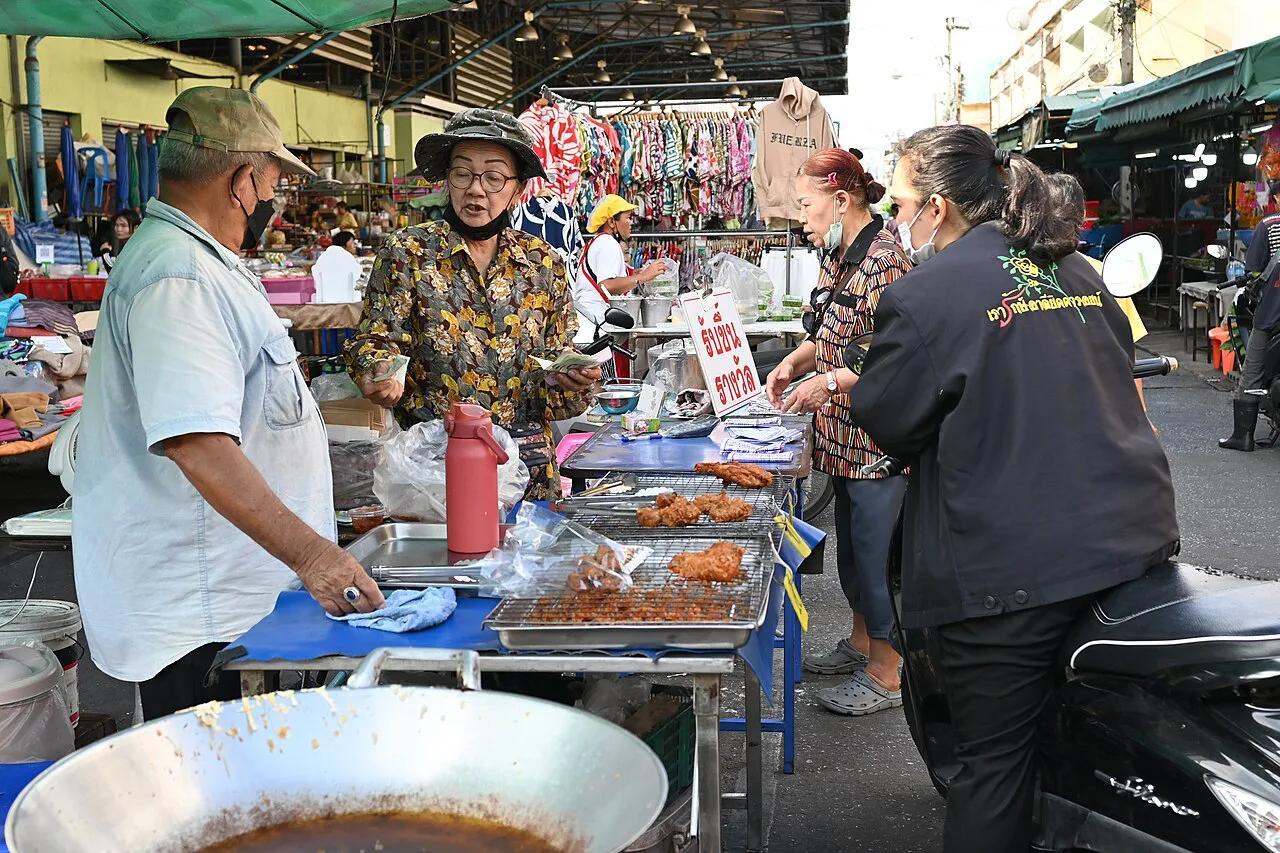
At a street stall, you order one dish, often over rice or noodles, and eat on a plastic stool. Condiment caddies sit on the table. Food courts work the same way, with vendors cooking single-plate meals. Sit-down restaurants follow the shared model, with dishes arriving as they are cooked. A glass of cold water usually comes with the meal. At home, the host decides the order, and you eat once served. For a first meal, a short checklist helps.
- Order one dish over rice if you are alone.
- Take the spoon in your right hand and the fork in your left.
- Taste before adding condiments.
- Ask for less chili if you are unsure.
- Eat sticky rice with your right hand only.
Dietary Needs and Drinking Food
Vegetarian requests are easiest when you state them plainly. Fish sauce and shrimp paste hide in many dishes, including curries and dips, so say so if you avoid them. Allergies need the same specific wording. Halal food is easier to find in the south. Drinking has its own food category, kap klaem. Groups order small shared plates, such as fried cashews or grilled dried cuttlefish, to eat alongside drinks. Thais prefer not to drink or eat alone. For background, see how Thai cuisine developed. Our comparisons with Vietnamese cooking, Indian food and Japanese food show how table habits differ. Three habits matter most on a first trip: use your right hand, share dishes, and season gradually.
Thai food notes for your next trip
Optional updates to our food guides.
You might also like

Continue reading
More guides you'll find useful