Thai Food Etiquette: 7 Table Rules Travelers Should Know
Thai food etiquette in 7 rules: spoon and fork, shared dishes, condiments, noodle chopsticks, and which table mistakes actually offend.
On this page
Last updated November 2026: Thai food etiquette comes down to a spoon in your right hand, a fork in your left to push food onto it, and shared dishes eaten over your own rice. Chopsticks are for noodle soups, and sticky rice is eaten by hand. Seven rules below cover the rest, from who starts eating to how to ask for the condiments.
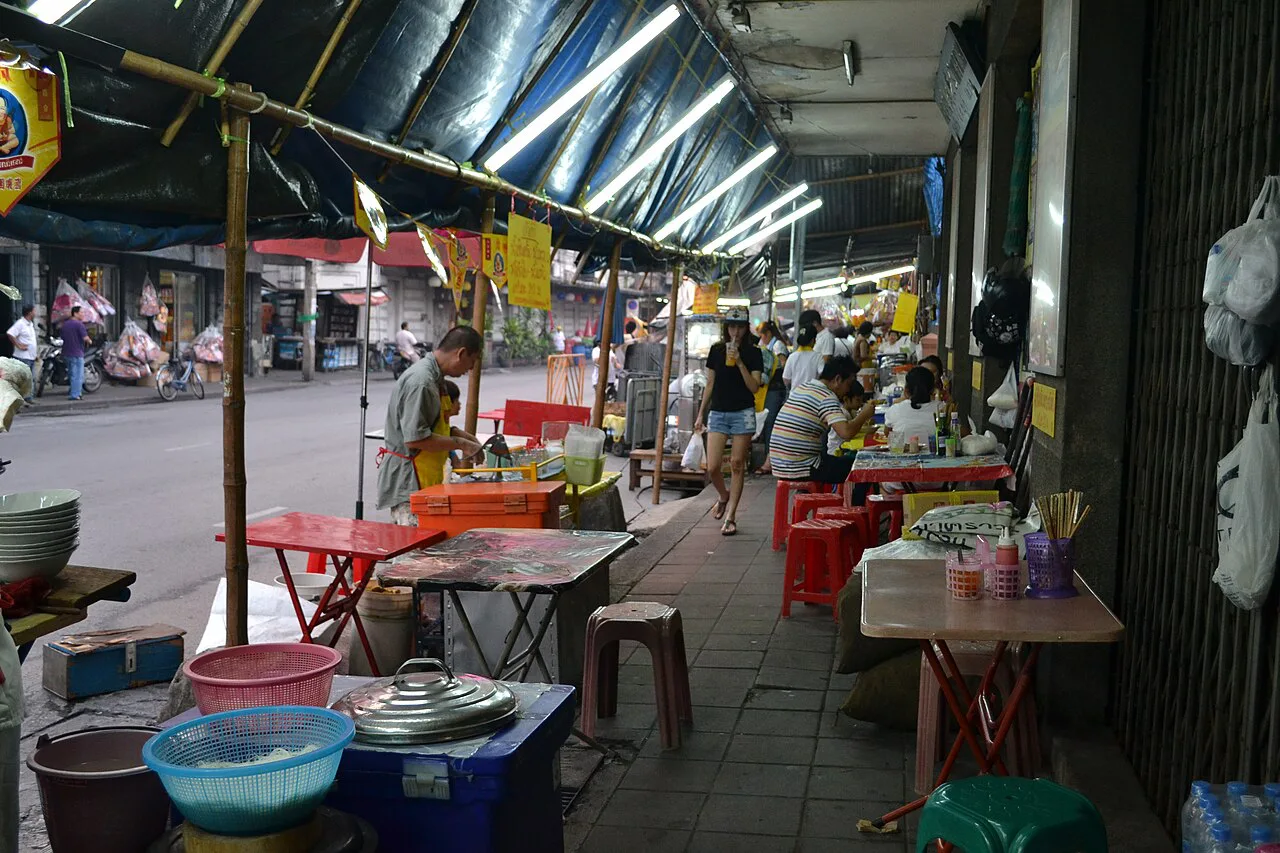
Featured image: Takeaway, CC BY-SA 3.0, via Wikimedia Commons.
7 Thai Food Etiquette Rules for Any Table
Etiquette shifts between regions, and tourist-oriented venues are relaxed. Treat these rules as courtesy rather than law. Background on Thai customs is available from Thailand's Ministry of Culture.
1. Spoon in the right hand, fork as the pusher
Thai food arrives cut into small pieces, so you do not need a knife. Hold the spoon in your right hand and the fork in your left. Use the fork only to push food onto the spoon, then bring the spoon to your mouth.
Rice goes on the spoon, not the fork. A fork lifted to your mouth looks awkward rather than offensive. For a step-by-step demonstration, see our guide on How to Eat Thai Food: Utensils, Sharing & Etiquette.
2. Share every dish and spoon it over your own rice
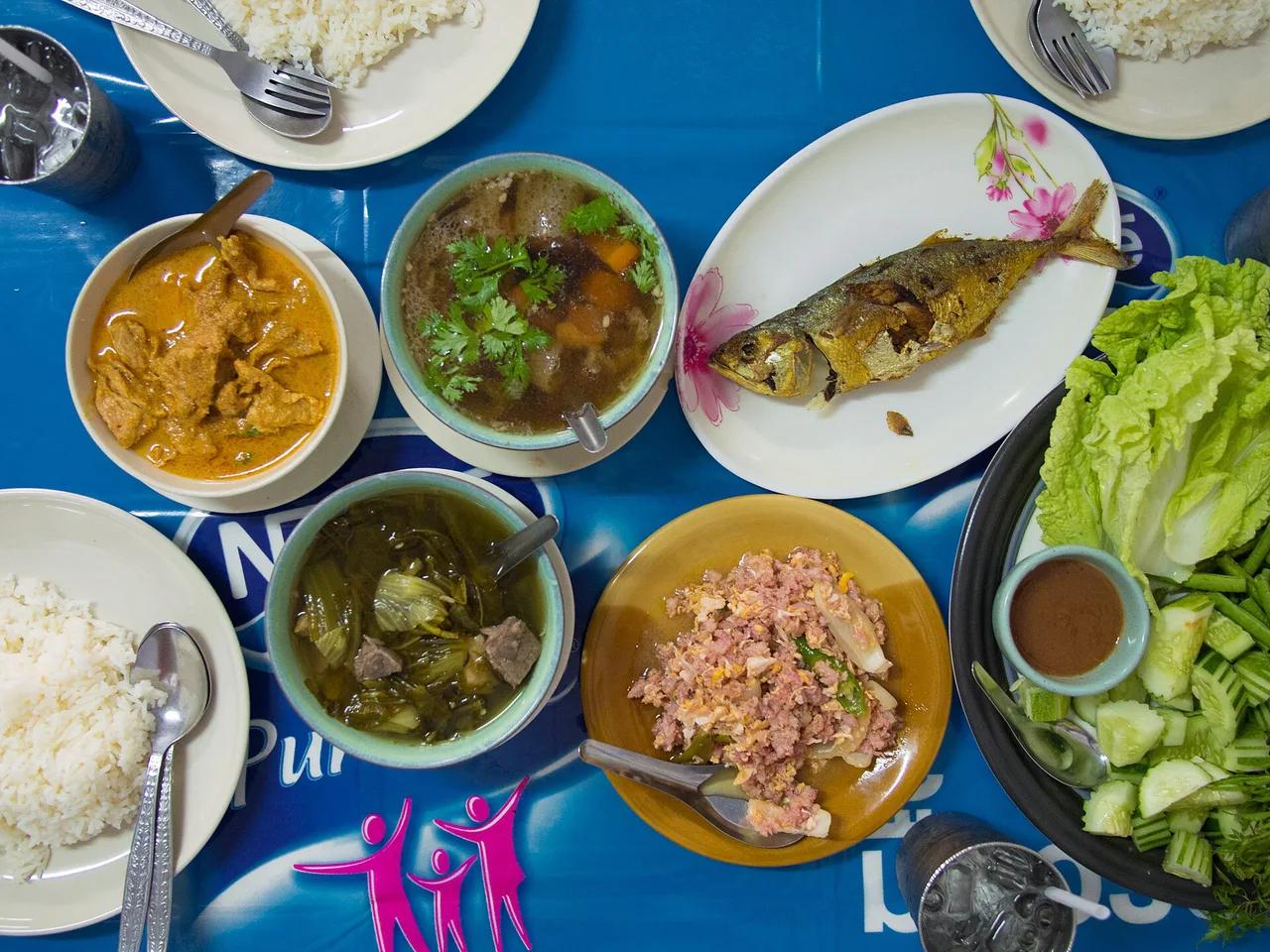
Each person starts with a plate of rice, and the dishes sit in the middle of the table. A typical spread has a soup, at least one spicy dish, fresh vegetables and a few sauces. Spoon a little of one dish onto your rice and eat it bit by bit.
Many dishes come with a serving spoon. Use it rather than your own eating spoon. Take small portions first and go back for more, since a heaped plate can look greedy. Try a little of everything instead of finishing one dish alone.
3. Let elders and hosts start first
At a Thai table, older people or the host pick from the shared dishes first. As a guest, wait for the invitation to eat. With friends, watch who reaches first and follow.
Younger diners often set the table for elders. Invited to a home? Take off your shoes at the door and consider bringing a small gift of food or drink. It is welcome but not required. Street stalls and food courts are looser, because there is no host to wait for.
4. Ask for the condiments, taste first, then adjust
Thai tables often carry a condiment set called a puang prik. It typically holds items such as sugar, chili flakes, vinegar and nam pla prik, which is fish sauce with chopped chilies. Taste your dish before adding anything, since the cook has already balanced it.
If no set is on your table, ask for one. Our guide to Thai table condiments explains each jar.
5. Chopsticks for noodle soups, hands for sticky rice
Chopsticks are not the main utensil in Thailand. Use them for noodle soups, along with a short flat spoon to carry broth to your mouth. Sticky rice is eaten by hand. Pinch off a small ball and use it to scoop up other dishes.
Keep the noise down with noodles and soup. Loud slurping is not a compliment here. Skip chopsticks for rice plates and curries, where spoon and fork are standard.
6. Keep utensils, noise and mouth manners in check
Do not point with your spoon or fork, and do not clink them against plates or bowls. Hitting tableware is considered rude, whatever the utensil. Chew quietly and avoid talking with food in your mouth.
Cover your mouth with your other hand when you use a toothpick. Keep your feet off chairs and tables, and steer clear of gross topics while people eat. Visitors get a lot of leeway, so a slip here is rarely a crisis.
7. Ask politely about spice, allergies and declining a dish
Tell the server how hot you want a dish. Mai phet, sometimes spelled mai pet, means not spicy. Our list of Thai Food Phrases: What to Say When Ordering (With Thai Script) adds the bill and thanks. For allergies or vegetarian requests, name the ingredient plainly and ask the server to check with the kitchen.
If you pass on a dish, a smile and a thank-you keep things easy. Skip the spiciest shared dishes if you are unsure, and build heat later from the condiment set.
Thai Food Etiquette by Setting
Settings change which rules matter. Tourist-oriented restaurants may serve individual plates and milder spice, so read that as a clue about the venue, not a fault. To scout restaurants before you travel, browse the MICHELIN Guide Thailand. A khan tok dinner is a northern tradition: small dishes arrive on a tray, with sticky rice in small baskets, for honored guests and special occasions.
| Setting | Rules that matter | Risk if wrong |
|---|---|---|
| Sit-down restaurant | Share dishes, use serving spoons, ask for the condiment set | Low |
| Street stall or night market | Order simply, taste before seasoning, keep noise down | Low |
| Family home | Shoes off, wait for the host, bring a small gift if you like | Medium |
| Northern khan tok dinner | Eat sticky rice by hand, follow your host's lead | Low to medium |
Behaviors to Avoid: A Severity Ladder
Not every slip weighs the same. In our editorial assessment, these tiers separate harmless habits from the few that genuinely offend.
| Tier | Behavior |
|---|---|
| Harmless | Pushing rice with a fork, asking for the condiment set, taking a second helping |
| Awkward | Overfilling your plate, talking with a full mouth, loud chewing or slurping, an uncovered toothpick |
| Genuinely rude | Hitting tableware, pointing with utensils, putting feet on a chair or table, eating before elders at a host's table |
Ordering, Paying and Tipping
For a group, order a mix: a soup, a spicy dish, vegetables and sauces, with rice for each person. Add dishes as more people join. Among friends, one person usually asks for the bill and the group settles up afterward. Tipping norms are covered in our piece on tipping in Thai restaurants. For budgeting, see what food costs in Thailand.
How a Thai Meal Works: Rice, Shared Dishes and Pacing
Most of the rules above make more sense once you see how the meal is built. A Thai meal is not a sequence of appetizer, main and dessert. Everything arrives for the table to share, and each person starts with a plate of rice as the base.
A typical family-style spread has a bowl of soup, at least one spicy dish, a plate of fresh vegetables and a few sauces in small bowls. Common sauces include nam prik kapi (a shrimp-paste chili dip), nam pla prik (fish sauce with chopped chilies and a touch of lime juice) and nam prik tadaeng. Each diner adds flavor to taste, which is why the condiment set matters.
Building a balanced order
- Order several dishes with different character rather than several versions of the same one. Thai diners do not eat one dish on its own.
- Ask for rice for each person, since the dishes are meant to be eaten over it.
- Look for a serving spoon in each dish. Among family, serving spoons are often absent and people reach over with their own spoon, but friends and mixed groups usually use them. In a group of visitors, use the serving spoon if there is one and ask for one if there is not.
Eating pace and the spoon
Spoon a small amount of one dish onto your rice, eat it, then take something else. There is no need to finish a dish before moving on. The spoon does most of the work, from soup to fried rice.
At a host's table, the same sharing logic applies with a seniority layer. Elders, or people in a higher position, take from the side dishes first, and the youngest person at the table is usually the one who sets it. Follow that lead and you will fit in without any special effort.
Quick Checklist Before You Sit Down
Run through these before your first meal.
- Spoon in your right hand, fork in your left as a pusher.
- Rice on your plate, shared dishes in the middle.
- Wait for elders or the host to start.
- Taste first, then ask for the condiments.
- Chopsticks only for noodle soups; sticky rice by hand.
- No pointing, no clinking, feet off the furniture.
Explore More Guides
Keep planning your trip with these guides.
Guides
Thai food notes for your next trip
Optional updates to our food guides.
You might also like


Continue reading
More guides you'll find useful