Jackfruit in Thailand: Season, Where to Buy & How to Eat It
Meet khanun, Thailand's giant jackfruit: when it's in season, where to find it, what to pay, how to pick ripe pods, and how to eat it without the mess.
On this page
Last updated November 2026. Anyone searching for jackfruit Thailand style wants khanun (ขนุน), a giant, bumpy fruit whose yellow pods taste lightly sweet. Season is the end of the rainy season, so mid-November is a good time to look. Vendors at markets and food stalls usually sell it already pulled from the rind, and this guide covers where to find it, what to pay and how to eat it.
Featured image: Vyacheslav Argenberg, CC BY 4.0, via Wikimedia Commons.
What Thai jackfruit (khanun) is and how it tastes
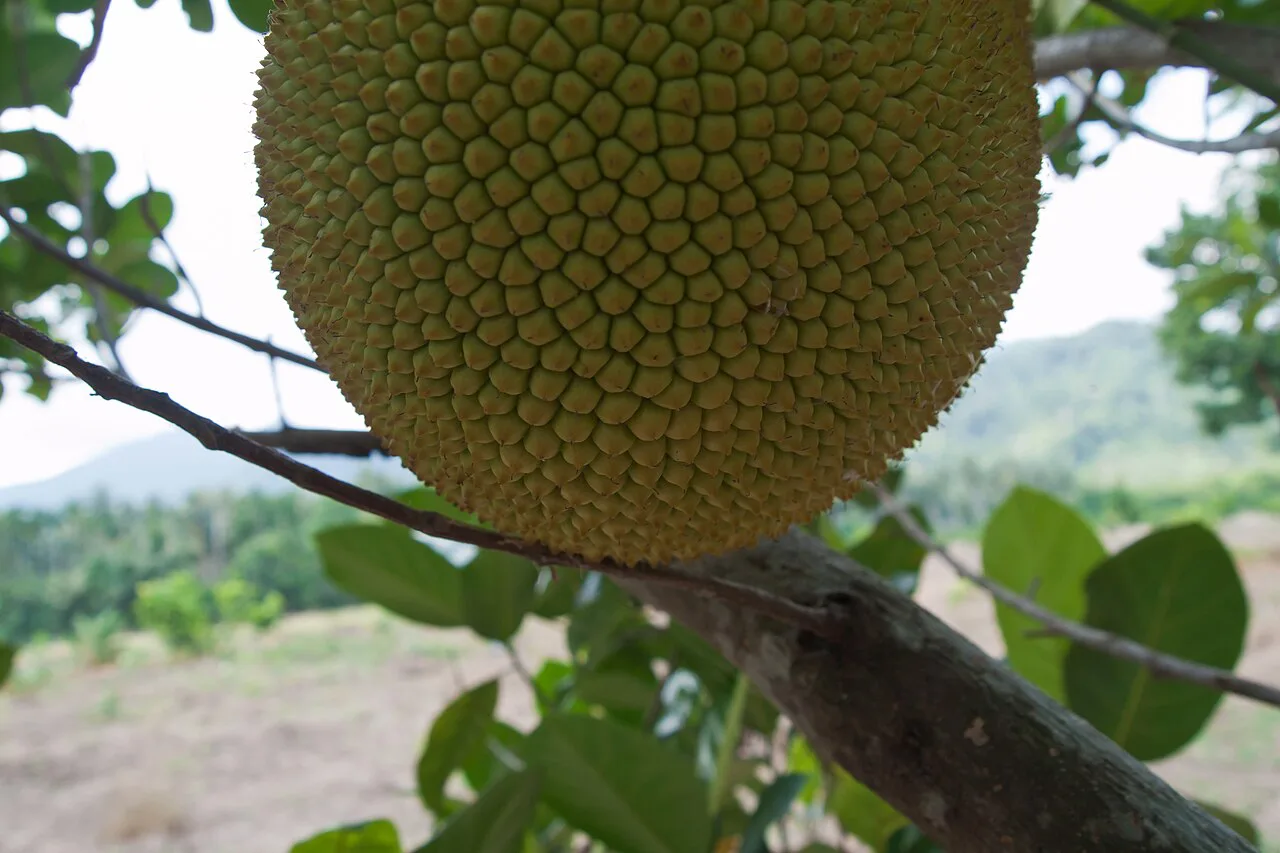
Khanun is the Thai name for jackfruit, the largest tree-borne fruit in the world. Whole fruits can reach nearly a meter in length. They can weigh tens of kilograms. Fruit grows straight out of the trunk rather than from the tips of branches. Skin is thick and light green, sometimes turning yellow when ripe, and it carries stubby pyramid-shaped bumps.
One fruit can hold as many as 500 pods, which is why buying stall-pulled pods beats doing it yourself.
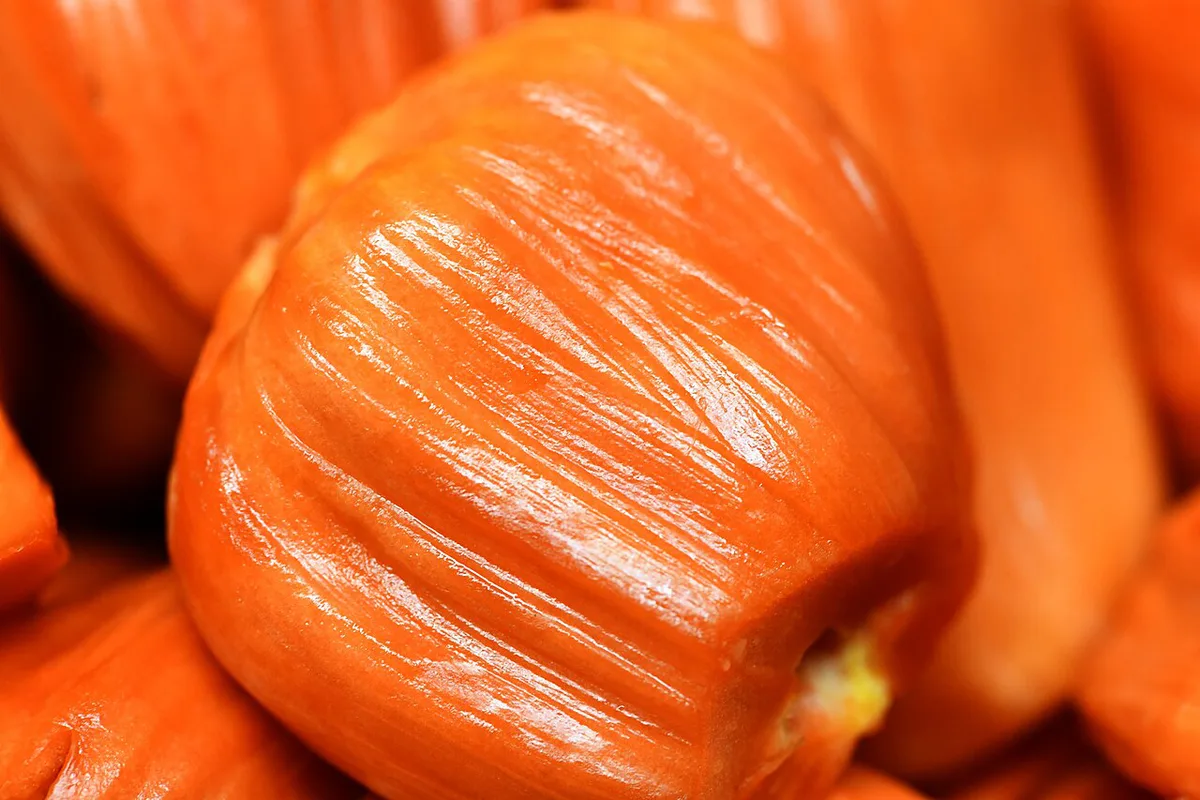
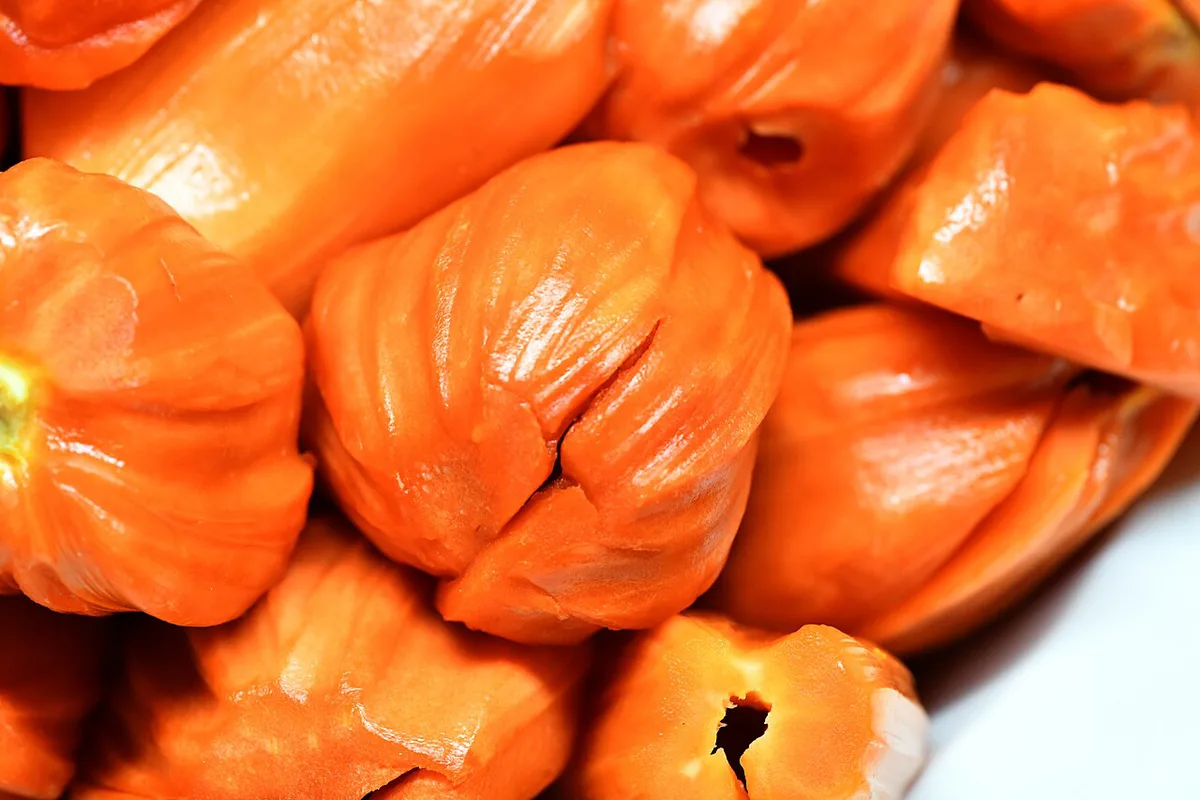
Inside, a woody core holds as many as 500 pods. Each pod wraps one large seed in a juicy, fibrous membrane. Ripe pods are the color of a banana skin and smell like banana mixed with pineapple. Taste is lightly sweet, and the texture is unlike most other fruit. Two broad types exist: one soft, juicy and sweet, the other harder and crisp. Labels may name a variety such as Thong Prasert, so ask whether the pods are soft or crisp. For the wider picture of what else is on the carts, browse our guide to Thai fruit.
When jackfruit is in season in Thailand
Peak supply falls around the end of the rainy season, in October and November. That puts the best window right now. Jackfruit does not appear on the street all year, so you have to keep a sharp eye out for it.
Fruits take roughly three to eight months to mature after flowering. Supply from backyard trees can be patchy, and a stall that had pods last week may be sold out today. For month-by-month planning across other fruit, see our Thai fruit calendar. Plan on a stall visit in the morning, when pods are freshest and vendors still have a full fruit to cut.
Where to find and buy jackfruit in Thailand
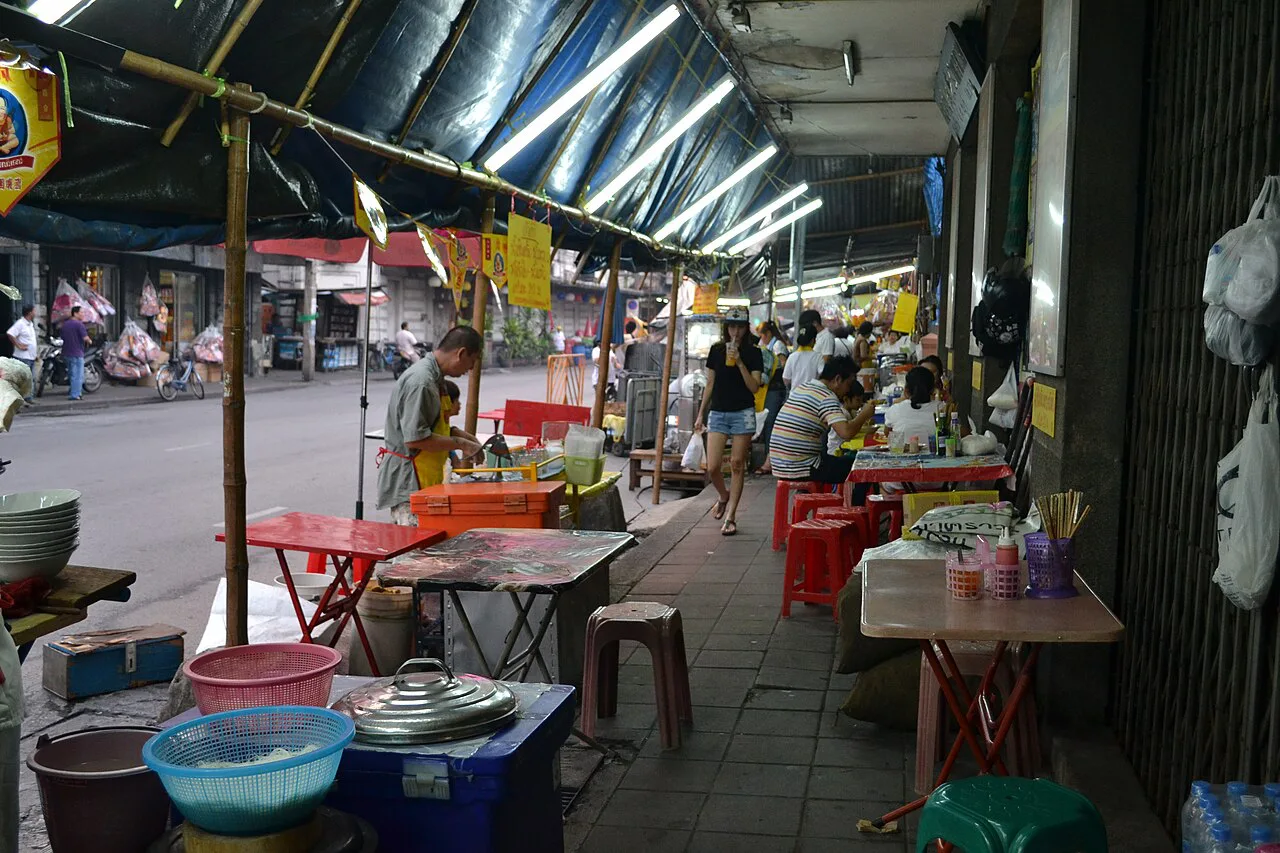
Regular fruit carts carry jackfruit when it is most plentiful. You are just as likely to find it at other food stalls. Owners there often have a link to someone with a tree and sell what the tree gives.
Doi Suthep's 300-step stairway is a gamble, because supply from backyard trees can be patchy even in peak season.

Spotting a stall is easy. A split jackfruit takes up most of a table top. Whole fruits also sit for sale in Bangkok's fruit markets, though a whole fruit is far too big for a traveler to carry.
One easy place to see a tree is Wat Phra That Doi Suthep, about 16 kilometers west of Chiang Mai and more than one kilometer above it. Climb the 300-step stairway from the road. A jackfruit tree grows in the courtyard outside the compound of the gilded chedi, the symbol of Chiang Mai. With luck you will see a fruit or two on the trunk. Treat it as a bonus on the way up, not a guaranteed sight.
- Fruit carts: pods in bags when the season is strong.
- Other food stalls: often the better bet outside peak weeks.
- Bangkok fruit markets: whole fruits for sale, best for looking.
- Doi Suthep courtyard: a tree to spot, not a place to buy.
How to choose jackfruit and what to pay
Buy pods already extracted at a stall. A whole fruit means hours of sticky work and a lot of waste. Cut fruit also spoils quickly, within a few days once opened, so eat it the same day.
Look for pods the color of a ripe banana skin with a clear banana-and-pineapple smell. Whole fruits are ripe when green skin turns toward yellow or greenish brown, the smell is strong and a tap sounds hollow. Pale, hard, odorless pods belong to unripe fruit, which cooks as a savory ingredient and tastes nothing like dessert.
Prices are low. A small bag of pods is a cheap street snack, and vendors usually sell pieces nearly as fast as they extract them. Ask for a price before you point, since stalls without signs set their own rates. Compare the formats below.
| Format | Price level | Effort | Freshness | Best for |
|---|---|---|---|---|
| Whole fruit | Cheapest per kg, big total | Very high, sticky | Highest if cut yourself | Looking, photos, big groups |
| Stall-cut pods | Cheap snack | None | High, buy same day | Almost every traveler |
| Dried or frozen | Higher per bite | None | Long shelf life, firmer taste | Carrying home, hotel snacks |
| Jackfruit in a dessert or dish | Varies by stall | None | Cooked, sweetened | Trying the flavor gently |
How to eat jackfruit without the mess
Sap is the problem. The bark and leaves ooze a milky, sticky latex, and the fruit leaves a residue on hands and knives. Vendors coat hands and blades with oil to stop it sticking. That is why buying bagged pods is the clean option.
Eat pods with fingers and a napkin. Pull the flesh off the seed with your teeth, then discard the seed. Fibrous strips sit between pods and are not worth chewing. Seeds are edible, but they are normally boiled or roasted first.
A handful of pods is plenty for one person. Fibrous flesh fills you up faster than softer fruit does. Carry wet wipes and keep the bag away from clothing and phone screens.
Jackfruit vs durian and other Thai fruit
Newcomers sometimes mistake jackfruit for durian. Look at the bumps. Jackfruit has stubby, flattened ones, while durian spikes are sharp. Jackfruit smells of banana and pineapple, and a ripe one gives off a milder odor than durian. Our durian buying guide covers the stronger smell and where to eat it.
Texture sets jackfruit apart from custard-type fruit. Pods are chewy and fibrous rather than creamy. If you like soft, sweet flesh, try sugar apples at the same cart.
For a lighter finish after jackfruit, ask whether the stall also has peeled rambutan. Another option is purple mangosteen, which has a clean, juicy taste.
Beyond fresh fruit: dried, frozen and cooked jackfruit
Jackfruit is also sold canned, frozen and dried. Frozen and dried packs travel better than fresh pods and need no sap handling. Dried pieces taste firmer and more concentrated.
Unripe jackfruit works as a savory ingredient across South and Southeast Asia. Cooks simmer it in curries, sometimes with coconut milk. Ripe pulp goes into desserts and jams.
Thailand is a major grower. It produced about 0.392 million tonnes in 2024, third behind India and Bangladesh. That scale explains why you can often find processed jackfruit even when fresh pods are scarce.
Common mistakes to avoid with jackfruit
Most problems come from timing and format, not from the fruit itself. Run through this list before you buy.
- Buying a whole fruit. It is huge, messy and wasteful for one traveler.
- Handling sap bare-handed. Use a bag, napkins or oil.
- Expecting it year-round. Peak supply is October and November.
- Confusing it with durian. Blunt bumps and a milder smell point to jackfruit.
- Assuming every stall has it. Check food stalls as well as fruit carts.
- Leaving cut pods in a bag overnight. Flesh deteriorates within a few days.
Is jackfruit worth trying? A verdict by traveler type
Jackfruit rewards a short detour but is not a must-chase item. Match your effort to your trip.
- First-timer: yes, buy one small bag of pods and eat it the same day.
- Fruit enthusiast: yes, ask about sweet versus crisp types and compare it with other Thai fruit.
- Short-stay visitor: buy only if you spot a stall. A dried pack is a safe fallback.
- Family with children: yes, but keep wipes handy and skip whole fruits.
For trip-planning details, see Jackfruit.
Thai food notes for your next trip
Optional updates to our food guides.
You might also like


Continue reading
More guides you'll find useful