Mangosteen in Thailand: Season, How to Pick and Eat It
Mangosteen is Thailand's "queen of fruits". Learn when it's in season, how to pick a ripe one, how to open it, and what to try instead.
On this page
Last updated November 2026. Mangosteen is a sweet-tart tropical fruit with a thick purple rind and soft white segments inside, and Thailand is one of the best places to eat it fresh. Use this guide to pick a ripe one, open it cleanly and know what to try when it is out of season. It is one spoke of our wider guide to 10 Thai Fruits to Try and When to Eat Them.
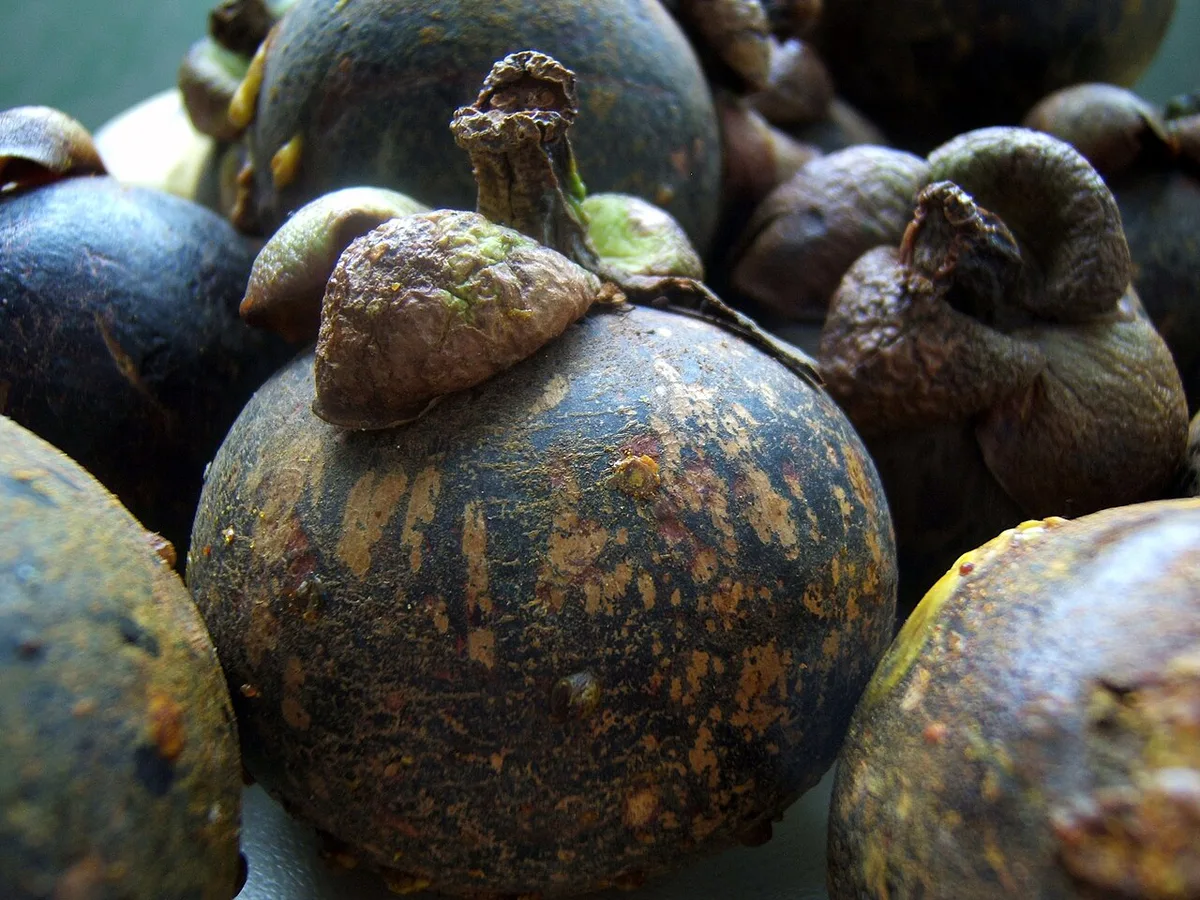
Featured image: PattayaPatrol, CC BY-SA 4.0, via Wikimedia Commons.
What mangosteen tastes like
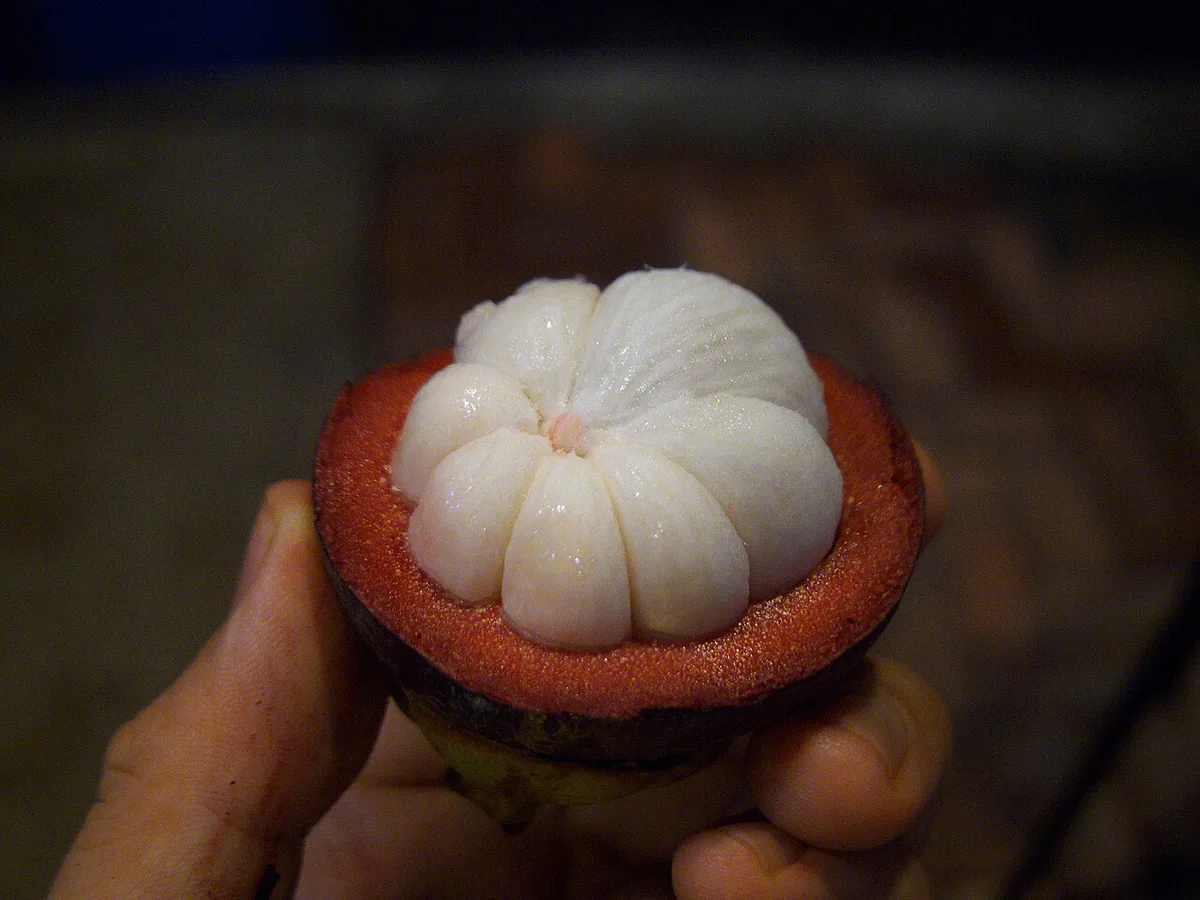
Mangosteen tastes sweet and tangy, with a soft, juicy, lychee-like texture. Inside the hard purple rind sit creamy white segments, and those are the only edible part. Many people call it the queen of fruits. Its flavor is milder than most tropical fruit, so it suits first-timers. Rind and seeds are not eaten. Thais pair it in conversation with durian, the so-called king, and our durian guide covers the other half of that pairing.
When is mangosteen in season in Thailand?
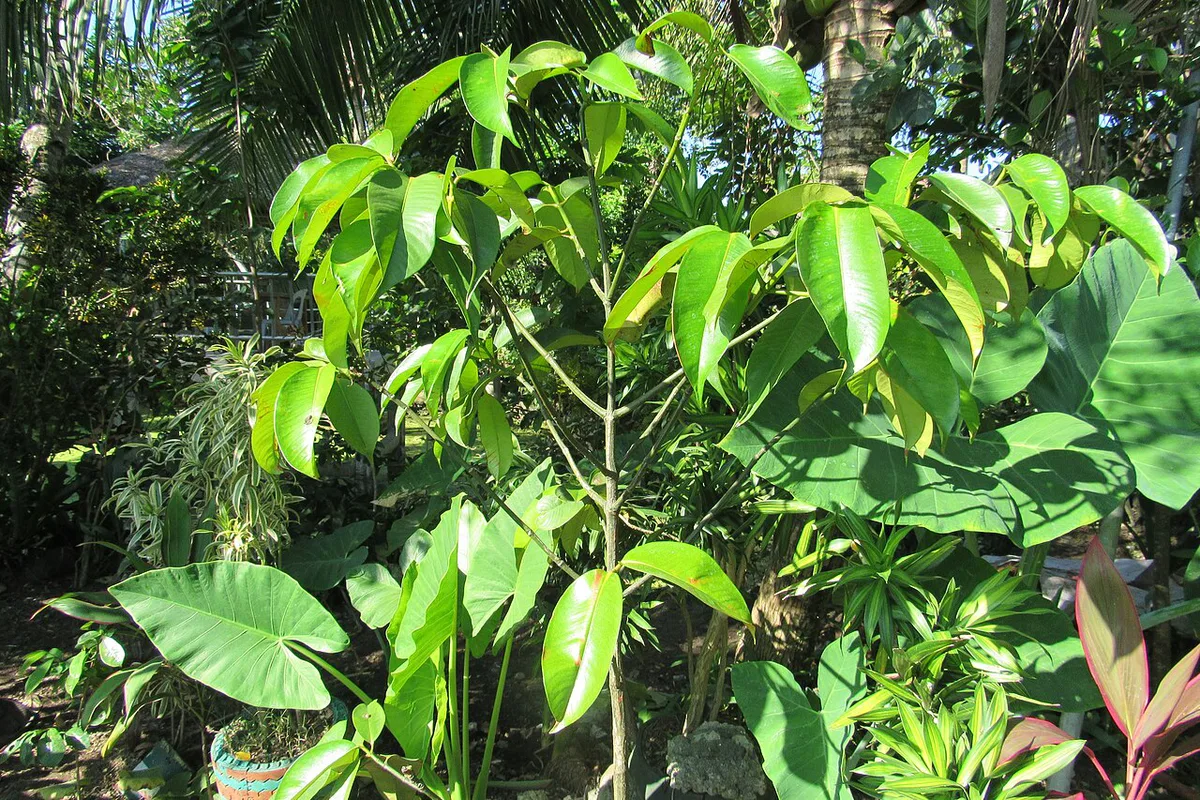
Mangosteen is a hot-weather fruit. Peak supply falls in the heat of the year, though stalls may carry some at other times. A tree needs over 100 days from flower to full ripeness, so harvests arrive in a concentrated wave. Chanthaburi and Rayong in the east are the best-known growing areas. Nakhon Si Thammarat in the south also grows it. Trees tend to fruit heavily one year and lightly the next, so supply and prices can shift between years. Exact month ranges vary by province and year. Our Thai fruit season calendar lays out what else is ripe alongside it, and the Department of Agriculture publishes current harvest information.
Check the season window against the over 100 days a tree needs from flower to full ripeness before you plan a market visit.
How to pick a ripe mangosteen
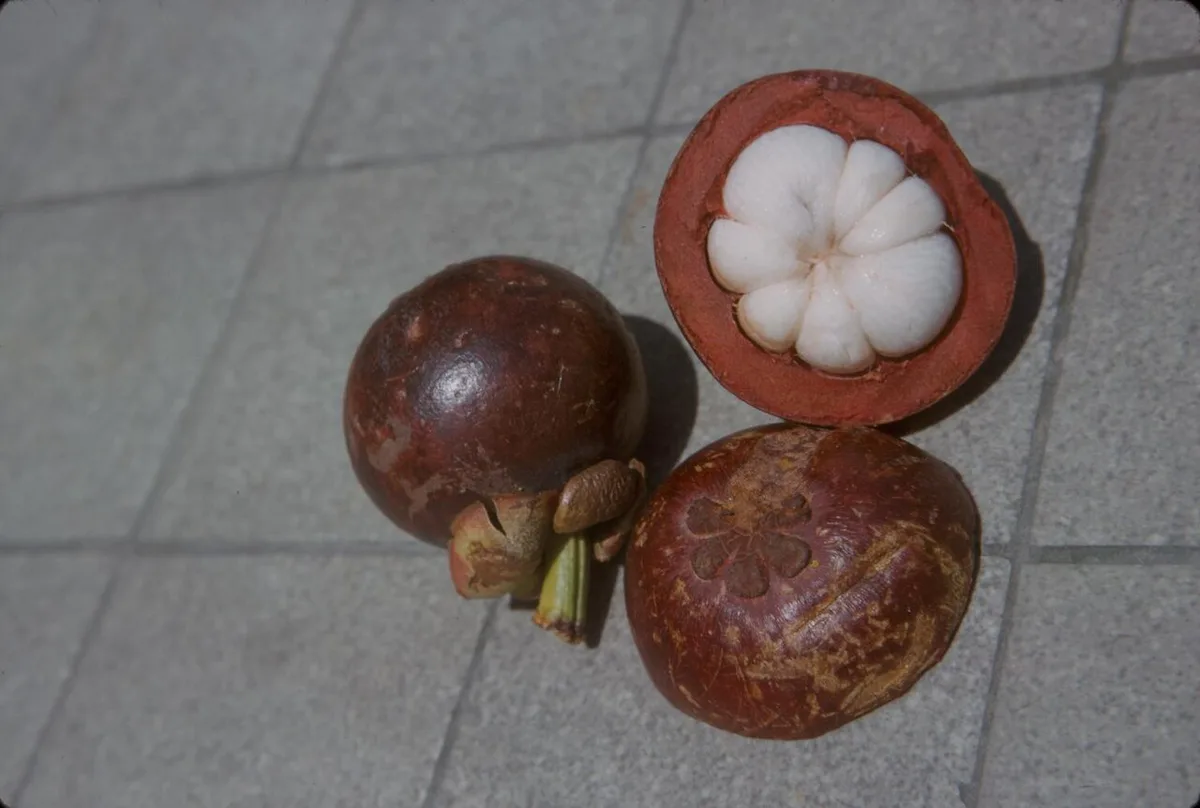
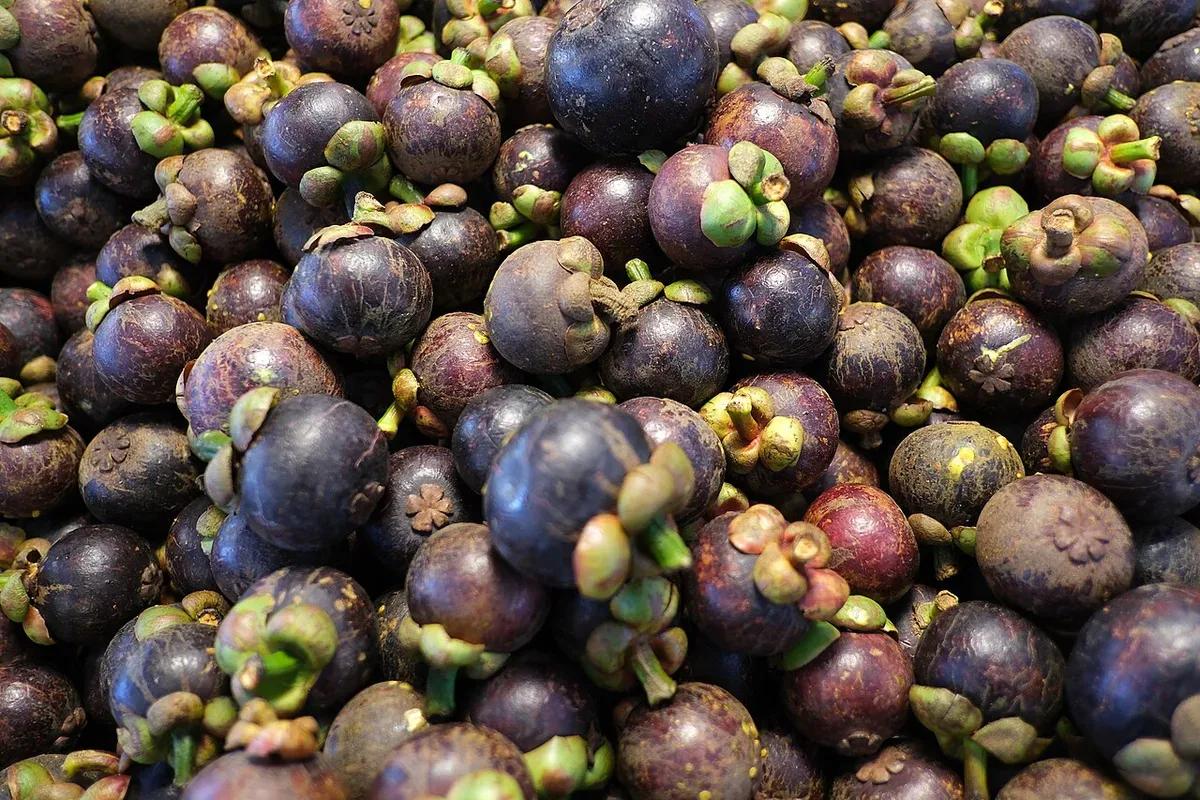
Choose fruit with a deep, even purple color that feels firm but yields slightly under your thumb. Check that the green cap of sepals is still attached. Flip the fruit over and count the raised petal-like marks on the base. That count matches the segments inside, usually between four and eight. More segments generally means more seed-free flesh. Brown patches on the rind are usually cosmetic, because insect scarring does not affect the fruit inside.
- Skip fruit with a hard, dry rind, which is hard to open and often past its best.
- Skip fruit that feels rock-solid or very light.
- Do not buy days ahead. Mangosteen keeps only a few days.
- Expect some segments to be yellow and resin-stained. Those taste bitter, so discard them.
How to open and eat mangosteen
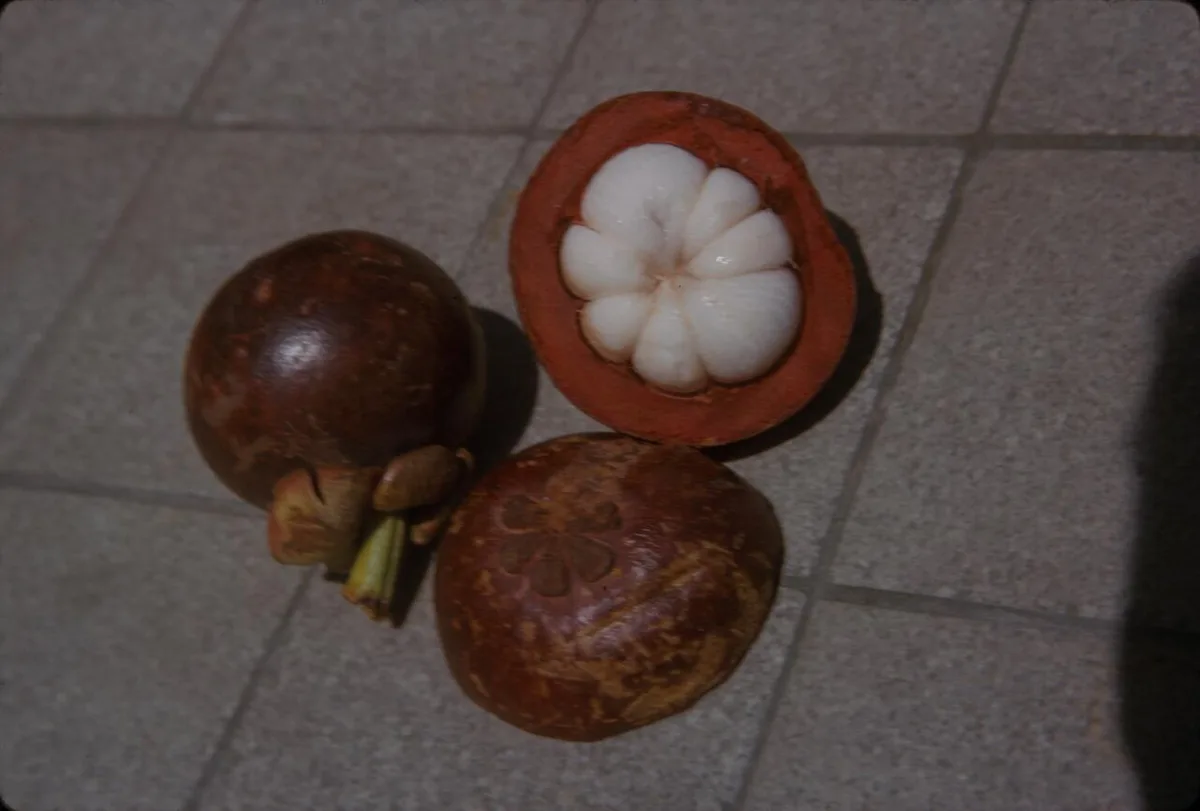
Hold the fruit in your palm and squeeze gently around the middle until the rind cracks. Pull the halves apart and lift out the white segments. A knife works too. Cut a shallow line about 1/4 inch deep around the equator, then twist the top half off. Eat the segments one at a time, straight from the rind. The larger segments may hold a seed, which you spit out. Purple rind juice can stain clothes, so keep napkins close and avoid white shirts. Vendors will often open fruit for you if you ask, though that depends on the stall.
- Squeeze the rind around the middle until it pops.
- Twist the halves apart.
- Lift out the white segments.
- Discard any yellow, bitter-looking pieces and the rind.
Where to buy mangosteen in Thailand
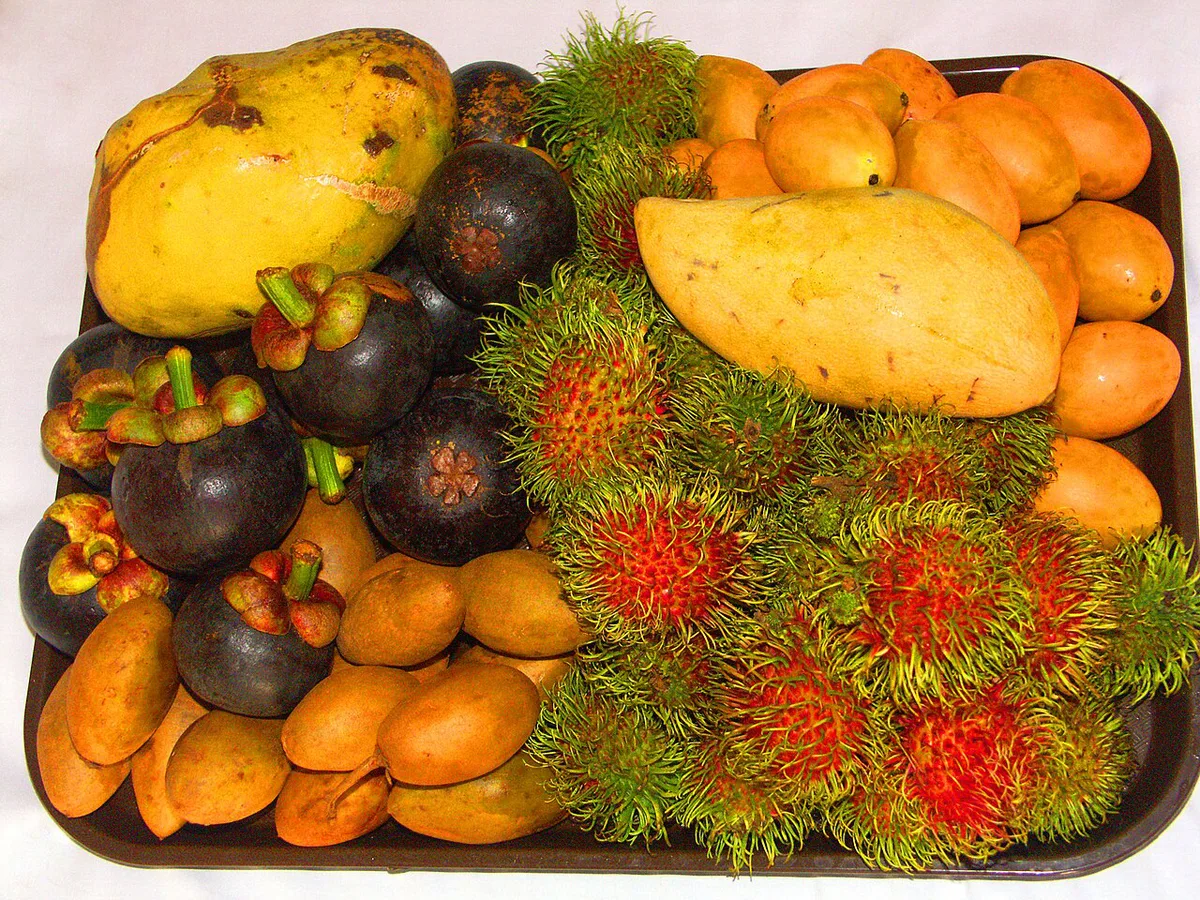
Fresh markets, roadside fruit stalls and supermarket fruit counters all sell mangosteen in season. Markets give you the best chance to handle the fruit before buying. Prices run higher than for everyday fruit such as bananas, and a stall usually sells by weight or in a bag. Ask the vendor to pick a ripe bag for the day. Store fruit in a hotel fridge if you have one, and eat it within a few days. Prices and hours change year to year, so ask at the stall before you load a bag.
Mangosteen vs other Thai fruits
Mangosteen sits among several small, easy-to-peel fruits sold at the same stalls. Use the table to decide what to order next to it.
| Fruit | Taste and texture | Ease of opening | Best for first-timers? |
|---|---|---|---|
| Mangosteen | Sweet-tart, soft white segments | Squeeze the rind until it pops | Yes, mild and easy |
| Rambutan | Sweet and juicy, hairy red skin | Split the skin by hand | Yes |
| Longan | Sweet, translucent flesh around a seed | Crack the thin brown shell | Yes |
| Langsat | Sweet and sour, juicy segments | Peel the thin skin | Good second choice |
| Salak | Tart and crisp, scaly brown skin | Peel the scales off | Adventurous |
| Santol | Sweet-sour with a soft, cotton-like texture | Peel the skin, spit out the seeds | Adventurous |
Can you take mangosteen home?
Rules on bringing fresh fruit across borders differ by country, and many airports restrict it. Check your home country's agriculture or customs authority before you pack any. Thailand's Department of Agriculture covers export rules for the fruit itself.
Ways to enjoy mangosteen beyond eating it fresh
Fresh is the best way to eat mangosteen. Surplus fruit goes into juice, cocktails and desserts, and some cooks add it to a curry or stir-fry. The rind is generally discarded, though some juice makers use it. If you cannot find fresh fruit out of season, try other stall favorites. Thai Mango Guide: Varieties, Season and How to Eat It is one good option, and pomelo is another.
For trip-planning details, see Mangosteen.
Frequently Asked Questions
Where does mangosteen grow best?
Mangosteen needs a hot, humid tropical climate. In Thailand, the main areas are the east, around Chanthaburi and Rayong, and the south, including Nakhon Si Thammarat.
How do you store mangosteen?
Keep whole fruit in the fridge with the cap attached. Eat it within a few days, because a drying rind gets harder to open.
Thai food notes for your next trip
Optional updates to our food guides.
You might also like


Continue reading
More guides you'll find useful