Durian in Thailand: Varieties, Prices & First-Timer Guide
Which Thai durian to try first, what it costs per kilo, when it's in season, and where durian is banned. Practical tips before you taste it.
On this page
Last updated November 2026. This durian Thailand guide starts with Monthong, a mild 3-4 kg variety, and covers prices, dishes and the places that ban the fruit. It sits inside our guide to Thai fruits.
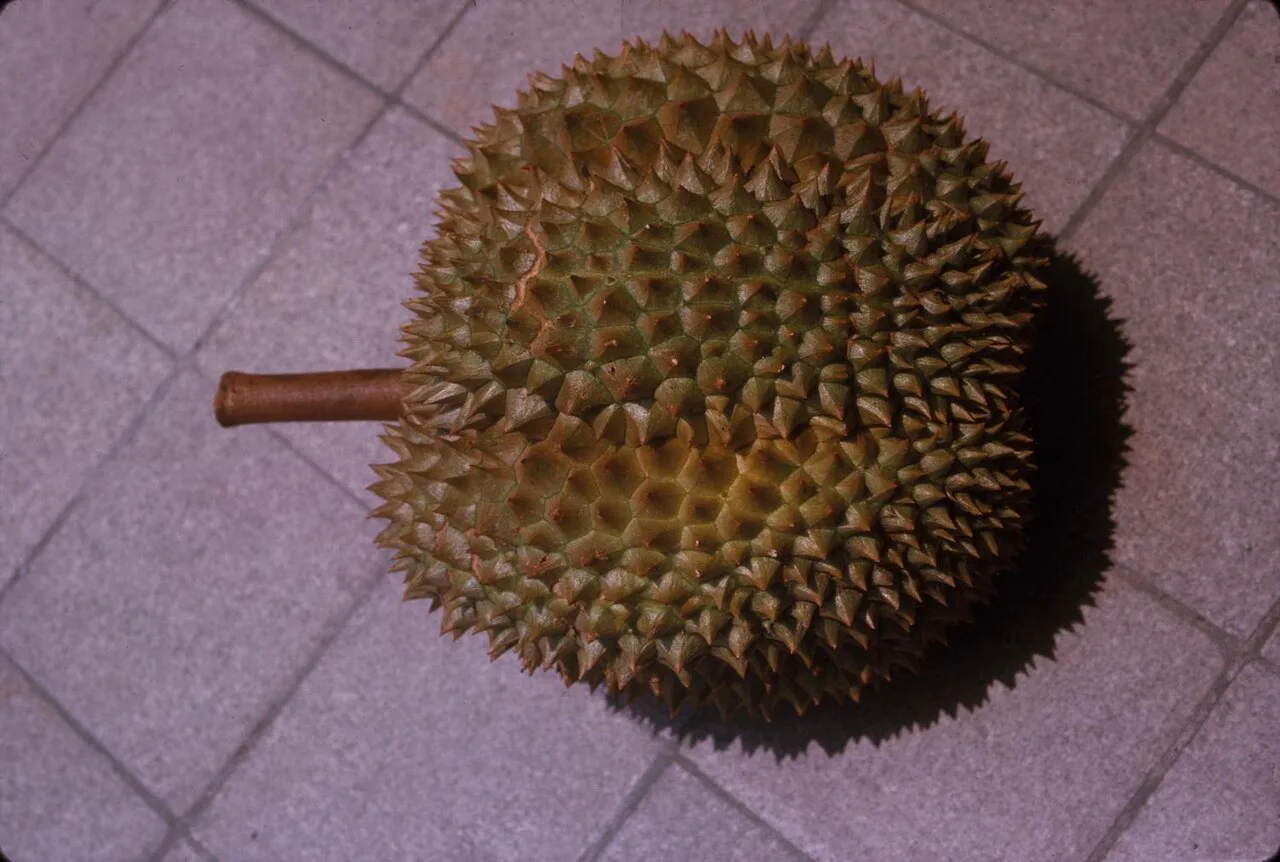
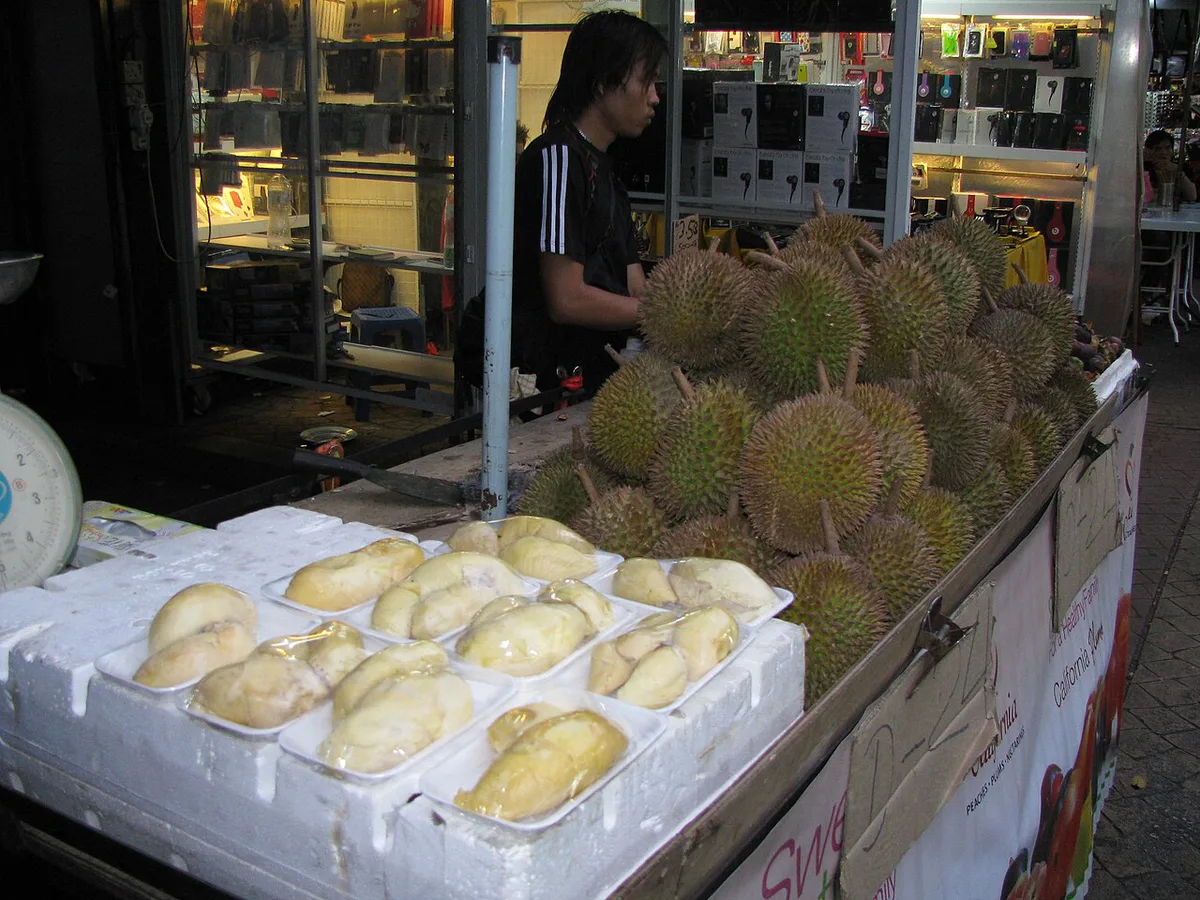
Featured image: Carlquist, Sherwin John, 1930-2021, CC BY 4.0, via Wikimedia Commons.
Quick answer: what to know before trying Thai durian
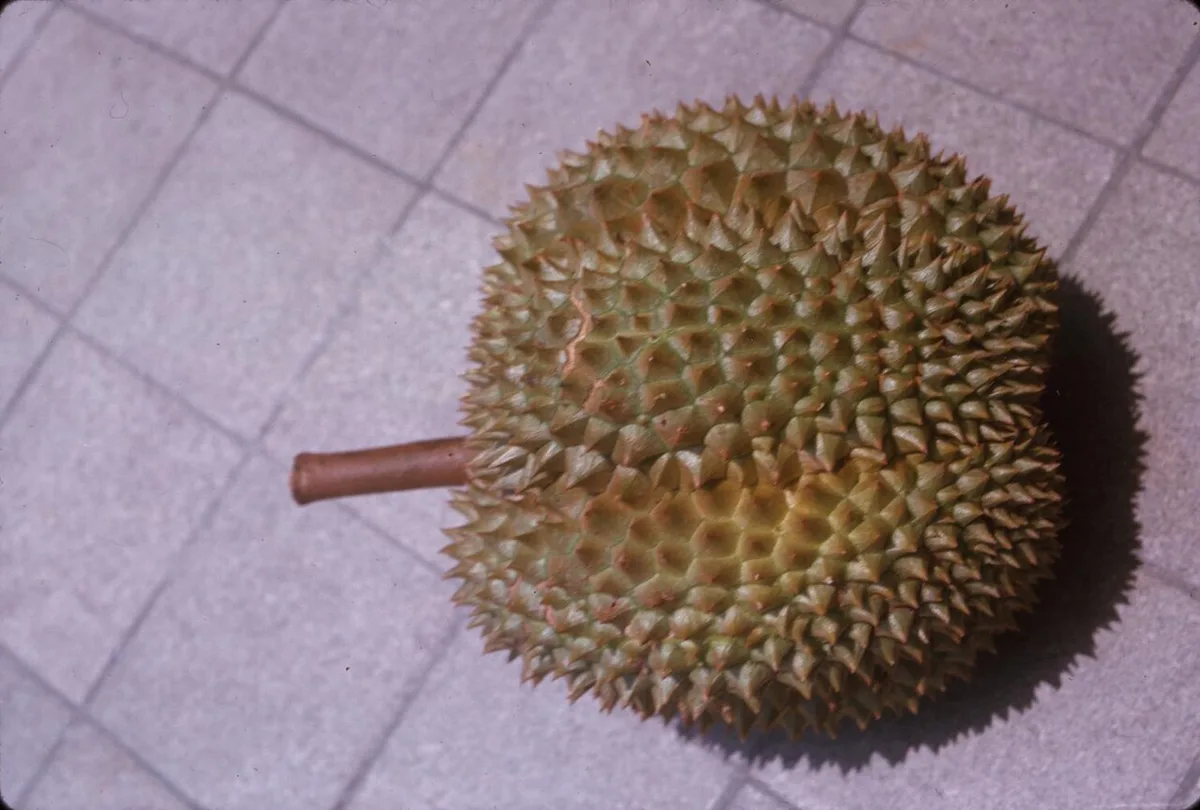
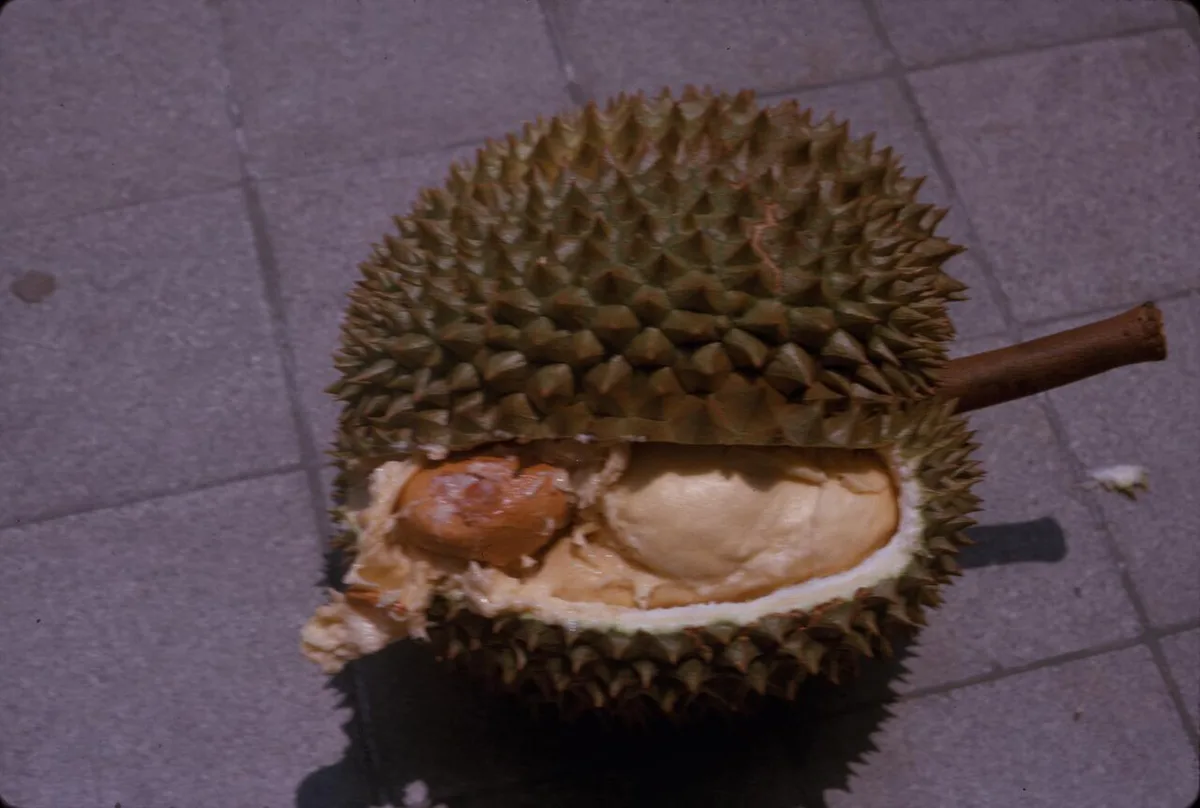
Start with Monthong. It weighs 3-4 kg (about 7-9 lb), gives off a soft scent and is not overly sweet. Ask the vendor to open the fruit so you can see the flesh before you pay. Chanee gets softer and creamier as it ripens, so texture changes a lot between a firm and a very ripe fruit. Keep durian out of hotel rooms, buses and airports, where signs often ban it.

Durian in Thailand: which variety should you try?
Thailand grows more than 200 varieties, and most visitors meet only a handful. Chanthaburi, Rayong, Trat and Nonthaburi are the growing regions to look for on labels. Kanyao comes from Nonthaburi, and Puangmanee is grown in Rayong. Prices below come from a February 2023 Thailand Foundation guide, so treat them as indicative. Two entries look odd: Kradoom is cheaper than Monthong despite being smaller, and Chanee's range overlaps Kradoom's. Grade and market swings explain part of that.
| Variety | Typical size | Flavour and texture | Smell | Indicative price |
|---|---|---|---|---|
| Monthong | 3-4 kg (7-9 lb) | Smooth yellow flesh, not overly sweet | Soft | ฿90-130 per kg |
| Kradoom | About 1 kg (2 lb) | Sweet, soft and sloppy when ripe | Not widely rated | ฿70-80 per kg |
| Chanee | 3-5 kg (7-11 lb) | Creamy and almost syrupy | Strong | ฿65-100 per kg |
| Kanyao | Large, long stem | Umami, golden flesh | Fragrant | ฿5,000-15,000 per fruit |
| Puangmanee | 1.5-2.5 kg (3-5 lb) | Sweet, dark yellow flesh | Light | ฿150-200 per kg |
- Mild first: Monthong, for people who dislike very sweet fruit.
- Sweet and soft: Kradoom or Puangmanee.
- Creamy and intense: Chanee, which is also used for desserts.
- Cannot handle the smell: skip the fresh fruit and try chips or preserve.

When is durian season in Thailand?
Season shifts by region and by year, so no single date range fits every market. Our Thai fruit season guide shows how durian fits against other fruits. At the stall, ask which province the current fruit comes from and match it to the regions above.
How much does durian cost?
Per-kilo prices are quoted on the whole fruit, and much of that weight is husk and seeds. A 3-4 kg Monthong at ฿90-130 per kg works out to roughly ฿270-520. A 1 kg Kradoom lands near ฿70-80. These 2023 figures move with the market, so compare two stalls before buying. A higher price does not guarantee better taste.
Kanyao's ฿5,000-15,000 per fruit price means it cannot be judged against Monthong's per-kilo rate, so compare whole-fruit totals instead.
| Variety | Rough whole-fruit cost |
|---|---|
| Monthong | ฿270-520 |
| Kradoom | ฿70-80 |
| Chanee | ฿195-500 |
| Puangmanee | ฿225-500 |
| Kanyao | ฿5,000-15,000 |
Where to eat and buy durian
Pick the venue by how much commitment you want. A 1 kg Kradoom suits one or two people, while a 3-5 kg Chanee needs a group. Boxed pre-cut fruit costs more per bite but lets you try a little. Whole fruit is cheaper per kilo and works better when you can share.
Since Monthong weighs 3-4 kg, a 1 kg Kradoom is the lighter buy when a single stall visit is all you plan.
- Market stalls: the vendor will open the fruit and show you the flesh. Best for first-timers.
- Roadside vendors: good for whole fruit when you have a group and a place to eat it outdoors.
- Orchards and orchard tours: you learn the variety and the province directly.
- Supermarkets: pre-cut boxes let you taste a small amount, but ask about ripeness.
Beyond fresh fruit: durian dishes for the hesitant
Thai cooks turn durian into several dishes that mute the smell. Durian sticky rice is the easy entry point, served with durian broth over sweet rice. Think of it as the cousin of Thai Mango Guide: Varieties, Season and How to Eat It and sticky rice. Check mango season in Thailand if you want both desserts side by side. If smell is the problem, try rambutan or longan instead. Jackfruit is another milder option.
- Durian in syrup: unripe durian cooked in sugar. The pungent odor fades, leaving a sweet, nutty taste.
- Fried durian chips: salty and nutty, and easy to eat like potato chips.
- Durian preserve: slow-cooked with sugar, soft and chewy. Monthong is mostly used.
- Durian sticky rice: the best match for readers who already like dessert rice.
Smell, rules and etiquette
Signs ban durian on public transport, buses, libraries, airports, hotels and other shared indoor spaces. The smell can linger long after the flesh is gone. Eat at the stall or outdoors. Ask your hotel or airline about their policy before carrying fruit anywhere. Avoid these common mistakes:
- Taking durian into hotel rooms or onto transport.
- Mixing it with alcohol.
- Buying unripe or pre-ripened fruit without asking the vendor.
- Assuming a higher price means better taste.
- Repeating a precise variety count: sources disagree, so say more than 200.
Health and common beliefs
Thai tradition says eating durian with alcohol is a bad idea, and the belief is widely repeated. Durian is also high in sugar and carbohydrates. People with diabetes, heart or liver conditions, or high blood pressure are advised to be careful. Another belief calls durian "heaty" and mangosteen "cooling", so the two are often eaten together. Treat this as folk tradition, not medical advice.
Frequently Asked Questions
What does durian taste like?
Thai durian is described as sweet with a hint of nuttiness. The texture is creamy, somewhere between soft and firm. Some varieties taste almost syrupy, and others lean umami.
Why do I feel sick after eating durian?
Durian is high in sugar and carbohydrates, so a large portion can sit heavily. Thai belief also warns against eating it with alcohol. If symptoms persist, speak to a doctor.
Thai food notes for your next trip
Optional updates to our food guides.
You might also like


Continue reading
More guides you'll find useful