Mango Sticky Rice in Thailand: When and How to Order
What mango sticky rice is, how to order it in Thailand, when mangoes are in season, how to spot a good plate, and how to make it at home.
On this page
Last updated November 2026. Mango sticky rice (khao niao mamuang) is steamed glutinous rice soaked in sweet coconut milk, served with ripe sliced mango and a salty-sweet coconut cream. We wrote this traveler's guide to cover how to order it, when mangoes peak, and how to judge a plate. For neighboring sweets, see our wider Thai dessert roundup.
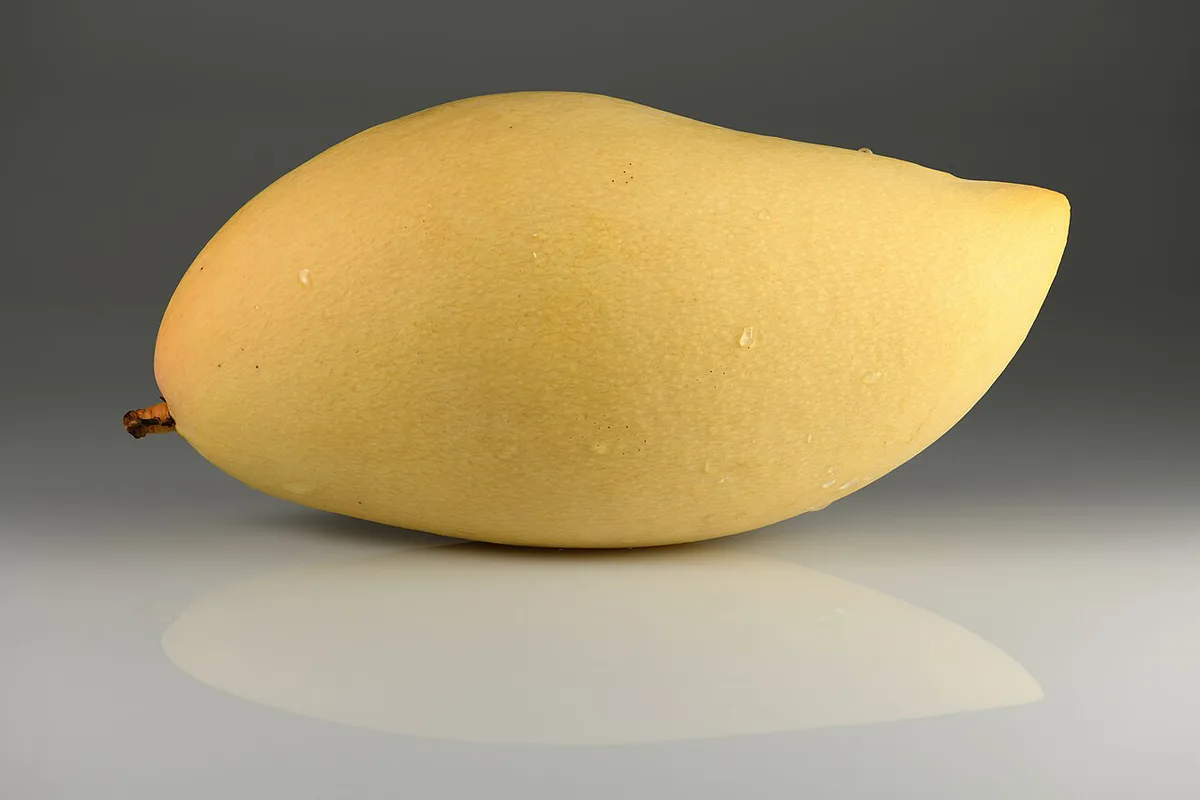
Featured image: deror_avi, CC BY-SA 3.0, via Wikimedia Commons.
What Is Mango Sticky Rice?
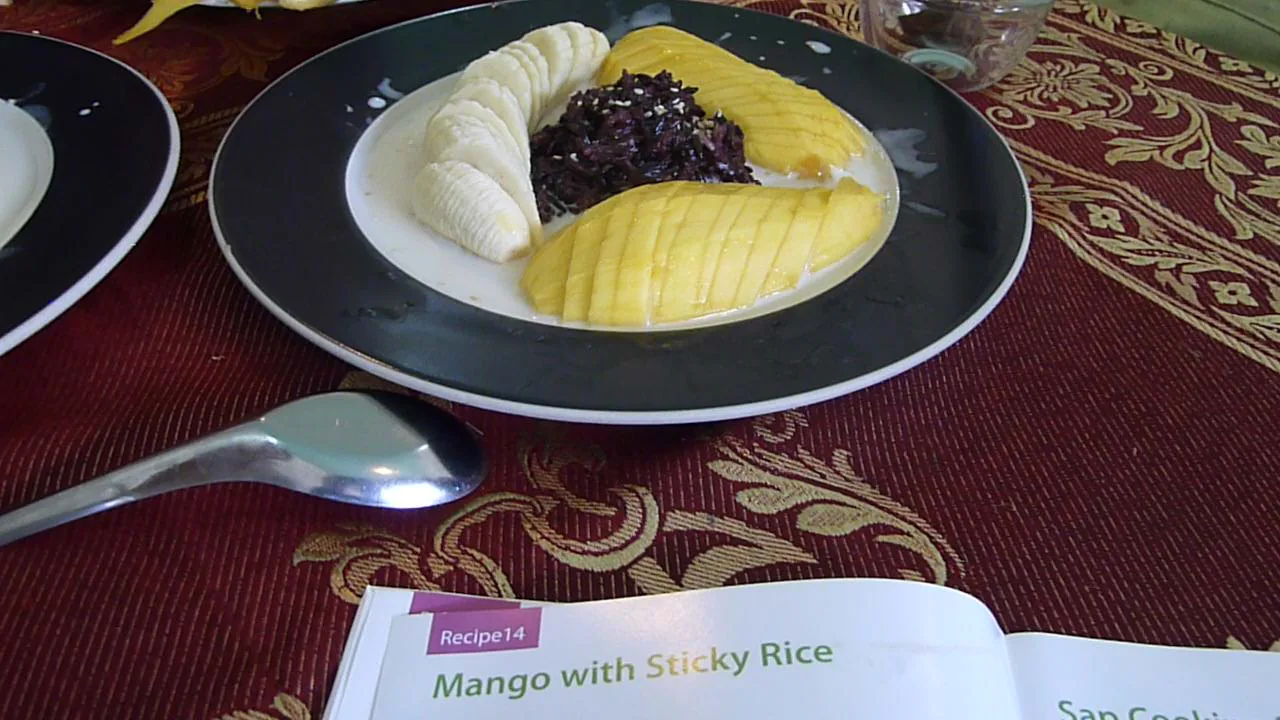
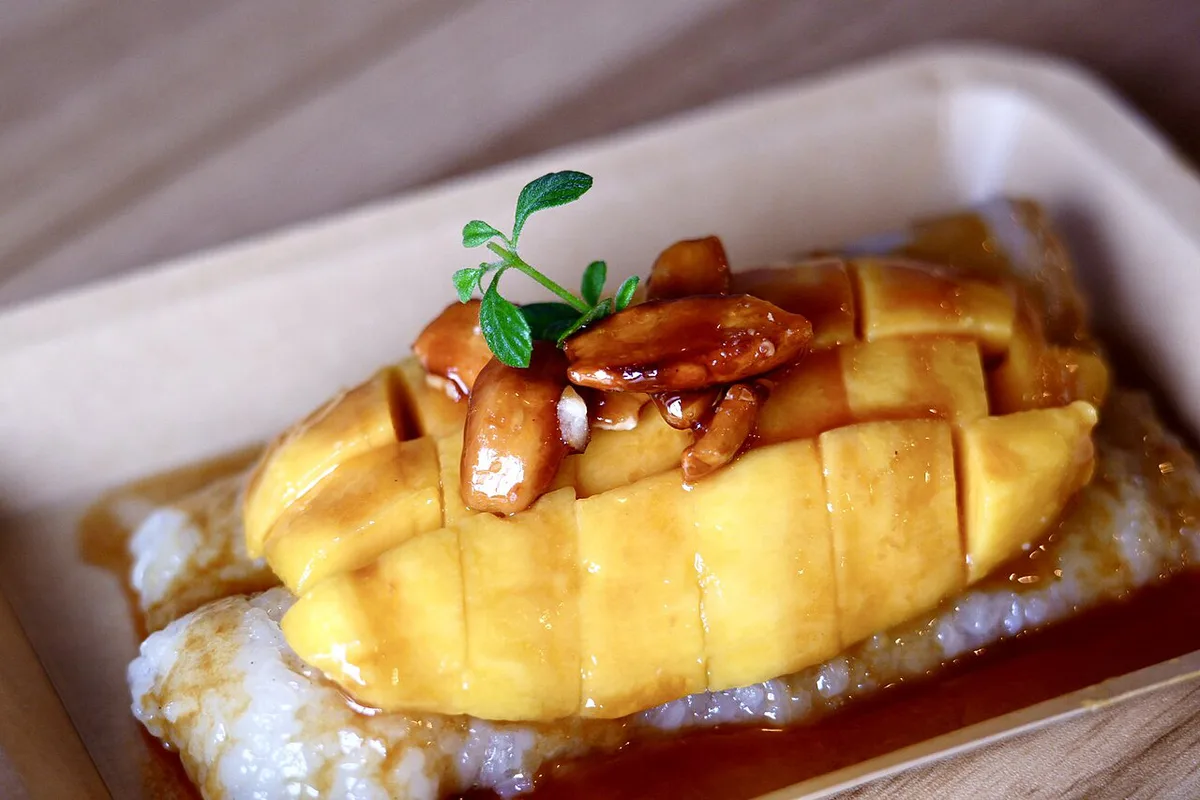
Khao niao mamuang is a three-part dessert. Glutinous rice is steamed, then soaked in sweetened coconut milk until every grain turns glossy. Ripe mango slices sit alongside it. A spoonful of lightly salted coconut cream finishes the plate, often with toasted mung beans or sesame seeds on top. That salty-sweet contrast is the whole point of the dish. English spellings vary, and you will see khao niao, khao niew and khao neeo on menus. We use khao niao mamuang throughout. Some cooks add pandan for a grassy, floral aroma, but it is optional.
How to Order and Eat Mango Sticky Rice in Thailand
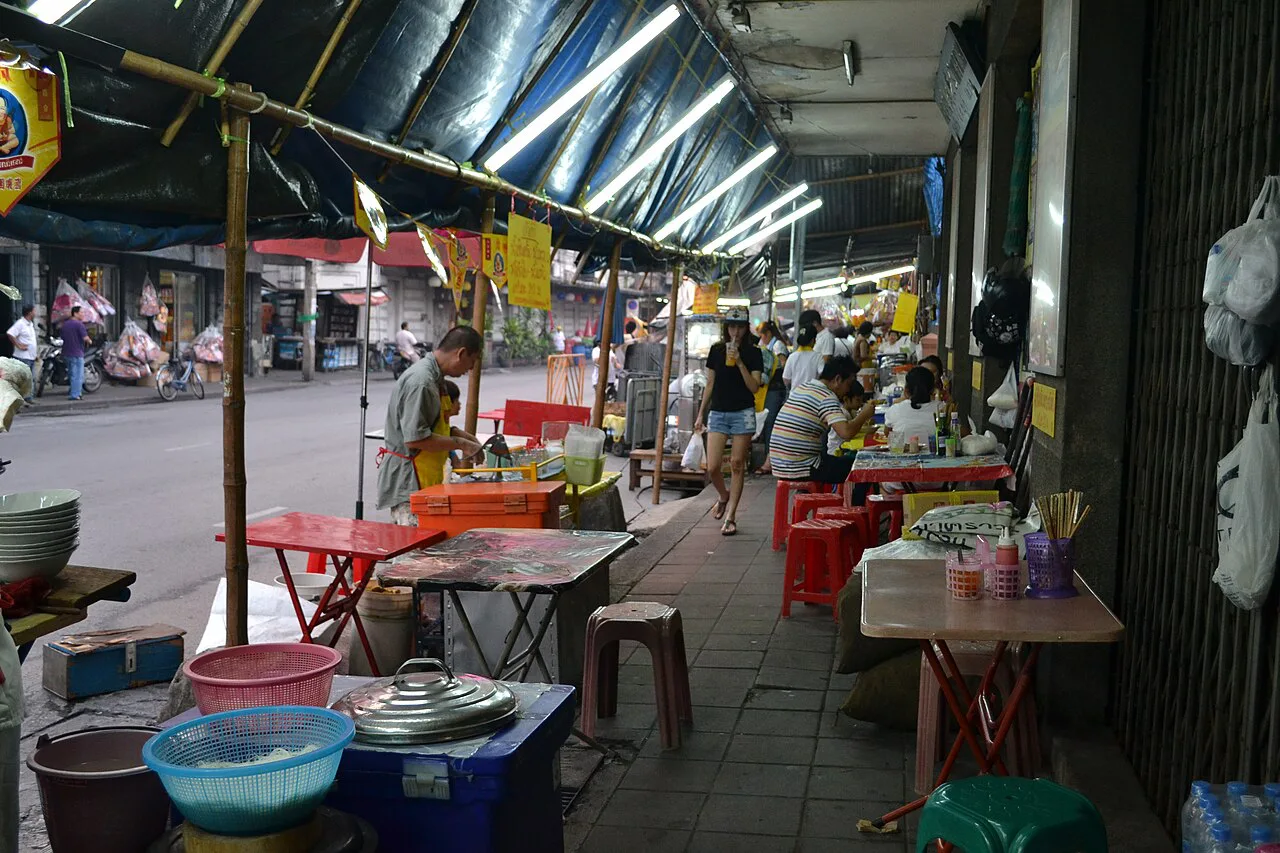
Street markets and dessert stalls across Thailand sell mango sticky rice, and restaurants list it on dessert menus. Point at the rice, the mango and the cream, and the vendor builds the plate for you. Eat it with a spoon, taking rice and mango in the same bite. Our pick for a walk-away order is the coconut cream on the side. That keeps the rice glossy instead of soggy while you carry it. Finish it soon after buying. Rice that sits for hours stiffens and loses the softness that makes the dish.
Keeping the coconut cream apart from the rice lets a chilled sauce last up to 1 week.
When Is the Best Time to Eat Mango Sticky Rice?
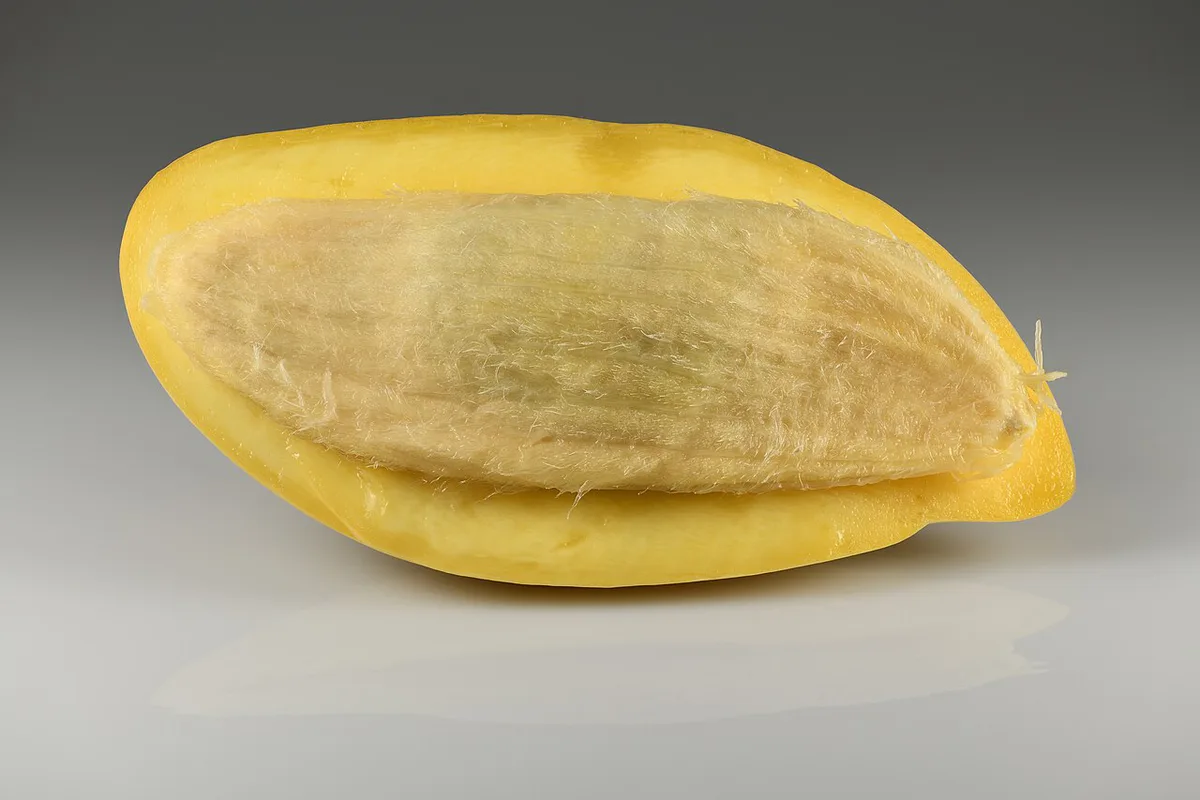
Mango season runs roughly March to June, and that is when we would plan your plate. Varieties such as nam dok mai and ok rong are the ones usually associated with the dessert. Look for golden, very ripe fruit with silky, creamy flesh. Sticky rice itself is available year-round, and some cooks outside Thailand swap in frozen mango or mango sorbet. In Thailand, we'd rather wait for peak fruit than settle for a firm, sour slice.
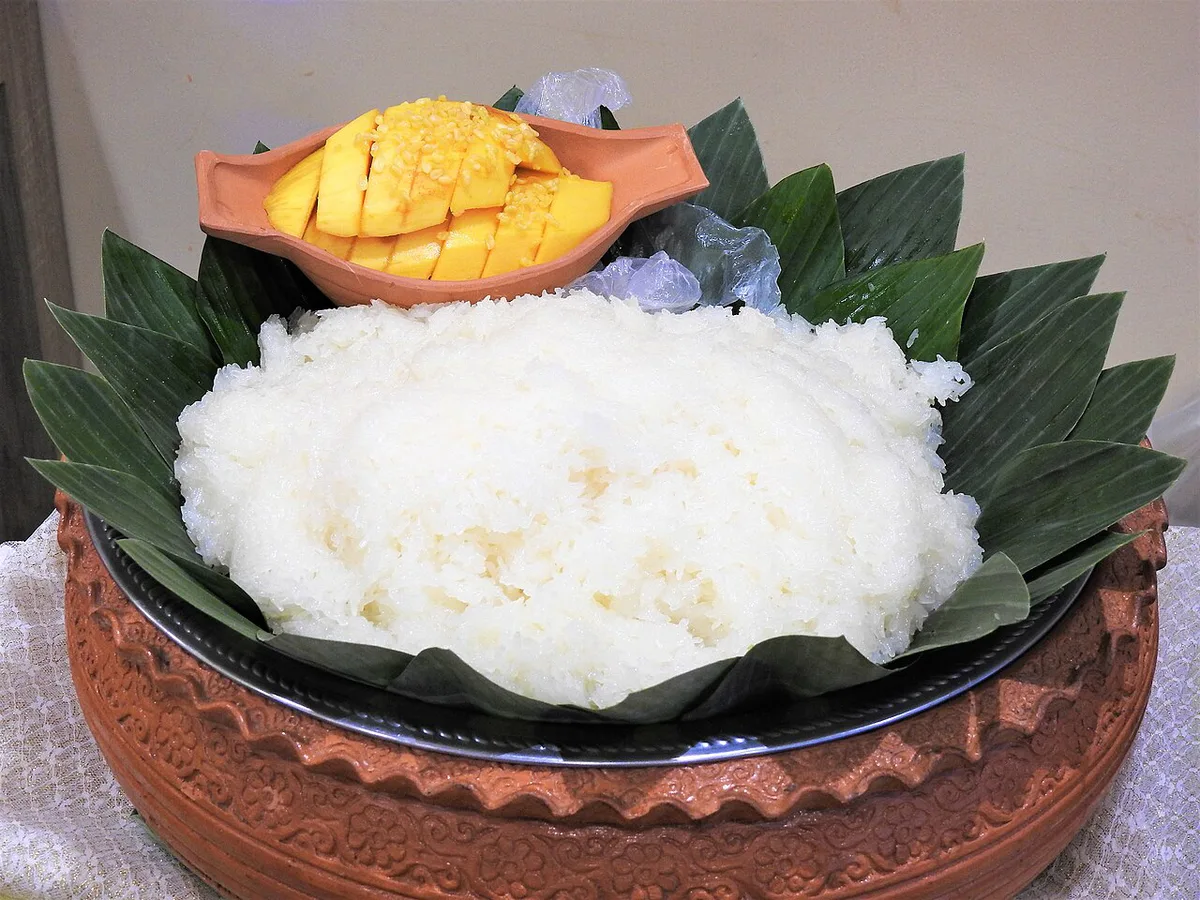
How to Tell a Good Plate from a Mediocre One
Four quick checks separate a great plate from a forgettable one. Rice should rest in warm coconut mixture for about 20 to 30 minutes so it absorbs the flavor fully. Look for these signs before you pay:
- Rice that is chewy and glossy, not mushy, dry or hard.
- Coconut cream that tastes salty-sweet rather than only sugary.
- Mango that smells fragrant and slices cleanly without stringy fibers.
- Rice that is soft and fresh, since cold, leftover rice turns firm.
Common Mistakes to Avoid
Buying out of season is the biggest one, because underripe mango flattens the whole dish. Eating a plate hours after it was made is the second. Assuming it is free of dairy or allergens without asking is the third. Ask the vendor what went into the rice and cream before you order.
A plate eaten hours later loses its softness, yet cooked sticky rice can be refrigerated for 1–2 days at home.
Price and Where It Fits in Your Budget
We found no reliable published price for mango sticky rice, so we won't guess one. Ask the vendor for the price before you order, since stalls, markets and restaurants all set their own.
Dietary and Practical Notes for Travelers
Coconut and mango are both common allergens, so tell the vendor if either affects you. A basic version uses only glutinous rice, coconut milk, sugar, salt and mango. That makes it plausibly vegan and gluten-free, but sauces and toppings differ from stall to stall. Ask about additives and shared utensils. Sugar levels also vary, and home cooks often cut the sugar because the rice can taste very sweet. If you avoid heavy desserts, ask for less sauce. Plan to eat it fresh and the same day.
Mango Sticky Rice vs Other Thai Desserts
Mango sticky rice sits in a family of coconut-based sweets. Use this table to choose your next order, and follow each link for its full page.
| Dessert | What it is | Best for |
|---|---|---|
| Khanom Krok: Thai Coconut Pancakes and How to Eat Them | Small coconut-rice pancakes | Grazing at a market |
| Thai Coconut Ice Cream: What It Is, Where to Eat It & How to Order | Frozen coconut dessert | Hot afternoons |
| Khanom Buang: Thai Crispy Crepe Guide, Where to Eat It | Crisp, thin pancake | Crunch lovers |
| Lod Chong: Singapore vs Classic and How to Order | Pandan noodles in coconut milk | A cold, light finish |
| Bua Loy: Thai Rice Balls in Warm Coconut Milk | Rice balls in warm coconut milk | A warm, mellow bowl |
| Tub Tim Krob: Thai Red Ruby Dessert Guide | Water chestnut in coconut milk | A refreshing bowl |
| Foi Thong: Thai Golden Egg Threads Dessert Explained | Golden egg-yolk threads | Very sweet cravings |
| Khanom Chan: Thai Nine-Layer Coconut Dessert Guide | Layered steamed sweet | Chewy texture fans |
| Thai Custard: Kanom Tuay vs Sangkaya Explained | Steamed egg custard | Smooth, gentle sweetness |
| Thai Roti: Street Dessert Guide, Types & How to Order | Fried flatbread dessert | A street-side snack |
Make Mango Sticky Rice at Home: What Matters Most
Four things matter most at home. Use glutinous rice, because regular rice lacks the starch to turn sticky. Soak it for several hours, then steam it for about 15 to 20 minutes. Combine hot rice with warm coconut mixture and rest it 20 to 30 minutes. Finally, choose very ripe mango. Full recipes from home-cooking sites give exact quantities, so we leave those to them.
How to Store Leftover Mango Sticky Rice
Mango sticky rice is at its best soon after serving, but leftovers can be managed if you need to return to your hotel. Keep the rice, mango and coconut sauce in separate containers. Separating them protects the rice from becoming wet and prevents the mango from perfuming the sauce.
A home-cooking storage guideline suggests keeping cooked sticky rice for 1–2 days in the refrigerator. Coconut sauce can last up to 1 week when chilled separately. These are storage guides, not a guarantee of safety. Discard anything with an unusual smell, changed texture or uncertain handling.
Cold rice will firm up, so let it lose its chill before eating. Warm it gently if your accommodation has suitable facilities. Add the coconut sauce and mango only when ready to eat. Do not treat chilled leftovers as a substitute for a freshly made plate at the market.
Frequently Asked Questions
Is it okay to use regular rice for mango sticky rice?
No. Regular white rice lacks the starch of glutinous rice, so it will not turn sticky and chewy. Look for glutinous rice, also sold as sticky or sweet rice, at Asian markets.
Can you bring home mango sticky rice?
It is best eaten fresh, because refrigerated rice hardens and dries. If you must carry it, pack the rice and sauce separately. Fresh fruit rules vary by country, so check your destination's customs guidance.
Thai food notes for your next trip
Optional updates to our food guides.
You might also like


Continue reading
More guides you'll find useful