Dragon Fruit in Thailand: Types, Where to Buy & Eat
What Thai dragon fruit tastes like, how to pick white vs red flesh, where to buy it, and how to order it. Practical tips for visitors.
On this page
Last updated November 2026: this dragon fruit Thailand guide covers types, buying, ripeness and ordering. Thai markets sell the cactus fruit, also called pitaya, as whole fruit, chilled slices and blended shakes. Pick white flesh for a plain, mild bite or red flesh for colour, and eat it cold.
Featured image: Rod Waddington, CC BY-SA 2.0, via Flickr.
Dragon fruit in Thailand: the quick answer
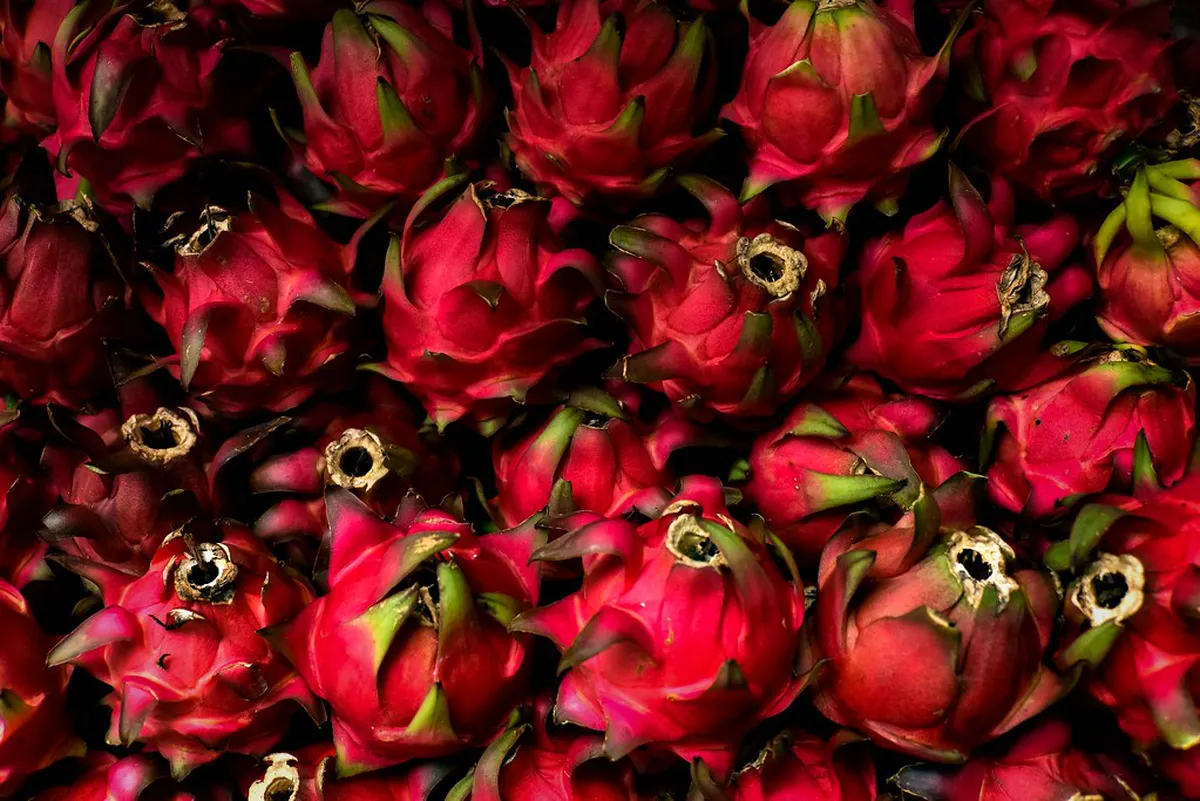
Dragon fruit, or pitaya, grows on a climbing cactus of the Hylocereus group. In Thai it is แก้วมังกร, written kaeo mangkon. Three types are common: pink skin with white flesh, pink skin with red flesh, and yellow skin with white flesh. All taste mild and lightly sweet, often compared to a blend of kiwi and pear. Buy it chilled, ask for it cut, and treat it as a refreshing fruit rather than a bold dessert. It is one of many fruits covered in our guide to Thai fruits. Orchards sit mainly in central and eastern Thailand, so fruit in Bangkok and the coastal resort towns usually travels only a short way.
White, red, or yellow: which dragon fruit to choose
Choose by how you plan to eat it. White flesh looks plain but suits a bowl of chilled slices. Red flesh gives smoothies and fruit plates a vivid colour. Yellow-skinned fruit turns up less often, so grab it if a stall has it. Sweetness rankings between colours are not settled, so taste a slice when a vendor offers one.
| Type | Skin and flesh | Flavour and texture | Best for | Staining |
|---|---|---|---|---|
| White-flesh | Pink skin, white flesh with black seeds | Mild, lightly sweet, soft and crunchy seeds | Plain slices, fruit plates | Low |
| Red-flesh | Pink skin, deep red or magenta flesh | Mild, lightly sweet, similar texture | Shakes, colourful fruit bowls | High: marks hands and clothes |
| Yellow-skin | Yellow skin, white flesh | Mild and sweet, similar texture | Eating plain, as a change | Low |
Where to buy and eat dragon fruit in Thailand
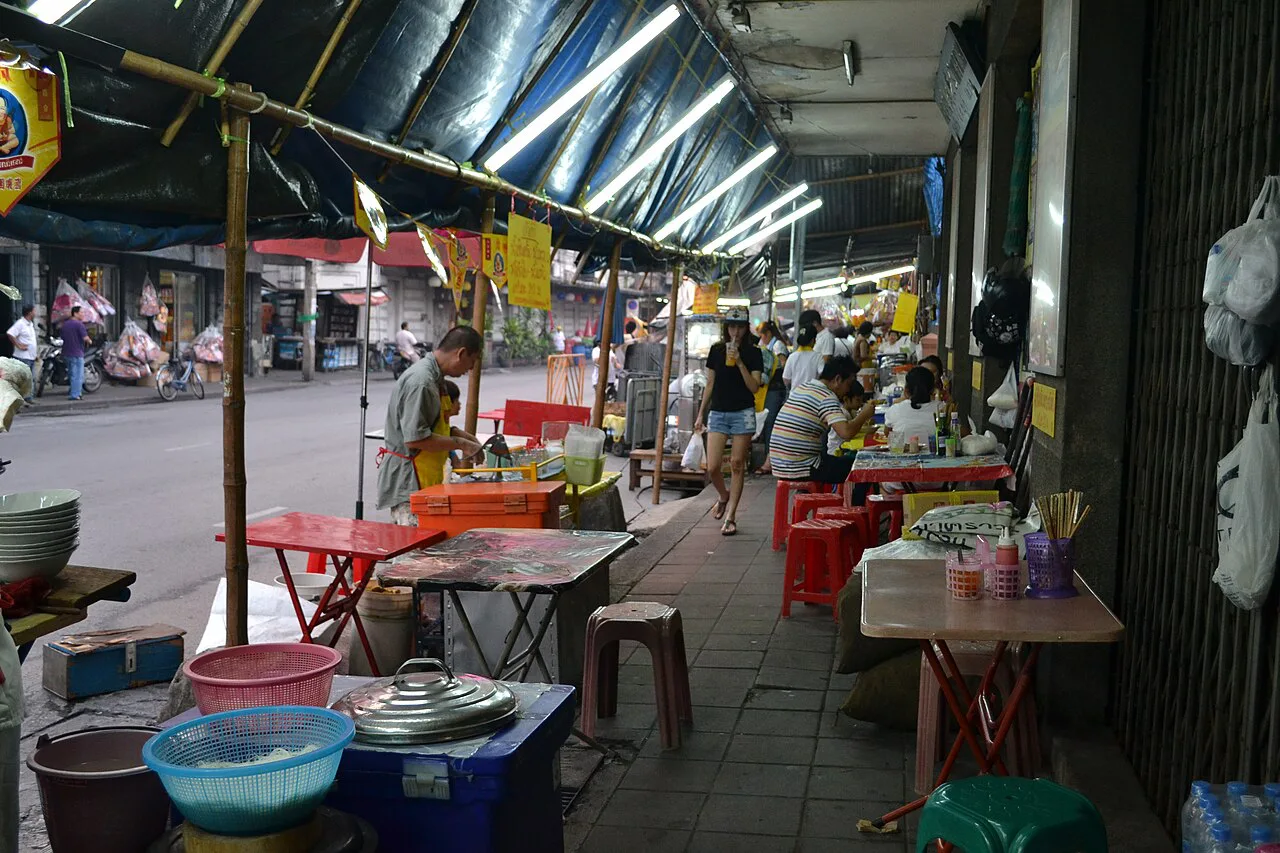
Fruit reaches visitors through five routes. Cost levels below are our editorial assessment, since prices shift by town and season. Street carts and markets suit a quick chilled cup. Hotel buffets give an easy first taste with no ordering. Supermarkets and convenience stores sell whole or packed fruit, handy for a room fridge.
| Route | Relative cost | Convenience | Quality notes |
|---|---|---|---|
| Street fruit carts | Lowest | High, found near markets and busy roads | Ask for chilled, freshly cut portions |
| Fresh and night markets | Low | High, many vendors to compare | Whole fruit lets you judge ripeness yourself |
| Shake stalls | Low to mid | High, made to order | Colour is strong, flavour is mild |
| Hotel breakfast buffets | Included in the room rate | Highest | Usually chilled and cut, variety limited |
| Supermarkets and convenience stores | Mid | High, fixed hours and prices | Packed cut fruit is consistent but less fresh |
How to pick a ripe one (and what to avoid)
Use your eyes first, then your hands. The checklist below is practical advice from common fruit-buying habits, not a grading standard.
- Skin: look for even, bright colour without large dark patches.
- Bracts (the leafy scales): fresh and slightly flexible beats dried or blackened.
- Firmness: a ripe fruit gives slightly under a thumb press. Rock-hard fruit is underripe and mushy fruit is past it.
- Weight: pick the fruit that feels heavy for its size.
- Ordering: ask for it whole, chilled or pre-cut, and ask for a taste if the vendor is cutting.
- Mistake: pre-cut fruit left in the sun.
- Mistake: expecting a strong flavour.
- Mistake: eating the skin. Peel it away and eat the flesh only.
- Mistake: ignoring stains. Red flesh marks hands and clothes, so keep napkins close.
When is dragon fruit in season?
We cannot state a reliable harvest calendar for dragon fruit here. Check our seasonal fruit calendar and ask vendors what is arriving now.
Can you visit a dragon fruit farm?
We cannot name farms, hours or fees that are open to visitors. Expect out-of-the-way locations, a need for a car or tour, and limited English, so ask your hotel about current options.
How to eat it: fruit plates, shakes, and simple serving ideas
Chilled slices are the simplest serving. Cold fruit tastes better, and chilling is the usual advice for improving the flavour. Mixed fruit plates pair it with stronger fruit, where its mild taste works as a palate cleanser. At a shake stall, say "dragon fruit shake" and point at the fruit you want. Blends with mango, pineapple or banana are common. Ask for less sugar if you want to taste the fruit itself.
Other Thai fruits to try at the same stall
Most carts that sell dragon fruit also sell stronger flavours. Mangosteen is sweet and tangy inside a purple rind. Peel a hairy rambutan for lychee-like flesh. A pomelo tastes like a milder, sweeter grapefruit. Try longan for light, floral sweetness. Adventurous eaters can approach durian, famous for its strong aroma. Stalls may also stock jackfruit, Sugar Apple in Thailand: How to Pick, Ripen and Eat It, salak, langsat and santol.
For trip-planning details, see Dragon fruit.
Thai food notes for your next trip
Optional updates to our food guides.
You might also like


Continue reading
More guides you'll find useful